
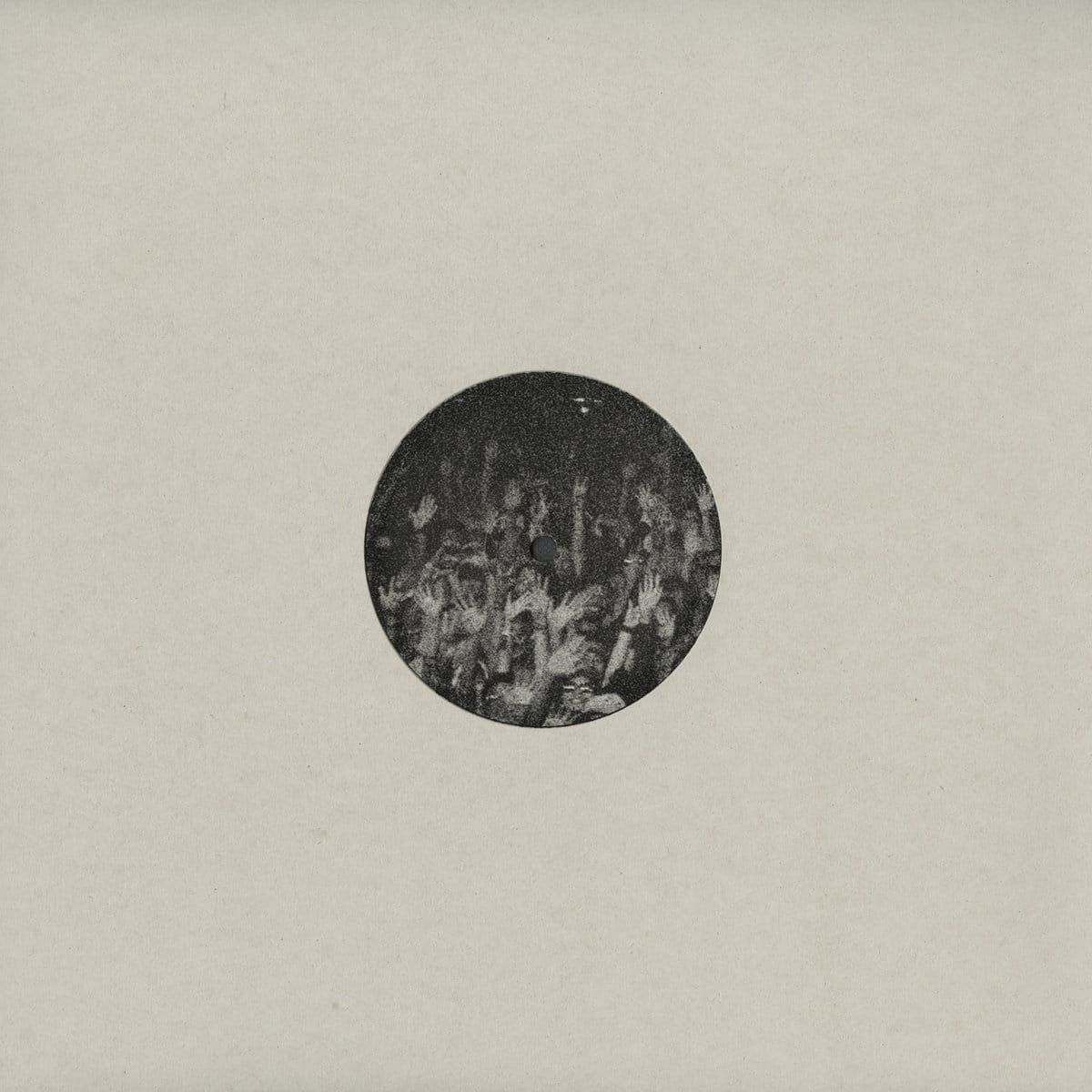
Every Four Tet release is a small argument about what music needs, and Human Voice, which Kieran Hebden finally let loose on Bandcamp on July 30th through his own Text Records, makes its argument with the track titles alone. Side one is called Human Voice. Side two is called T246 130ish Electribe Plaits. One title is a poem. The other is a filename. And the joke, if it is a joke, is that he named them backward.
Because here is the thing about the A-side. The human voice on Human Voice, sung by Katie Serva, does not behave like a human. It arrives in fragments, spiraling vocal shards threaded through six and a half minutes of rolling drums and woozy chords, chopped and looped until the voice becomes another oscillator, another texture in the machine. The most human-sounding element on the record is actually the B-side, the one named like metadata. T246 130ish Electribe Plaits is exactly what it says, the 246th entry in his working archive, roughly 130 beats per minute, built on a Korg Electribe and a Plaits module, and yet across its eight and a half minutes it is the warmer, stranger, more searching piece of music, IDM and nineties ambient memories wrapped around a minimal groove. The track named for a spreadsheet is the one that feels like a person thinking. The track named for humanity is the one that turns a person into an instrument. That inversion is the whole release, and I refuse to believe Hebden did not notice.
The filename title deserves a moment of appreciation on its own, because it is a quietly radical act. T246 means there are at least two hundred and forty-five other tracks sitting in that archive. 130ish means he could not be bothered to check the exact tempo, or more likely that precision was never the point. Most artists spend weeks agonizing over titles, focus-testing mystique. Hebden just showed you the label on the folder. It is the least marketed piece of music naming imaginable, and in an industry where every single arrives wrapped in narrative, handing the listener the raw studio notation feels almost intimate, like being shown the workbench instead of the showroom.
And then there is the timeline, which tells its own story about patience. Human Voice was not born on July 30th. Hebden had been playing it in DJ sets for roughly two years before it ever became an object, and in that time the track lived the way dance music lived before recording, as a rumor. Phone rips from festival sets circulated online, half-buried under crowd noise and whatever he had layered over it in the mix, and people traded those clips like field recordings of an animal nobody had photographed. The vinyl came in February. The digital release waited until the end of July. By the time you could actually own Human Voice, it had already existed in public for two years without ever officially existing at all. There is something wonderful about a track called Human Voice spending its first two years transmitted person to person, room to room, in imperfect secondhand copies. That is how human voices have always traveled.
I listened to both sides back to back late at night, loud, and what stays with me is how unhurried the whole thing is. Two tracks, fifteen minutes, no filler, no deluxe edition, no rollout. Serva's voice keeps circling through the A-side like a phrase you almost remember, and the B-side unspools with the loose confidence of someone playing hardware in real time, letting the machines drift a little because the drift is the music. Nothing here is trying to be an event. It is just the next transmission from a man who has spent nearly thirty years releasing music the moment it is ready and not one second before, on a label he owns, at whatever pace he feels like, with titles that tell you either everything or nothing.
Fifteen minutes, two names, one inversion. The machine track with the human soul, the human track that becomes a machine. Somewhere in between those two sides is the question Hebden has been asking his entire career, which is where exactly the person ends, and the equipment begins. He still is not answering. He is just making the question groove.
Human Voice is out now on Text Records. Buy it on Bandcamp, grab it on Beatport, and find everything else at fourtet.net.