
Four years after his last solo studio album, Future (born Nayvadius Wilburn) returned on July 10 with The Real Me, 22 tracks and 58 minutes of exactly what the title promises, just not in the way anyone expected. There is no confession booth here. There is something better: the most stripped-bare presentation of Future's artistry in over a decade, built with deliberate intent and one of the deepest producer benches he has ever assembled.
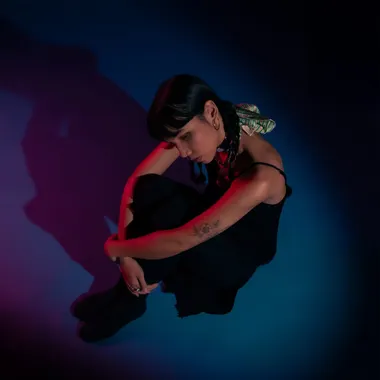
Consider what he removed. No Metro Boomin, after two chart-topping collaborative albums in 2024. No Drake, months after their reconciliation on "Ran to Atlanta" put them back at the top of the charts together. No features at all, on a 22-track album, from the most collaborative hitmaker of his generation. The cover, revealed on his Instagram two days before release, shows him shirtless, no chains, staring straight down the lens. Every external element that has ever propped up a Future release is gone, and what remains is the real him: the stream-of-consciousness id, the non sequiturs, the melodic muscle memory, and the willingness of a 42-year-old legend to take real vocal risks in public. The voice was always the whole point. This album proves it can carry an hour alone.
The most consequential decision on The Real Me is a name that does not appear in the credits. Instead of a third Metro Boomin collaboration, Future rebuilt the sound from his own extended family: Wheezy, ATL Jacob, Southside, TM88, DJ Spinz, Dre Moon, Sean Momberger, FnZ, Allen Ritter, RushDee, Simmy, KrazyMob, and, in the album's most fascinating cameo, Pharrell Williams. That list is not a grab bag. It is a deliberate cross-section of every era of Future's sound, assembled like a retrospective staffed by the people who built the original rooms.
Wheezy is the anchor. He co-produces the opener "Fukk a Interview" with FnZ and ATL Jacob, a track built on synths that gather like weather before a storm, and he returns for "Hollywood" late in the sequence. Wheezy has been Future's most reliable widescreen builder since the Wizrd era. He has described his own style as soul-romantic-trap, beats that deliberately leave space open for the words, and that philosophy is all over this record. His voice tag, spoken by Future himself, has opened an era of hits spanning Lil Baby, Gunna, Travis Scott, and Young Thug. Here he handles both the album's thesis statement and its biggest sonic swing.
The low end belongs to ATL Jacob. His work on "Trench Coat" is the cleanest bass engineering on the record, a 1:46 sprint with a mid-song switch that plays like the back half of the old Drake collaborations, where Future would take over after the beat flipped. Jacob's origin story is pure Freebandz lore. Future's brother Casino brought him to the studio as a teenager, and he became the label's in-house producer before he finished high school. He spent the early 2020s becoming the architect of Future's melodic radio era, producing over half of I Never Liked You including the Grammy-nominated "Wait for U." His fingerprints here are the moments where the album sounds expensive.
Southside and TM88 carry the 808 Mafia lineage, the connection back to the Monster and 56 Nights run that made Super Future a genre. Southside, who says he makes movies with beats and has pointed to DS2 as the album that changed everything for him, co-founded 808 Mafia with TM88 in the Brick Squad era. TM88's own resume runs from "Codeine Crazy" to the diamond-certified "XO Tour Llif3," a beat he famously built off a Beats Pill speaker and a broken laptop. Their presence is why the album's front half hits the way it does. "Tank Top Pluto," a KrazyMob production, sits squarely in that tradition too, harsh ringing tones descended straight from "I Serve the Base," two minutes of pure pressure with a one-phrase hook. This is the sound Future perfected in 2015, executed in 2026 by the school that invented it.
The deepest cut on the bench is DJ Spinz. Spinz goes back to the Hoodrich mixtape era and co-produced "Fuck Up Some Commas" with Southside, one of the defining Future singles of the 2010s. His influence runs even deeper than his credits. The Spinz 808, his custom kick drum sample, became one of the most-used low-end sounds in all of trap, and long before that he was the connective tissue of New Atlanta, breaking artists as a DJ while feeding beats to the same scene. Putting him on a 2026 major-label album is not nostalgia. It is a citation. Future is footnoting his own history.
The album's most exposed material goes to Dre Moon and Allen Ritter. Moon is the quiet hitmaker behind the HNDRXX era (named for Future's 2017 album), a Grammy winner for "Drunk in Love" whose signature is lush, dreamy, R&B-leaning atmospheres. Ritter is the keys specialist whose touch runs through "Work," "Father Stretch My Hands," and huge stretches of Rodeo. Their co-production on "Build a Bitch" is essentially beatless, a suspended, alluring ballad that forces Future's melody to carry the entire structure. Moon also produced the closer "Cast a Spell," where Future floats a high, unsettled lullaby register over the beat. It is the boldest vocal on the album, a legend with nothing left to prove choosing to end his record on the take most artists would have deleted. That is its own kind of honesty.
Two names from outside Atlanta round out the architecture. FnZ, the Australian duo of Finatik and Zac, are the wild card on the opener. Perth crate-diggers turned Grammy winners, they built their name flipping samples for Denzel Curry, Kanye, and 21 Savage, and their underdog story is one of the best in modern production. Their texture-first instincts are part of why "Fukk a Interview" sounds like weather instead of just drums. Sean Momberger is the quiet flex of the credits. He co-produced "Not Like Us" and "Lovin on Me," two of the biggest records of the decade, and his sample-mining process is worth studying for anyone who cares about how hits get built. On this album he shares credit on "Hollywood," which is exactly where you would want a pop-instinct sample architect standing next to two trap lifers.
And then there is Pharrell Williams, who produces "Alice" fresh off one of the most celebrated production runs of his career, a stretch in which he described his current approach as painting with feelings rather than sounds. "Alice" is the one place on The Real Me where the outside world intrudes. Future is filtered and pitch-warped over Pharrell's keyboard work, with a West Coast lean and genuine crossover potential, chasing something that is neither trap nor pop. It is the album's most surprising three minutes and its clearest signal that Future knew exactly how adventurous this record was going to be.
The producer story only matters because of what Future does on top of it. The Real Me contains more vocal experimentation than any Future solo album in a decade, and this is where the album earns the word gem. On "2018" he pushes into a pitched-up, squeezed falsetto unlike anything else in his catalog. On "Cast a Spell" he floats a freaked-out lullaby. On "Konnichiwa" he attacks a cinematic beat switch with near-robotic precision. On "California Girls" he lets soft drums fall away and carries the song on pure melodic yearning, reaching notes he rarely attempts. And on "Hollywood" he does a full New Wave frontman turn over widescreen drums and a filmic pad progression from Wheezy, Southside, and Momberger, a night-drive record with a neon, after-hours glow. It is telling that "Hollywood" is the only track on the album without an explicit tag. It is a different movie entirely, one that opens up where everything around it closes down, and it is the strongest evidence that Future built this album as a range demonstration rather than a hit package.
An artist twelve albums deep who chooses the risk of sounding unfamiliar over the safety of sounding like himself is doing something rare. The safe version of this album exists in an alternate timeline: fifteen features, three Metro beats, a Drake reunion single. Future had that album available to him and did not make it.
There is real weight here for anyone listening past the surface. This is Future's first release since the death of his longtime friend and collaborator Young Scooter in 2025, and the first since the Drake reconciliation closed the most chaotic chapter of his commercial life. The Afroman courtroom clip that opens "Fukk a Interview," a man celebrating the legal right to tell his own story, is not random. Neither is the André 3000 clip on "No Misery," in which one all-time great describes the pain running under everything Future does and the way he lets the world watch him balance it. Future placed both clips himself. He is telling you how to listen: the testimony is the delivery, not the diary entry.
The mid-album stretch of "Radio," "If I Could," and "Big Moment" carries the most direct reflection, an artist fully aware of his legend status and openly uninterested in performing it for anyone. "Radio" is the joke that summarizes the whole project, a perfectly radio-ready single about refusing to make radio music. Even the rollout was misdirection theater, Future asking fans to guess the features on an album that has none. He was never going to hand over a confession. The withholding is the character. The character is the confession.
The Real Me is a big album and it rewards full front-to-back listens where the sequencing does its work, the punishing opening run into the melodic middle into the late-album experiments. The production bench is the richest of any Future solo record since The Wizrd, assembled with obvious intent: every era of his sound, rebuilt without the one collaborator everyone expected, so that the only constant left in the room is him. Fifteen years in, he is still reaching, still risking, still finding new rooms inside a sound he invented. That is what makes this album worth your time, and worth going back to.
Start with "Hollywood," "Tank Top Pluto," "Trench Coat," "California Girls," "If I Could," and "Radio." Then run it front to back and let the whole picture develop.
Liner Notes
The architects of The Real Me, and where to follow them.
Wheezy · the widescreen anchor, from the opener to "Hollywood"
ATL Jacob · the low-end technician, Freebandz in-house since high school · SoundCloud
Southside · 808 Mafia co-founder, the pressure behind the front half · 808mafia.io
TM88 · 808 Mafia co-founder, from "Codeine Crazy" to diamond · tm88world.com
DJ Spinz · the Hoodrich citation, co-author of "Commas" and the Spinz 808
Dre Moon · the HNDRXX-era melodist, behind "Build a Bitch" and "Cast a Spell" · hear his catalog
Allen Ritter · the keys specialist, co-architect of the beatless ballad · YouTube
FnZ · the Perth sample surgeons on the opener · X
Sean Momberger · the pop-instinct sample architect on "Hollywood" · X
Pharrell Williams · the outside world, arriving on "Alice" · pharrellwilliams.com
Future, The Real Me (Freebandz/Epic, July 10, 2026). Listen on Apple Music or Spotify. Vinyl, CD, and signed editions at the official Future store.
Related: Kelela new avatar · Ninajirachi