
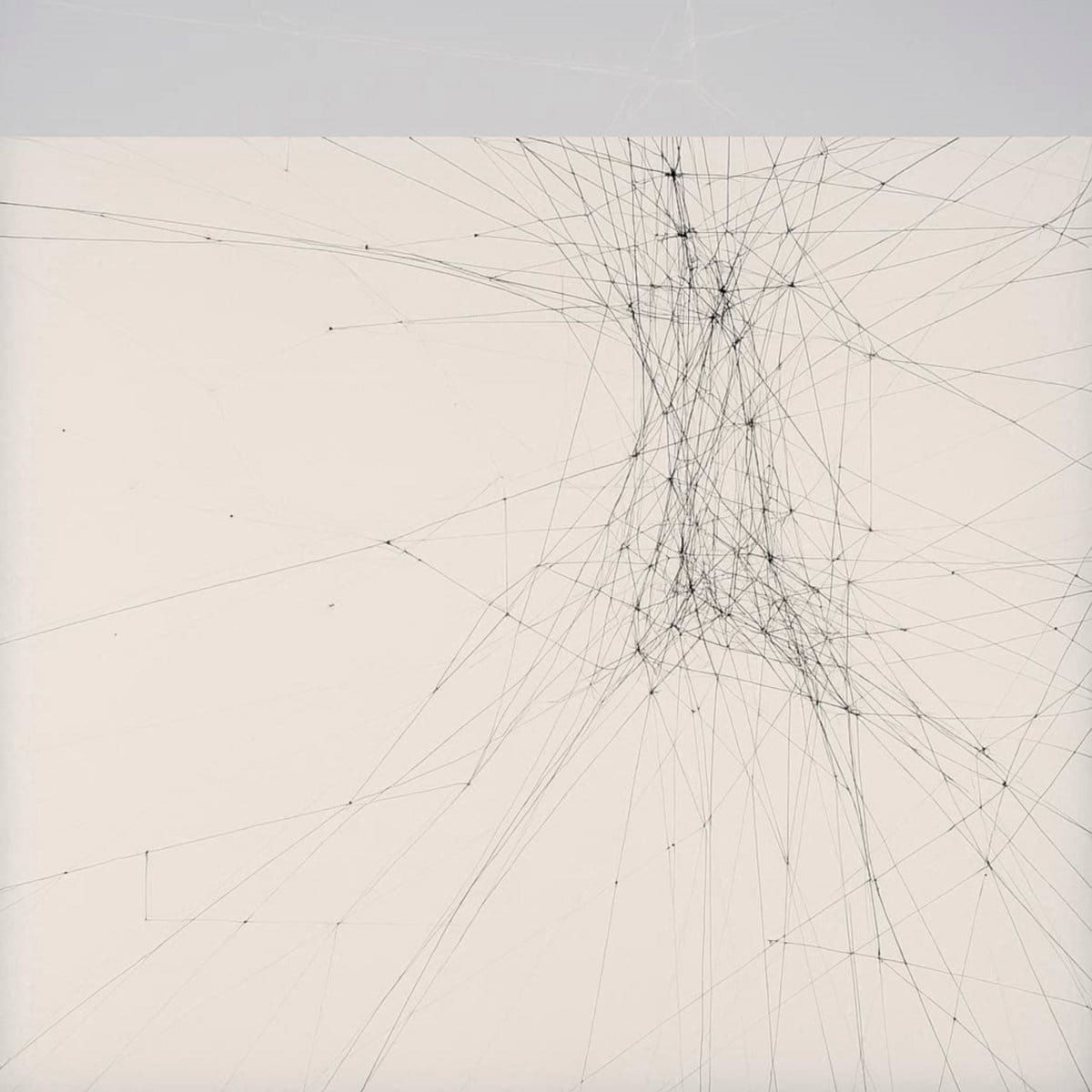
Eight tracks of rhythm-first, process-driven IDM that strip the genre to its working parts and let the patterns do the talking. rheom's _ 729.root is rigorous, precise, and exactly the kind of record this music exists to make. Out now on Polygon Network.
Some of the best electronic music is built on subtraction. rheom's _ 729.root belongs to that tradition: an eight-track album that treats a track as a system, holds the variables tight, and pushes rhythm and timing to the center while everything else clears out of the way. Released April 15, 2026 on Bilbao's Polygon Network, it is reductionist IDM made with real discipline, and it lands.
The method
The organizing principle is reduction, and rheom commits to it fully. The kit is pared back until what remains is rhythm and the precise placement of events. Melody and harmony are not the point and are not missed; they show up only as far as they help you read the pattern. Timing carries the weight a hook carries in pop, so the tension comes from where a hit lands and how a sequence shifts, not from a chord change.
Repetition is the method, not a crutch. rheom locks a figure in place and then works it: small displacements, a value nudged, a step moved, each change legible against the last. Silence gets the same rigor, used as an active interval rather than dead air. This is music that builds its interest out of process, the way Mark Fell and SND build theirs, and it holds the line against drift and mood the whole way through. Each of the eight tracks runs like a clean, self-contained study.
What it sounds like
_ 729.root is tight, exact, and full of detail when you listen closely. The spectrum is kept open and uncluttered, which is the point: it lets every micro-shift register, so the small moves become the event. The rhythms advance in increments across fixed grids instead of the build-and-drop arc of dance music, and the reward is in tracking how a pattern mutates over its run. Even the track titles are in on it, reading as operations rather than names: div_27.3, op_9→27, Δ_14, frame_120.0. The record tells you what it is and then delivers exactly that.
This sits in a lineage worth knowing. The algorithmic precision of Autechre, the rhythmic reductionism of Mark Fell and SND, the clinical microsound of Ryoji Ikeda, and the Raster-Noton camp: that is the neighborhood, and Rheom moves through it with a sure hand. The machine logic is the aesthetic, the detail is the payoff, and warmth was never the assignment.
The label
_ 729.root is the 80th release on Polygon Network, an abstract-electronic label running out of Bilbao, Spain, since 2016. The catalog goes deep in experimental, ambient, IDM, and techno from artists across Europe, and the label has a long-held taste for exactly this kind of process-driven work. This is not a stray experiment; it is a sharp entry on a roster that has been mining this seam for the better part of a decade.
Why it works
The pleasure here is the one on which this whole strain of IDM is built: hearing a system reveal itself. You drop in, lock onto a pattern, and start clocking the deviations, and the more attention you give it, the more it gives back. On good headphones, played close, the micro-detail opens up, and the precision becomes the hook. This is headphone music for people who already know that the small moves are the whole show, and _ 729.root plays that game at a high level.
rheom has made the kind of record that rewards repeat listens, the kind that sounds better the third time through than the first. For anyone who lives in this corner of electronic music, it is an easy recommendation.