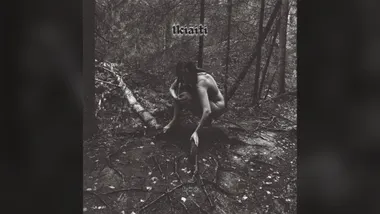

Every once in a while, this site gets to stop covering what's new and plant a flag on what's permanent. So, plainly: Untrue by Burial is one of our favorite albums ever made. It came out in 2007 on Hyperdub , and it has not aged a single day, because it was never really of a day; it takes place at night, permanently, in a South London that exists mostly in memory, and memory doesn't date.
The mythology is real, and it matters, so here is the whole story. When Untrue arrived in 2007 on Hyperdub, the label founded by Kode9 (producer Steve Goodman), nobody knew who made it. Not the press, not most of the scene, reportedly not more than a handful of people in the producer's own life. He gave almost no interviews, appeared in no photographs, played no shows, and as the album's reputation grew, the vacuum filled with theory: this had to be a famous producer in disguise. By 2008, with Untrue nominated for the Mercury Prize, actual bookmakers were taking bets on Burial's identity, with names like Aphex Twin and Fatboy Slim carrying odds, and newspapers had joined the hunt outright. The music had become a national guessing game about a man who only ever wanted to describe the night bus.
So he ended it himself, in the most Burial way possible: a plain post on his Myspace page with his name, William Bevan, a photo, and a sentence that remains the best artist statement of the century: "i'm a lowkey person and i just want to make some tunes." No press tour, no reveal interview, no Mercury ceremony appearance. He confirmed he was nobody famous, which was somehow the most satisfying answer available, and then he went back to being barely visible, a state he maintains to this day. Nearly two decades on, there are still only a handful of photographs, there have still been no live shows, and the anonymity has aged from mystery into something better: consistency. He told everyone exactly who he was, and who he was turned out to be the point.
The biographical details that did surface only deepened the picture. Bevan grew up in South London and attended the Elliott School in Putney, the same comprehensive that produced Four Tet and members of Hot Chip, one ordinary school quietly seeding a generation of British electronic music. He came up on the jungle and garage tapes of an older brother, worshipping a rave era he was slightly too young to fully live, and that's the wound the whole project pours from: Burial's music is the sound of loving a communal moment from just outside it, after it ended. The writer Mark Fisher, Burial's most important early champion, gave that feeling its name, hauntology, music haunted by futures that were promised and never arrived, and Untrue remains the idea's defining record.
Then there's how it was made, which remains one of the great outsider-craft stories in music. No sequencer, no grid, no studio: Bevan made Untrue in SoundForge, a basic audio editor with no musical intelligence whatsoever, arranging sounds by eye against the waveform and by feel against the night, tuning things until they were slightly, deliberately wrong. The swing in these beats, the way the crackle sits like weather, the rain that may be rain or may be static, none of it snaps to anything, because there was no grid to snap to. Machines made this album human by being used incorrectly, and for twenty years, producers with infinitely better tools have been trying to sound this alive ever since.
The signature move, the one that changed popular music's texture from the underground up, is the vocals: fragments of R&B songs pitched and bent until gender dissolves and words blur into pure longing, more like spirits caught on tape than singers. "Archangel" is the eternal example, a scrap of a slow jam transformed into something that sounds like devotion itself with the specifics burned away. The genius is that Bevan didn't hide the seams; you can hear that these voices came from somewhere else, some happier, glossier song, and their dislocation is the emotion. Every voice on Untrue is a ghost of a pop song, which is exactly what a night out's memory is.
And the sequencing understands the night it's describing. "Untitled" opens like a door into cold air. "Archangel" and "Near Dark" carry the walk. "In McDonalds" is two minutes of fluorescent 4am grief that has no business being as devastating as it is. "Shell of Light" is the record's one sunrise, and "Raver" closes it the way those nights actually close: not with an ending but with a fade, the music still going somewhere as you leave it. Thirteen tracks, one continuous emotional weather system, mourning a communal euphoria, the rave, the scene, the crowd, from the far side of its ending.
Everything this site cares about is somewhere in this record. It's small-batch conviction at the scale of one anonymous person and an audio editor. It's a source that got outrun by its influence. You've heard Untrue's fingerprints on a decade of chart music, whether you know it or not, and the original still towers over every borrowing. Its late-night register still runs through records like Phaeleh's The Fragile Hours, from the Bristol branch of the same family tree. And it's the deepest argument we know for the thing we keep circling in these pages: that atmosphere is not the opposite of substance. Some albums you respect. This one we return to, at night, in transit, in winter, whenever the world needs a layer of static over it to make sense.
What Burial did after Untrue might be the most impressive part. Handed the kind of acclaim that turns into arena tours and major-label money, he simply declined the entire apparatus. There has never been a third Burial album. Instead, a slow drip of EPs across the years, each one stranger and less obligated than the last: the fractured devotionals of Kindred and Rival Dealer, three tracks he described simply as anti-bullying tunes, through to the nearly beatless winter drift of the ANTIDAWN EP, a record Hyperdub aptly describes as Burial's music reduced to just the vapors. Along the way came collaborations conducted with the same total absence of promotion: singles with Four Tet, with Four Tet and Thom Yorke together, with Massive Attack, ongoing work with label boss Kode9, and the Tunes 2011 to 2019 compilation that gathers the decade for newcomers. His whole catalog lives on Bandcamp, where even the merch stays in character, and through Hyperdub, the label that has protected his way of working for two decades. No shows, no festival headline slots, no documentary. Just tunes, appearing when they exist, from a man who meant what he posted on Myspace. In an attention economy, the refusal to be seen has become his second masterpiece.
Listen and own it: streaming everywhere, and in lossless on Bandcamp, with the vinyl still in print through Hyperdub, which is the right way to own it; this label took the risk on a faceless producer and got a masterpiece for it. Play it after midnight, through headphones, moving through a city. It was built for exactly that, and eighteen-plus years on, nothing else does the job.
More in our Electronic Music Labels hub.