

Blancpain has spent 18 years building its name on the carrousel, and on November 24 it tipped the whole thing over. The Carrousel Incliné sets the watch's spinning regulator on a 30 degree slope, which Blancpain calls a world first for a one-minute flying carrousel. It also sits inside the first watch case the Swiss house has ever cut entirely from sapphire, so you can watch the tilted cage turn from the front, the back and the sides.
Jehan-Jacques Blancpain registered as a watchmaker in Villeret in 1735, and the brand's own history traces almost 200 years of family ownership. Every movement is now made in-house in the Vallée de Joux, the Swiss valley where most high complications are still built by hand.
Carrousel vs tourbillon: the part most people get wrong
A carrousel looks like a tourbillon: a cage that spins the balance wheel and escapement to average out gravity. The difference is inside. A tourbillon runs its cage and escapement off one gear train. A carrousel uses two, one to drive the escapement and one to turn the cage. "Flying" means there is no bridge on top holding it in place, so the cage seems to float.
The carrousel was invented in 1892 by Bahne Bonniksen in Britain and ruled observatory timing trials, then was nearly forgotten for most of the 20th century. Blancpain brought it to the wristwatch in 2008 with a flying, one-minute carrousel and a 100-hour power reserve, and it has been the house signature ever since.
How the Blancpain Carrousel Incliné keeps time lying flat
A normal carrousel spins flat. That averages out errors on the wrist, but leave the watch dial up on a nightstand and the balance turns in one horizontal plane. Tilt the cage 30 degrees and the balance keeps moving through changing angles to gravity, even at rest. Blancpain rates each watch at an average of 0 to plus 2 seconds a day.
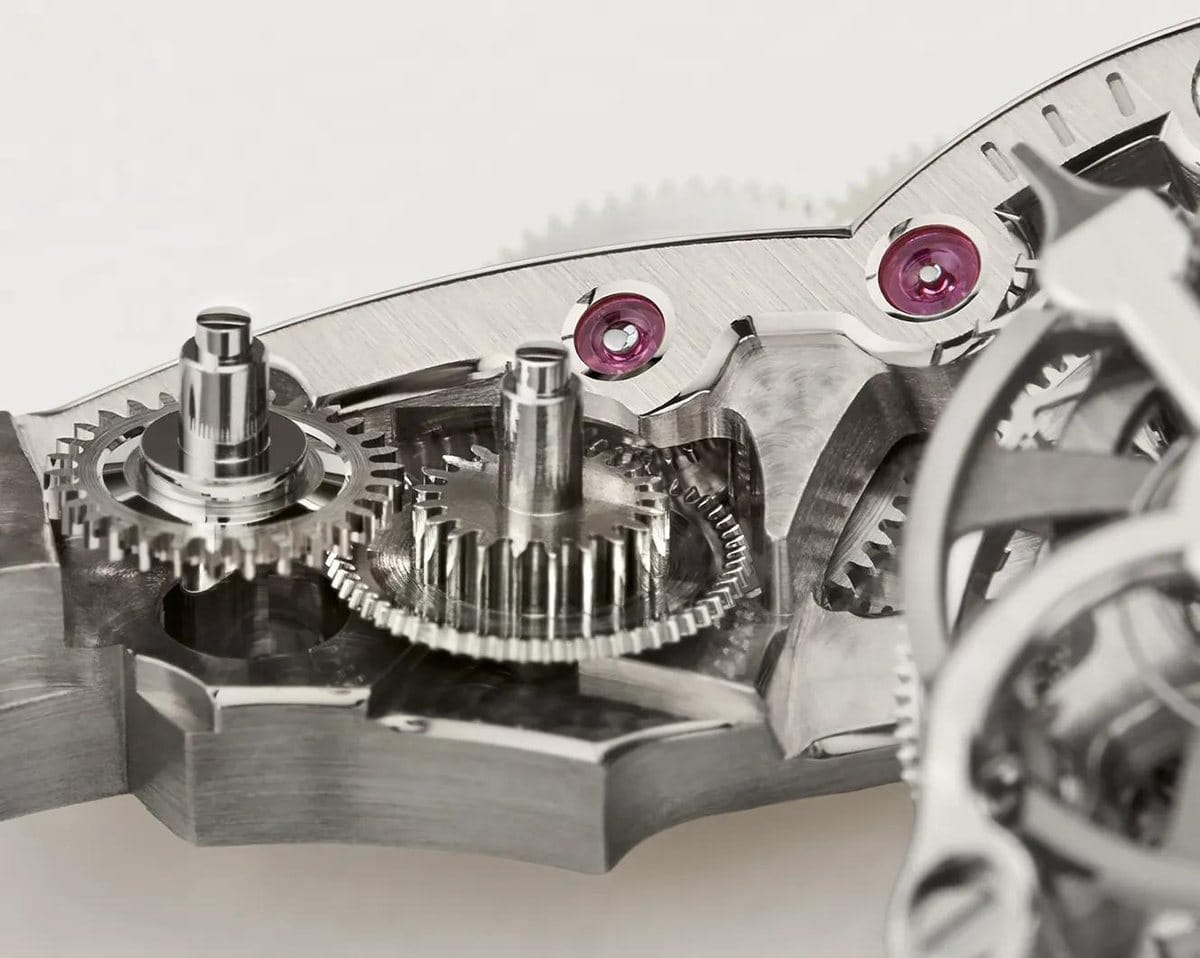
Getting power to a tilted cage was the hard part. The new hand-wound calibre 222ISQ does not make the whole 30 degree turn in one gear mesh. It splits it across two, at 22 degrees and then 8 degrees. The cage itself was rebuilt too: 8.5 percent lighter, with 30 percent less rotational inertia, an 8 mm balance wheel and a silicon hairspring, still beating at 4 hertz and turning once a minute.
A sapphire case, and a movement with no back side
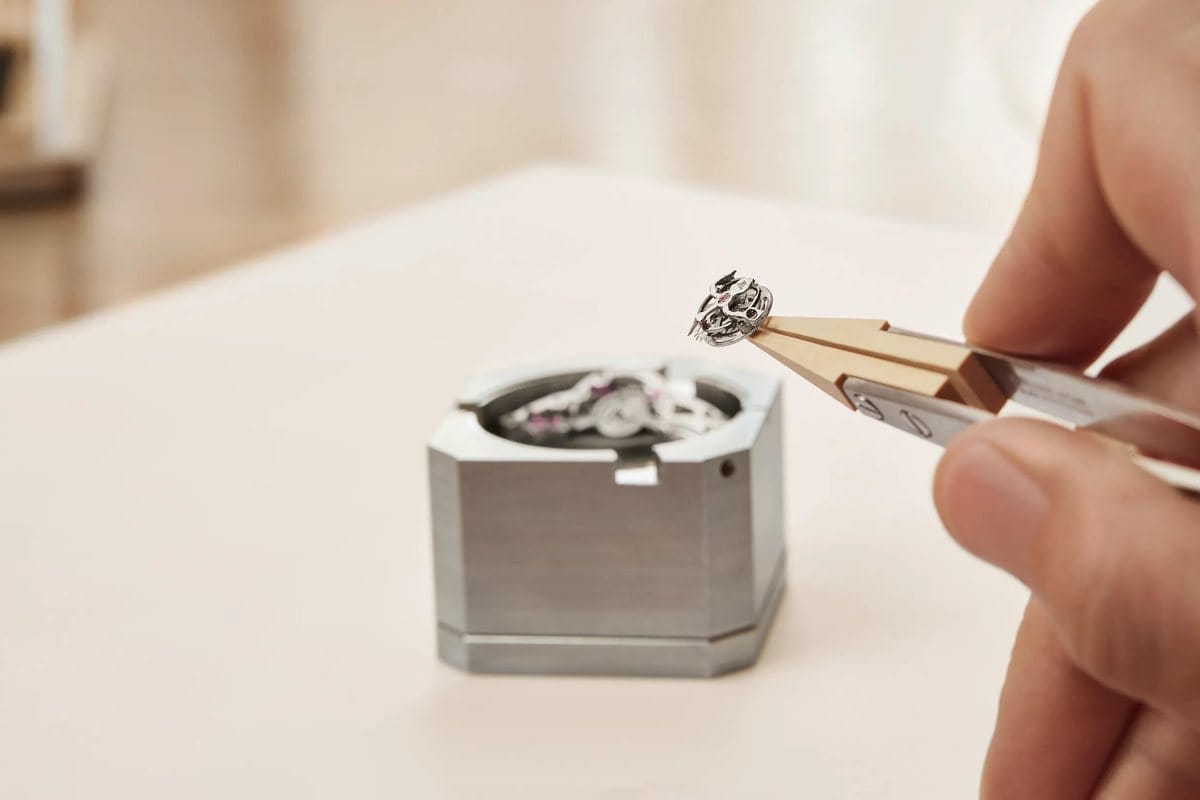
With the case, dial and caseback all in sapphire, there is no hidden side, and Blancpain's finishers say they treated calibre 222ISQ as a movement with "two upper sides." Bridges are beveled top and bottom, at 30 degrees above and 45 below. The movement has 253 sharp inward angles, each shaped and polished by hand with burins and then wooden tools wrapped in finer and finer abrasive paper.
The last polish is the detail we did not see coming. It is done with the stems of wild gentian, a mountain flower that grows in the Vallée de Joux. A 224-part movement gets its final shine from a local flower.
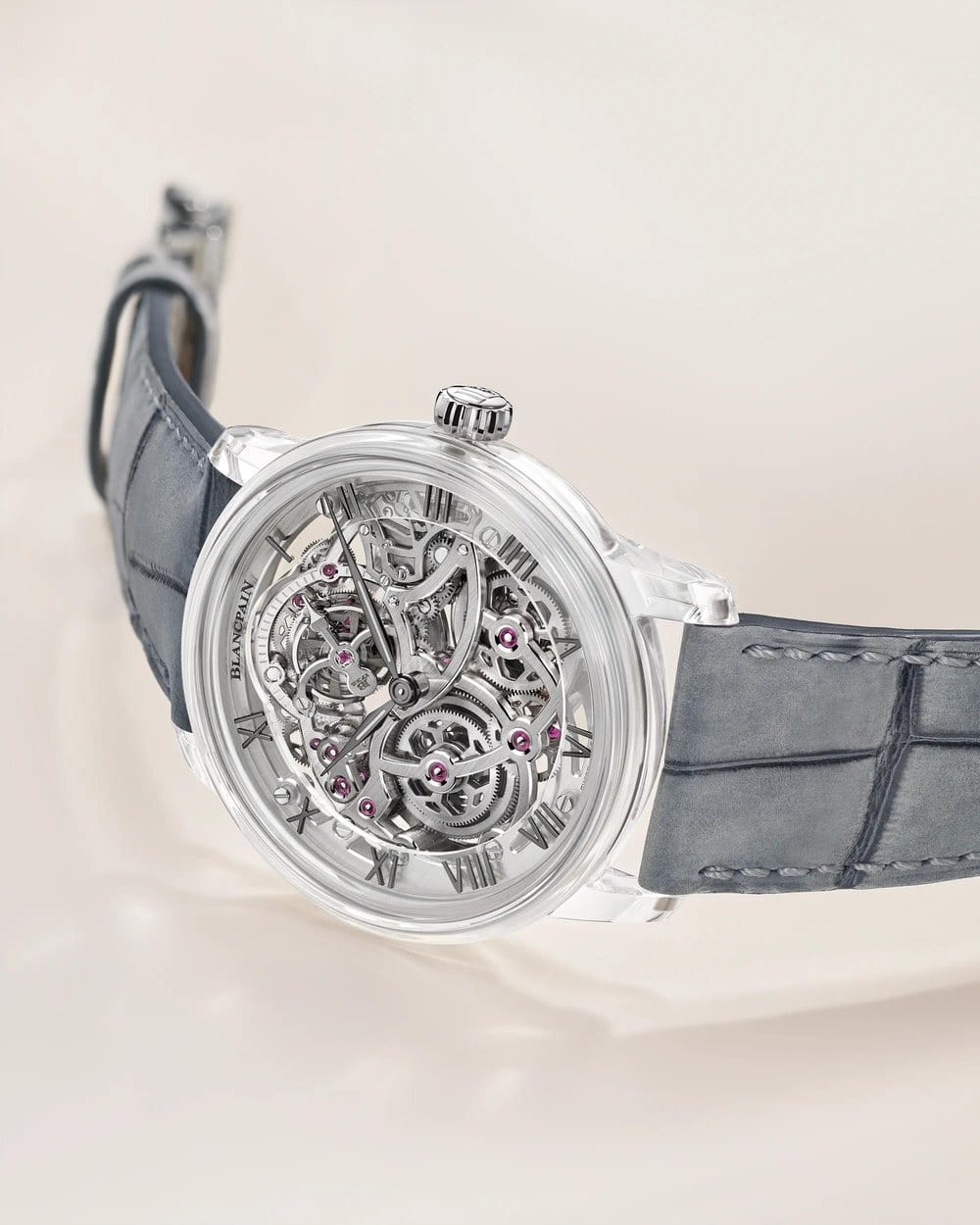
Blancpain Carrousel Incliné specs and the two references
The case is 40.30 mm across and 11.30 mm thick, with 22 mm between the lugs. Inside, the movement is just 5.30 mm thick with 37 jewels and two barrels in series for 100 hours of power. It comes on a grey alligator strap with a folding clasp, in two references: 66222S 0000 55B with a silver-toned movement and 66222S A 0000 55B with a warm rose gold tone. Blancpain sells it by enquiry through its boutiques and points of sale.
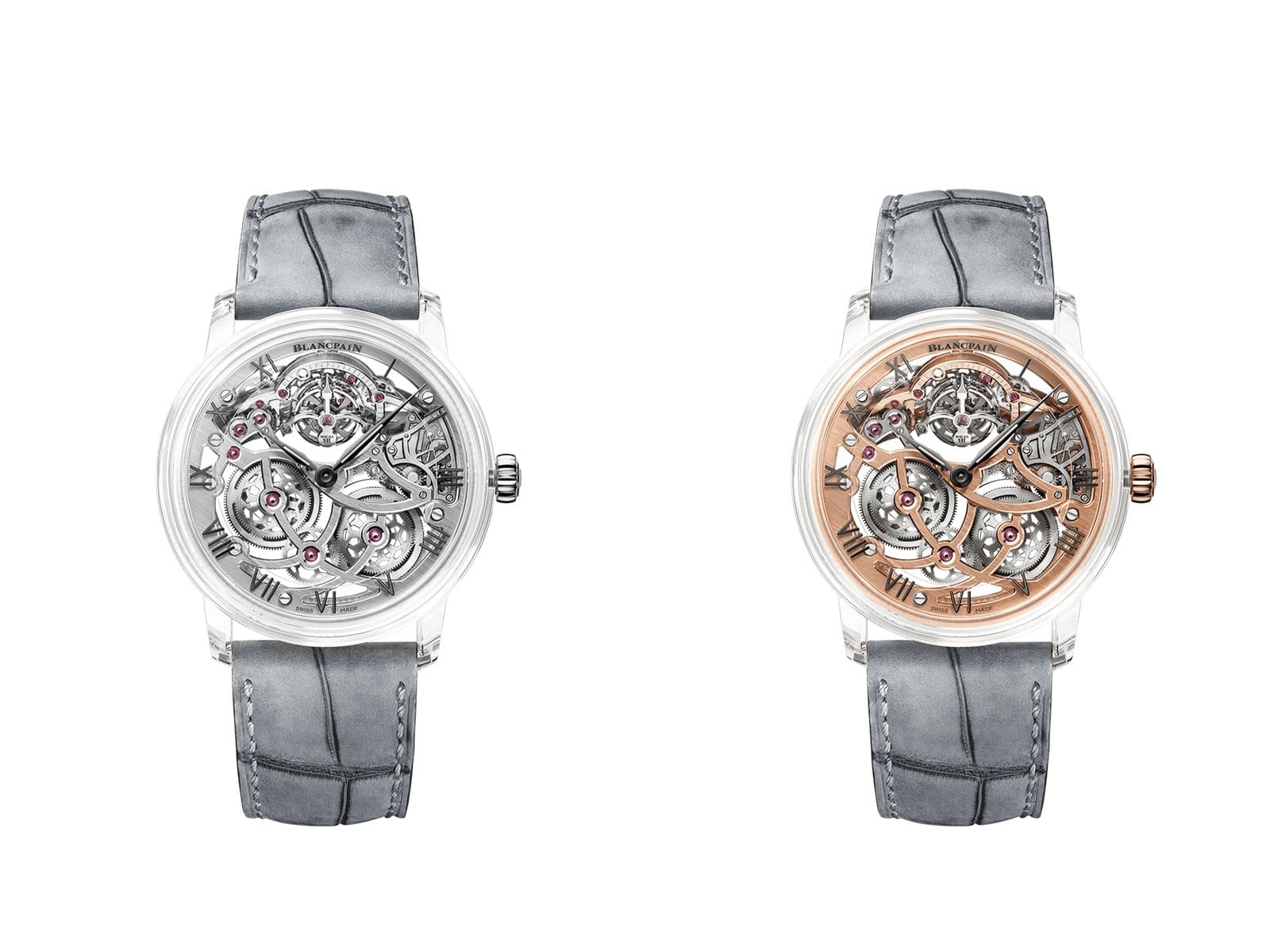
New to hand-wound watches? Start with our guide to quartz, automatic and hand-wound movements. For a dial that hides a trick of its own, see the Leica ZM 11 Green Spirit.
Our call: buy, if you are one of the very few collectors in the market for a high complication. Most new complications are an old trick in a new case. This one fixes a real weakness of the flat carrousel and lets you see every part of the fix. For everyone else, save the official images: it is the clearest look at Swiss hand finishing this year.