
Ambient music asks one thing of an instrument that most synths are not built for: it has to keep moving when you stop touching it. A pad that sits still for five minutes is a test tone. The instruments below are the ones that make sound drift, evolve and decay on its own, which is what the genre is built on. We picked one for each way of working, from a box that turns any sound into texture to a keyboard that reads the pressure of every finger.
As an Amazon Associate we earn from qualifying purchases.
Torso S4: best for turning any sound into texture
The S4 is not a synth in the strict sense. Torso calls it a sculpting sampler, and for ambient work that is the point. It runs as a four-track tape machine with four parallel stereo tracks, and every track feeds a chain of five devices: Material to play or record sound, Granular to break it into grains, Filter, Color for warmth or grit, and Space for reverb, delay and a freeze that holds a moment in place. Record a few seconds of a piano, a field recording or another synth, and the S4 turns it into a slowly shifting bed. The modulation system adds evolving LFOs and random movement, so a track keeps changing without your hands on it. The techno producer Surgeon puts it best on Torso's page: there are universes in that box.
Who it suits: anyone who already has sound sources and wants a place to dissolve them. Torso's product page showed the S4 out of stock when we checked, so try both the Torso store, which ships from the EU, and this retailer listing. Our full S4 guide goes deeper on the workflow.
Korg modwave mk II: best for evolving pads
Korg has a long history of making pads that move. Its 1985 DW-8000 paired digital wavetables with analog filters, and the Wavestation that followed introduced wave sequencing, stepping through samples to build sounds that changed over time. The modwave mk II carries both ideas. It is a wavetable synth with 60 voices, almost double the original modwave, and its Motion Sequencing 2.0 borrows the continuously evolving patterns of the wavestate. Kaoss Physics, an x/y pad driven by game physics, lets you throw a sound into motion and let it bounce.
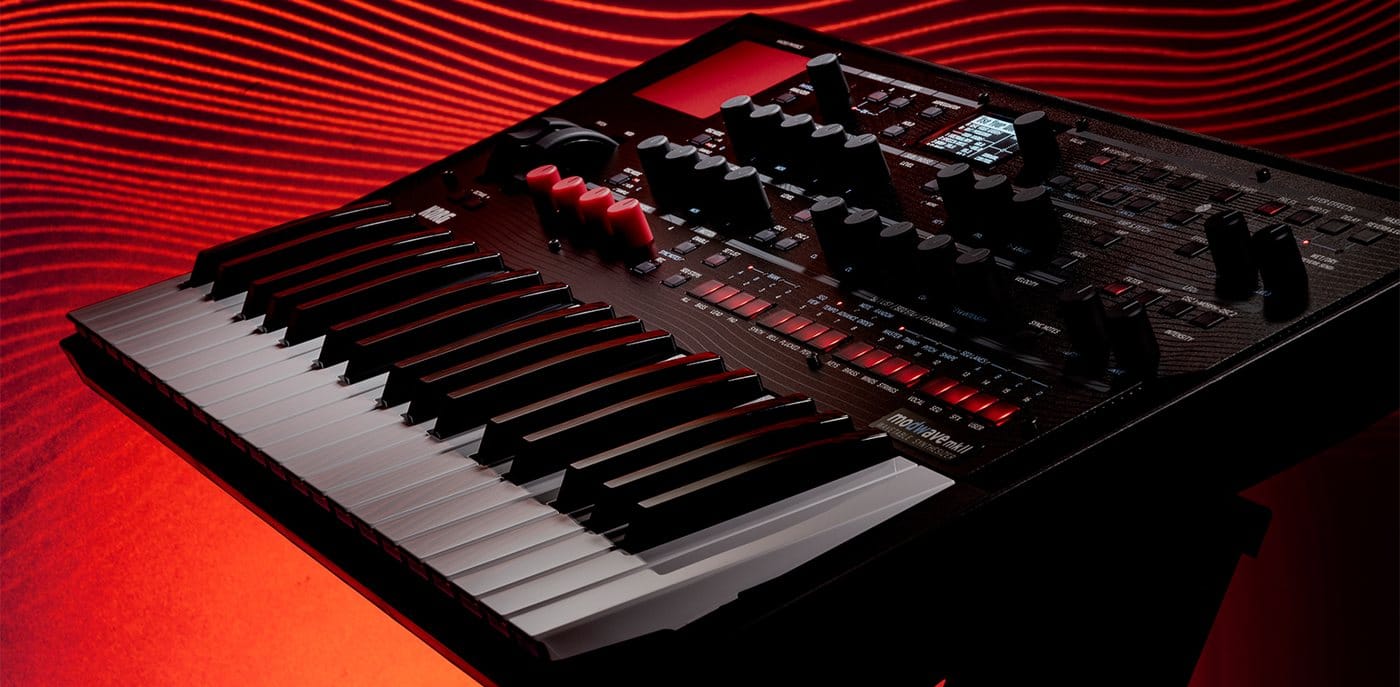
Who it suits: producers who want huge, shifting pads in one keyboard. Shop the modwave mk II. Its sibling, the wavestate mk II, is the purer wave sequencing machine, with 96 stereo voices and a design that splits timing, samples and melody into separate lanes that loop at different lengths. Korg's own US store showed it sold out when we checked, which is why the modwave gets the slot.
Sequential Take 5: best analog polysynth for warm pads
The Prophet-5 changed what a synthesizer could be in 1978, and the Take 5 is Sequential's way of putting that sound in reach. It has five voices, analog oscillators, a 4-pole resonant lowpass filter that traces straight back to the Prophet-5, and 44 full-size keys in a compact frame. For ambient players the effects matter as much as the oscillators. There is a dedicated reverb with damping, pre-delay, decay and tone controls, plus a multi-effect that includes BBD and tape delays, so a single held chord can bloom into a room.
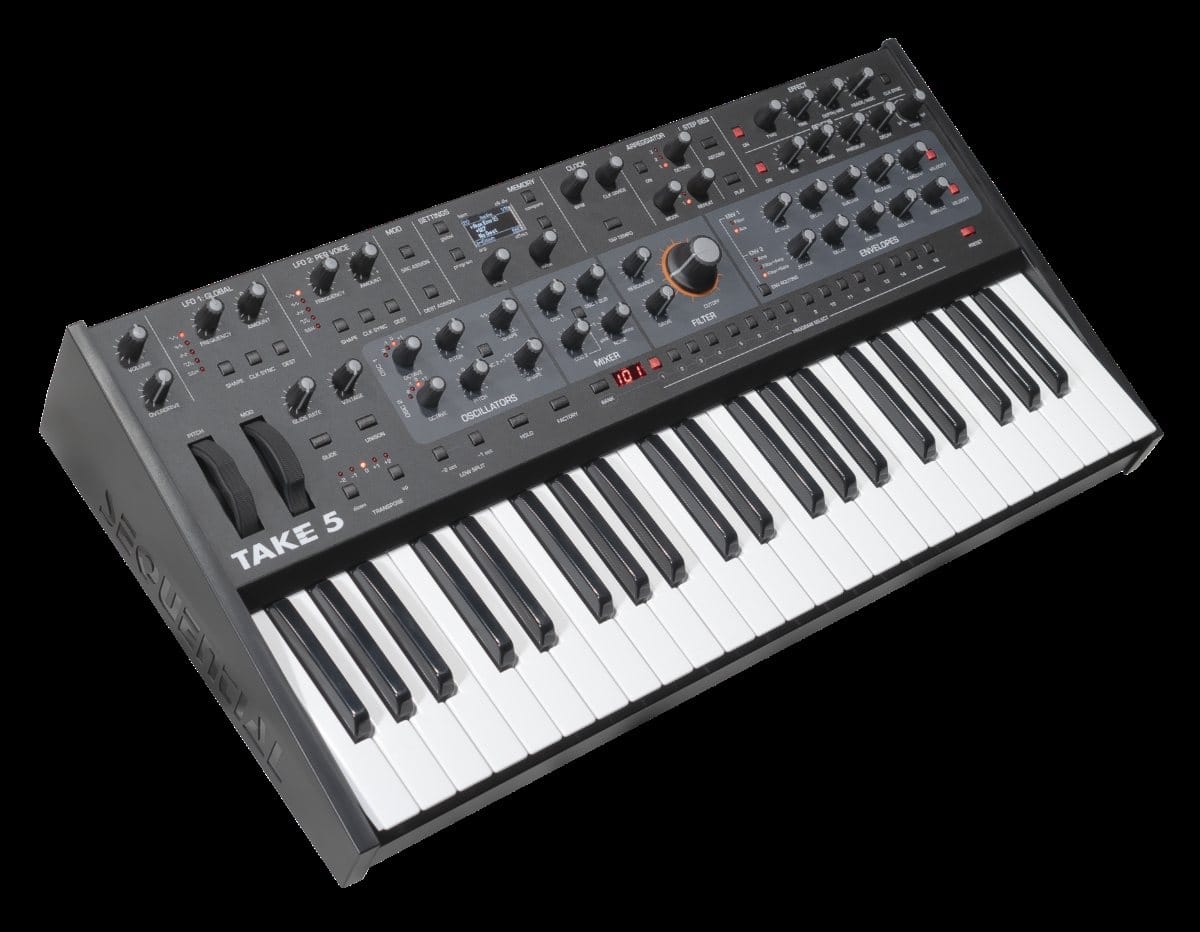
Who it suits: anyone who wants one warm, playable analog keyboard. Sequential sells it direct on its own site, shipping to the US. If you would rather keep the desk clear, there is also a Take 5 desktop module.
Make Noise 0-Coast: best for drones on a small budget
Synth history has two coasts. On the East Coast, Moog built the keyboard synth most people know. On the West Coast, Don Buchla built instruments around complex tones and the low pass gate, a circuit that gives notes a plucked, organic decay. Make Noise, based in Asheville, North Carolina, named the 0-Coast for its refusal to choose. It is a single voice that works straight out of the box with any MIDI controller, but it is also patchable, with cables to rewire it. Make Noise says you can forgo MIDI altogether and disappear into a cloud of harmonics around one fundamental drone, which is about as good a description of ambient practice as exists. Its external audio input also lets you run other sounds through its circuits.
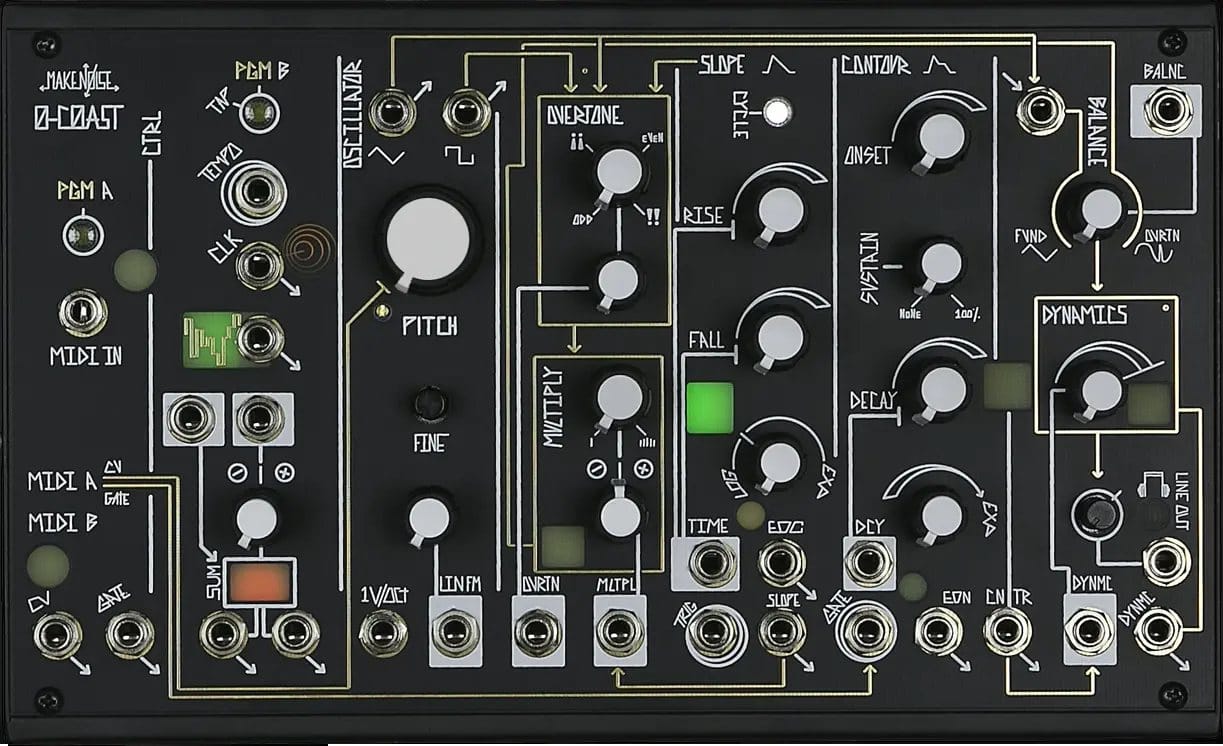
Who it suits: curious players who want a first step toward modular. Make Noise sells it through its dealers. New to the terms? Our monophonic vs polyphonic explainer covers why a single voice can still fill a room.
Korg minilogue xd: best first ambient synth
The minilogue xd is the sensible starting point. It is a four-voice analog synth with two oscillators per voice plus a digital multi engine, and its effects section runs modulation, reverb and delay at the same time. That last detail is what makes it an ambient instrument at its price: a simple chord through chorus, tape delay and a long reverb is the whole genre in miniature.
Who it suits: beginners and anyone who wants a small, complete keyboard. Shop the minilogue xd, and see our minilogue xd guide for the rest of its features.
Expressive E Osmose: best for players who want touch
Most keyboards only know how hard you hit a key. The Osmose reads three-dimensional movement on every key, so you can press deeper, bend sideways or shake a note after it starts, and each finger in a chord can do something different. It runs on the EaganMatrix sound engine by Haken Audio, comes with more than 500 presets, and doubles as an MPE controller for software synths. It is designed in France and now comes in 49 and 61 key sizes.
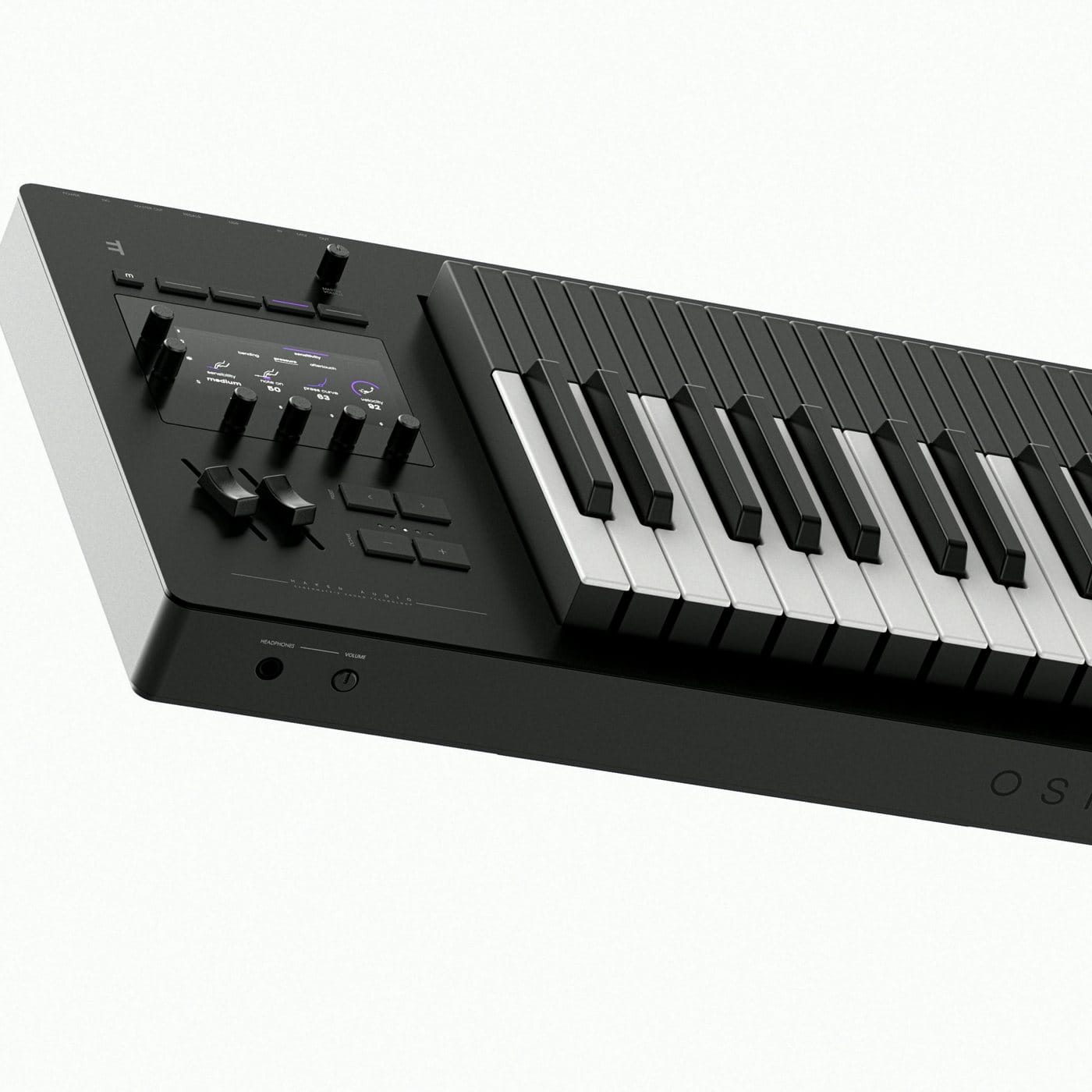
Who it suits: trained keyboard players who want a pad to swell under their fingers the way a bowed string does. Buy it from Expressive E directly.
The wild card: SOMA Lyra-8
If you want an instrument with a will of its own, the Lyra-8 from SOMA Laboratory is the one drone players talk about. Designer Vlad Kreimer calls it organismic. Its eight voices behave like the tone generators in old electric organs rather than standard oscillators, and they are wired in pairs that can modulate each other, feeding a cross-feedback delay and a distortion. It does not play scales politely. It roars and breathes. SOMA sells it by email order and through dealers, listed on its price and availability page.
These instruments pair well with the records that shaped the style, which our ambient hub collects, including the new Emily A. Sprague album written for a Tokyo department store.
Our call: if you already make music, buy the Torso S4 first, because it turns everything else you own into ambient material. If you are starting from zero, buy the minilogue xd and learn what reverb, delay and slow envelopes do. Step up to the Take 5 when you want one great analog keyboard for life, and skip the Osmose unless you are a real keyboard player, since its depth is wasted on single held chords.