
Most synths start with an oscillator. Audrey III starts with feedback. The new desktop instrument from Synthux Academy is built on three string-like feedback loops, each one seeded with a drop of noise and left to ring, howl or collapse depending on how hard you push it. Synthux's own description is the best one: it is like three guitar players feeding back together on huge Marshall amps.
It is also named after the man-eating plant from Little Shop of Horrors, and Synthux calls it a horrorscape synthesizer. Orders are open now for December shipping.
From one string to three
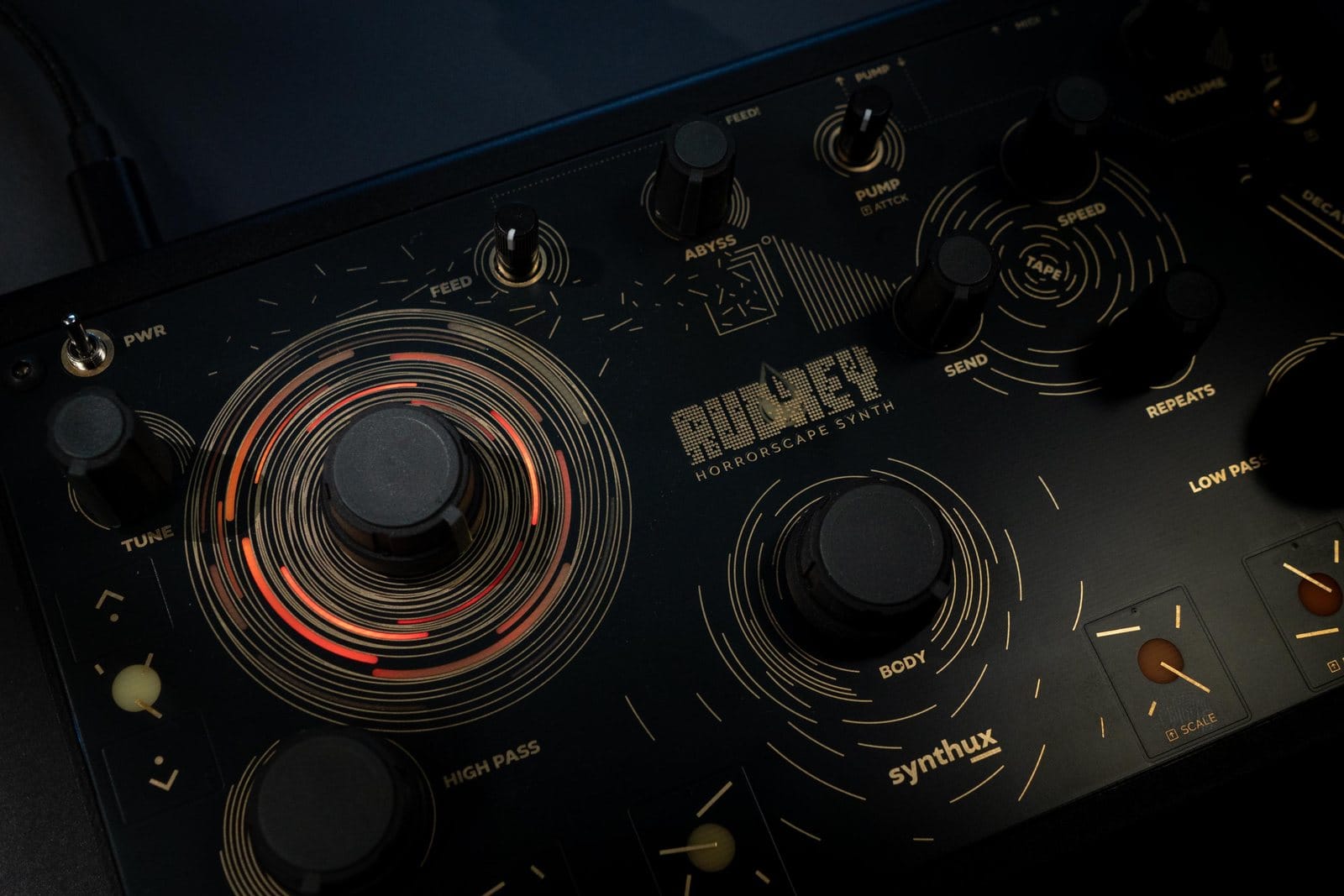
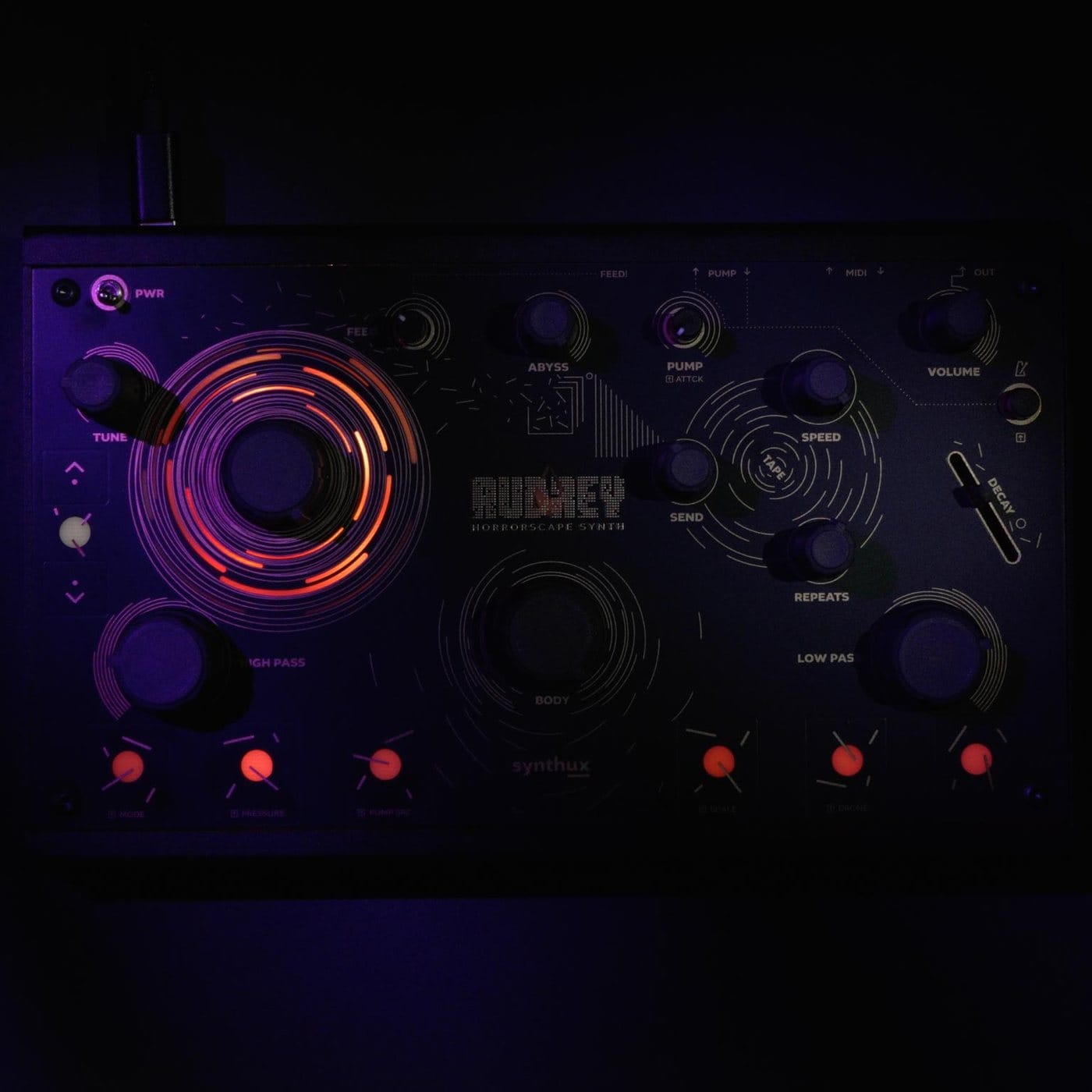
The original Audrey II played a single feedback string. Audrey III grows that to three, which makes it polyphonic, and runs all of them through a chain Synthux labels Feedback, Filters, Body, Abyss, Delay, Pump and Output. There is stereo tape echo and reverb on board, plus a pump effect that comes from a side chain built straight into the output amplifier. Turn one knob and the whole thing breathes. No patching, no routing.
The detail that matters most for anyone who makes ambient or drone music is the default behavior. Audrey III wakes up droning, so the last note you let go of keeps sounding. Hold Tap and touch the second plate from the right to switch drone off, and then each touch triggers the feedback and lets it die away. If drone music is your thing, that one design choice says a lot about who this was built for.
The feed input is the real trick
A stereo feed input lets you run drums, vocals or other synths straight into the resonating strings. Whatever you send interacts with the feedback, which harmonises it and adds resonance, so the strings ring along with your drum loop or vocal take. It works like a resonator effect and an instrument at the same time. Plug in a MIDI keyboard or sequencer and you can play it conventionally too, and Synthux says arpeggios give some very cool results.
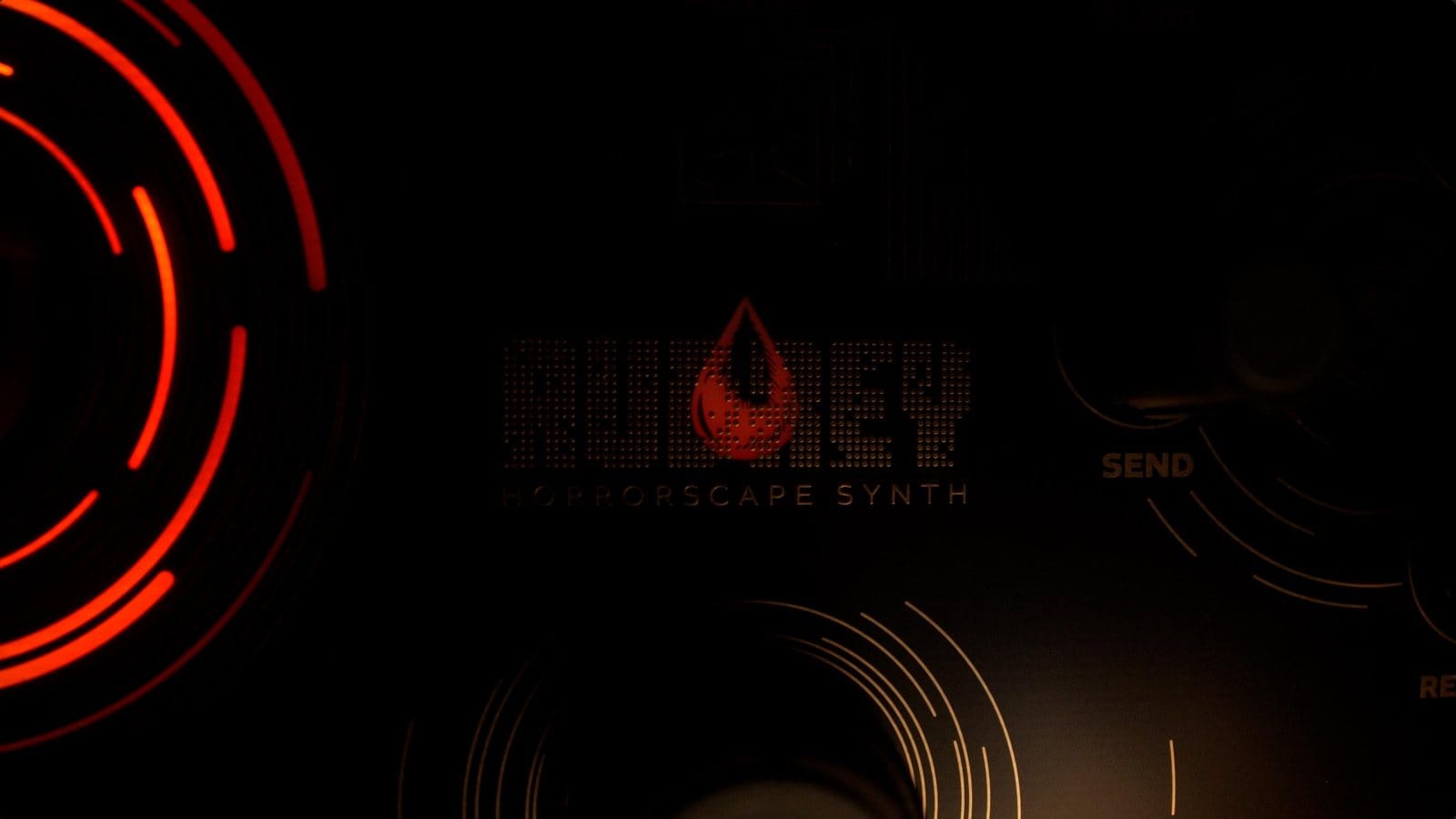
There is no screen. Every knob does one thing, and the LED rings respond to the audio, so you play by ear and by light rather than by menu. You can try it before you buy, too. The product page has a playable version of the sound engine in your browser with presets called Whisper, Drift, Howl and Destroy.
Specs that matter
- Controls: 8 pressure-sensitive touch plates, 12 knobs, 1 fader and a Tap button for tempo.
- Connections: audio in, headphone and line out on 3.5mm, MIDI in and out on TRS type A, USB MIDI, and sync in and out.
- Power: USB-C at 5V and 1.5A, so a power bank will run it.
- Build: aluminum case, 205 by 121 by 42mm and 420g.
- In the box: a USB-C cable, a MIDI DIN adapter, a printed quick-start guide and an unnamed surprise.
Who makes it
Synthux Academy is a non-profit founded in Rotterdam in 2021. It runs a nine-month Instrument Design Residency where makers build and ship their own hardware, and it releases its designs under open licenses so anyone can study or modify them. The same team makes the Spotykach dual looper, sold alongside Audrey in the Synthux store. The firmware updates and full manual are still listed as coming soon.
You can order direct from Synthux, which is covering import duties for US and UK buyers for a limited time, and Perfect Circuit already lists it. If you want a smoother, prettier pad machine instead, look at the Waldorf Crema.
Our call: buy it if you make drones, ambient or soundtrack work and want something that sounds alive out of the box. The feed input alone makes it more than a novelty, and USB power means it lives happily on a small desk. Wait if you need a deep manual and polished firmware on day one, because both are still on the way.