

Some synthesizers are tools. The Schmidt was always closer to a monument. It is a German analog polysynth with eight voices, a front panel so dense it looks like a mixing desk, and a build so uncompromising that its makers expected to sell only a handful. Now, after 14 years, hardware production is ending. The company's shop lists a Limited Final Series Black Edition next to the classic wood-sided version, and a new plugin, Schmidt Vi, made with the software company UJAM, puts the sound inside any computer.
The synth that was meant to be a run of 25
The Schmidt was first shown at the Musikmesse trade fair in Frankfurt in 2012, and again at the NAMM Show in Los Angeles in 2013. The company's own account says the plan was an initial production of 25 units. Demand kept it alive far longer than that.
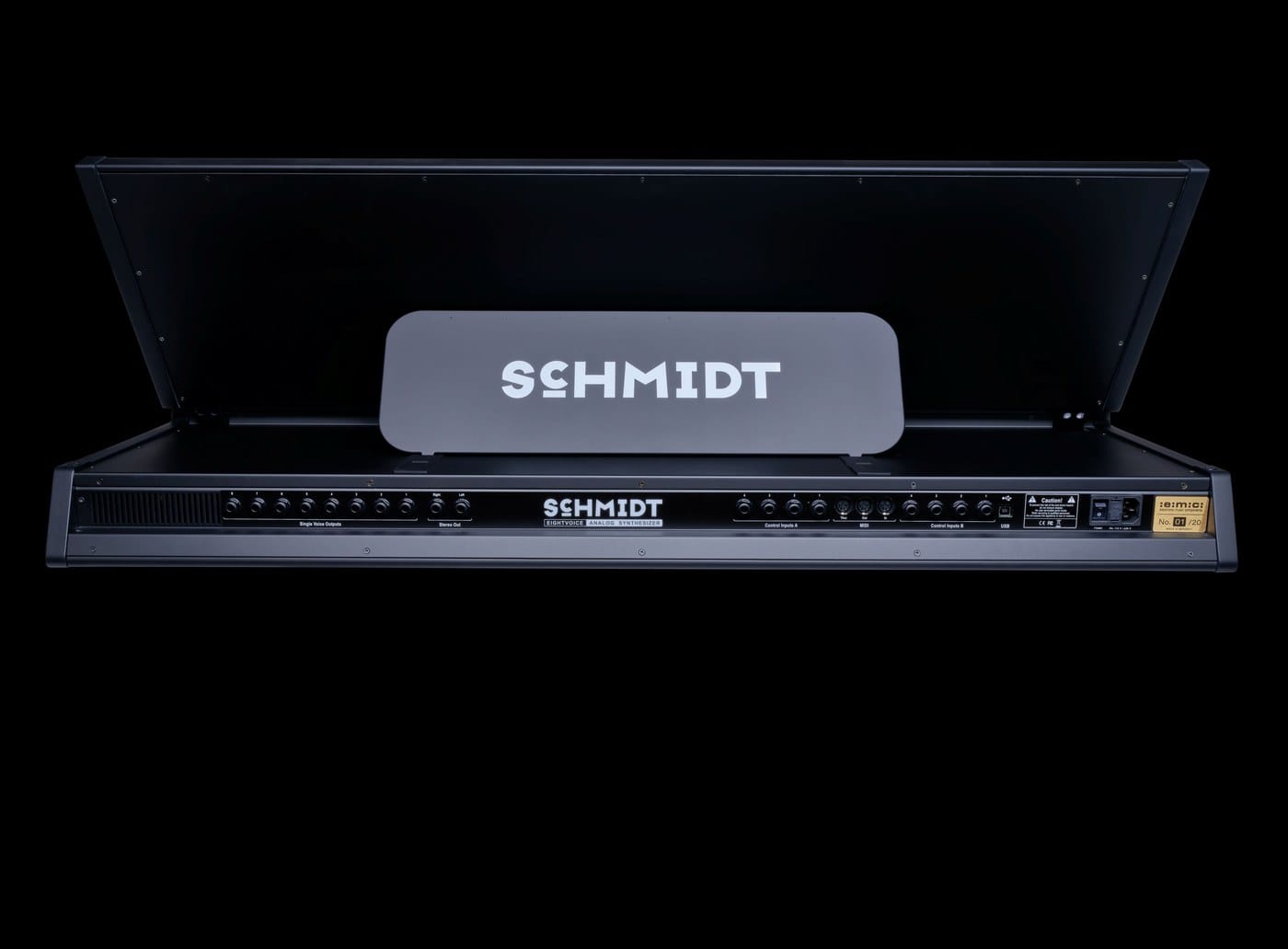
It was built the hard way on purpose. Everything was made in Germany, with through-hole construction and no specialized components, so that any technician could repair one decades from now. The same choices that make it repairable are what ended it: the company says rising costs and changes in how electronics are manufactured made that way of building no longer viable.
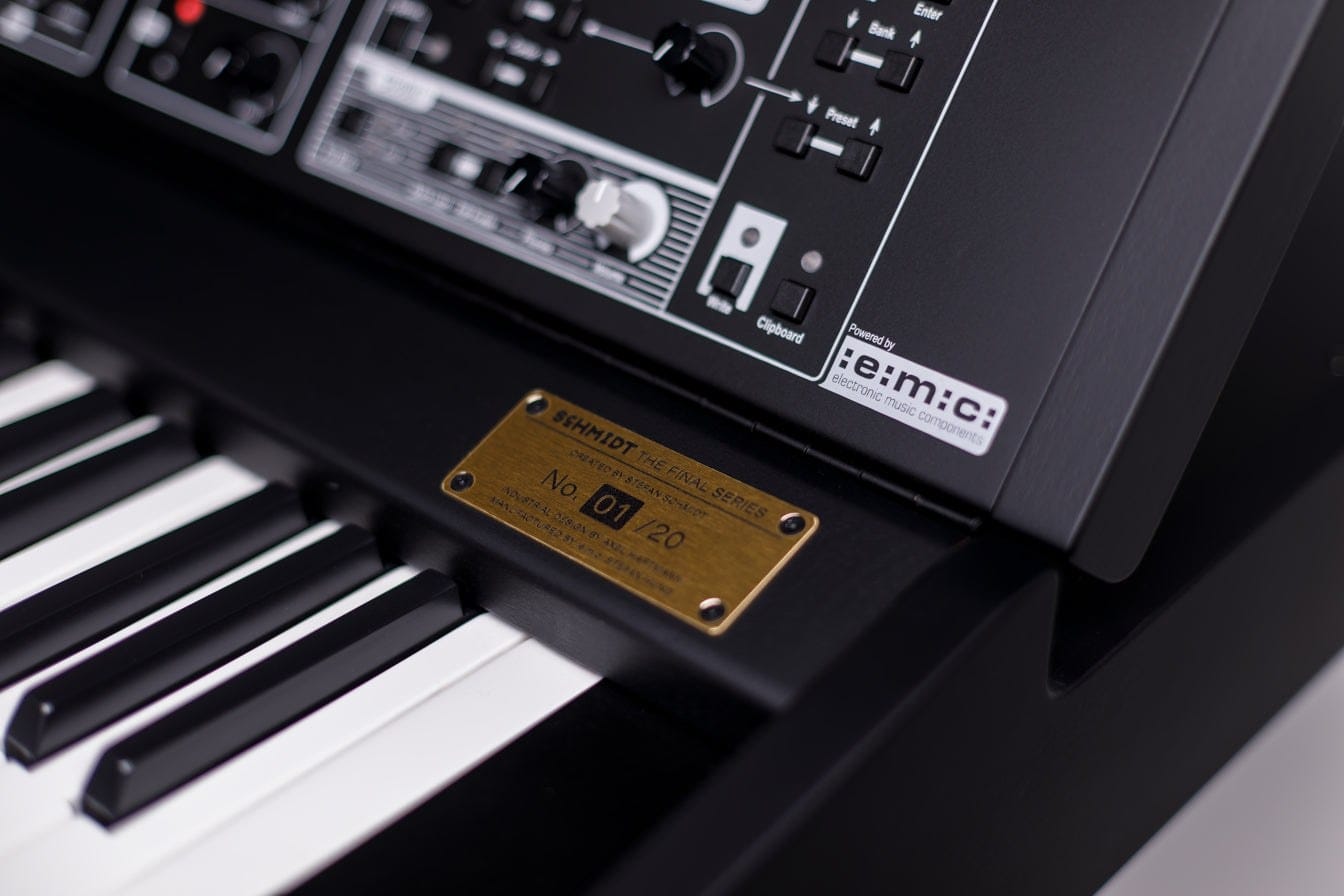
The Schmidt Synthesizer Final Series
The Final Series swaps the classic model's wooden sides and blue pitch and mod wheels for an all-black body with red wheels and a gold plaque under the panel. Underneath, it is the same instrument. The signal path is genuinely analog and built from discrete parts, while control is digital, so every sound can be saved. Schmidt describes oscillator features that had never appeared in a series-produced synth, let alone a polyphonic one, with multi-pulse-width and multi-ring modulation as the headline examples. The Schmidt Vi manual adds that about 95 percent of the sound functions sit on the panel itself, with no menu diving.
It also has a sense of humor. The manual opens by explaining how to say the name ("SH-mitt") and introduces its creator as "Mr. Stefan Smith, err, Schmidt."

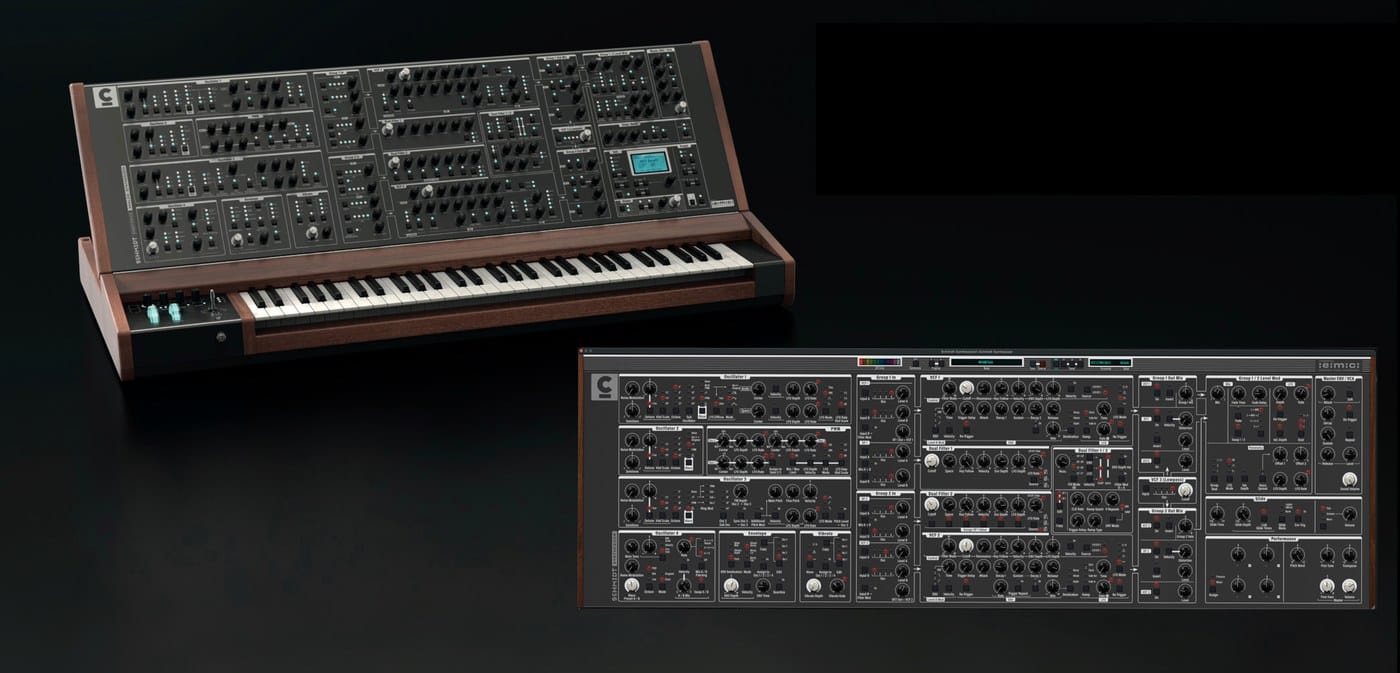
Schmidt Vi: the plugin version
For nearly everyone, this is the news that matters. Schmidt says it had long wondered whether to make a digital copy, and a friendship with people at UJAM, a virtual instrument company whose founders include Hans Zimmer and Pharrell Williams, made it happen. The analog circuit was studied in detail and rebuilt with a new modeling process. An early prototype was shown at Superbooth in Berlin in May 2026.
The plugin even does two things the hardware never could. Each knob on screen shows its real value, and a randomizer invents new patches, which Schmidt says often lands on surprisingly good sounds. The interface works on one wide screen or splits the panel for a single smaller display. It needs an iLok account to run.
If plugins of rare old synths are your thing, Cherry Audio did something similar for the Pentaphonic, and our guide to monophonic and polyphonic synths explains why eight real voices are such a big deal.
Our call: buy Schmidt Vi, admire the Final Series. The hardware is a collector's instrument, and if you have the money and the floor space, the black edition is the last chance to own a new one. For working musicians, the plugin is the real gift: one of the rarest polysynths ever made now fits on a laptop, with a randomizer that makes it easier to explore than the original. Watch the official introduction on the Schmidt Vi page first, and see the Schmidt shop for both editions of the hardware.