
Ambient music is mostly made of the space around the notes. A single chord on a guitar or a synth is a few seconds of sound; run it through the right reverb and it becomes a room, a weather system or a slow tide. That is why ambient players obsess over reverb pedals more than any other box on the floor. We ranked the five we would actually buy for ambient work, from the flagship most studios already own to the cheap pedal that taught a generation what reverb does, and we say plainly who each one is for.
The quick answer
- Best overall: Strymon BigSky. Twelve reverb machines, stereo, presets and a Cloud setting that is ambient music in a single knob turn.
- Most otherworldly: Eventide Space. Blackhole and Shimmer from the company that built the studio Harmonizer.
- Best ambient specialist under the flagships: Walrus Audio Slö. Three modes, all of them built for long, slow, washed out sound.
- Best small stereo pedal: BOSS RV-6. Shimmer, stereo and an expression input in a compact box.
- Cheapest way in: Electro-Harmonix Holy Grail Neo. One knob, three classic reverbs, no menu.
Where the ambient reverb sound came from
Most of the sounds people now call ambient reverb were invented in studios long before they were squeezed into pedals. Plate reverb came from huge steel sheets hung in a frame with a driver at one end and pickups at the other, and the Electro-Harmonix Holy Grail Neo still names its Plate mode after the studio plates of the 1960s and 1970s. Spring reverb lived inside guitar amps. Hall reverb was the sound of an actual concert hall, until digital machines learned to imitate one.
Here is the part most players never hear. Shimmer, the glowing octave-up halo that defines a lot of modern ambient guitar, began as a studio trick usually credited to Brian Eno and Daniel Lanois: send a reverb through a pitch shifter set an octave up, then feed the result back into the reverb so every repeat climbs higher. The classic tool for the job was a Harmonizer from Eventide, the New Jersey company whose 1975 H910 Harmonizer put real-time pitch shifting into studios. So when you press the Shimmer setting on an Eventide pedal today, you are using a direct descendant of the gear that made the sound possible in the first place.
The best reverb pedal for ambient, ranked
1. Strymon BigSky: the one to buy if you buy once
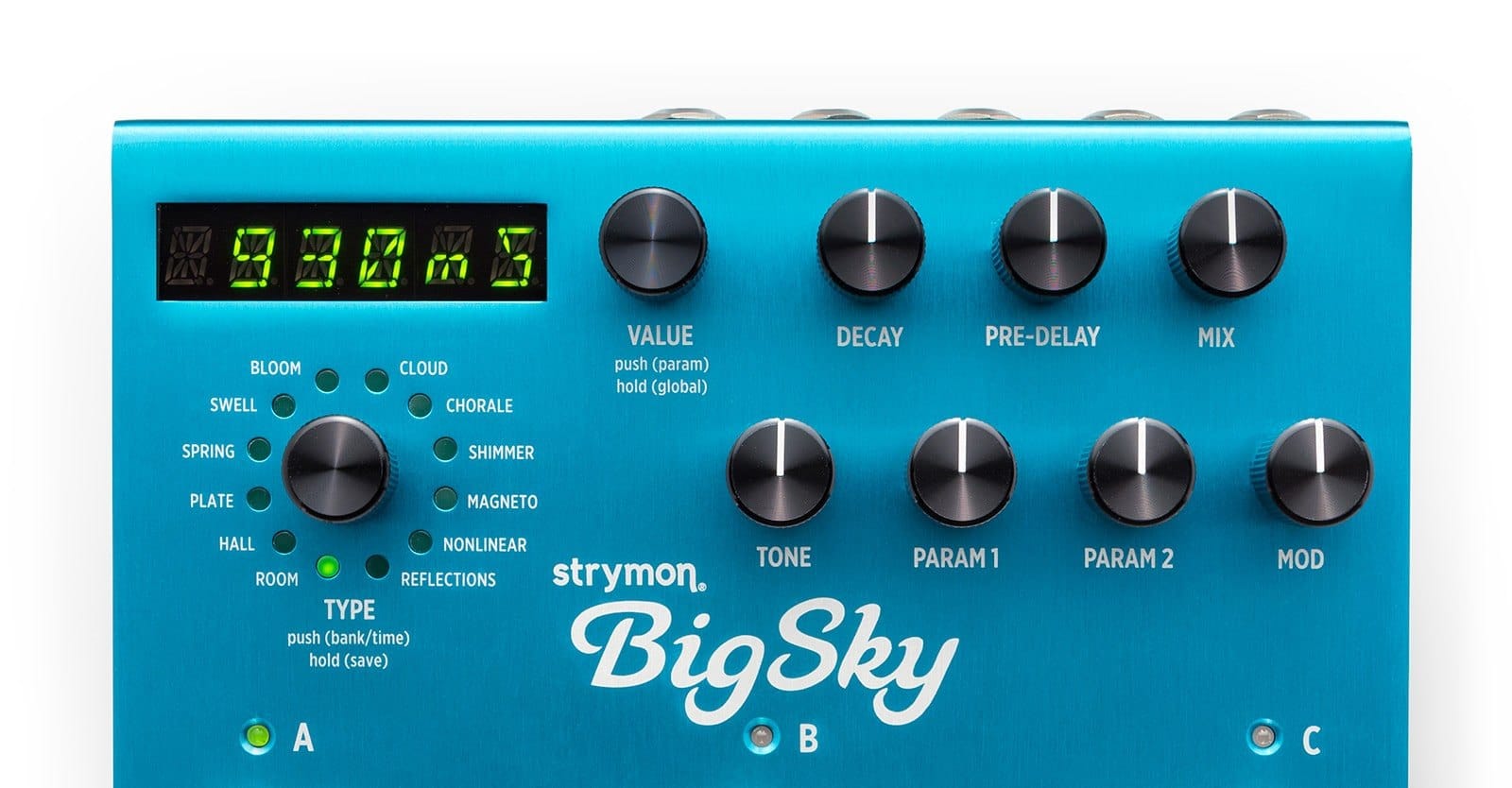
Strymon was started in California by engineers who had already been building digital effects together for years, and the BigSky is the pedal where their obsession with reverb history shows most. The company says it studied and analyzed reverb technology from the previous fifty years before writing its algorithms. The result is twelve reverb machines: the expected Hall, Plate, Spring and Room, plus the ones ambient players actually buy it for. Cloud, which Strymon describes as drawing from techniques developed in the late 1970s, turns any note into fog. Bloom adds a feedback stage so the reverb swells slowly behind the dry sound. Chorale adds a wordless choir. Shimmer has two tunable pitch voices. Magneto smears a multi-head echo into reverb.
Just as important for ambient work: 300 presets, an Infinite Sustain and Freeze function you can hold under a chord while you play over it, true stereo, and an analog dry path so your original signal is never converted to digital. It is big for a pedalboard and it has a menu, which is the price of all that depth.
Who it is for: anyone serious about ambient, on guitar or synth, who wants one reverb that will never run out of ideas. Our deeper look at the Strymon BigSky reverb pedal covers each machine in more detail.
2. Eventide Space: for sounds that do not exist in nature
If the BigSky is a beautifully stocked library, the Space is a laboratory. Eventide built it around twelve reverb and combination effects taken from its H8000FW and Eclipse rack processors, units that sat in professional studios for years. The headline is Blackhole, a vast reverb with a Gravity control that can even be flipped to anti-gravity, so a chord seems to fall into the tail and get swallowed whole. MangledVerb adds distortion to the tail. ModEchoVerb blends modulation, echo and reverb. And Shimmer, as covered above, comes from the company that made the original trick possible.
The factory presets are a small history lesson in themselves. Eventide lists presets from the producers Flood and Alan Moulder, from Jónsi and Alex Somers of Sigur Rós, and from sound designer Richard Devine. Its list of artists using Space includes Chris Carter of Throbbing Gristle and Chris and Cosey, and the composer Laurie Spiegel, which tells you how well it sits on both the industrial and the ambient side of experimental music. It has 100 presets, stereo inputs and outputs, MIDI (Musical Instrument Digital Interface) in and out, and it accepts guitar or line level, so it is happy in front of a synth.
Who it is for: sound designers, synth players and guitarists who want reverb as an instrument rather than a room. If you find the BigSky too polite, buy this.
3. Walrus Audio Slö: built only for ambient
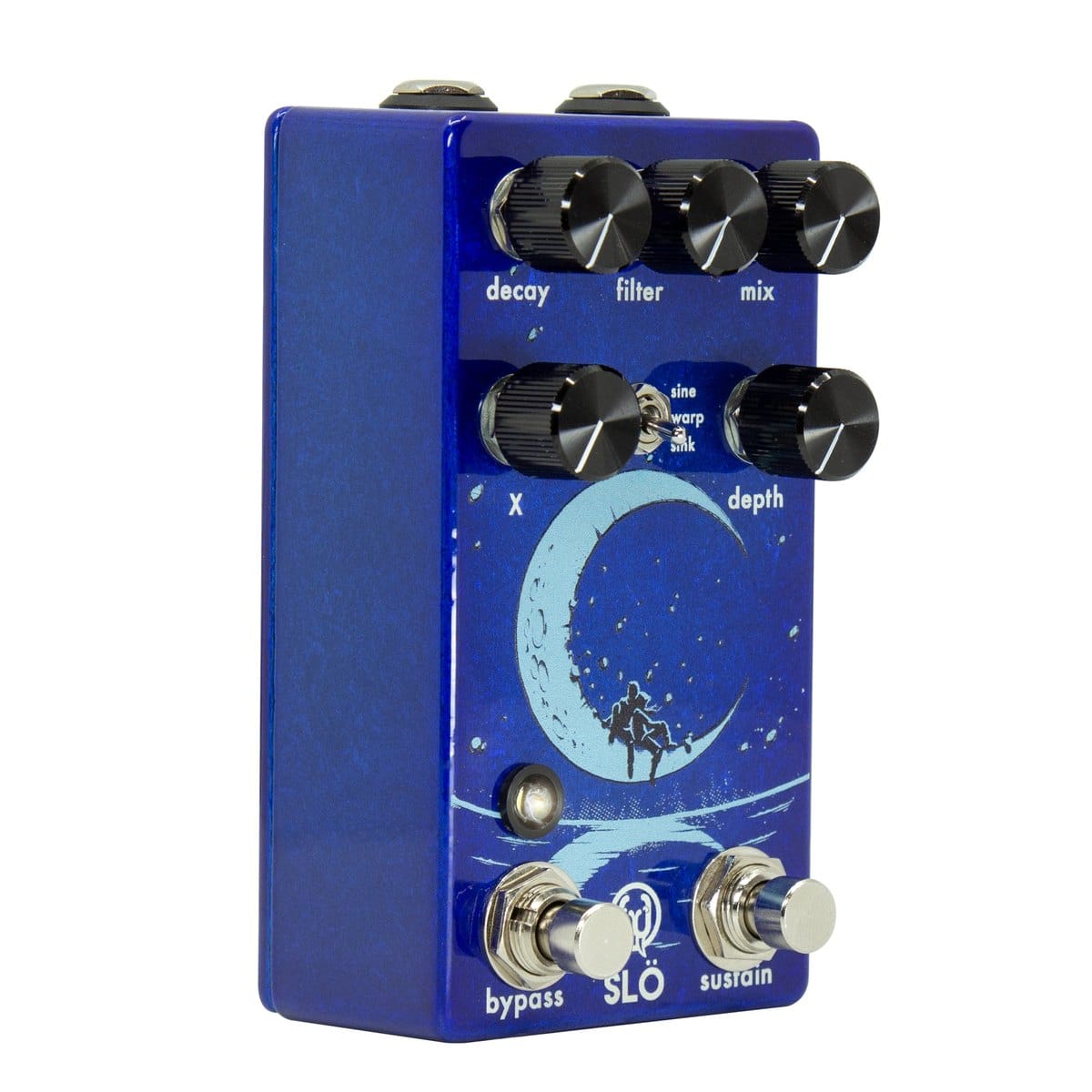
The Oklahoma City company Walrus Audio did something the big multi-reverbs do not: it built a pedal with only three modes and made every one of them for slow music. Dark adds a lower octave to the reverb trail for deep, heavy washes. Rise is an auto-swell that fades the reverb in after each note, so a picked guitar starts to sound like a bowed string. Dream is a lush reverb with a latching pad: press the Sustain switch and the pedal holds what you just played while you play over it, and the X knob adds vibrato to the held pad. A hidden menu changes the modulation shape between Sine, Warp, which bends up like a warped record, and Sink, which drags pitch down.
It is mono, with no presets and no MIDI, so it is not the right choice for a stereo synth rig. On a guitar board, though, it gets to the sound most ambient players are chasing faster than anything twice its price.
Who it is for: guitarists who want ambient textures without menus. Read our full review of the Walrus Audio Slö for the settings we like.
4. BOSS RV-6: the small stereo pedal that does more than it looks
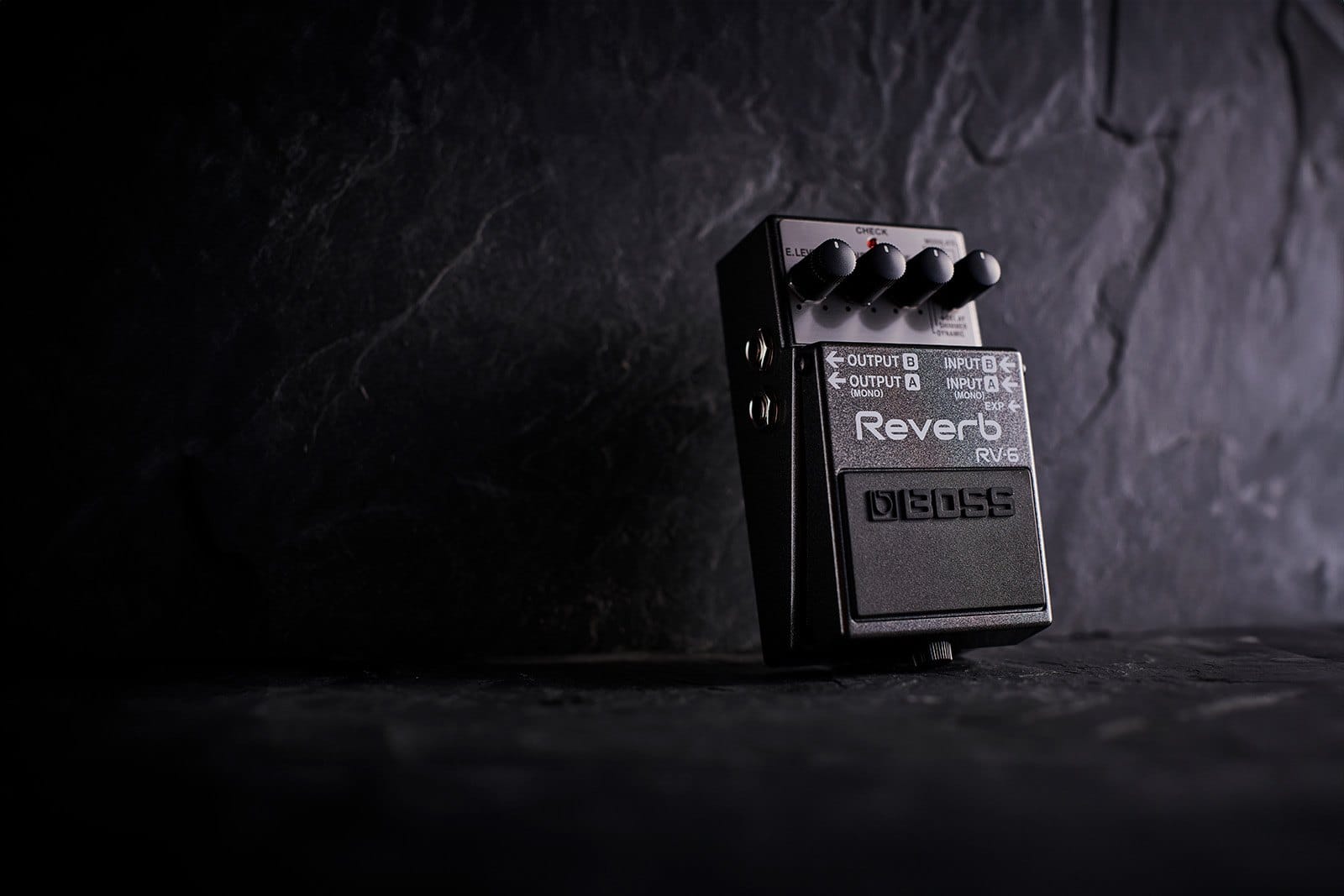
BOSS compact pedals are the ones you find on every board, and the RV-6 is easy to underrate because it looks like all the others. It has eight modes: Room, Hall, Plate, Spring, Modulate, Delay plus Reverb, Shimmer and Dynamic, which sets the depth of the effect according to how you play, so the reverb stays deep without blurring busy passages. It runs mono, mono to stereo or full stereo, and it has an expression pedal input for the reverb level. One clever detail for synth and studio users: plug into the B input only and the RV-6 outputs a 100 percent wet signal, which makes it easy to use on an aux send from a mixer.
Who it is for: players who need stereo and a usable shimmer on a small board or a small budget, and synth players who want a reverb they can patch in without thinking. Our BOSS RV-6 review goes deeper on each mode.
5. Electro-Harmonix Holy Grail Neo: the honest starter
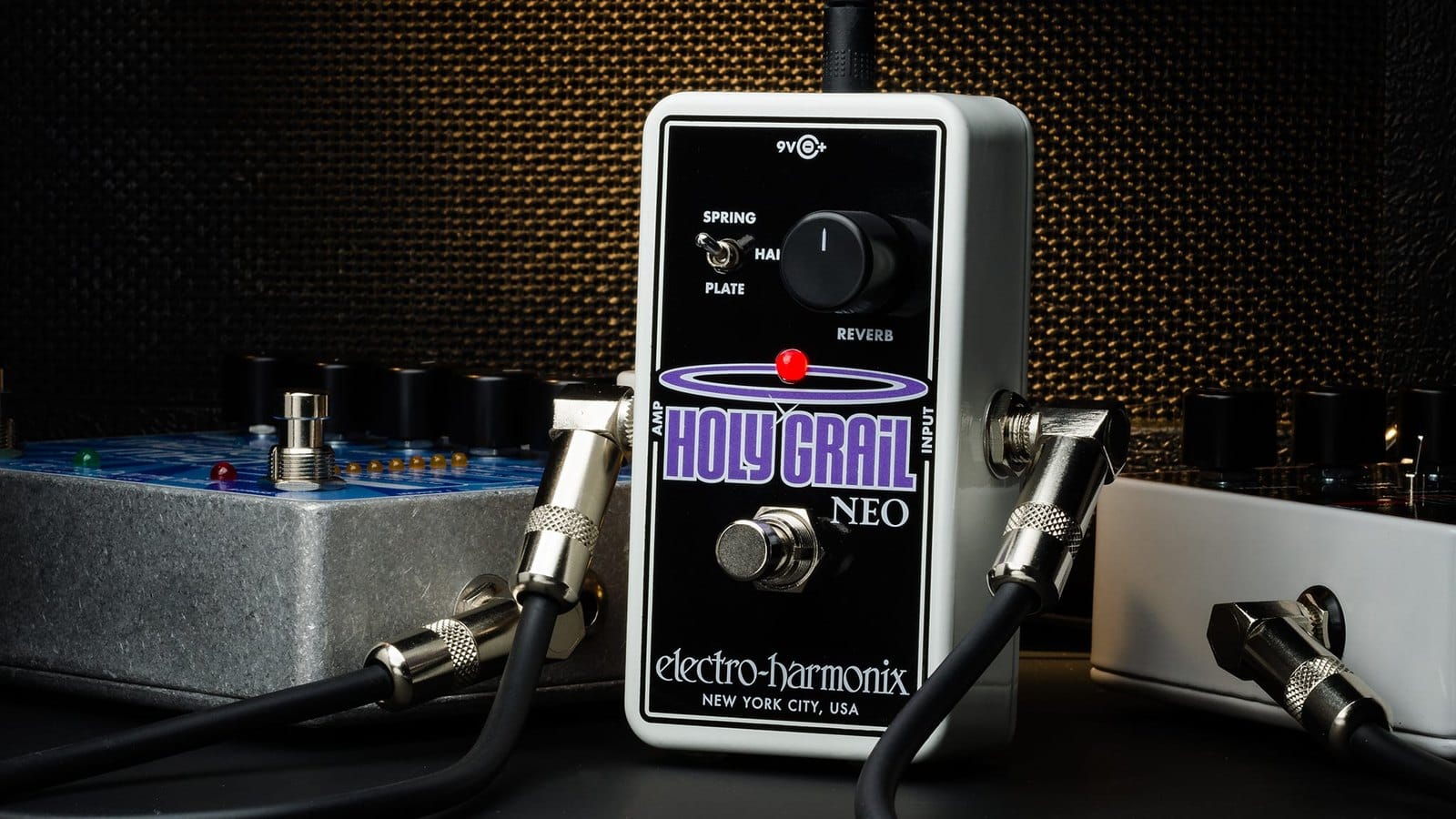
The Holy Grail line is the reverb pedal many people bought first, and the Neo version, released in 2015, keeps the idea simple: a single knob for the wet and dry mix and a three-way switch for Spring, Hall and Plate. There is no decay control and no shimmer. That sounds limiting for ambient, and it is, but the Hall setting with the knob turned high is still a lovely wash, and the pedal is a fine teacher. Run it after a delay and you will hear most of the ambient guitar sound with almost no money spent.
Who it is for: beginners and anyone adding a second, simpler reverb to a board. See our Holy Grail Neo review for more.
Best reverb pedal for ambient: the five compared
| Pedal | Reverb types | Ambient highlights | Stereo | Presets | Price tier |
|---|---|---|---|---|---|
| Strymon BigSky | 12 machines | Cloud, Bloom, Shimmer, Chorale, Infinite Sustain and Freeze | Yes | 300 | Flagship |
| Eventide Space | 12 effects | Blackhole, Shimmer, MangledVerb, ModEchoVerb | Yes | 100 | Flagship |
| Walrus Audio Slö | 3 modes | Dark octave, Rise swell, Dream latching pad | No | None | Mid |
| BOSS RV-6 | 8 modes | Shimmer, Dynamic, Delay plus Reverb, 100 percent wet option | Yes | None | Budget |
| Electro-Harmonix Holy Grail Neo | 3 modes | Hall wash with one knob | No | None | Budget |
Which one for which player
- Synth players and stereo rigs: Eventide Space first, BigSky a close second, RV-6 if money is tight. All three run in stereo and take line level signals.
- Ambient guitarists on one pedal: Strymon BigSky. It does every texture well and saves them.
- Ambient guitarists on a budget: Walrus Audio Slö. Fewer options, more mood per dollar.
- Small boards: BOSS RV-6.
- First reverb ever: Holy Grail Neo, then upgrade once you know which sound you are chasing.
A reverb is only half of the classic ambient chain. Put a delay in front of it and the repeats get smeared into the reverb, which is where most of the magic happens. Our guide to analog vs digital delay explains which kind to pair, and the Roland RE-201 Space Echo shows where tape echo and spring reverb first met in one box. For records to play these pedals against, start with our ambient music starter guide.
Our call
Our call: buy the Strymon BigSky if you are serious about ambient and can afford one flagship. It covers more ground than any other reverb here and the Cloud and Bloom settings alone justify it. Buy the Eventide Space instead if you play synths or want reverb that sounds like nothing in nature. If you play guitar and want the ambient sound tomorrow without learning a menu, the Walrus Audio Slö is the best value on this list. Skip buying several cheap reverbs to stack; one good pedal will teach you more.
Strymon BigSky: twelve reverb machines, stereo and 300 presets, our top pick. Check price or see it at Strymon
Eventide Space: Blackhole, Shimmer and studio rack algorithms for synths and sound design. Check price or see it at Eventide
Walrus Audio Slö: three ambient modes and a latching pad, the best value here. Check price or see it at Walrus Audio
BOSS RV-6: compact stereo reverb with Shimmer and a 100 percent wet input. Check price or see it at BOSS
Electro-Harmonix Holy Grail Neo: one knob, three classic reverbs, the cheapest way in. Check price or see it at Electro-Harmonix
More like this: browse every related post in our Ambient Music Hub.
As an Amazon Associate we earn from qualifying purchases.