
Most albums arrive all at once. Peter Gabriel's new one has been arriving all year, one song at every full moon since January 3, and a second version of that song at every new moon two weeks later. On November 27 the whole thing lands as o\i, his 13-track follow-up to 2023's i/o, on Real World Records.
The latest piece dropped on November 9, the new moon: the Bright-Side mix of Who Are We Talking To?, Eleven of the 13 songs are now out. Yes, It Will Go and Sacrament are the two that have not had a moon of their own yet.
Peter Gabriel o\i release date and the two-mix idea
o\i is out November 27. Gabriel calls it the longest album he has ever put out, and it completes what he frames as a single 25-track project with i/o, which went to number one in the UK. Three years between the two is, by his own camp's count, his shortest gap between studio albums since the early 1980s.
The unusual part is that every song exists twice. The Bright-Side mixes are by Mark "Spike" Stent. The Dark-Side mixes are by Tchad Blake, with one exception: Mike Elizondo, who co-produced A Hard Lesson, mixed the Dark-Side version of Who Are We Talking To? There is also a third, digital-only Dolby Atmos version called the In-Side mix, shaped by Hans-Martin Buff, who won a Grammy for his immersive mix of i/o.
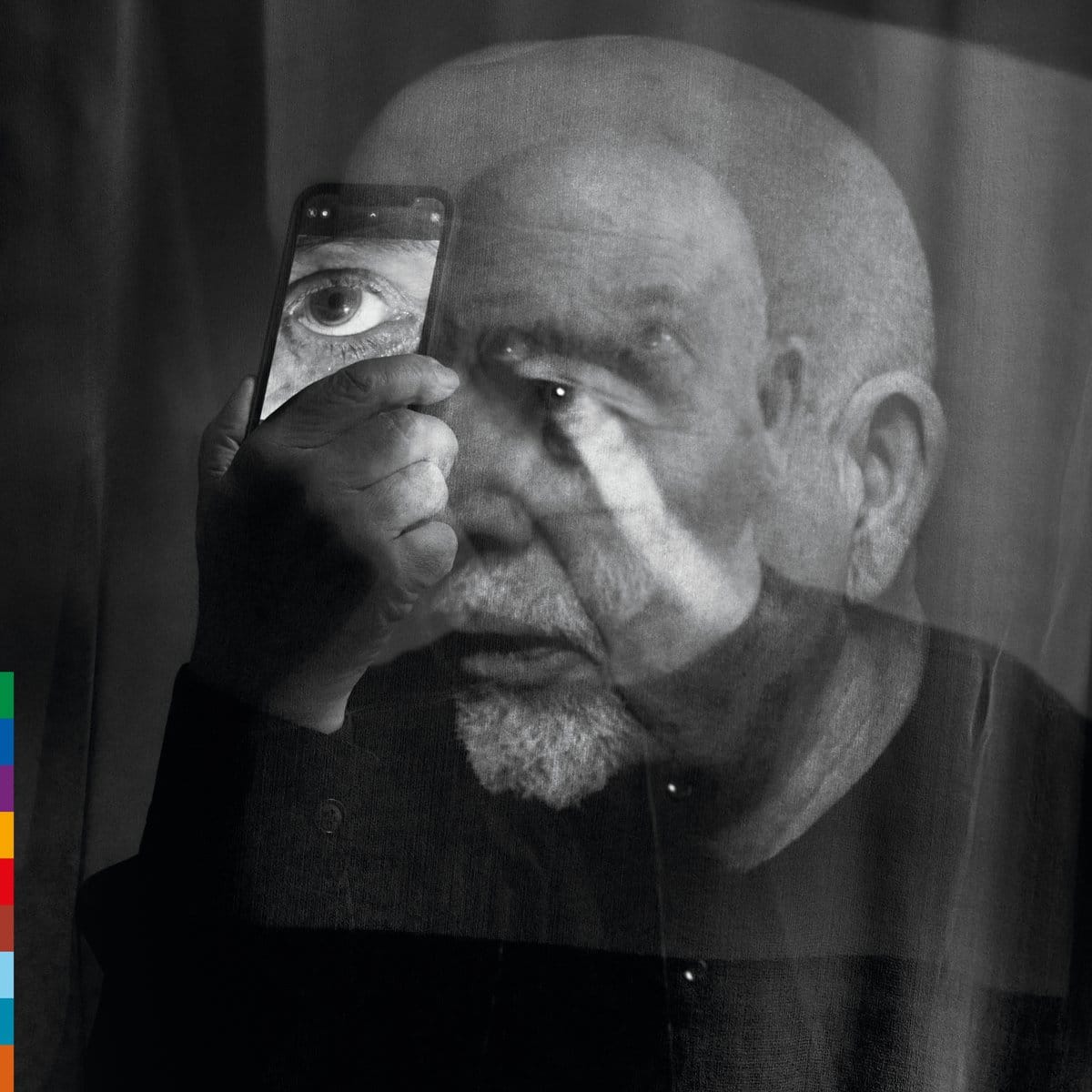
Peter Gabriel o\i tracklist
- Been Undone
- Put the Bucket Down
- What Lies Ahead
- Till Your Mind Is Shining
- Won't Stand Down
- Who Are We Talking To?
- Yes, It Will Go
- One by One
- A Hard Lesson
- Face the Wall
- I Belong to the Sky
- Looking for the Happy
- Sacrament
The song that waited 40 years, and the spiders
Like most Gabriel records, this one mixes new writing with things that have sat in a drawer for decades. A Hard Lesson is the oldest. Gabriel says it started in the late 1980s or early 1990s in Senegal, built on the threes against fours he heard in the music there, and spent 30 or 40 years in the "almost" pile before it finally made a record.
The players are the familiar core: David Rhodes on guitar, Tony Levin on bass, Manu Katché on drums. Around them are Brian Eno, Leo Nocentelli of the Meters, trumpeter Paolo Fresu, the Soweto Gospel Choir, Swedish male choir Orphei Drängar and the New Blood Orchestra under John Metcalfe. His daughter Melanie sings backing vocals again. If you came to Eno through the ambient records, our guide to Music for Airports on vinyl is a good detour.
Each song also has its own artwork by a different artist, from Judy Chicago and Shirin Neshat to Tatsuo Miyajima and Tomás Saraceno, whose piece was, in the album notes' words, co-authored with spiders. Who Are We Talking To? uses Bloques by the Spanish painter Juan Genovés: crowds of tiny figures pressed up against huge geometric blocks, which Gabriel reads as the barriers that keep people apart.
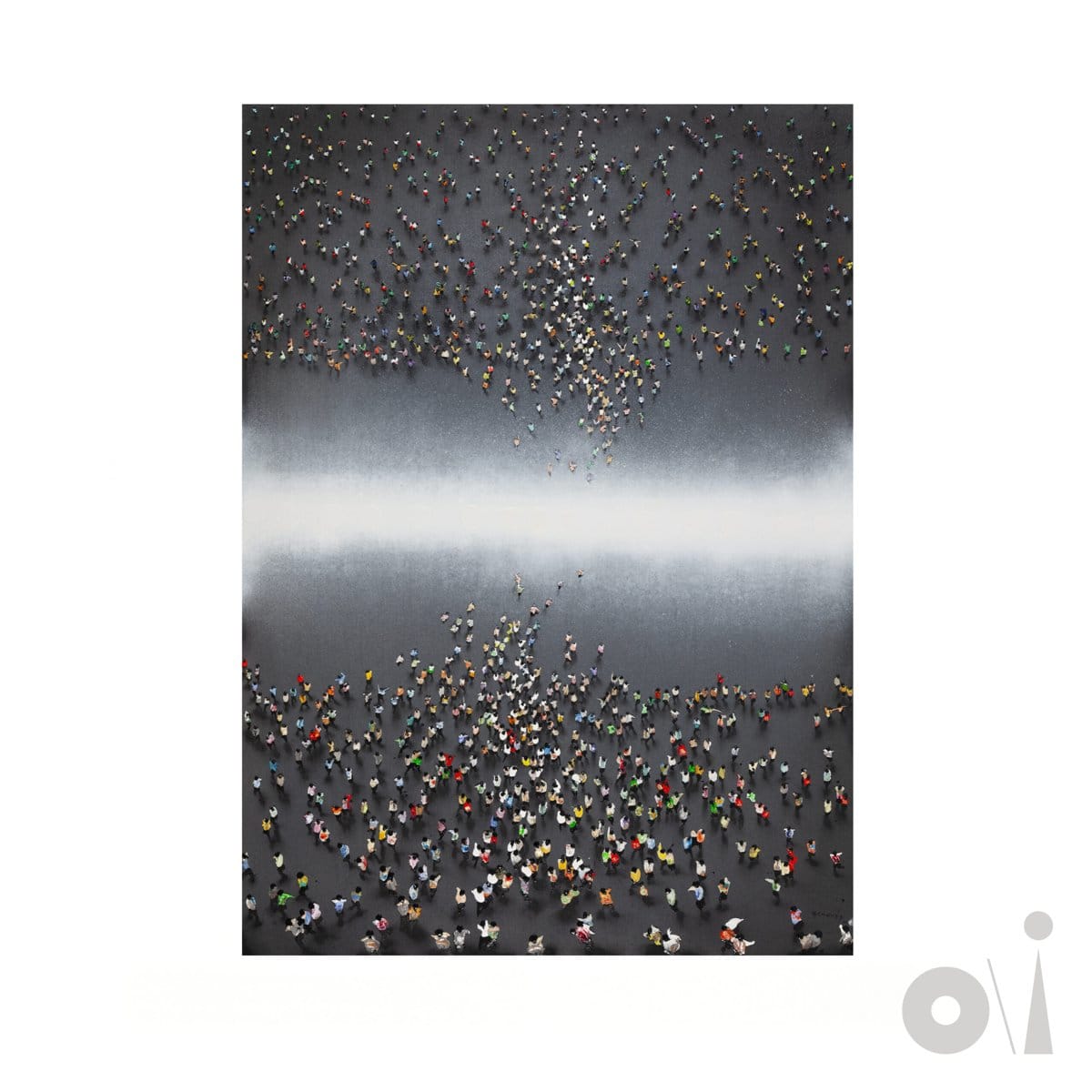
Gabriel describes that song as a plea for activism "served on a danceable platter", pointing to Marvin Gaye, Fela Kuti and Curtis Mayfield. Here he is talking it through:
Which o\i edition to get
- o\i 4CD. The only physical edition with both mixes of all 13 songs, two discs each, in a CD-sized hardback book with a 32-page booklet. Shop it at the Real World Store.
- o\i Bright-Side Mix 2LP. Black vinyl at 33rpm, gatefold, obi strip, 32-page booklet and a hi-res download card. Shop it at the Real World Store.
- o\i Dark-Side Mix 2LP. Same package, Tchad Blake's mixes. Shop it at the Real World Store.
Coloured vinyl versions exist as retail exclusives at select shops. If the LP is the plan, our beginner turntable guide covers the deck side.
Our call: get the 4CD if you only buy one, and audition before you pick a vinyl. We have not heard the finished album, so this is about format, not songs. The whole point of o\i is that each track has two personalities, and only the 4CD gives you both on a shelf. If you want vinyl, stream both mixes of a song that is already out, such as Who Are We Talking To?, and buy the side that sounds like you. Picking a 2LP blind means choosing half the album's idea without hearing it.