
Most audio interfaces stop caring about your sound the moment it leaves the headphone jack. Audient's new range goes one step further. The third-generation iD interfaces, announced on November 12, run room correction for your studio monitors on a DSP chip inside the box. The correction happens in hardware, so it costs your computer nothing and it applies to everything you play, from a session in your DAW to an album on a streaming app.
That is the headline. The fine print is a rename that will confuse anyone shopping used, plus a measurement mic that only comes with two of the four models.
The new names, decoded
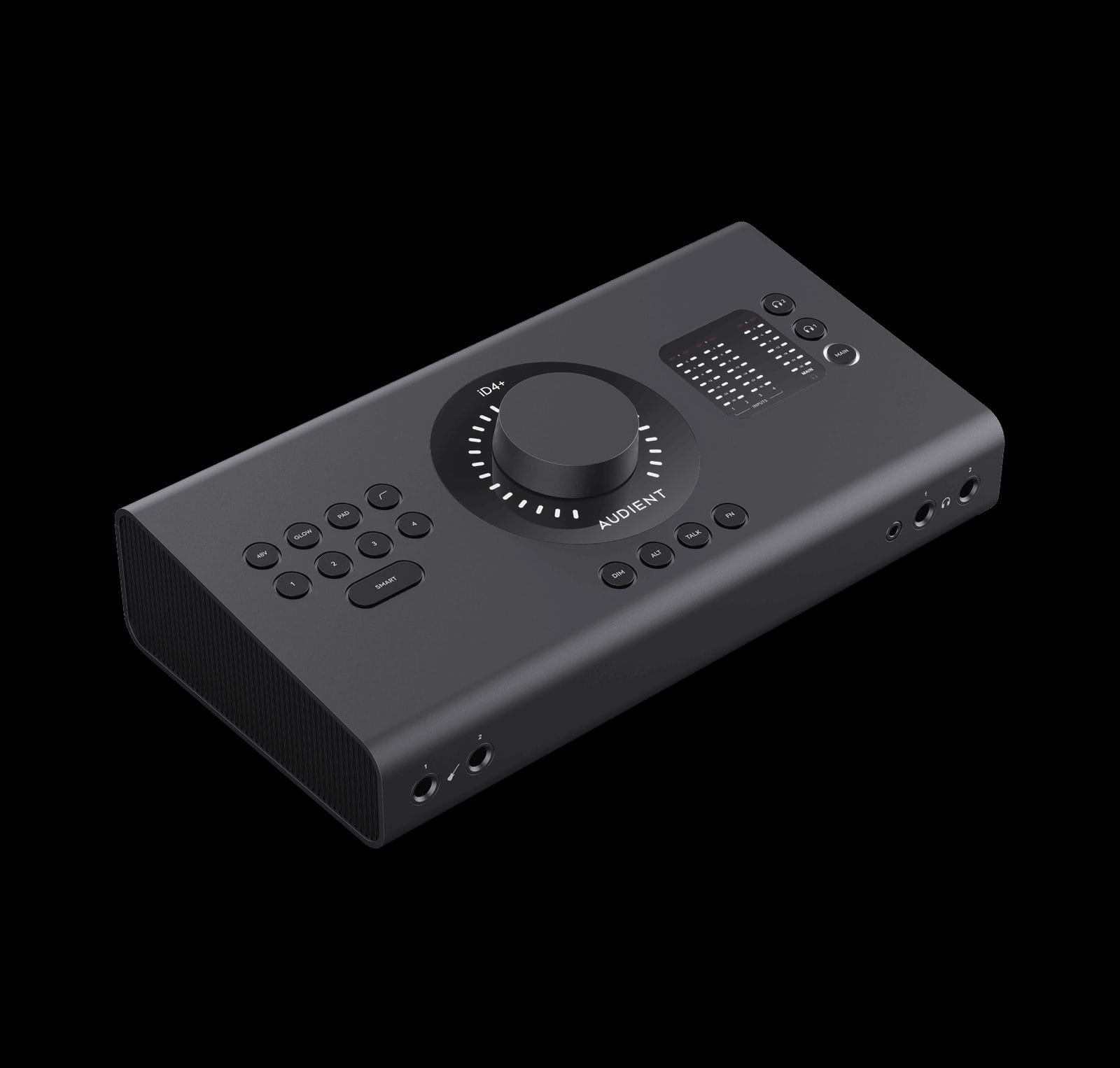
Audient now names each iD after its number of mic preamps, and a plus means extra studio routing. Here is how the old models map onto the new ones:
- iD1 replaces the iD4. 2 in, 2 out, one preamp plus an instrument input you can use at the same time. Due in early 2027.
- iD2 replaces the iD14. 10 in, 6 out, two preamps, eight more inputs over ADAT and two sets of speaker outputs.
- iD2+ replaces the iD24. 10 in, 14 out, two balanced hardware inserts for outboard gear, ADAT in and out. RM1 mic included.
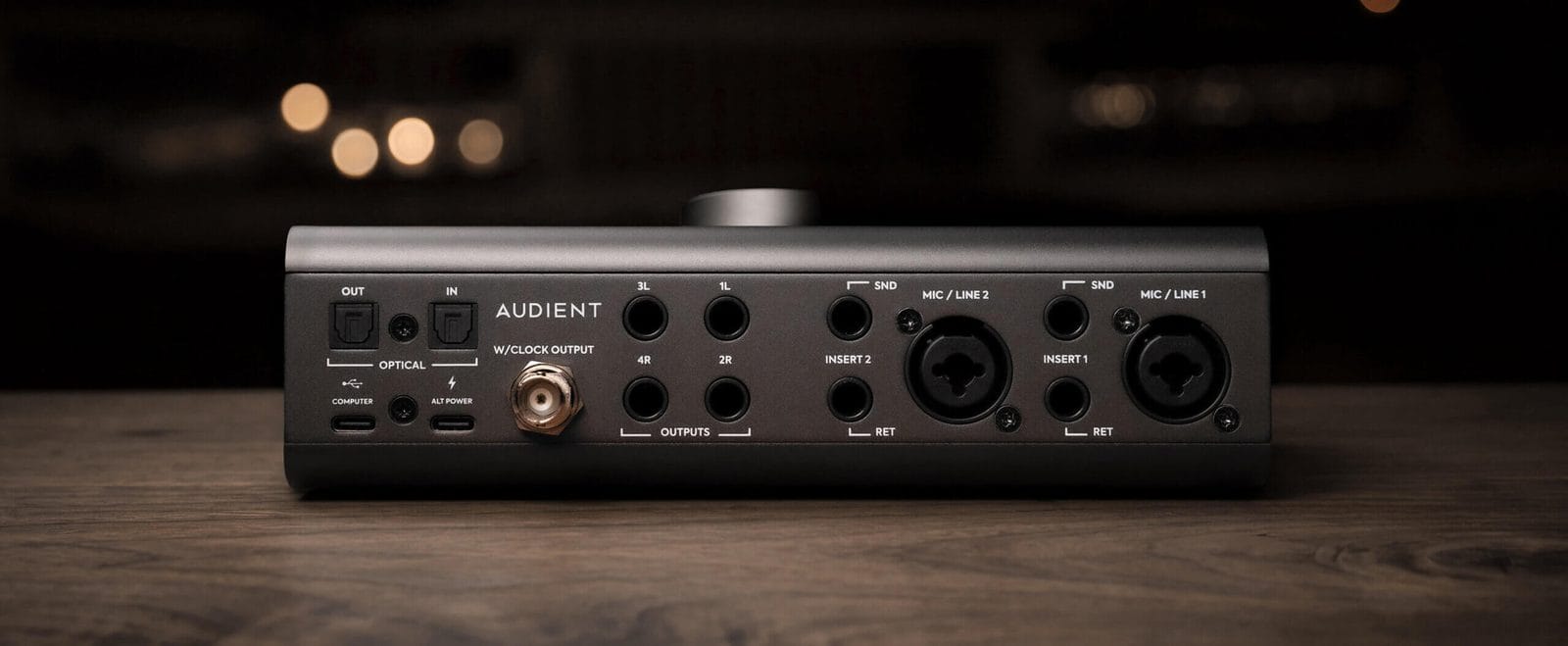
- iD4+ replaces the iD44. 20 in, 24 out, four preamps, two instrument inputs, two inserts, two headphone amps with up to four cue mixes. RM1 mic included.
So the new iD2 is the old iD14, not a two-preamp version of the iD4. Check the generation before you buy secondhand.
What RoomTune actually does
You put the RM1 reference mic where your head goes, the software measures how your room colors the speakers, and the interface's DSP applies a correction curve to the monitor outputs. At launch it handles a stereo pair of speakers. Headphone correction and extra target curves are promised as a free update later.
The catch is the mic. RoomTune needs the RM1, which ships with the iD2+ and iD4+ and is sold separately for the iD1 and iD2.
The rest of the rebuild
Every model shares the same core: Audient's console preamps with 75dB of gain, borrowed from its large ASP8024-HE desk, 32-bit conversion with 128dB of dynamic range, zero-latency EQ, compression and reverb on the DSP, and full power over a single USB-C cable. There is also an analogue tone section on the way in. Orbit changes the impedance the mic sees, HMX adds saturation through a MOSFET circuit, LIFT adds top-end sheen, and GLOW combines the last two.
Audient's product chief Andrew Allen calls it a completely new technology platform rather than a spec refresh, and on paper that holds up. Room correction used to mean a plugin on your master bus or a separate hardware box. Putting it in the interface, system-wide, makes a bedroom studio far easier to trust. If you are fixing the room the old-fashioned way too, start with our acoustic panel placement guide and match the speakers to the space with our Yamaha HS5 vs HS7 vs HS8 breakdown.
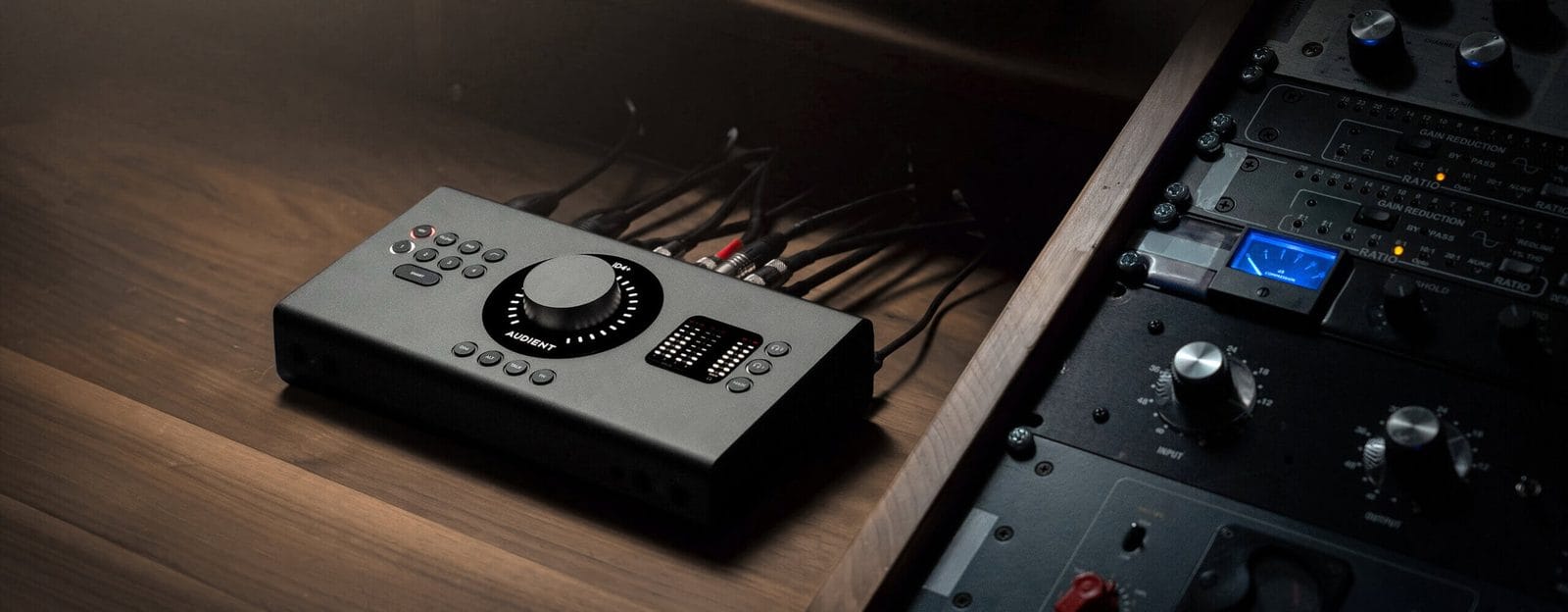
Our call: buy the iD2+. It is the cheapest way into the whole range with the RM1 mic in the box, so RoomTune works on day one, and the inserts mean it will grow with you. Pick the iD2 only if your room is already treated or you are happy to add the RM1 later. Solo singer-songwriters should not wait for the iD1 in 2027. The iD4 MKII is still on sale and does the same basic job right now, and our home recording interface guide has the alternatives.