
Elektron makes three boxes that look almost identical on a desk: Digitakt II, Syntakt and Digitone II. They share the same 215 by 176 millimetre footprint, the same row of 16 trig keys and the same 128 by 64 pixel OLED screen. They also share the thing people actually buy an Elektron for, the sequencer that lets you hold a step and turn any knob to lock that parameter to it. What they do not share is a sound source, and that single fact decides which one belongs on your table. One plays back samples, one makes drums from analog and digital circuits, and one is a polyphonic synthesizer. Here is how to pick.
The quick answer
- Buy Digitakt II if your music starts with recordings: loops, vocal chops, found sound, a crate of old drum breaks. It is the sampler of the three, with 16 tracks.
- Buy Syntakt if you want to build a whole beat from nothing, kick to hat to bassline, with real analog drum voices. It is the drum computer and the one for hardware techno and electro.
- Buy Digitone II if you want chords, pads and leads from a polyphonic FM-based synth, with the same sequencer on top. It is the melodic one.
Digitakt II: the sampler
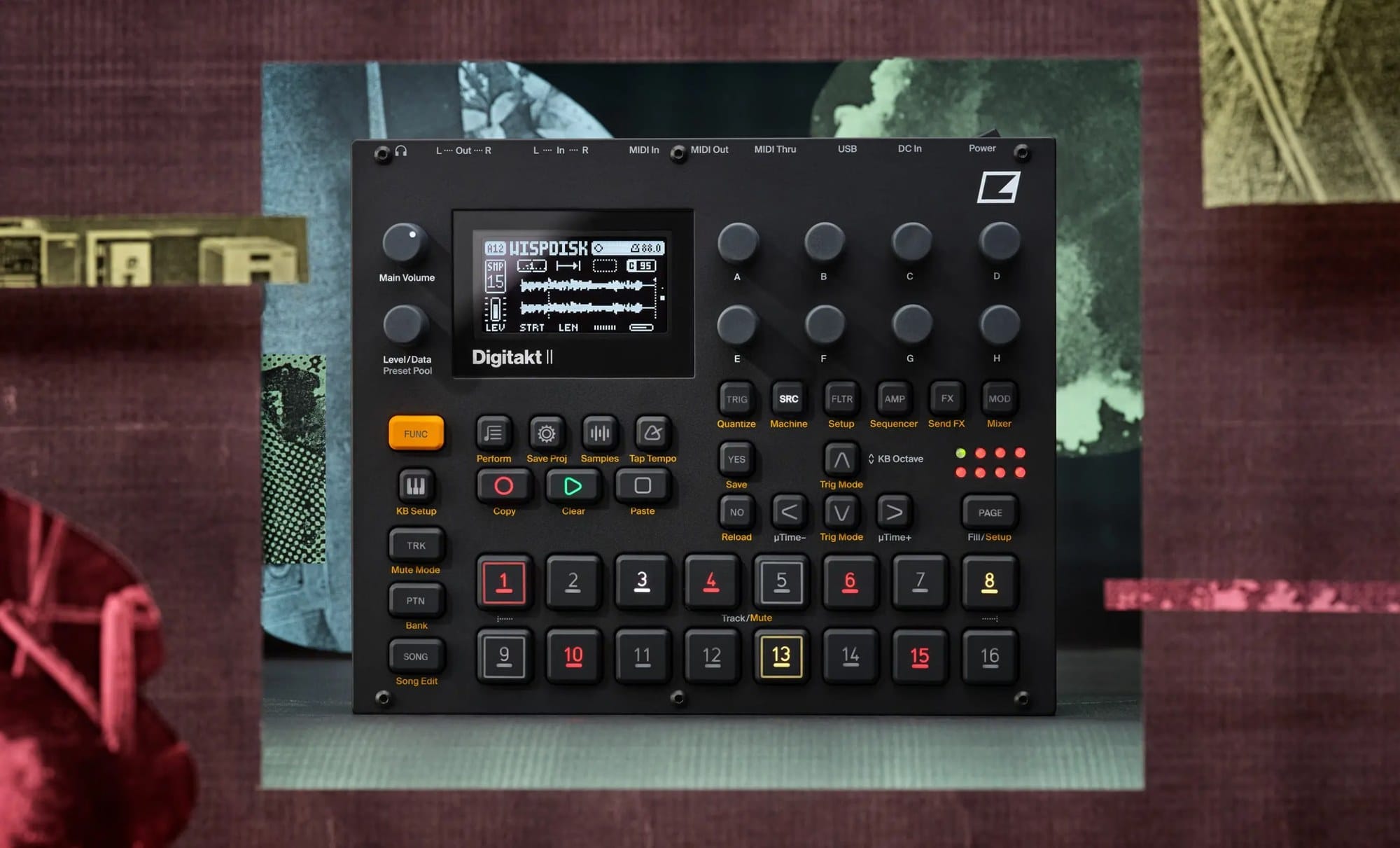
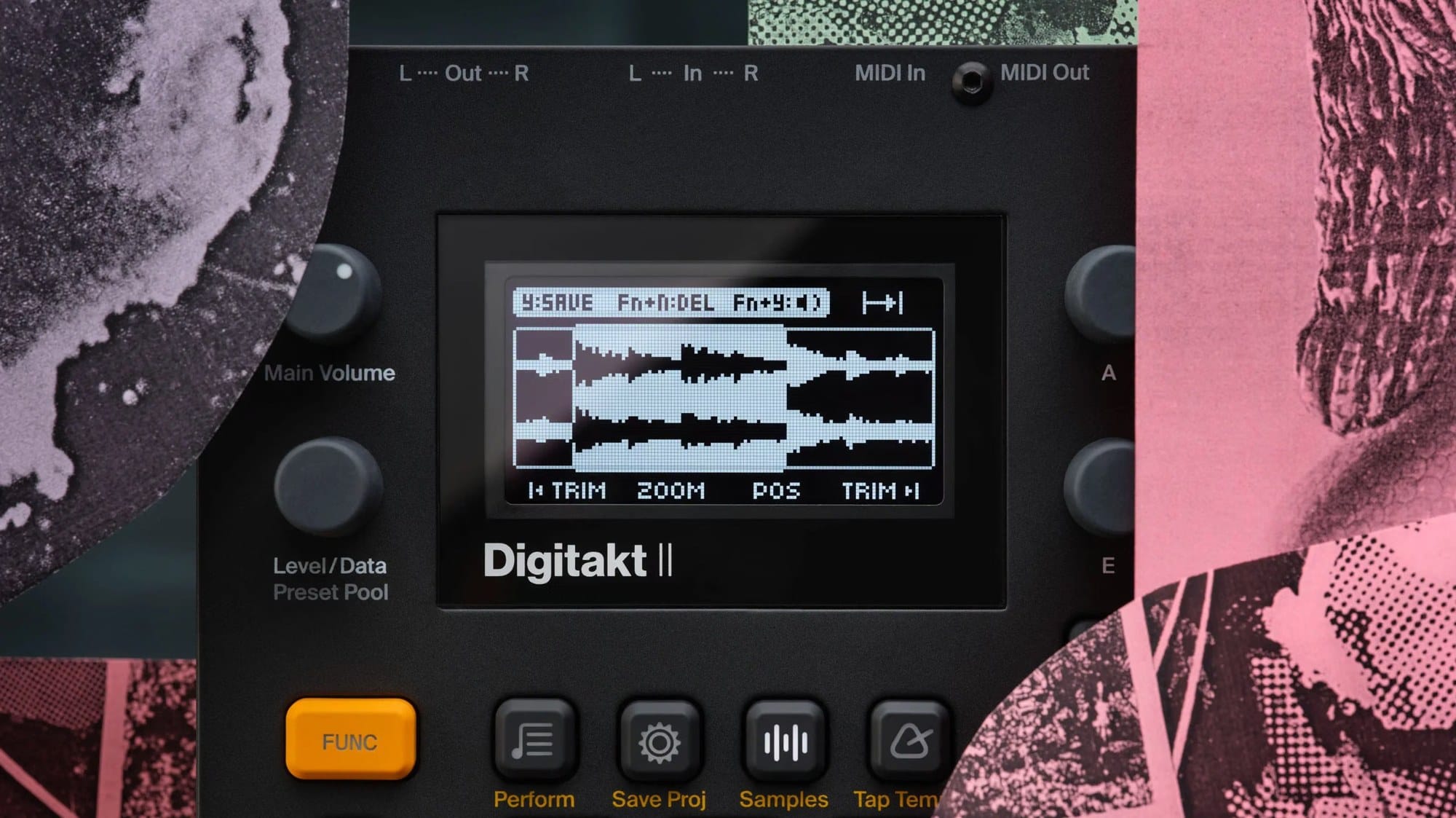
Digitakt II is Elektron's 16-track drum computer and stereo sampler, and the maker says it offers many times the power of the original Digitakt. Every track can play stereo or mono audio, or be turned into a MIDI track to drive other gear. You can sample externally or internally, freely or quantized to the tempo, and Elektron quotes up to 30 minutes of stereo samples per project, with 400 MB of sample memory and 20 GB of +Drive storage for your library.
The big idea is modularity. Each track picks one of six source machines, which are Oneshot for crisp hits, Slice and Grid for carving a sample into pieces, Werp for stranger territory, and Repitch and Stretch to fit a sample to the tempo. Filters are swappable too, with Multi-Mode, Lowpass 4, Equalizer, two comb filters and the legacy LP/HP. Add three LFOs per track, delay, reverb and chorus sends, and bit and sample rate reduction, and a sample becomes raw material rather than a finished sound.
The sequencer is the upgrade you will feel first. Digitakt II steps through 128 steps per pattern and track, double the earlier box, and Song Mode is built in. Keyboard mode plays samples chromatically with 36 scales.
Syntakt: the drum computer
Syntakt is a 12-track drum computer and synthesizer, built from eight digital tracks and four analog tracks. Three of the analog tracks are drum voices and one is a cymbal voice. Elektron lists 40 sound-generating machines in total: the analog drum tracks offer 19 machines including seven bass drums and five snares, the cymbal track offers 13 with hi-hats, cymbals and cowbells, and the digital tracks offer 11 including bass drum, snare, clap, percussion and tonal synths. Some machines were reimagined from Elektron's Analog Rytm and Model:Cycles, which tells you where this lineage comes from.
It is the only one of the three with analog overdrive and an analog multimode filter on its drum tracks, and an FX track that can route any synth track or external audio through analog stereo overdrive and filter, with delay and reverb as send effects. The sequencer runs 64 steps per pattern and track, with parameter locks, trig conditions, Euclidean generation and four trig modifiers for retrig and velocity. Keyboard mode has 36 scales. It ships with over 1,000 presets.
One honest limit: Syntakt plays samples, but only through a single Twinshot sample-player machine on its digital tracks. If you want to chop your own audio, it is the wrong box. If you want to design a kick, it is the right one.
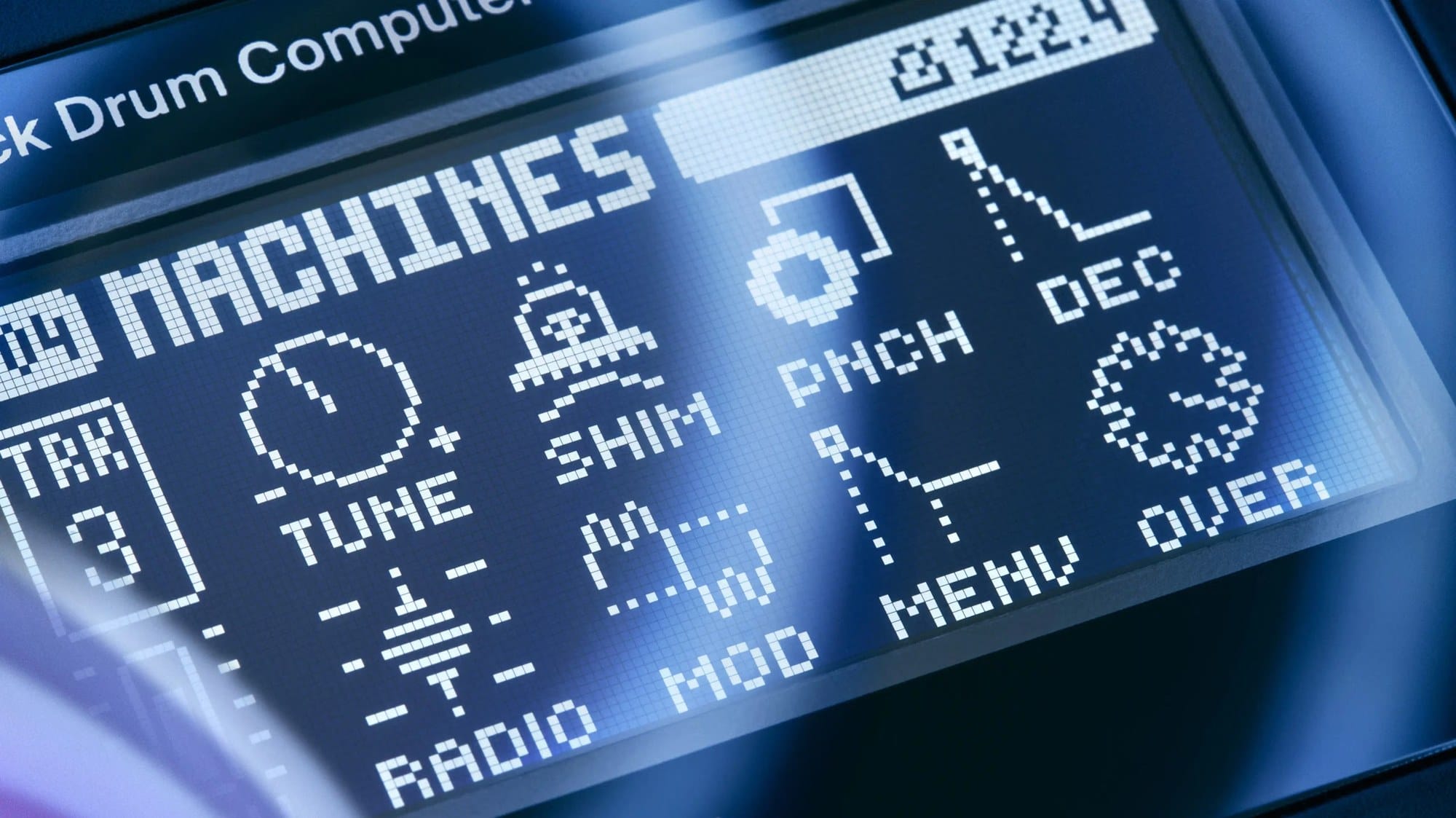
Digitone II: the synth
Digitone II is a 16-track multitimbral polyphonic synthesizer with 16 voices shared across its tracks. It has four synth machines. Wavetone is a two-oscillator design with morphing shapes and phase distortion, Swarmer is a supersaw-style cluster, FM Tone is the original Digitone FM engine, and FM Drum covers percussion and, as Elektron puts it, melodic work too. Tracks can also be MIDI tracks.
The playing tools set it apart. Chord Mode harmonizes a single finger into a chord with scales, chord types and Chord Memory, and a note editor lets you change the note, length, velocity and micro-timing of each note in the chord. Modulation can respond to aftertouch, pitch bend, mod wheel, velocity, breath control and key tracking. The filters match Digitakt II (Multi-mode, EQ, Lowpass 4, two combs and the legacy filter), each voice has ADSR or AHD amp envelopes, and the sequencer is the same 128 steps with Euclidean mode and song mode.
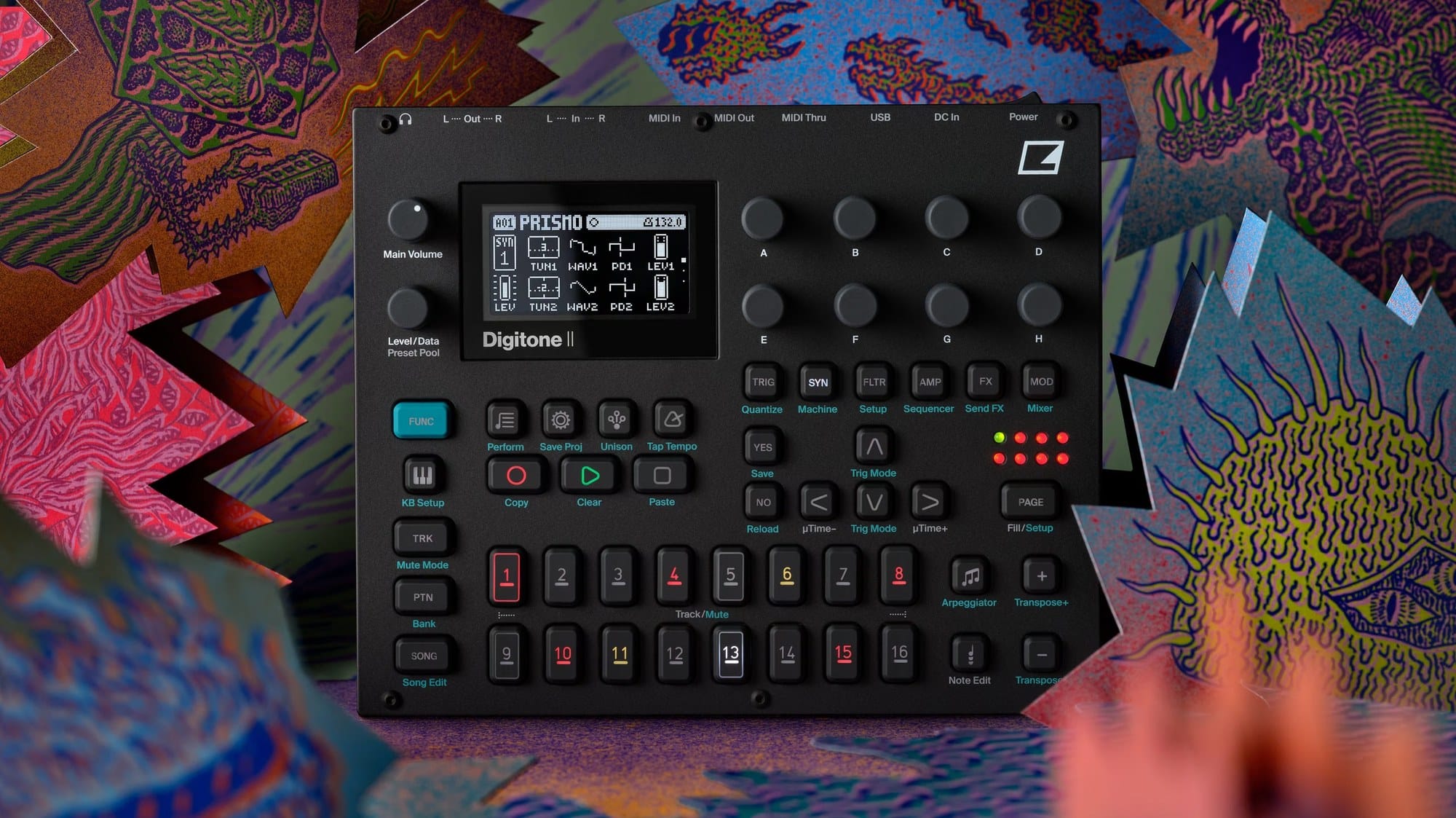
Digitakt II vs Syntakt vs Digitone II compared
| Digitakt II | Syntakt | Digitone II | |
|---|---|---|---|
| What it is | Drum computer and stereo sampler | Drum computer and synthesizer | Polyphonic digital synthesizer |
| Tracks | 16 audio or MIDI | 12 (8 digital, 3 analog drum, 1 analog cymbal) | 16 synth or MIDI |
| Sound source | Your samples through 6 source machines | 40 drum and synth machines | 4 synth machines, 16 voices |
| Sampling | Yes, up to 30 minutes of stereo per project | Twinshot sample player only | No |
| Analog circuits | No | Yes, 4 analog tracks with analog overdrive and filter | No |
| Sequencer | 128 steps, Song Mode | 64 steps, Song Mode | 128 steps, Song Mode |
| LFOs per track | 3 | 2 | 3 per voice |
| Outputs | Two balanced quarter-inch outs, stereo headphone jack, USB, MIDI in, out and thru | ||
| Size and weight | 215 x 176 x 63 mm, about 1.48 kg | 215 x 176 x 63 mm, about 1.53 kg | 215 x 176 x 63 mm, about 1.48 kg |
| Best for | Chopping loops, vocals, field recordings | Building techno, electro and breaks from scratch | Chords, pads, leads and FM bass |
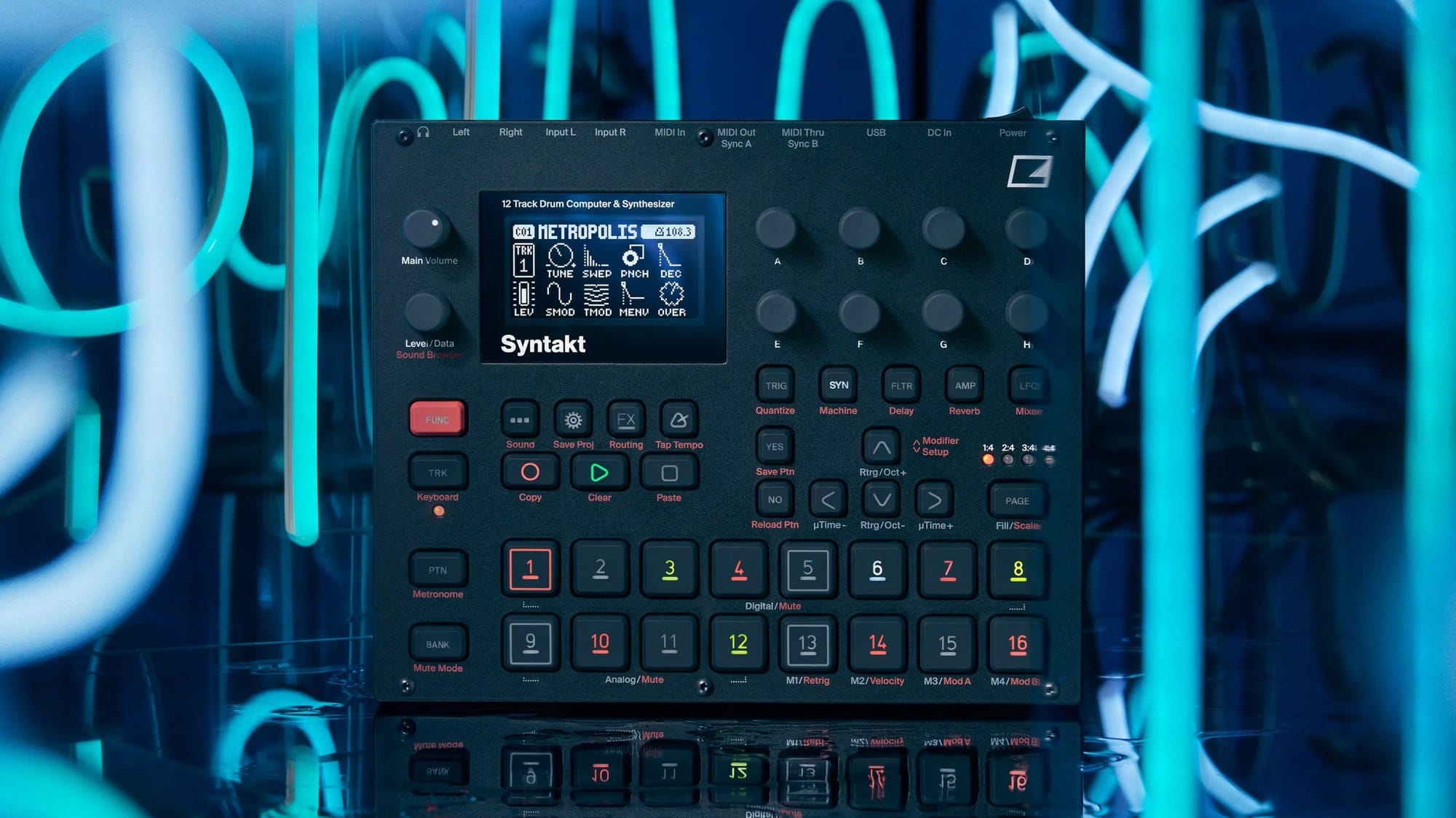
How to choose
Ask what your tracks are made of. If they begin with audio you recorded or dug up, the sampler wins, because it is the only one that lets you do that. If they begin with a beat you want to design, with a kick that has a pitch envelope and a hat that has a decay you control, Syntakt is more fun and faster to a finished groove. If they begin with a chord progression, Digitone II is the box you will want, and Chord Mode is a better reason to buy it than any spec.
All three share the sequencer, so what you learn on one carries over to the others. That also means a second Elektron costs you very little learning time, which is why many people end up with a pair: a drum machine for rhythm and a synth for harmony, sequenced together over MIDI. If you can afford only one, pick the one that makes the sound you cannot get another way from the gear you already own.
Our call
Our call: buy Syntakt if this is your first Elektron and you want to make beats, and Digitakt II if you already make music from samples. Syntakt is the one that turns a blank table into a groove, with analog drum voices you will not find in a sampler, and it is the most self-contained of the three. Digitakt II is the better tool for a producer whose music is made of recordings, and its 128 steps and deep source machines make it the most flexible. Digitone II is the best of the three at melody, but a first box that cannot make a drum sound on its own is a harder start. Whichever you choose, you are buying the same sequencer and the same way of working.
Elektron Syntakt: our pick for a first Elektron, with 4 analog and 8 digital tracks. Shop it at Elektron
Elektron Digitakt II: the 16-track sampler for producers who work from recordings. Shop it at Elektron
Elektron Digitone II: the 16-voice polyphonic synth for chords and leads. Shop it at Elektron
More on the gear: see our Digitakt II launch report, the story of the Roland TR-909 and our guide to Teenage Engineering. More like this: browse every related post in our Home Studio hub.