
Klipsch made its name on horn loudspeakers, and its new headphones are built on the same idea that every big Klipsch speaker uses: let a small driver handle the highs and a big one handle everything else. The Stratos HP-3 and HP-2, announced November 13 and shown to the public for the first time at CanJam Dallas on November 14 and 15, put a 10mm dynamic tweeter in a coaxial array with a much larger bio-cellulose driver in each earcup. In plain terms, each ear gets a tiny two-way speaker.
Both are wired over-ears, both arrive in the US in December through Klipsch and authorized retailers, and both mark the company's return to premium headphones during its 80th anniversary year.
Klipsch Stratos HP-3 vs HP-2
The two models share the same looks and the same idea, but they are tuned for different jobs.
- Stratos HP-3: semi-open back, 50mm bio-cellulose mid and bass driver plus the 10mm tweeter, 102 dB sensitivity, 24 ohms, 458g. This is the flagship and the one for long sessions at home.
- Stratos HP-2: closed back, 40mm bio-cellulose driver plus the 10mm tweeter, 100 dB sensitivity, 32 ohms, 380g, rated 15 Hz to 18 kHz. Klipsch pitches its isolation at studio monitoring.
Both are rated for 30mW and both are easy to drive, which is very Klipsch. The company's speakers have always been known for high efficiency, and the Stratos are designed to run from a phone as happily as from a desktop amp such as the new Onkyo HA-70. If the open versus closed question is new to you, our open-back vs closed-back explainer covers what you gain and lose, and headphone impedance explained shows why 24 and 32 ohms matter here.
Wood, copper and speaker cloth
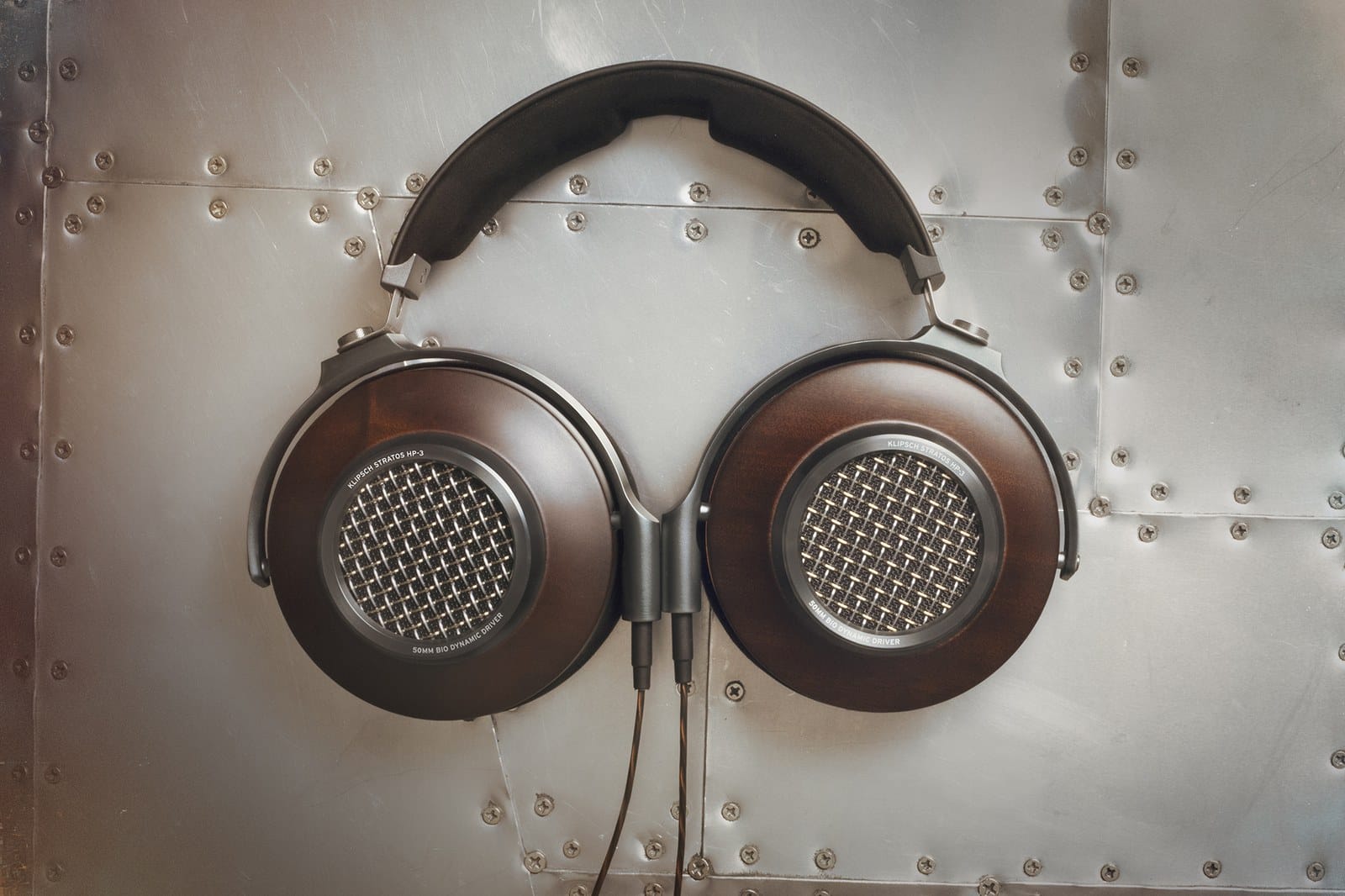
The build is where the speaker heritage becomes literal. The earcups are real stained sapele wood, ringed in copper, and the grilles use Klipsch Heritage Twitchell grille cloth, the same fabric family you find on the company's Heritage loudspeakers. The yokes and contact points are machined aluminum, the headband is protein leather lined with open-cell foam and cut out at the crown to stop hot spots, and the microsuede earpads attach with magnets so they swap out in seconds.
Both come in a single Auburn finish with two braided cables in the box: a 2.5m cable ending in 3.5mm unbalanced and a 1.37m cable ending in 4.4mm balanced, plus a quarter-inch adapter. Klipsch is also selling a matching walnut veneer headphone stand with a copper accent, due in December too.
Release date and what comes next
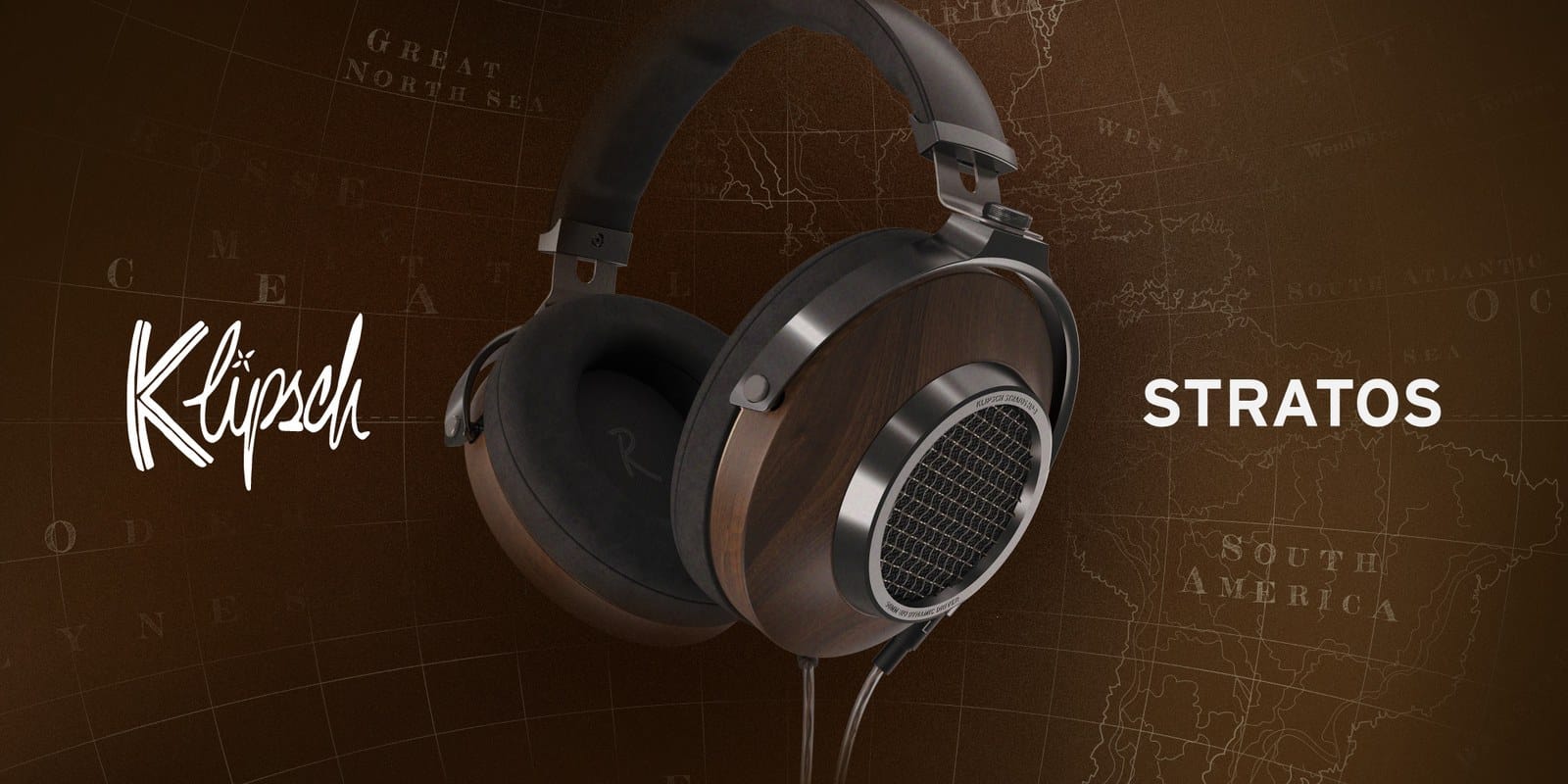
US availability starts in December 2026 from authorized Klipsch retailers and klipsch.com, where a signup list is open now. Europe follows in January 2027. A third model, the wireless Stratos HP-1, gets its details in early 2027, and it is the one most people will end up buying. For a different take on retro headphone design from this month, see the Sony MDR-3R, and Klipsch's last big launch with us was the Reference Premiere III floorstanders.
Our call: wait. The coaxial tweeter idea is smart, and the wood and Twitchell cloth make these the best looking headphones Klipsch has shown in years. But nobody outside the CanJam booths has heard them yet, and the published specs leave out how the two drivers are crossed over. Join the list, let the first listening impressions land in December, and pick the HP-3 for home listening or the HP-2 if you need isolation at a desk or in a studio.