Unknowndivide may earn a commission from purchases made through links in this post.
Shop for wired headphones for long and you will run into two labels again and again: open back and closed back. They look like small details on a spec sheet, but they change how headphones sound, who can hear them and where you can use them. Pick the wrong one and you will either annoy everyone around you or miss out on the spacious sound you were hoping for. This guide explains the difference in plain terms, using the way headphone makers themselves describe it.
The basic difference
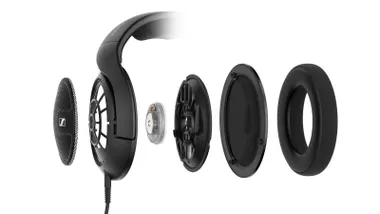
Every pair of over ear headphones has a housing, the cup behind each driver. What that housing is made of, and whether sound can pass through it, is what separates open from closed designs.
beyerdynamic's help center puts it clearly. A closed housing uses a continuous, sound blocking material, plus further measures inside, so that little or no ambient noise gets in and sound does not spill out to people nearby. An open housing has acoustically transparent areas, such as openings or acoustically transparent material, so outside sound can be heard and people nearby can hear what you are playing.
Closed back headphones
Closed back headphones are about isolation. They keep your sound in and the room's sound out. beyerdynamic notes that this is why closed headphones are preferred for mobile use, and its help center adds that a closed design is recommended for public transport, where the people around you should not hear your music.
That isolation also matters in a studio. When you record vocals or an acoustic instrument while listening to a backing track, you do not want that track leaking into the microphone. A closed design keeps the click and the mix where they belong. The beyerdynamic DT 770 PRO is the company's own example of a closed studio headphone.
Choose closed back for: commuting, offices, recording, tracking with a microphone, and any room where other people are trying to concentrate or sleep.
Open back headphones
Open back headphones give up isolation in exchange for sound. beyerdynamic says open headphones sound a little more voluminous and detailed and give a better feeling of spaciousness, which also reduces the feeling that the music is happening inside your head. For these reasons, it says, open headphones are particularly suited to a hi fi system or a headphone amplifier at home.
That spacious quality is why open designs are popular for mixing and careful listening. The beyerdynamic DT 990 PRO, an open studio model, is a long running example, as is the Sennheiser HD 560S, which Sennheiser designed with angled drivers to recreate the triangular listening position of a pair of speakers. Sennheiser also lists the HD 650 among its open back models, with a damping element of fine acoustic metal mesh.
Choose open back for: quiet rooms at home, mixing and mastering, long listening sessions and anyone who wants music to feel like it is in the room rather than in their head.
What about semi open?
Some headphones sit in between, with a housing that is partly open. beyerdynamic describes semi open headphones as a mixture of both designs, but notes that its own semi open models tend to be more similar to the open design than the closed one. Its DT 880 PRO is the classic example. In practice, treat semi open headphones like open ones: they will leak sound and let the room in, so they are best at a desk or in a studio rather than on a train.
Quick comparison
- Noise isolation: closed is strong, open is minimal, semi open is closer to open.
- Sound leakage: closed keeps sound in, open and semi open let it out.
- Sense of space: open designs feel more spacious and less inside the head, according to beyerdynamic.
- Best places: closed for travel, offices and recording; open for quiet rooms, mixing and home listening.
Do not forget impedance
Design is only half of the mobile question. beyerdynamic's help center points out that whether headphones suit mobile use also depends on impedance. High impedance headphones are not suitable for a phone or tablet because playback will be very quiet, while low impedance models play at an adequate volume. A 250 ohm open back headphone, for example, belongs on a desk with an audio interface or headphone amplifier. Our guide to headphone impedance covers the numbers in detail.
One pair or two?
Many people who work with sound end up owning both: a closed pair for recording and travel, and an open pair for mixing and relaxed listening at home. If you can only buy one, think about where you will use them most. If the answer is a shared space, a commute or a vocal booth, go closed. If it is a quiet room with a decent source, go open.
beyerdynamic also notes that weight and cable length matter for portable use, but treats them as personal preference rather than technical limits. Comfort counts too, especially for open models that you are likely to wear for hours.
Where to start
Pair any wired studio headphone with a good audio interface or headphone amplifier and you have a complete listening setup for a home studio. Start with the room you have: the quieter it is, the more an open design makes sense.
For more studio gear, browse our home studio picks.