
Universal Audio has been part of recording history since 1958, when engineer Bill Putnam founded the company that went on to build the 1176 compressor, still one of the most used studio tools ever made. Its Apollo interfaces carry that history onto a desk. Each one lets you record through software copies of classic preamps, compressors and EQs (equalizers) as you play, with no delay you can hear, because the processing happens on chips inside the box rather than on your computer. Universal Audio sells three desktop Apollos: the Apollo Solo, the Apollo Twin X and the Apollo x4. They look like the same silver box in three sizes, but they suit very different studios. Here is how the Apollo Twin X, Apollo Solo and Apollo x4 compare, and which one to buy.
The quick answer
- Buy the Apollo Twin X if you are building a real home studio. You get the new Gen 2 converters, enough DSP (digital signal processing) to track through several plug-ins at once, a proper monitor controller with talkback and built-in room correction.
- Buy the Apollo Solo if you record one or two sources at a time, want the Apollo sound for less and like that it runs off a single Thunderbolt cable with no power supply.
- Buy the Apollo x4 if you record bands, drums or several players at once and need four preamps, two headphone outputs and the most DSP of any desktop Apollo.
The trick all three share
Every Apollo has Unison preamps. When you load a Unison plug-in, say a Neve 1073 or an API channel, on an input, the Apollo does more than add the plug-in's sound. It physically changes the input's impedance and gain behavior to match the original hardware, so a microphone or guitar reacts as if it were plugged into the real unit. Combined with the onboard DSP, that is why Apollo owners can track a vocal through a preamp, a compressor and a reverb and hear the finished sound in their headphones as they sing.
The Apollo Twin, launched in 2014, was the interface that brought this out of big studios, and Universal Audio itself calls it the box that changed home recording. The Twin X followed, and in 2024 the Twin X and x4 moved to a Gen 2 design with Universal Audio's best converters yet. The Solo, the smallest member, keeps the older converter design.
Apollo Twin X vs Apollo Solo vs Apollo x4, side by side
| Apollo Solo | Apollo Twin X Gen 2 | Apollo x4 Gen 2 | |
|---|---|---|---|
| Inputs x outputs | 2 x 4 | 10 x 6 | 12 x 18 |
| Unison mic preamps | 2 | 2 | 4 |
| Instrument (Hi-Z) inputs | 1 | 1 | 2 |
| Onboard DSP | Single-chip | DUO or QUAD | QUAD |
| Converters | 24-bit, 192 kHz | Gen 2, 24-bit, 192 kHz, 129 dB D/A dynamic range | Gen 2, 24-bit, 192 kHz, 129 dB D/A dynamic range |
| Outputs | 2 monitor outs, 1 headphone out | 2 monitor outs, 2 line outs, 1 headphone out | 2 monitor outs, 4 line outs, 2 headphone outs |
| Optical (ADAT or S/PDIF) | No | Input | Input and output |
| Room correction | No | Apollo Monitor Correction | Apollo Monitor Correction |
| Talkback and speaker switching | No | Yes | Yes |
| Power | Thunderbolt 3 bus power | Power supply | Power supply |
| Included plug-ins | Heritage Edition (20-plus) | UAD Analog Classics (30-plus) | UAD Analog Classics (30-plus) |
Specifications and prices are from Universal Audio's official product pages in November 2026; the Solo and x4 are on sale below their list prices as of this writing. All three are Thunderbolt interfaces for Mac and Windows, and all three run UAD plug-ins inside any major DAW (digital audio workstation).
Apollo Twin X: the one most studios should buy
The Twin X is the center of the range because it does the most important things right. Its Gen 2 converters are the same class Universal Audio uses in its bigger rack Apollos, with a 129 dB dynamic range on the outputs you monitor through. It adds Apollo Monitor Correction, powered by Sonarworks, which calibrates your speakers and headphones to offset the flaws of your room so your mixes translate better elsewhere. And it is a full monitor controller: a big volume knob, a second pair of speaker outputs you can switch to, and a built-in talkback mic for speaking to someone in the vocal booth.
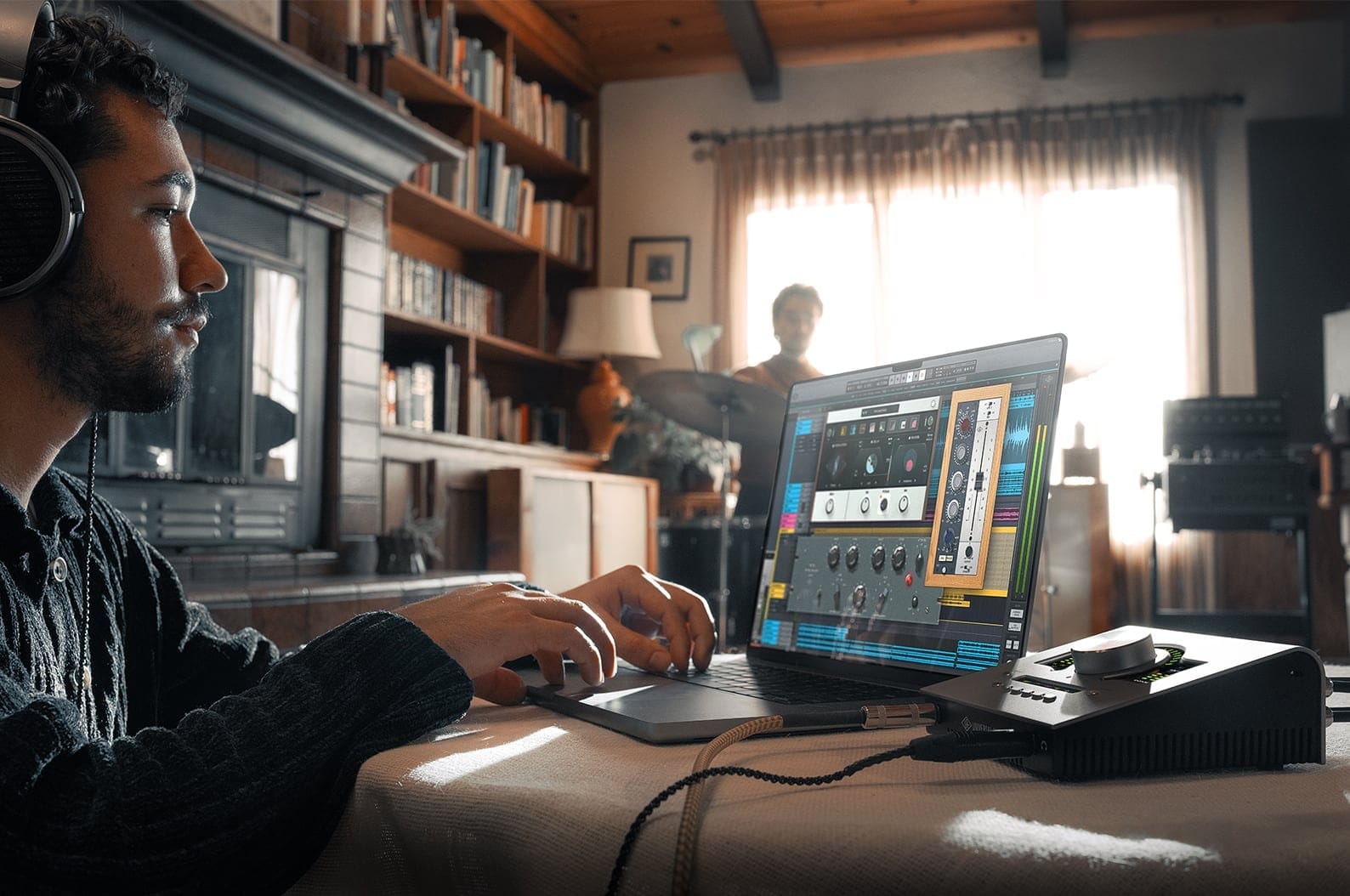
The DSP is the other reason. The DUO version has two processing cores and the QUAD has four, which decides how many plug-ins you can run on the chips at once. For one vocalist with a preamp, compressor and reverb, DUO is enough. If you like stacking channel strips on every input or tracking with heavy reverbs, QUAD is worth the extra money. The optical input also lets you add eight more mic preamps later with an ADAT preamp unit, so the Twin X can grow with you.
Apollo Solo: the Apollo sound for less
The Solo is the smallest Apollo and the cheapest way into the system. You still get two Unison preamps, a front instrument input and Universal Audio's realtime UAD processing, plus the Heritage Edition bundle with copies of the UA 1176, Teletronix LA-2A, Pultec EQs and the UA 610 tube preamp. It runs entirely off one Thunderbolt 3 cable, with no power supply, which makes it a neat fit for a laptop rig.
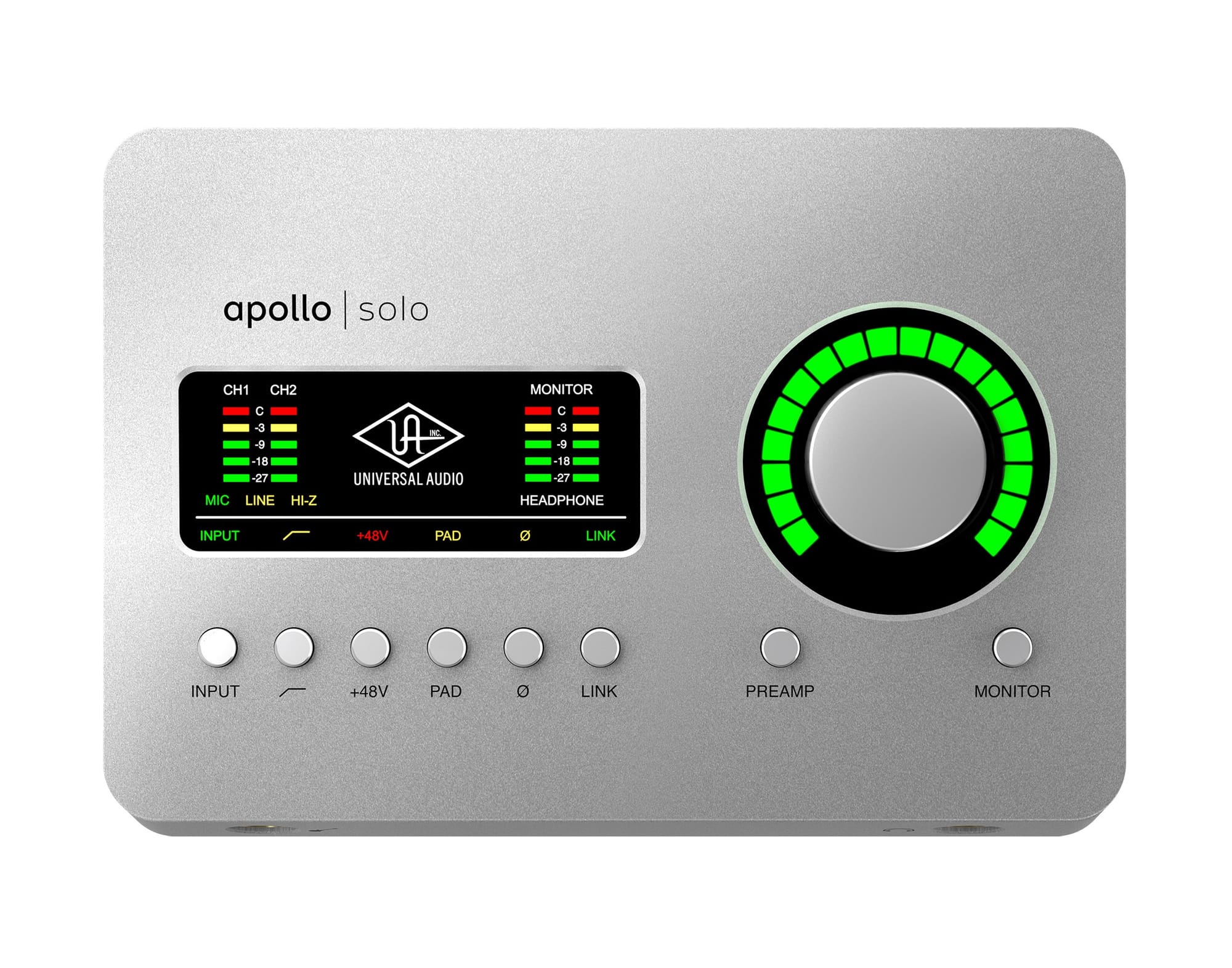
The limits are real, though. Its single-chip DSP runs out after a few plug-ins, it has no optical input for expanding, no talkback, no second speaker output, no room correction and the older converters. It is a superb interface for a singer-songwriter or a beatmaker who records a vocal or a guitar at a time. It is not the box to build a growing studio around. Note that Universal Audio also sells USB versions of the Solo and Twin X for Windows computers without Thunderbolt.
Apollo x4: the biggest desktop Apollo
The x4 is a Twin X with everything doubled where it counts: four Unison preamps, two front instrument inputs, two headphone outputs and four line outputs, plus optical input and output and QUAD DSP as standard. Universal Audio calls it its most powerful desktop Apollo, and it is the one to buy if you record two or more people at once, such as a duo singing together, a drum kit with several mics or a band tracking scratch parts live.
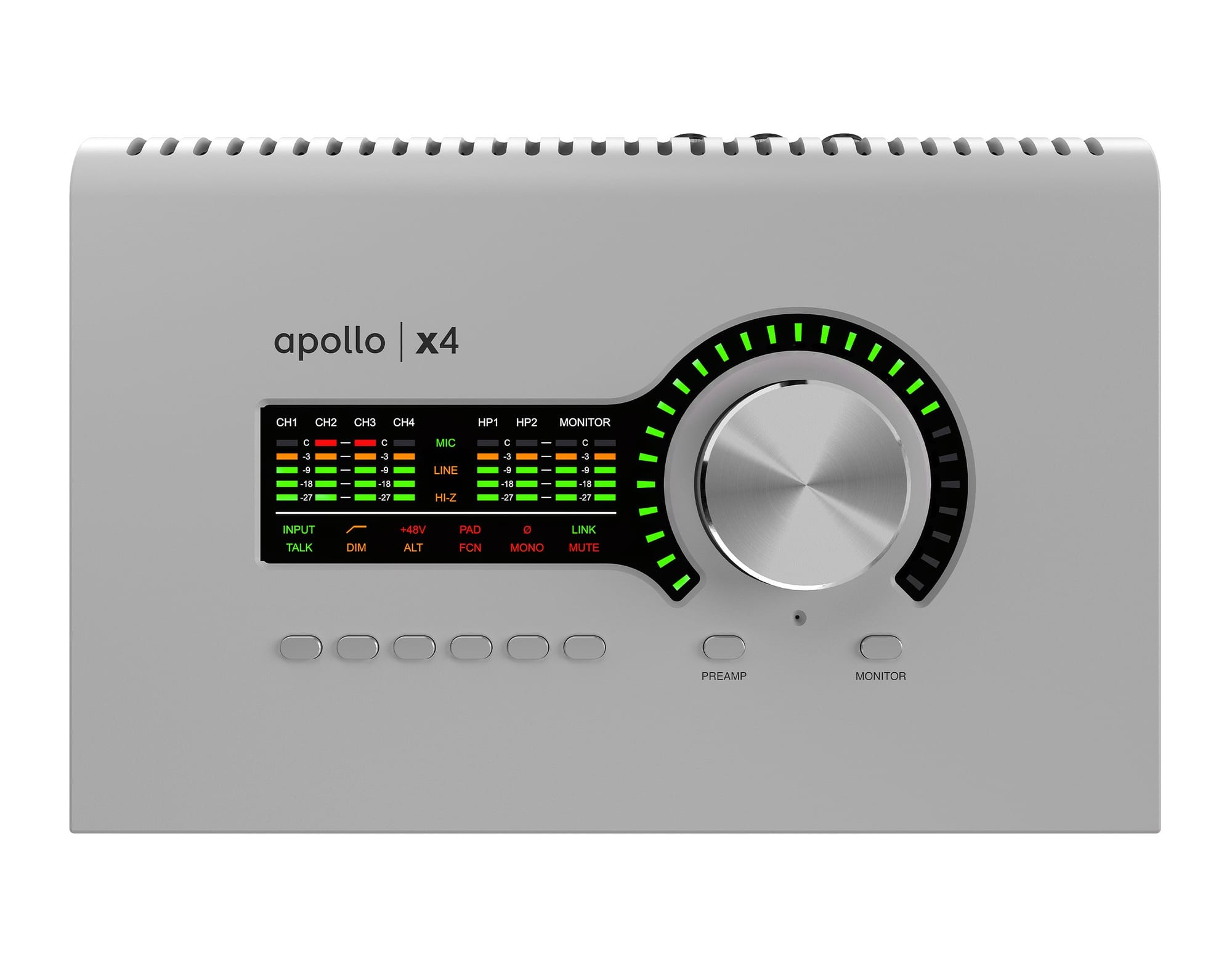
The second headphone output alone matters more than it sounds. With a Twin X, giving a second performer their own mix means buying a separate headphone amp. With the x4, two people get independent mixes straight from the interface. If you only ever record yourself, though, most of what you pay over a Twin X goes unused.

Which Apollo to buy, by buyer
- Singer-songwriter or podcaster recording one or two sources: the Apollo Solo.
- Producer building a home studio with good monitors: the Apollo Twin X DUO. The room correction and monitor controller earn their keep every day.
- Heavy plug-in user who tracks through full channel strips: the Apollo Twin X QUAD.
- Bands, duos and drummers: the Apollo x4, for four preamps and two headphone mixes.
- On a tighter budget and fine without onboard DSP: see our Universal Audio Volt 2 guide or our Scarlett Solo vs 2i2 vs 4i4 comparison.
Our call
Our call: buy the Apollo Twin X DUO. It gives you the Gen 2 converters, enough DSP to track through Unison preamps and a couple of plug-ins, built-in room correction and a real monitor controller with talkback. It is the Apollo you are least likely to outgrow, and the optical input leaves room to expand. Buy the Solo only if you record one source at a time and want the lowest price, and buy the x4 when you regularly record more than one person.
Universal Audio Apollo Twin X DUO Gen 2: our pick, with Gen 2 converters, room correction and talkback. Check price or buy at Universal Audio
Universal Audio Apollo Solo: two Unison preamps on bus power for small setups. Check price or buy at Universal Audio
Universal Audio Apollo x4 Gen 2: four preamps, two headphone outputs and QUAD DSP. Check price or buy at Universal Audio
Still shaping your setup? Our best audio interfaces for home recording covers cheaper options, our best microphones for home recording helps you choose what to plug in, and there is more in our Home Studio hub.
Prices and specifications are from Universal Audio's official product pages in November 2026 and change often, especially during sales.
Unknowndivide may earn a commission from purchases made through links in this post. As an Amazon Associate we earn from qualifying purchases.