
Neumann's current large diaphragm condensers come in clearly different jobs. The TLM 102 is the compact cardioid with an integrated pop screen, designed and manufactured in Germany. The TLM 103 is a transformerless cardioid whose capsule is derived from the K67/87 capsule of the U 87, with a presence boost above 5 kHz and a self-noise of 7 dB-A. The U 87 Ai is the three-pattern studio standard introduced in 1967, with a pad, a low cut and a transformer-balanced output. Here is how they compare, and which one to buy.
The quick answer
- Buy the TLM 102 if you want a smaller cardioid condenser with an integrated pop screen and headroom for very loud sources. Neumann lists 12 dB-A of self-noise and a maximum SPL of 144 dB, in a body about 210 grams and 116 mm long.
- Buy the TLM 103 if you want a single-pattern cardioid with the lowest official self-noise of the three (7 dB-A), high sensitivity of 23 mV/Pa, and the modern presence lift Neumann describes above 5 kHz.
- Buy the U 87 Ai if you need three polar patterns (omnidirectional, cardioid and figure-8), plus a switchable pad and low cut. Neumann calls it probably the best-known and most frequently used studio microphone in the world, and the standard for speech and vocals.
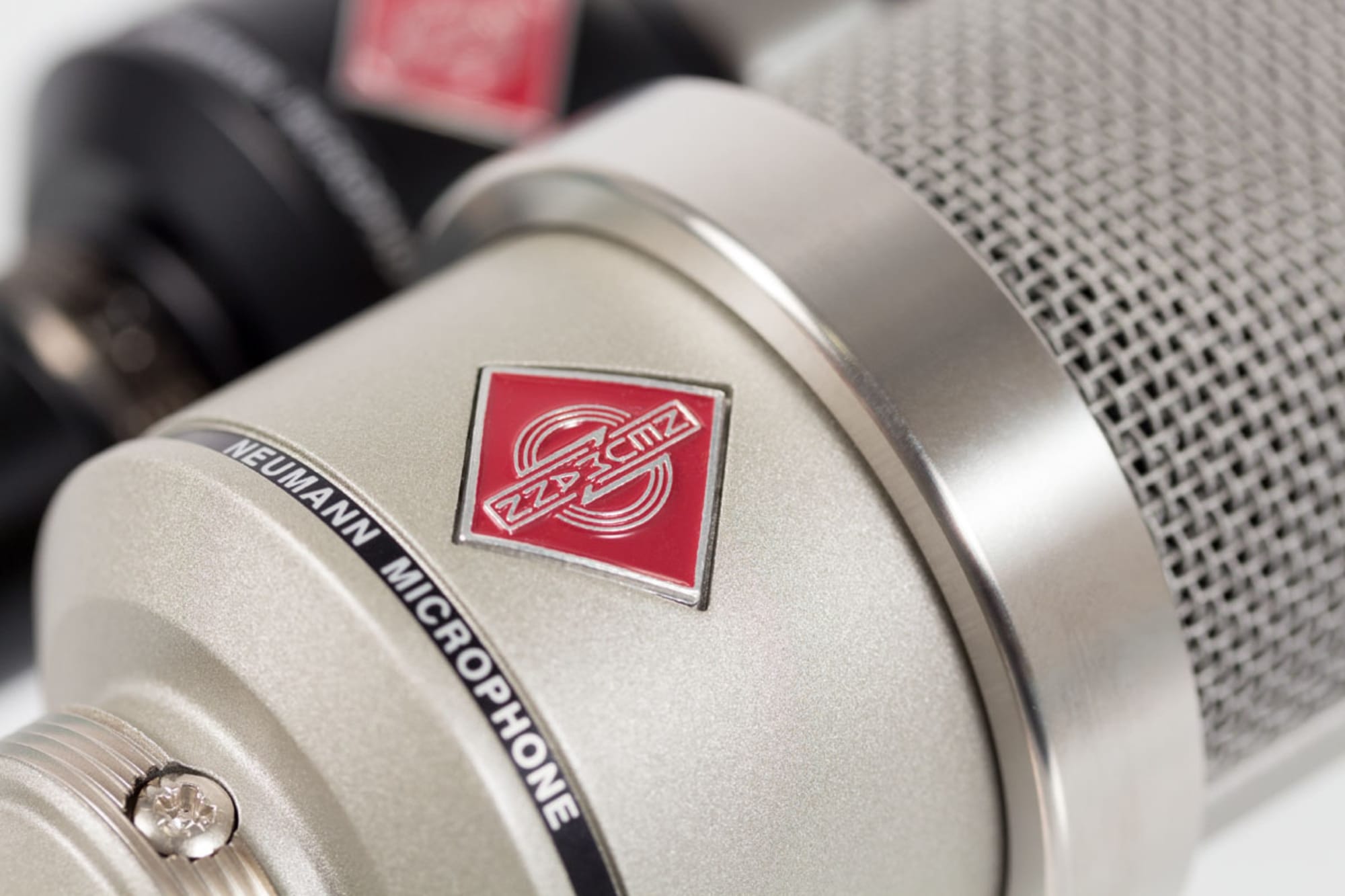
A compact TLM, a quieter TLM, and the U 87
TLM stands for transformerless microphone. Both the TLM 102 and the TLM 103 use a transformerless output stage, which Neumann says means powerful bass at high signal levels and a direct sound without transmission losses. The U 87 Ai is the other tradition: a FET circuit with a "minimal signal path and a transformer balanced output," using the same dual-diaphragm capsule design as its predecessor, the U 67 of the early 1960s. The U 87 itself arrived in 1967.
That history is why this comparison exists. The TLM 103's capsule is officially "derived from the classic K67/87 capsule of the legendary Neumann U 87," with a more modern voicing. The TLM 102 is reduced in size and features, with a newly developed large diaphragm capsule, a slight lift around 10 kHz, and an integrated pop screen aimed at smaller rooms and first-time Neumann owners. If you are also weighing a dynamic vocal mic, see our comparison of the Shure SM7B, SM7dB and MV7+.
TLM 102 vs TLM 103 vs U 87 Ai, side by side
| TLM 102 | TLM 103 | U 87 Ai | |
|---|---|---|---|
| Circuit | Transformerless | Transformerless | FET with transformer-balanced output |
| Polar pattern | Cardioid | Cardioid | Omnidirectional, cardioid, figure-8 |
| Pad and low cut | No | No | Yes, switchable |
| Frequency range | 20 Hz to 20 kHz | 20 Hz to 20 kHz | 20 Hz to 20 kHz |
| Sensitivity (1 kHz, 1 kohm) | 11 mV/Pa | 23 mV/Pa | 20 / 28 / 22 mV/Pa (omni / cardioid / figure-8) |
| Self-noise, A-weighted | 12 dB-A | 7 dB-A | 15 / 12 / 14 dB-A (omni / cardioid / figure-8) |
| Maximum SPL (0.5 percent THD) | 144 dB | 138 dB | 117 dB in cardioid, 127 dB with preattenuation |
| Rated impedance | 50 ohms | 50 ohms | 200 ohms |
| Weight | About 210 g | About 450 g | 500 g |
| Length and diameter | 116 mm, 52 mm | 132 mm, 60 mm | 200 mm, 56 mm |
| Integrated pop screen | Yes | No | No |
| Phantom power | 48 V | 48 V | 48 V |
Specifications are from Neumann's official US product pages. All three are 48-volt phantom-powered condensers with XLR connections, designed and made in Germany. We also have a standalone guide to the TLM 102.
TLM 102: the compact cardioid
Neumann presents the TLM 102 as the company's most compact way into a large diaphragm condenser for small studios. Officially it combines a cardioid pattern and an integrated pop screen, with a newly developed capsule that has a linear midrange, a slight lift around 10 kHz, and a controlled proximity effect. The transformerless output can handle 144 dB SPL, which is the highest official maximum of the three before any pad is applied.
At about 210 grams and 116 mm long, it is roughly half the weight of the TLM 103 and much shorter than the U 87 Ai. There is no pad, no low cut and no pattern switch. What you get is one well-defined cardioid, a built-in pop screen and a lot of SPL headroom, which is why it is the straightforward first Neumann for vocals, guitars and drums in a small room.
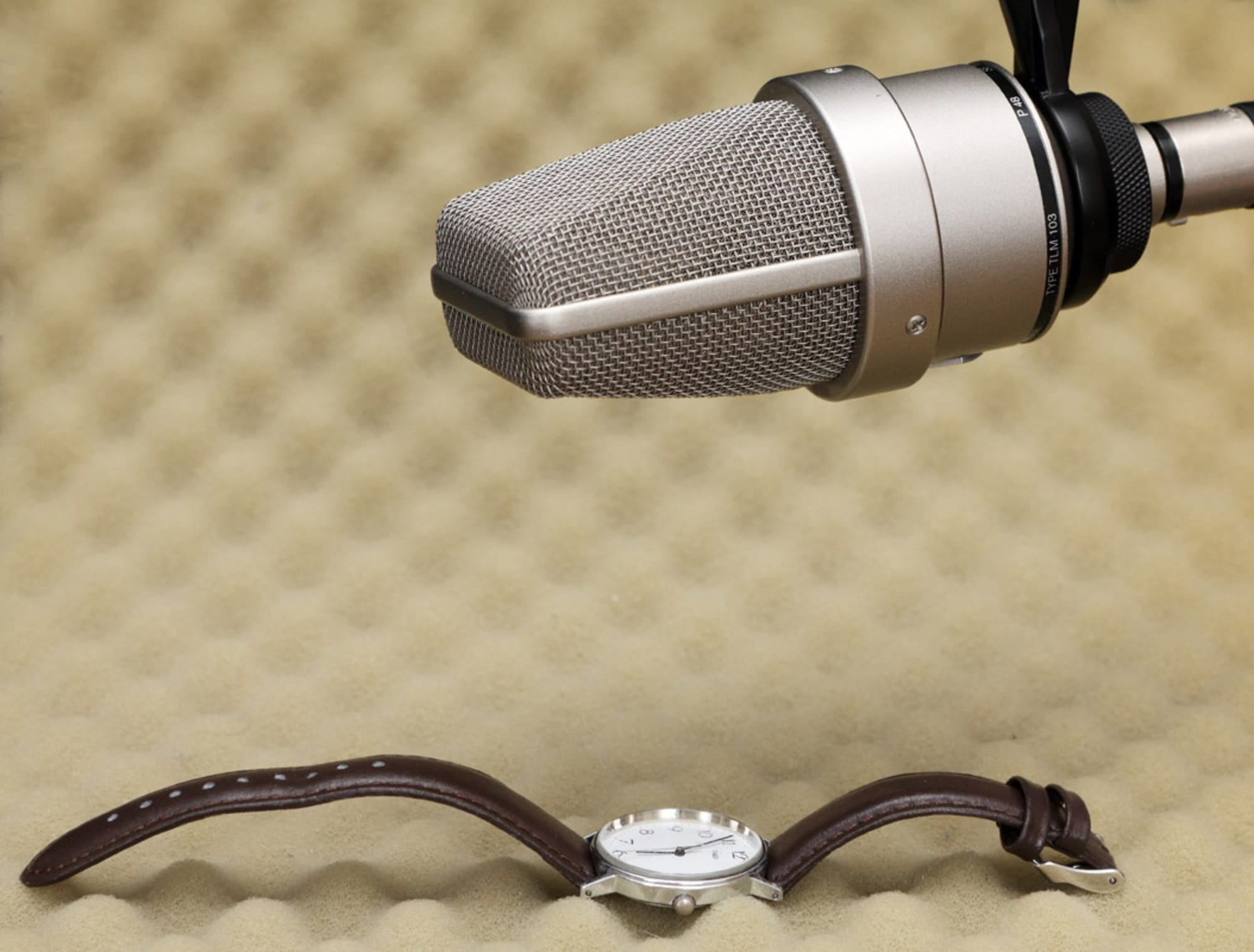
TLM 103: the quiet modern cardioid
The TLM 103 is the one Neumann describes as a modern update on the classic U 87, still as a single cardioid. Its capsule comes from the K67/87 family, with a wide presence boost for frequencies above 5 kHz. Officially the self-noise is only 7 dB-A, "among the quietest microphones available," and the sensitivity of 23 mV/Pa is meant to stay quiet even with modest preamps. Maximum SPL is 138 dB without a pad, and Neumann quotes a dynamic range of 131 dB.
There is still no pattern switch, pad or low cut on the microphone itself. You buy it for that one cardioid voice: quieter and more sensitive than the TLM 102, with a different official voicing, in a larger 450-gram, 132 mm body. It is the middle of this range in size, and the specialist if your work is mostly a singer or a solo instrument in a controlled room.
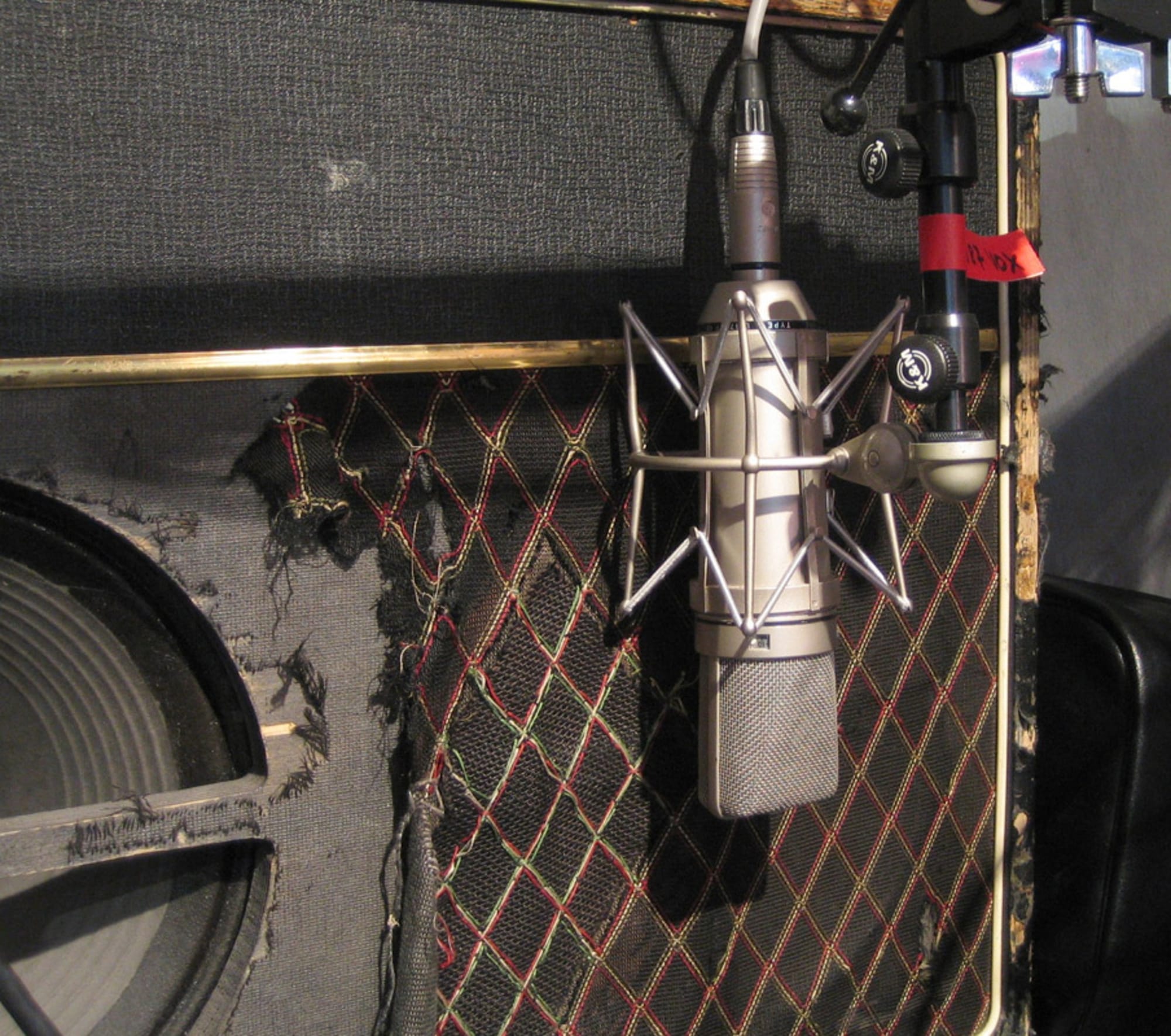
U 87 Ai: the three-pattern standard
The U 87 Ai is the microphone Neumann says no professional recording studio is complete without. Officially it has been the standard for speech and vocals for decades, with a smooth, refined sound and a surprisingly flat on-axis frequency response that still has a recognizable character. The practical difference from the two TLM models is the control set: three polar patterns, a switchable pad (raising maximum SPL from 117 dB to 127 dB in cardioid) and a switchable low cut.
It is also the only one of the three with a transformer-balanced output, a 200 ohm rated impedance, and a 200 mm body that weighs 500 grams. Cardioid self-noise is 12 dB-A, the same official A-weighted figure as the TLM 102, with higher sensitivity in cardioid (28 mV/Pa). You buy the U 87 Ai when you need those patterns and switches, not because a TLM cannot record a voice.
Where to buy
- TLM 102 at Neumann: the compact cardioid with an integrated pop screen and 144 dB of official SPL headroom.
- TLM 103 at Neumann: the transformerless cardioid with a U 87-derived capsule and 7 dB-A self-noise.
- U 87 Ai at Neumann: the three-pattern studio standard, with pad and low cut.
Our call
Our call: buy the TLM 102 if you want a smaller first Neumann and an integrated pop screen, buy the TLM 103 if you want the quieter, more sensitive cardioid with the presence lift, and buy the U 87 Ai if you actually need three patterns, a pad and a low cut. If you only ever record one voice in one room, the TLM 103 is the more complete specialist. If you need the microphone to change jobs, the U 87 Ai is the one that can.