
If you have ever looked for a serious pair of open-back headphones, you have met these three. The Sennheiser HD 600, HD 650 and HD 660S2 look like siblings, weigh the same 260 grams, share the same 300 ohm impedance and are all assembled in Ireland. Yet people argue about them like they are rival football clubs. One is the neutral reference that has barely changed since 1997, one is the warm, smooth classic that grew out of it, and one is the newest of the three with twice the sub bass. Here is what actually separates them, and which one to buy.
The quick answer
- Buy the HD 600 if you want the most honest picture of a recording: for mixing, for checking your own music, or for acoustic, jazz and classical. It is also the cheapest of the three at $294.95 on Sennheiser's US store right now.
- Buy the HD 650 if you listen for pleasure more than analysis and want a warmer, fuller sound that stays easy on the ears for hours. Rock, soul, hip-hop and electronic music suit it. It is $349.95 at Sennheiser right now.
- Buy the HD 660S2 if you want the deepest bass, the most modern cables in the box and the easiest time driving them. It is the best fit for electronic, ambient and film scores. It is $429.95 at Sennheiser right now.
A family that started in 1997
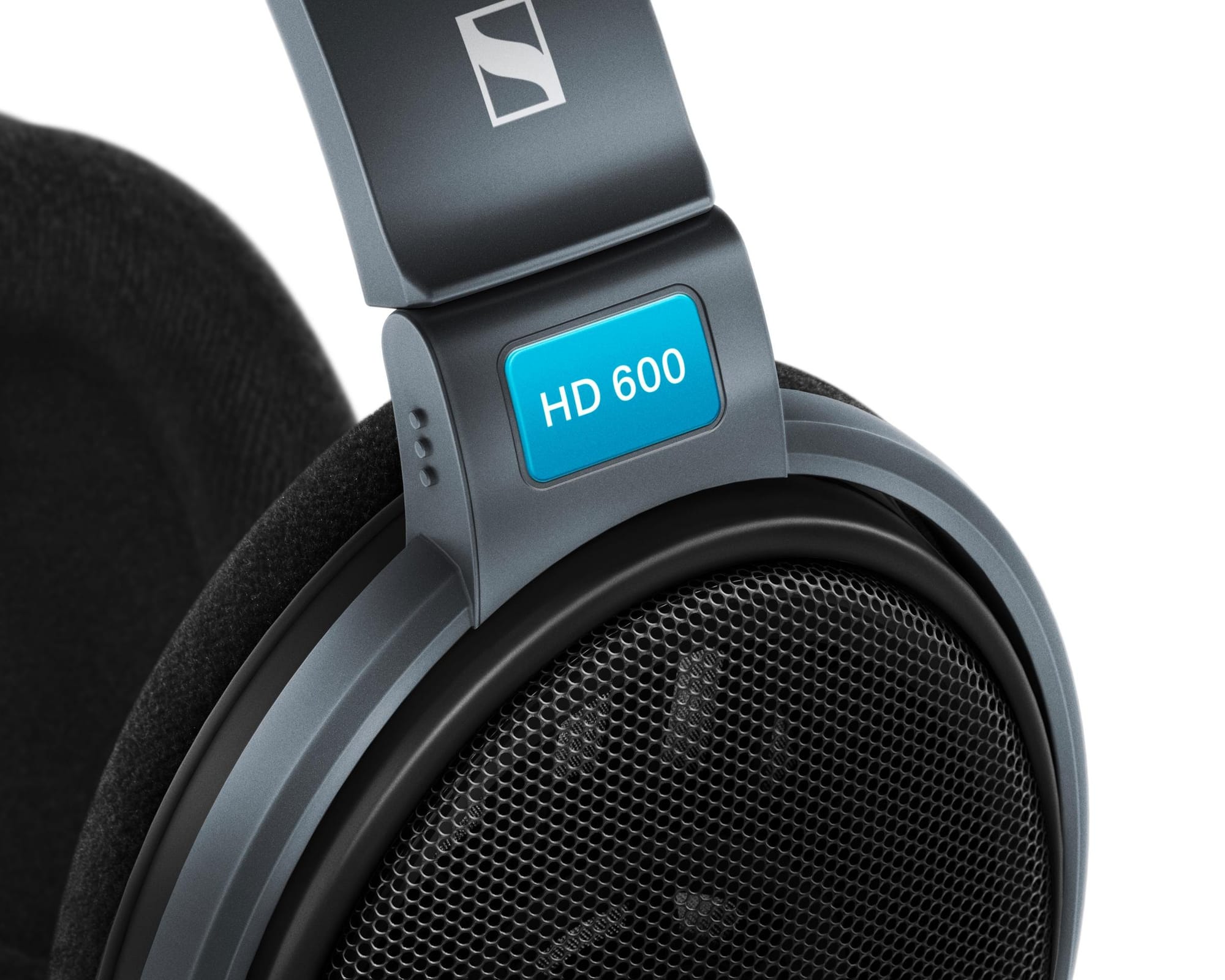
Sennheiser launched the HD 600 in 1997 with a simple brief: play back a recording exactly as it was made, adding nothing and taking nothing away. Sennheiser still calls it the standard for analytical listening, and in an industry that replaces products every two years, it has stayed on sale with almost no changes for close to three decades. Most of its parts are modular, so pads, headbands and cables can be swapped, which is part of why so many 20-year-old pairs are still in use.
The HD 650 came next. Sennheiser describes it as developed from the HD 600 with improved materials, and it kept the same frame, the same 42 millimeter transducer housing with a 38 millimeter diaphragm and an aluminum voice coil, and the same 300 ohm load. What changed was the voicing: warmer, smoother and more forgiving.
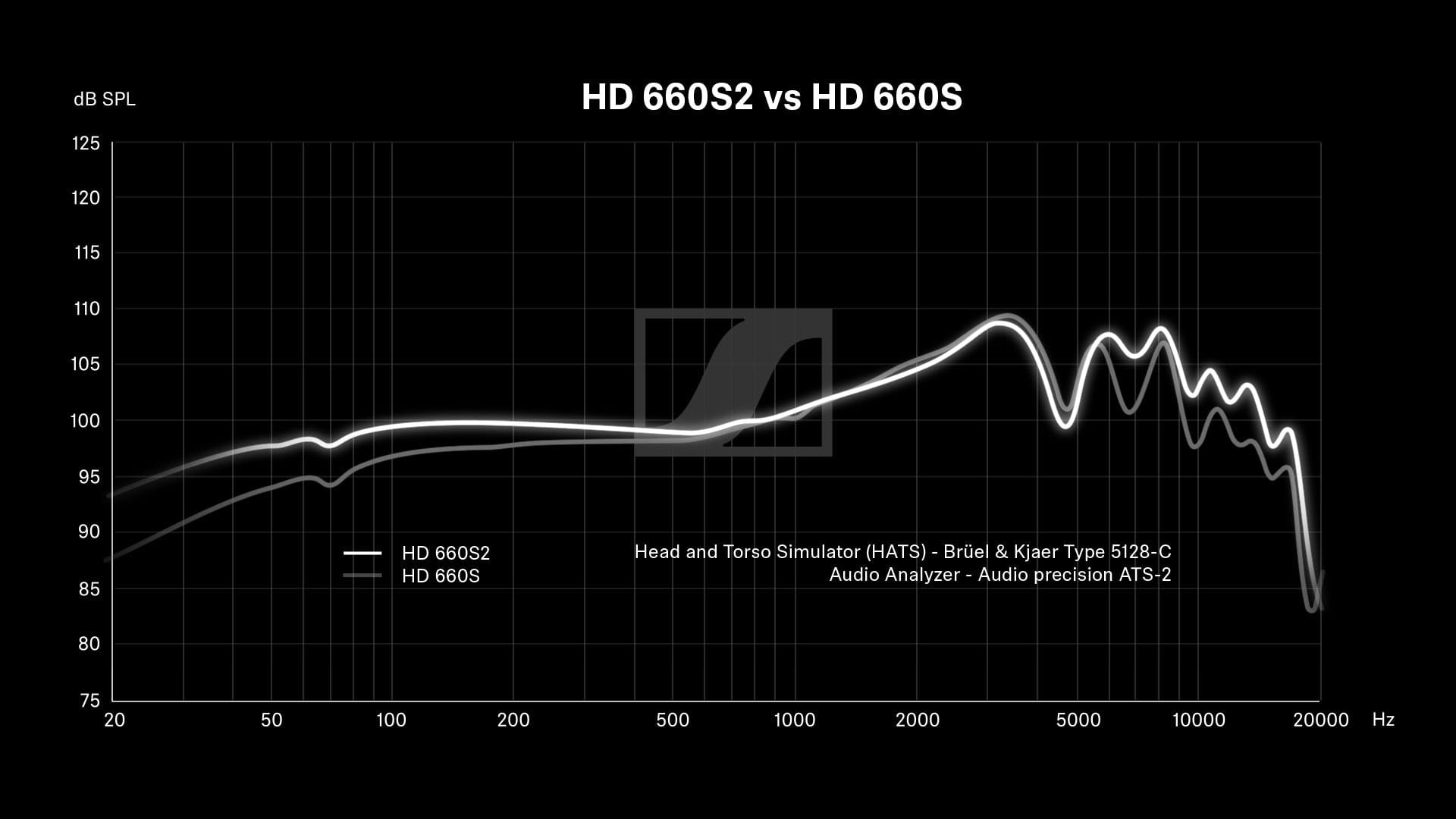
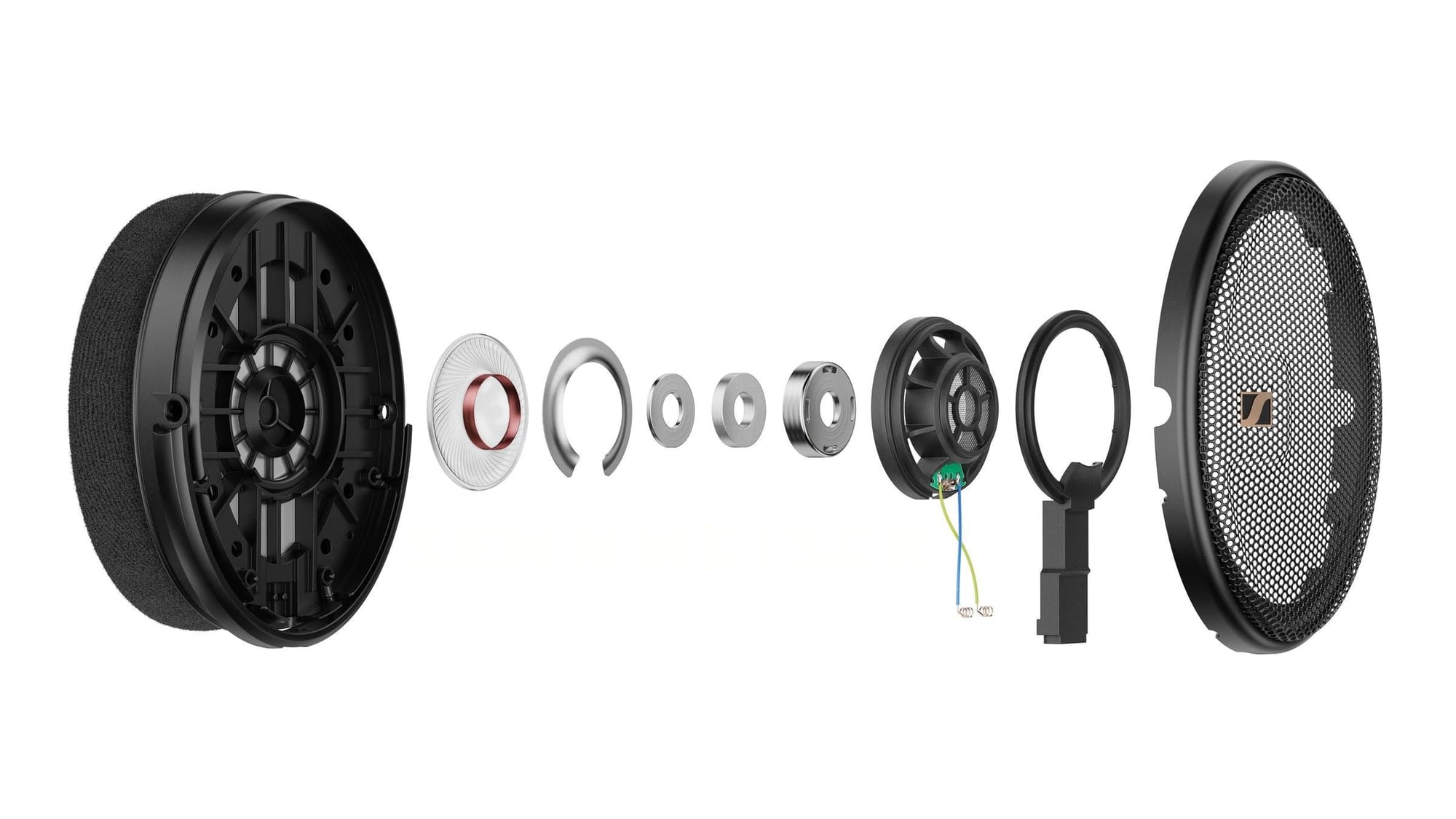
The HD 660S2 is the newest member. Sennheiser rebuilt the surround, diaphragm and voice coil, gave the magnet system milled air vents to cut distortion, and moved the impedance back to the 300 ohms of the HD 600 and HD 650. Its headline claim is bold: double the sound pressure at the lowest octaves. Sennheiser's own example is the lowest note on a concert piano, at 27.5 hertz, which most headphones only hint at.
The specs side by side
| HD 600 | HD 650 | HD 660S2 | |
|---|---|---|---|
| Design | Open-back, over-ear | Open-back, over-ear | Open-back, over-ear |
| Sound | Neutral, analytical | Warm, smooth | Warm with extended sub bass |
| Frequency response | 12 to 40,500 Hz | 10 to 41,000 Hz | 8 to 41,500 Hz |
| Impedance | 300 ohms | 300 ohms | 300 ohms |
| Sensitivity (sound pressure level at 1 volt) | 97 decibels | 103 decibels | 104 decibels |
| Weight | 260 g | 260 g | 260 g |
| Cable in the box | 3 m, 3.5 mm plug with 6.3 mm adapter | 3 m, 6.3 mm plug with 3.5 mm adapter | Two 1.8 m cables: 6.3 mm and 4.4 mm balanced, plus adapter and pouch |
| Made in | Ireland | Ireland | Ireland |
| Sennheiser US price (Nov 2026) | $294.95 (list $499.95) | $349.95 (list $579.95) | $429.95 (list $679.95) |
Specs are from Sennheiser's official product and support pages. All three take the same detachable cable, and Sennheiser sells a single 4.4 millimeter balanced cable that fits all three.
HD 600: the truth teller
The HD 600 is the one people mean when they say reference. Sennheiser measures and pairs each transducer to tight tolerances so the left and right sides match, and the result is a flat, even midrange where voices and instruments sit exactly where the engineer put them. The bass is present and tight but never pushed forward. Some listeners call that lean. If you mix music, that restraint is the point: a bass line that sounds right on the HD 600 tends to translate to speakers.
The catch is power. At 97 decibels per volt, the HD 600 is the hardest of the three to drive. It will play from a laptop, but it sounds thin and quiet there. Budget for a headphone amp or a good audio interface with a strong headphone output.

HD 650: the warm classic
The HD 650 takes the HD 600's frame and tunes it for long nights. The low end is fuller, the treble is smoother and the whole presentation is a little darker and more relaxed. Sennheiser compares it to a high-performance sports car without the quirks, and the metaphor holds: it is detailed, but it never shouts. Harsh recordings, older rock records and bright digital masters are far easier to live with on the HD 650 than on the HD 600.
It is also easier to drive, at 103 decibels per volt, though it still rewards a proper amp. If you are only going to own one pair for listening rather than mixing, this is the safest choice in the family.
HD 660S2: the bass upgrade
The HD 660S2 keeps the warm, non-fatiguing character of the HD 650 and adds real weight below 50 hertz. Sennheiser's own measurement chart shows the S2 sitting well above the older HD 660S in the deepest octaves while tracking it closely through the mids and treble. In practice, kick drums hit harder, synth bass and film score rumble have physical presence, and the soundstage feels deeper because there is more space at the bottom.
It also comes better equipped. You get two 1.8 meter cables in the box, one with a standard 6.3 millimeter plug and one with a 4.4 millimeter balanced plug for modern amps and portable digital-to-analog converters, plus a carry pouch. At 104 decibels per volt it is the easiest of the three to drive, though it is still a 300 ohm headphone and still happiest on a dedicated amp.
What none of them do
All three are open-back headphones, which means sound leaks out and the room leaks in. They are for a quiet room at home, not a train, an office or recording vocals next to a live microphone. If you need isolation, look at closed-back studio headphones instead. Our guide to open-back vs closed-back headphones explains the trade, and headphone impedance explained covers why 300 ohms needs more power.
If the prices above are a stretch, Sennheiser's own HD 560S is the honest budget alternative. It is a 120 ohm open-back that runs easily from almost anything and costs $179.95 at Sennheiser right now. It will not match the HD 600's midrange or the S2's bass, but it is the best way into this sound for the money.
Which one for you
- You produce or mix music at home: HD 600. Its neutrality is a tool, and it is the cheapest of the three.
- You listen to a bit of everything and want comfort for hours: HD 650.
- You love electronic, ambient, hip-hop or film scores: HD 660S2, for the sub bass.
- You want to plug straight into a phone or laptop: none of them, really. Get a headphone amp first, or start with the HD 560S.
Our call
Our call: buy the HD 650 if you only buy one. It is the best balance of the family: warmer and more forgiving than the HD 600, far cheaper than the HD 660S2, and at $349.95 it is one of the best value high-end headphones you can buy. Pick the HD 600 instead if you make music and want the truth, and step up to the HD 660S2 only if deep bass is the reason you listen. Whichever you choose, set aside money for an amp. These headphones scale with what you plug them into.
Sennheiser HD 650 ($349.95 at Sennheiser US): our pick, warm, smooth and comfortable for hours. Check price
Sennheiser HD 600 ($294.95 at Sennheiser US): the neutral reference for mixing and critical listening. Check price
Sennheiser HD 660S2 ($429.95 at Sennheiser US): the bass upgrade, with balanced and standard cables in the box. Check price
Sennheiser HD 560S ($179.95 at Sennheiser US): the budget open-back that runs from almost anything. Check price
All three at Sennheiser: buy direct for the 2-year warranty and spare parts. Shop it at Sennheiser
Need an amp to go with them? See our picks for the best portable DACs and headphone amps, and browse more studio gear in our Home Studio hub.
Prices are from Sennheiser's US online store in November 2026, during its holiday sale, and change often. Specifications and history are from Sennheiser's official product, support and company pages.
Unknowndivide may earn a commission from purchases made through links in this post. As an Amazon Associate we earn from qualifying purchases.