
If you bought your first turntable in the last decade, there is a good chance it said Audio-Technica on the front. The Tokyo company's entry-level decks are the default answer for new vinyl buyers, but the three most popular models are not just good, better and best versions of the same machine. The AT-LP60X does everything for you, the AT-LP70X adds a proper upgradable cartridge, and the AT-LP120XUSB is a heavy, fully manual direct-drive deck that lets you tune almost everything. Here is how they compare and which one to buy.
The quick answer
- Buy the AT-LP60X if you want the cheapest, simplest way to play records: press a button and the arm does the rest. $179 at Audio-Technica.
- Buy the AT-LP70X if you want the same push-button ease with a much better cartridge you can upgrade later. $249 at Audio-Technica.
- Buy the AT-LP120XUSB if you are serious about records, want to swap cartridges, play 78s or digitize your collection over USB, and do not mind placing the needle yourself. $399 at Audio-Technica.
A cartridge company first
Audio-Technica got its start in Tokyo in 1962, designing and building phono cartridges, the small part at the end of the tonearm that actually reads the groove. That history matters more than it sounds. On cheap turntables the cartridge is usually the weakest link, and it is exactly where Audio-Technica has more than 60 years of experience. The biggest differences between these three decks come down to which cartridge each one carries and whether you can upgrade it.

The specs side by side
| AT-LP60X | AT-LP70X | AT-LP120XUSB | |
|---|---|---|---|
| Operation | Fully automatic | Fully automatic | Fully manual |
| Drive | Belt, DC servo motor | Belt, DC motor | Direct drive, DC servo motor |
| Speeds | 33-1/3, 45 | 33-1/3, 45 | 33-1/3, 45, 78 |
| Cartridge | Dual Magnet, built into the headshell | AT-VM95C, fixed to the arm | AT-VM95E on a removable universal headshell |
| Stylus upgrades | Replacement stylus only (two options) | Any VM95 series stylus | Any VM95 stylus, or any cartridge |
| Platter | Aluminum | Die-cast aluminum | Die-cast aluminum with strobe |
| Built-in phono preamp | Yes, switchable | Yes, switchable | Yes, switchable |
| USB output | No | No | Yes |
| Signal-to-noise ratio | Over 50 dB | Over 55 dB | Over 50 dB |
| Weight | 2.6 kg | About 2.9 kg | 8 kg without the dust cover |
| Audio-Technica US price (Nov 2026) | From $179 | From $249 | From $399 |
Specs are from Audio-Technica's official product pages. All three have a built-in phono preamplifier that can be switched off, so they plug straight into powered speakers or an amplifier without a phono input, and you can bypass it later if you add a better external preamp.
AT-LP60X: press play
The LP60X is about as simple as a real turntable gets. Choose the speed, press start, and the tonearm lifts, moves over, lowers itself onto the record and returns at the end of the side. That alone makes it the safest choice for kids, for anyone nervous about scratching records, or for a second turntable in a bedroom. It is an update of the original LP60, with a redesigned tonearm base and headshell to improve tracking and reduce resonance, and an external power adapter to keep electrical noise out of the signal.
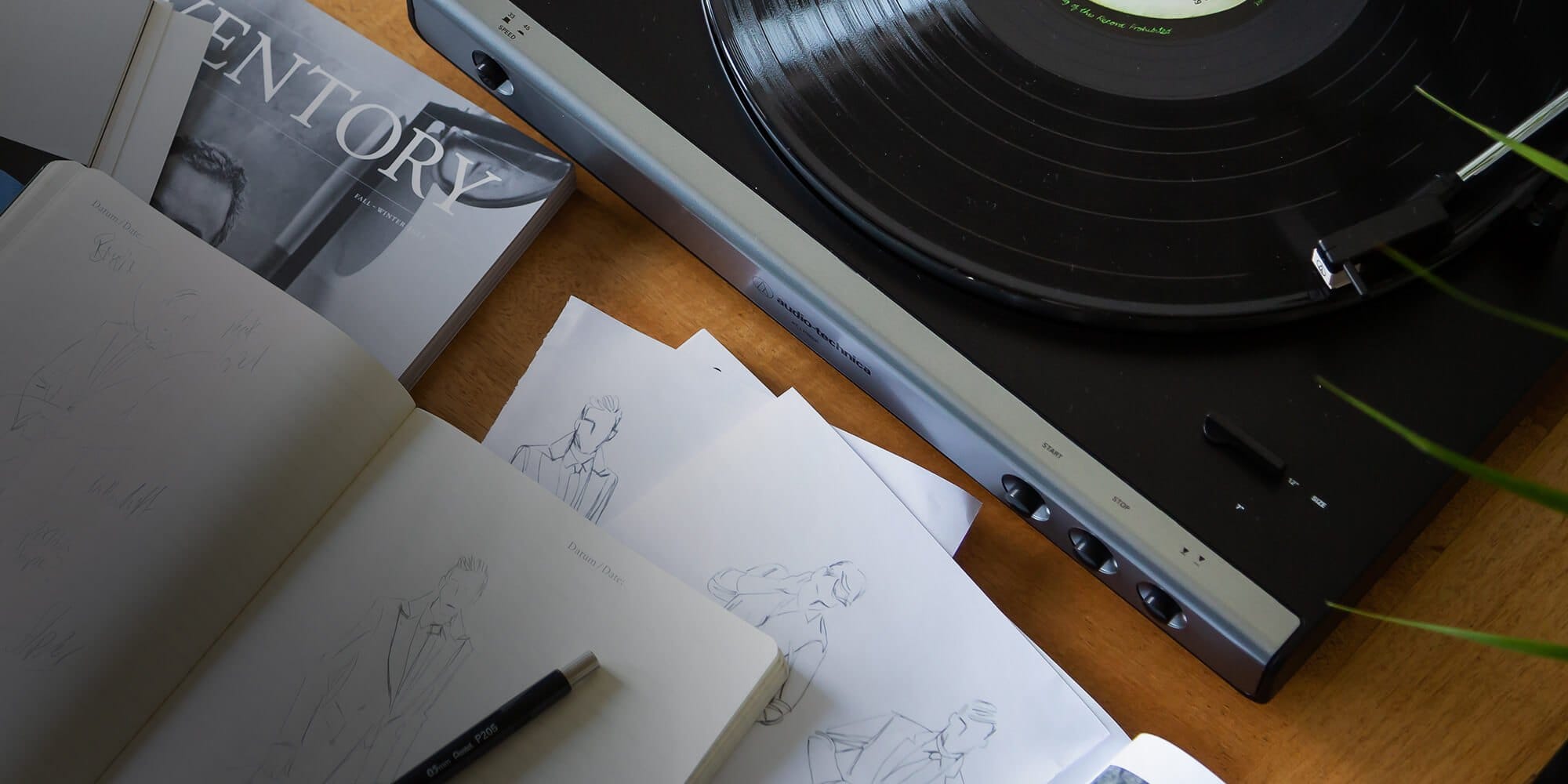
The limits are in the cartridge. The LP60X's Dual Magnet cartridge is built into the headshell, so you cannot change it, and your only upgrade path is a replacement stylus. It sounds clean and pleasant, but it is the reason the deck tops out early.
AT-LP70X: the smart middle
The LP70X keeps the automatic push-button operation and fixes the LP60X's biggest weakness. It carries an AT-VM95C cartridge from Audio-Technica's well-regarded VM95 family, with a 0.6 mil conical stylus, on a J-shaped tonearm that needs no balancing or setup. The cartridge itself is fixed, but it accepts any VM95 series replacement stylus, so you can move up to an elliptical or even more advanced stylus later for a real step up without buying a new turntable.
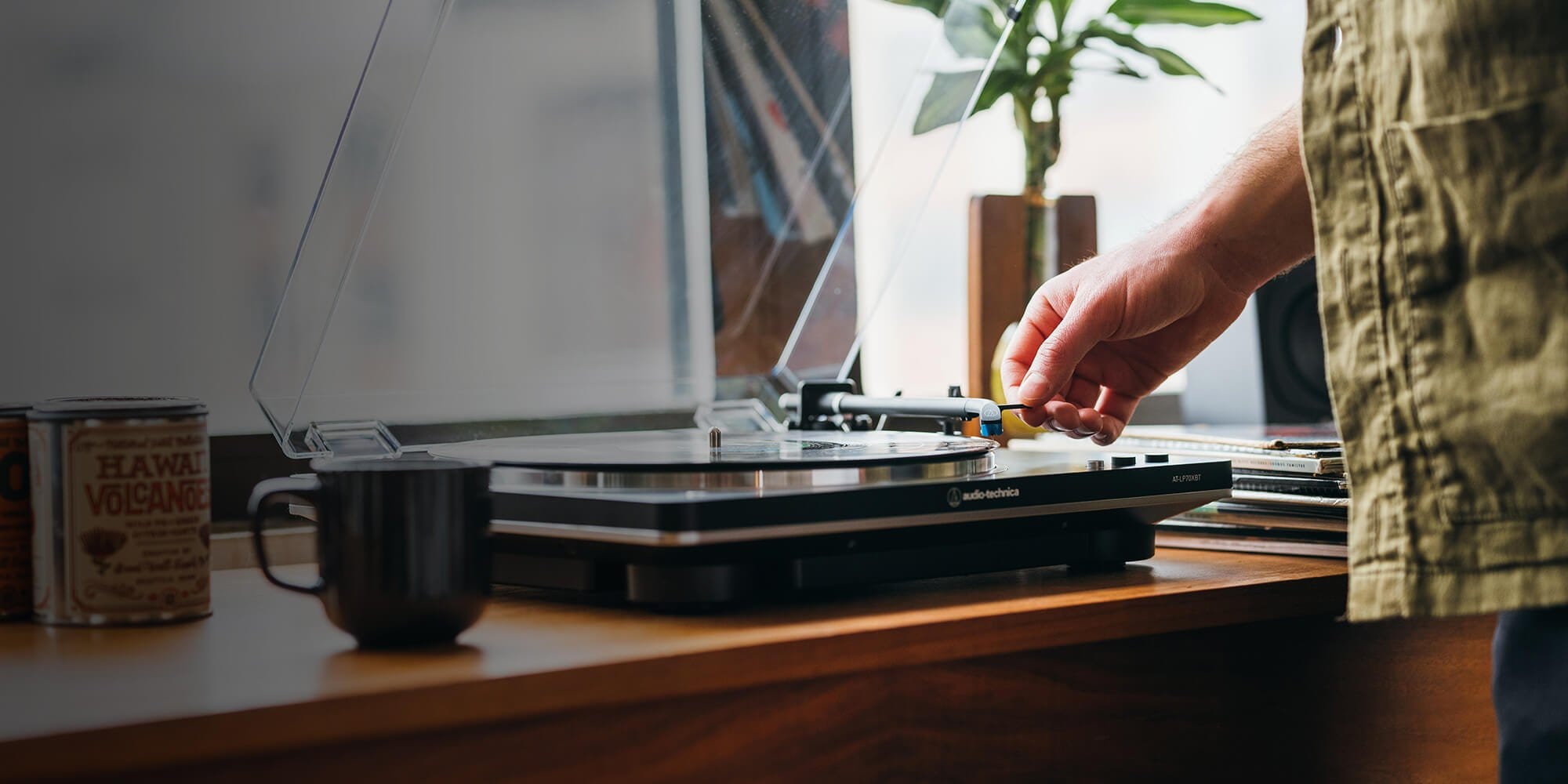
It also gets a three-piece anti-resonance chassis and a die-cast aluminum platter, and its signal-to-noise figure is the best of the three on paper. It comes in black and silver, black and bronze, or white and silver, which matters if the turntable sits in your living room.
AT-LP120XUSB: the keeper
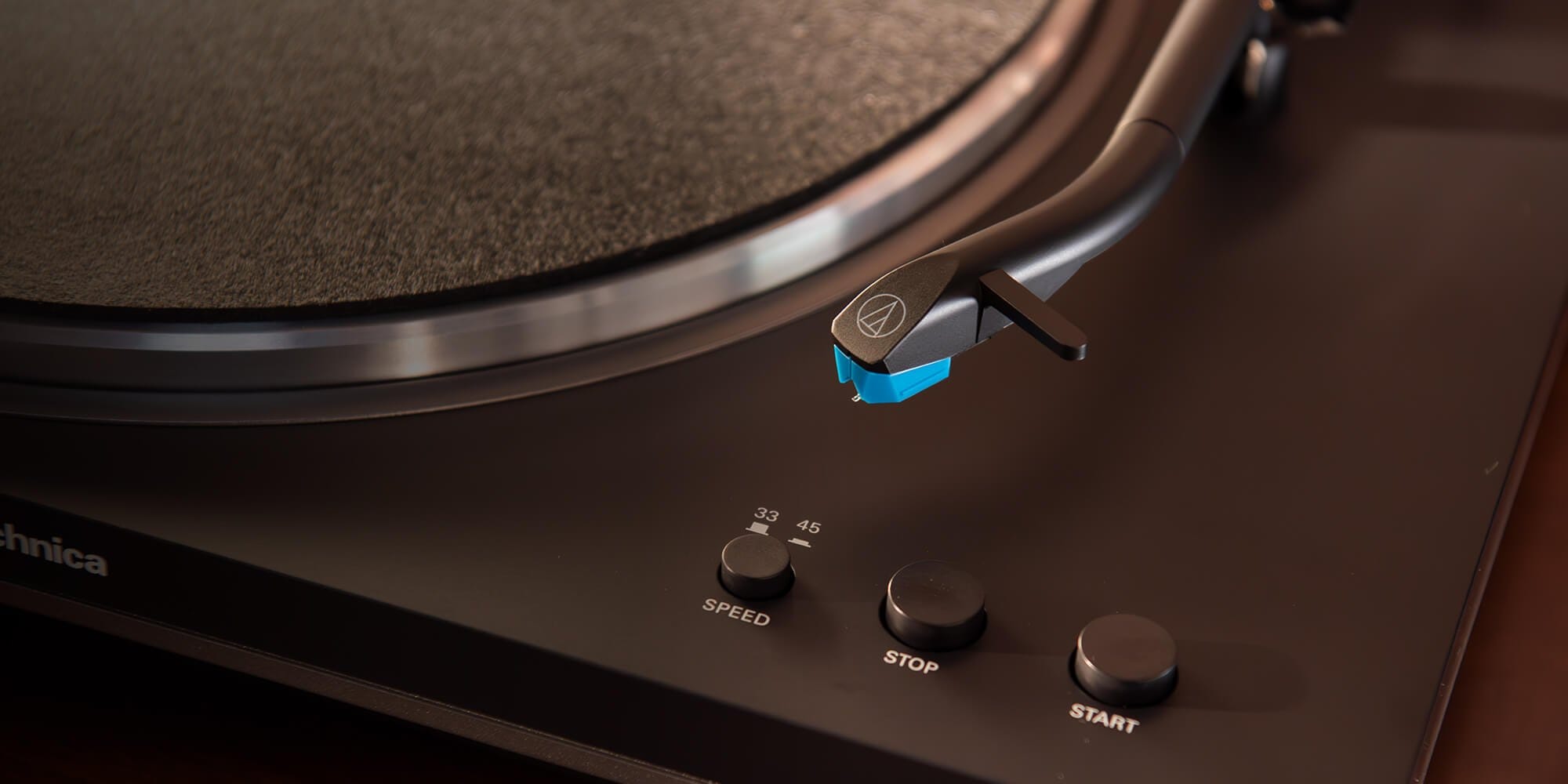
The LP120XUSB is a different kind of machine. It is direct drive, so the platter sits on the motor with no belt to stretch or replace, and it weighs about three times as much as the others. It is fully manual: you lift the arm with a cueing lever, lower it yourself and lift it off at the end. In return you get an S-shaped tonearm with adjustable tracking force and anti-skate, a removable universal headshell carrying an AT-VM95E cartridge with a finer 0.3 x 0.7 mil elliptical stylus, a third speed for 78 RPM (revolutions per minute) records, quartz-locked speed with a pitch slider, and a strobe platter to check speed by eye.
The USB output lets you record your records straight to a computer. Audio-Technica suggests the free Audacity software, but any recording app works. Because the headshell is a standard half-inch mount, you can fit almost any cartridge on the market as your ears and budget grow. It is a deck you can keep for a decade.
Which one for you
- A gift, a kid's room or a total beginner: AT-LP60X.
- You want push-button ease but care about sound: AT-LP70X.
- You are building a collection, DJ a little or want to digitize records: AT-LP120XUSB.
- You want wireless speakers: look at the Bluetooth versions, the AT-LP60XBT and AT-LP70XBT, covered in our best Bluetooth turntables guide.
Whichever you pick, pair it with good speakers. Our best powered speakers for turntables has picks that plug straight in.
Our call
Our call: buy the AT-LP70X. For most new vinyl listeners it is the best balance in the lineup. It is just as easy to use as the LP60X, it carries a far more capable cartridge in the VM95C, and the VM95 stylus upgrade path means it can improve with you. Spend the extra on the LP120XUSB only if you know you want manual control, 78 RPM playback or USB recording, and save with the LP60X only when simplicity and price matter more than sound.
Audio-Technica AT-LP70X (from $249 at Audio-Technica): our pick, automatic with an upgradable VM95C cartridge. Check price
Audio-Technica AT-LP60X (from $179 at Audio-Technica): the simplest, cheapest way to start. Check price
Audio-Technica AT-LP120XUSB (from $399 at Audio-Technica): direct drive, fully manual, three speeds and USB. Check price
All three at Audio-Technica: buy direct to pick your color. Shop it at Audio-Technica
New to vinyl? Start with our best turntables for beginners, see how the LP120XUSB stacks up in AT-LP120XUSB vs Fluance RT82, and browse more in our Vinyl and Reissues hub.
Prices are from Audio-Technica's US online store in November 2026 and change often. Specifications and history are from Audio-Technica's official product pages.
Unknowndivide may earn a commission from purchases made through links in this post. As an Amazon Associate we earn from qualifying purchases.