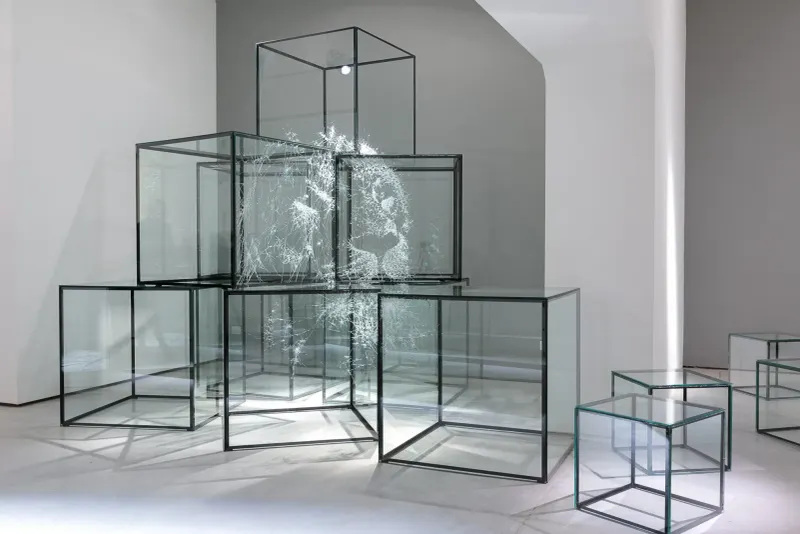
Up close, the surface is a web of cracks. Take a few steps back, and a face comes into focus, with almost photographic presence. Swiss artist Simon Berger makes those portraits by striking laminated safety glass with a hammer.
Berger was born in 1976 in Herzogenbuchsee and lives and works in Niederönz, Switzerland. He trained as a carpenter and is self-taught as an artist. He started with portraits painted with spray cans, made early works in wood, and later built assemblages from car bodies. In 2016, after an exhibition in Berlin left him dissatisfied with his own work, he looked for a new direction. He remembered the cracks he had seen years earlier while installing conservatory glass, then tried the idea on a car windscreen. Those first attempts worked quickly, and his technique of controlled impact followed from there.
How the fractures become a face
The material matters. Berger works on laminated safety glass, the kind that holds together as it breaks because a plastic layer sits inside the pane. That is what lets an image grow blow by blow instead of collapsing into loose shards. Each strike changes the structure. Force, position and density decide how the fractures spread. Open areas keep the transparency of the glass. Where the blows sit close together, the cracks catch the light and build the strongest tones.
From a distance, faces and forms become legible. Up close, they dissolve into impact points, radiating lines and dense fields of fractures. Light passes through the glass, catches on the broken edges, and shifts with the position of the viewer. A work seen in the morning can look different by evening. The Museo del Vetro in Murano has described this method as morphogenesis, a term Berger has used for the process. In 2022 he also gave that name to a public sculpture at the Sculpture Garden Biennale in Geneva.
Art historian and curator Sandrine Welte, writing of the work, put it this way: the destructive gesture of mere blows of a hammer on a glass pane ultimately "draws" images of great visual intrigue that emerge from the tangle of powerfully orchestrated cracks.
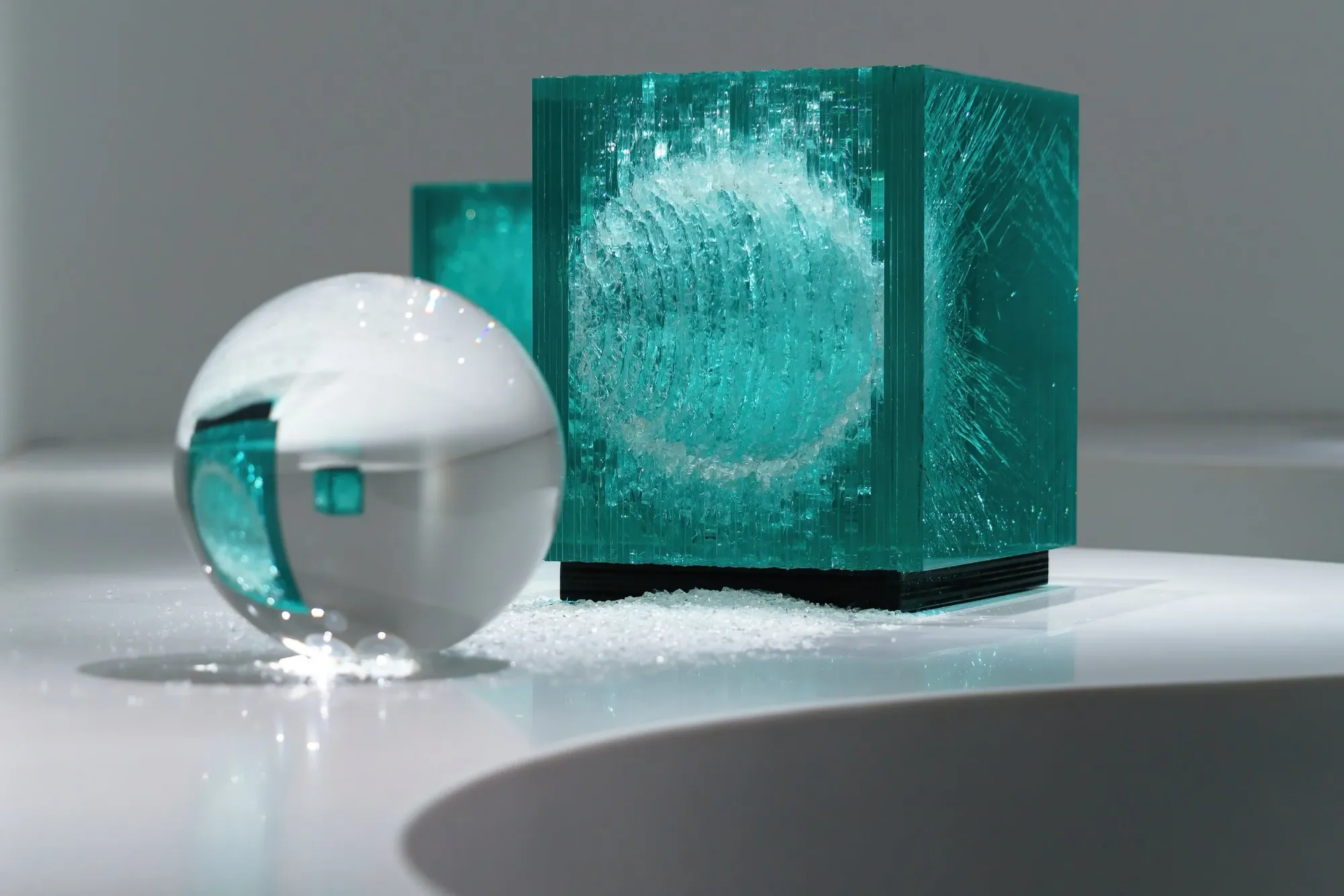
Cubes, live performances and work in public
The portraits often begin as a flat pane, hung on the wall. Berger's sculptures take the image into the room. Fractured glass is layered into cubes and spheres so that the motif sits inside the object and changes as you walk around it. Front, side and back can read as three different works held in one. Alongside the human face, the motifs now include animals and figures from mythology and architecture.
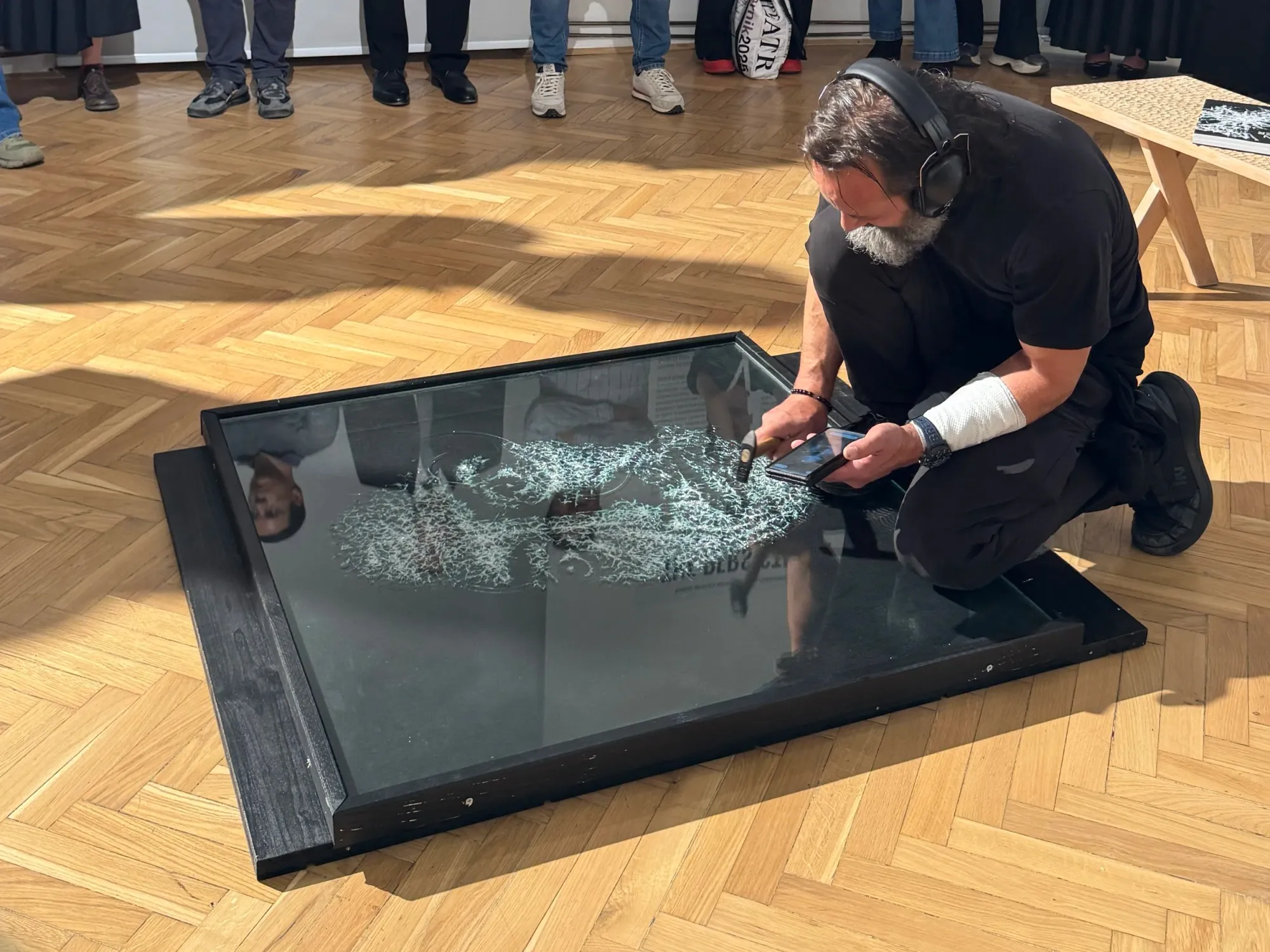
Live performances are part of the practice. In museums and cultural institutions, Berger creates a work in front of an audience, blow by blow, until the image becomes visible in the glass. His site names performances at the Fondation Pierre Gianadda in Martigny and, more recently, at the National Gallery of Bosnia and Herzegovina in Sarajevo.
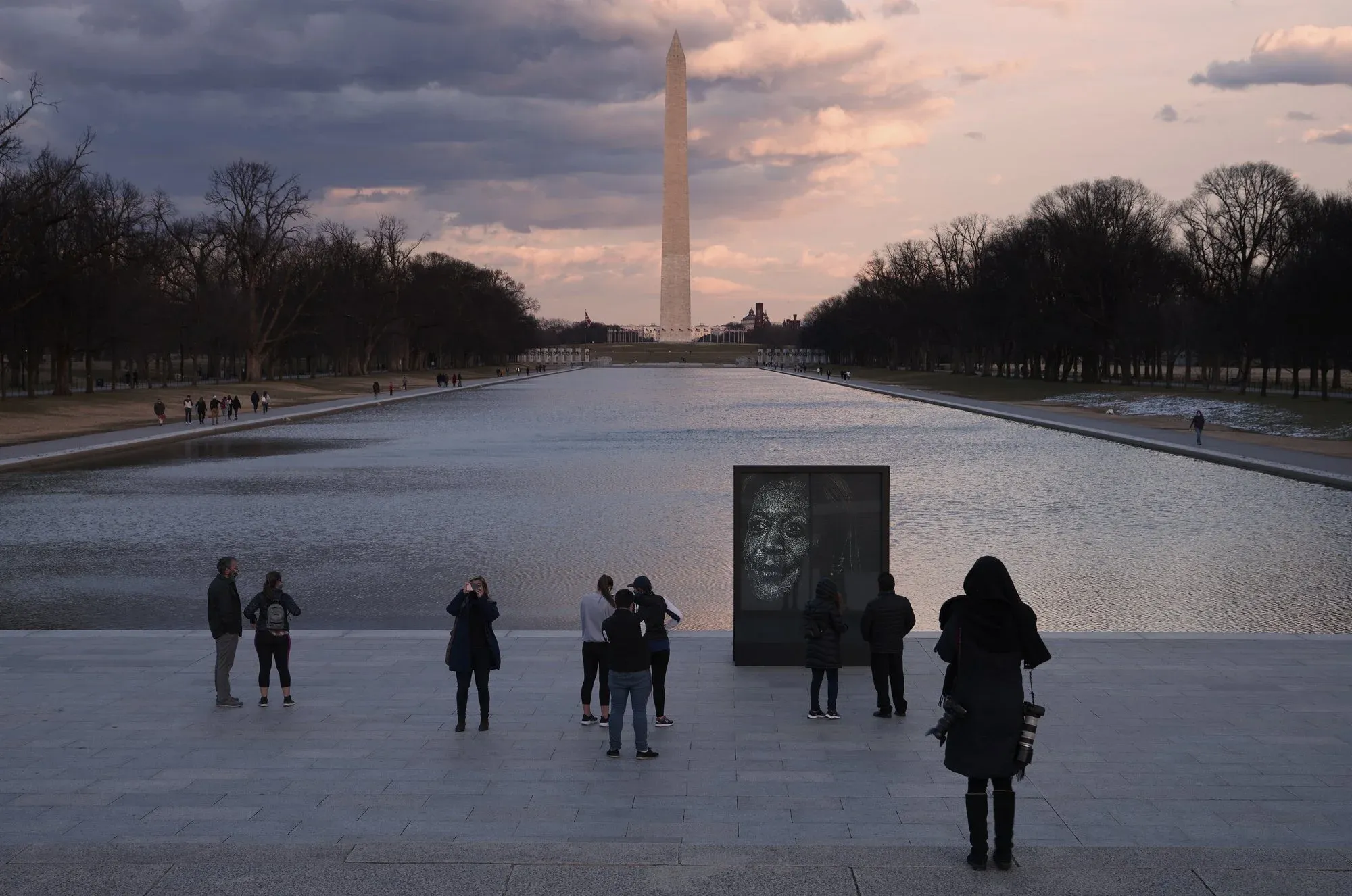
The same gesture also leaves the gallery. In 2021, his Glass Ceiling Breaker portrait of Kamala Harris stood at the Lincoln Memorial in Washington. Other public and site-specific projects range from a 2022 sculpture in Geneva to architectural commissions, including a permanent installation, The Four Icons, at The St. Regis Venice in 2025.
Shattering Beauty in Murano, and what is on view now
In 2023, Berger had a solo exhibition at the Museo del Vetro on Murano. Shattering Beauty ran from 28 January to 7 May 2023. The museum called it his first solo show in the Venice lagoon. It was curated by Sandrine Welte and Chiara Squarcina and organized with Berengo Studio. The installation mixed glass cubes and sculptural works of different sizes with a series of glass "canvases," some made for the exhibition. His work is now listed in the museum's collection.
This year he presented The Persistence of Presence at the National Gallery of Bosnia and Herzegovina in Sarajevo, a dialogue with Ferdinand Hodler and the gallery's Hodler collection. A monograph covering 2019 to 2023 appeared in 2024. New work is on view in Beyond the Surface, a duo exhibition with Add Fuel at Laurent Marthaler Contemporary in Montreux, from 8 October to 27 November 2026. The new pieces take the portraits of Eugène Carrière as a starting point: faces that emerge from darkness and recede into it again.
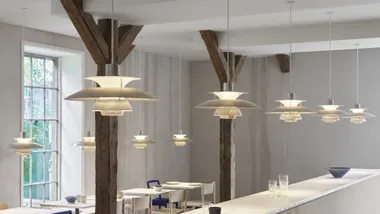
Photographs of blown glass, like the Iittala Aalto vase, can only hint at how a form holds light. Berger's images work the same way, and they also depend on your distance, as Isamu Noguchi's Akari lamps do. The fractures fully resolve only when you can walk toward them and back again.
Our call: see the work in person if a show or a live performance is within reach. If it is not, start with the portraits and sculptures on his site, and give yourself the room to step back.