
Two chairs dominate every conversation about serious seating, and both come from the same company and, remarkably, the same designer. The Aeron, with its black mesh and skeletal frame, launched in 1994 and became the most recognizable office chair ever made. The Embody, with its exposed spine and rib cage, arrived in 2008 and quietly became the chair people who sit all day swear by. Both are made by Herman Miller, both come with a 12-year warranty, and on the company's own store they sit within a hundred dollars of each other. The difference is in how they fit, how they feel and who they were designed for. Here is the story behind each, how they compare, and which one we would buy.
The quick answer
- Buy the Embody if you are of average build, sit for long stretches, shift and recline a lot, and want the most adjustable seat.
- Buy the Aeron if you are notably short, tall or heavy, if you run hot, or if you want the design icon at a slightly lower price.
- Look at the Mirra 2 if both feel like too much money. It is Herman Miller's lower-priced mesh chair, designed by the Berlin team Studio 7.5.
The chair that started as a chair for the elderly
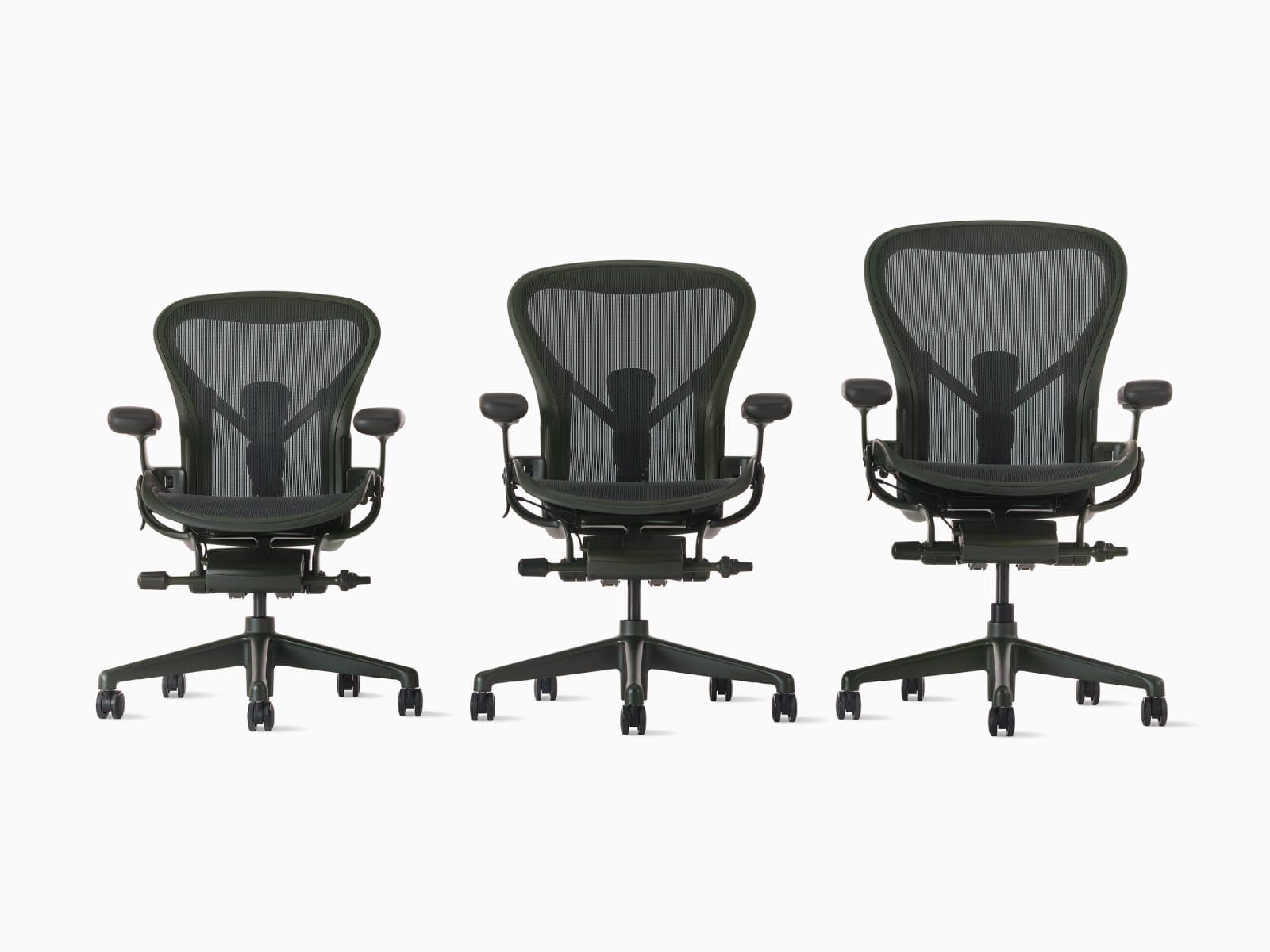
The Aeron did not appear from nowhere. Its co-designer Bill Stumpf had already created Ergon for Herman Miller in 1976, which the company calls the world's first research-based ergonomic chair. In 1984 he teamed up with Don Chadwick on the Equa, marketed as a chair for people who cannot sit still. Then, in 1987, the pair took on a pilot project to design comfortable seating for elderly people. The result, the Sarah Chair, experimented with a new kind of suspension made from woven elastic material instead of foam.
That is the surprising root of the most famous office chair in the world. The idea of sitting on a stretched, breathable membrane rather than a cushion grew into Pellicle, the proprietary mesh that made the Aeron look like nothing else when it launched in 1994. Pellicle flexed in several directions and was good-looking enough to be left exposed, with no foam, fabric or leather covering it. At a time when office chairs were upholstered boxes, the Aeron looked like an X-ray of one.
It was an immediate design landmark. The Aeron entered the permanent collection of the Museum of Modern Art in New York, won the Gold Prize at Japan's Good Design Awards in 1996, and in 2005 even turned up in an episode of The Simpsons as God's personal throne. Herman Miller remastered it in 2016 with Chadwick's help, adding a refined tilt, an adjustable back support called PostureFit SL and a new 8Z Pellicle with eight separately tensioned zones, four in the seat and four in the back. In 2026 it gained two new colors, a midnight blue called Nightfall and a dark olive called Jasper, plus a lighter aluminum base. More than 30 years in, the shape is unmistakably the same.
Embody: the chair designed to be good for you
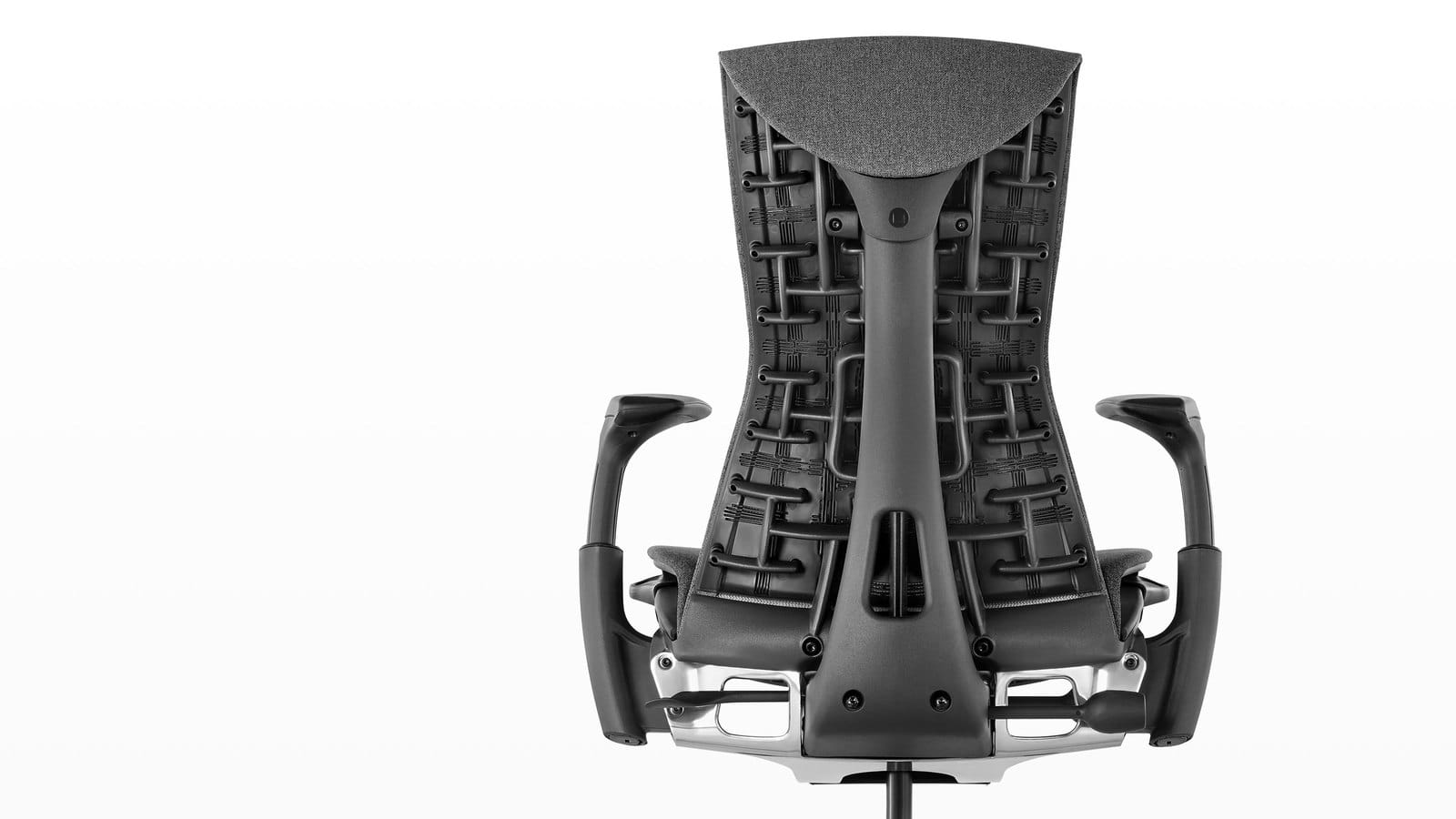
The Embody began as Bill Stumpf's next big question. Most ergonomic chairs aim to reduce the harm of sitting. Could a chair actually have positive effects on the body? Stumpf brought the idea to Herman Miller and began the work with designer Jeff Weber, testing hypotheses such as whether constantly shifting surface pressure would be healthier than a static cushion. Then, in 2006, Stumpf died. Weber carried the project on, and it was he who gave the Embody its final form and function, building on his late partner's idea.
More than 20 physicians and doctoral researchers in biomechanics, vision, physical therapy and ergonomics advised on the chair, and prototypes were put through lab studies of posture, pressure distribution and even metabolism. The result looks like anatomy. The back has a central spine with flexible ribs, and a dial called Backfit lets you set it to the natural curve of your own spine. Under you, the seat is built from four separate layers, each made by a different manufacturing process, and the surface is a matrix of what Herman Miller calls pixels, small supports that move independently with every shift of your weight. Nothing is hidden. Every working part is part of the look, which is why the Embody belongs in a conversation about design icons as much as the Aeron does.
Aeron vs Embody compared
| Herman Miller Aeron | Herman Miller Embody | |
|---|---|---|
| Designers | Bill Stumpf and Don Chadwick | Bill Stumpf and Jeff Weber |
| Launched | 1994, remastered 2016 | 2008 |
| Sizes | Three: A, B and C | One |
| Seat | 8Z Pellicle mesh, eight tension zones | Four-layer seat with independent pixel supports |
| Seat depth | Fixed by size: 16, 17 or 18.5 inches | Adjustable from 15 to 18 inches |
| Back support | PostureFit SL or adjustable lumbar pad, chosen when ordering | Backfit dial adjusts the flexible spine |
| Weight capacity | 300, 350 or 400 lb by size | 300 lb |
| Recycled content | More than 50 percent, including ocean-bound plastic | 42 percent, 95 percent recyclable |
| Warranty | 12 years | 12 years |
| Store price, default build | $2,305 (30 percent off: $1,613.50) | $2,395 (30 percent off: $1,676.50) |
| Best for | People outside average size, warm rooms, design lovers | Long hours, frequent shifting, average builds |
Fit: three sizes against one adjustable seat
This is the most important difference and the one most buyers overlook. The Aeron solves fit by coming in three sizes. Herman Miller recommends size A for people about 4 feet 10 inches to 5 feet 4 inches tall and up to 300 pounds, size B for 5 feet 2 inches to 6 feet and up to 350 pounds, and size C for 5 feet 10 inches to 6 feet 6 inches and up to 400 pounds. The company says the range covers everyone from the 1st to the 99th percentile of body sizes, against the 5th to 95th that most office chairs target. Each size changes the backrest height, seat width, tilt mechanism and even the base. B is the size most buyers choose.
The Embody takes the opposite approach: one size with more adjustment built in. Its seat slides from 15 to 18 inches deep, so you can set it to the length of your thighs, and the seat height runs from 16 to 20.5 inches. That makes it a wonderful fit for the broad middle of the population and a worse one for people at either end. Its 300 pound capacity is also lower than the Aeron B and C. If you are very petite or very tall and heavy, the Aeron in the right size is simply the better-fitting chair.
Feel: mesh hammock or floating surface
Sit in an Aeron and you are suspended in tensioned mesh. The edge of the seat is firm, the mesh breathes freely, and the chair holds you in a defined, upright posture with its PostureFit pad pressing gently at the base of your spine. The Harmonic 2 tilt lets you rock back smoothly. People who run warm love it, because there is nothing between you and the air. Some find the firm front edge of the seat noticeable over long sessions, and the feeling is more supportive frame than soft cushion.
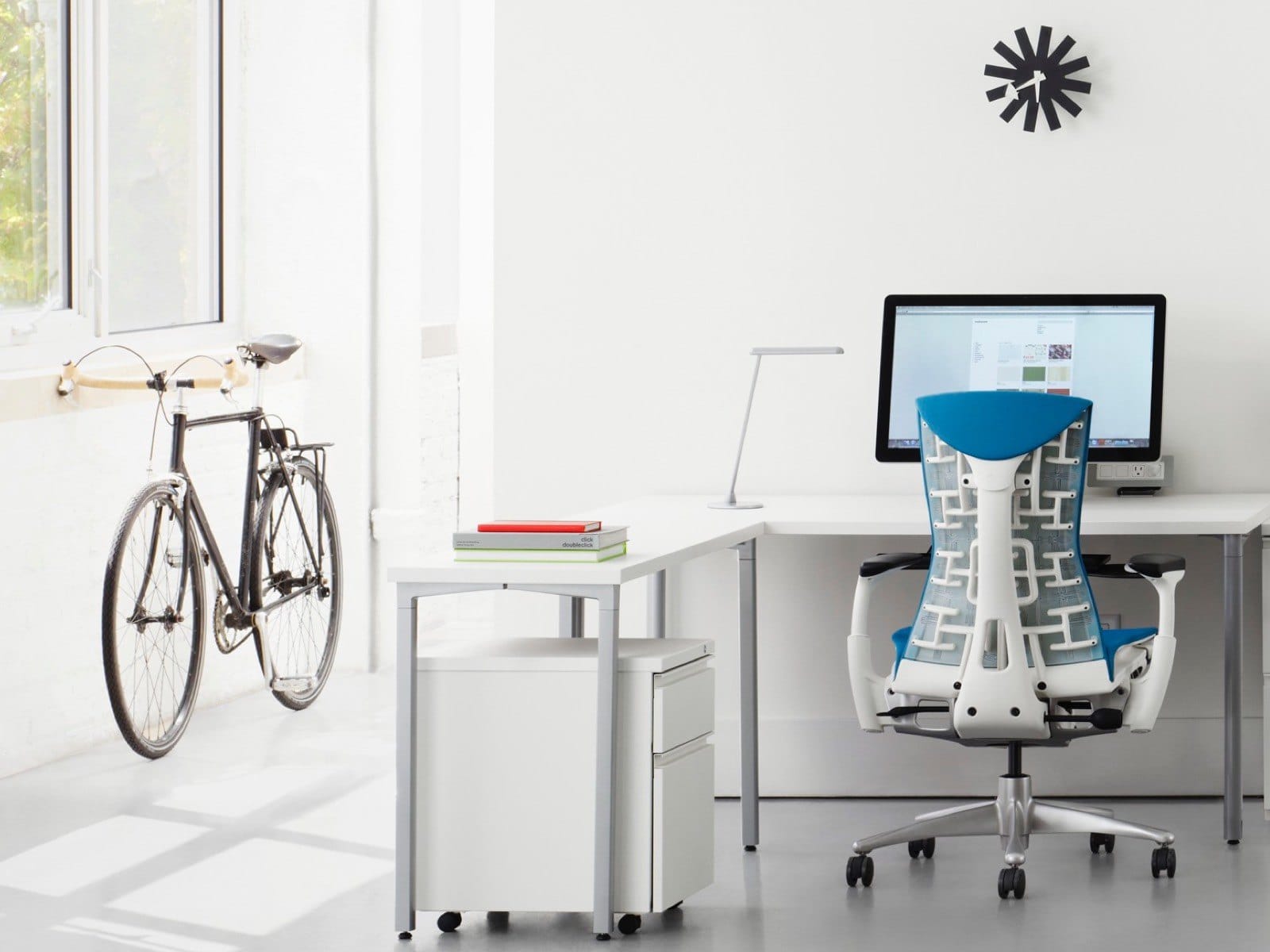
Sit in an Embody and the sensation is closer to floating. The pixelated seat spreads your weight evenly and responds as you move, and the narrow back follows you when you lean forward to type or recline to think, so support stays constant through every position. The narrow back also leaves your shoulders and arms free, which suits people who reach and twist a lot at a desk. It is upholstered in fabric over its layers rather than open mesh, and although it is designed for airflow, it is not as cool as the Aeron on a hot day.
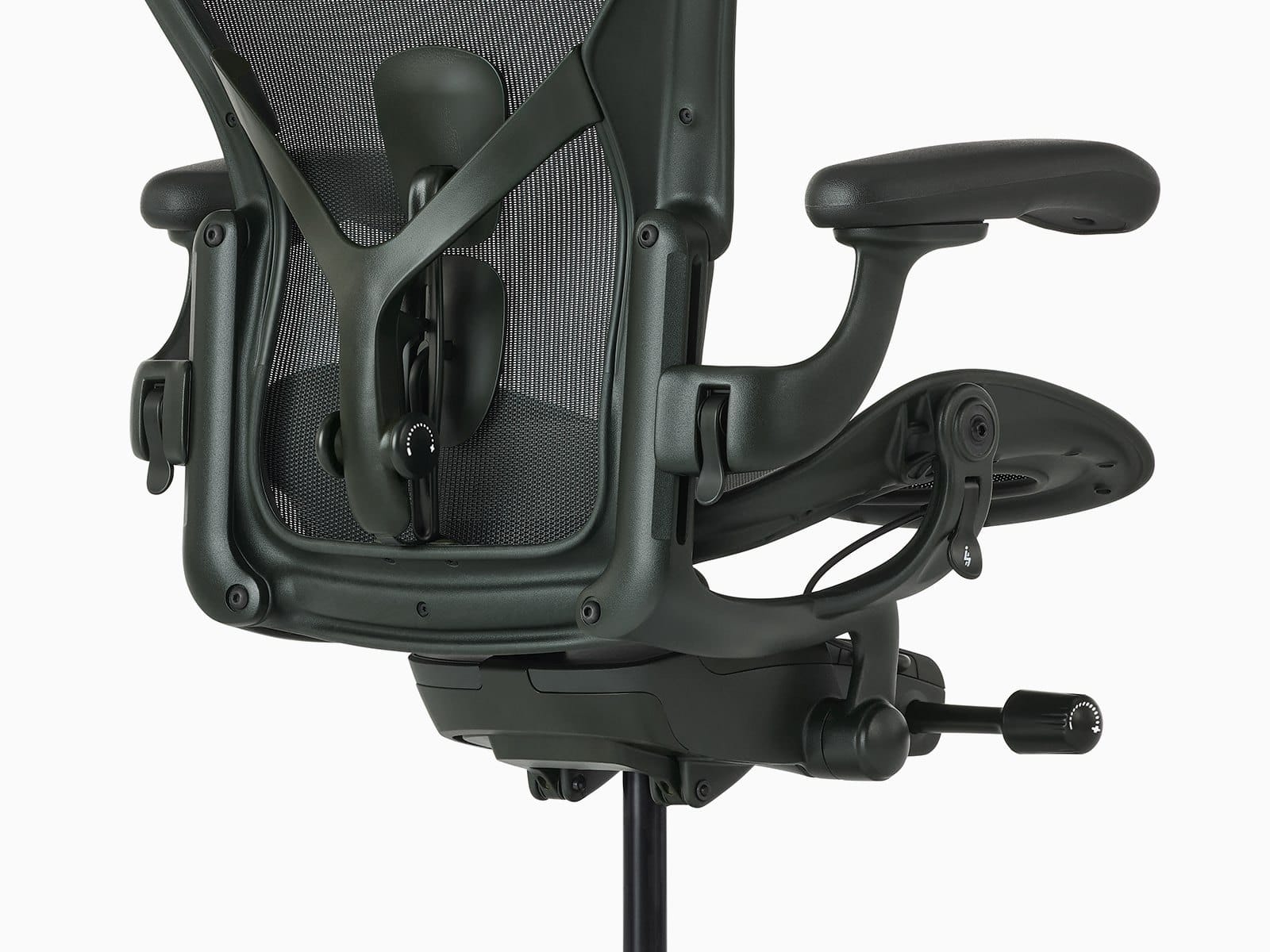
There is also a practical difference in ordering. The Aeron is configured when you buy it: size, back support, tilt and arm style are all choices, and getting them wrong means living with them. The Embody comes with its key adjustments, seat depth, Backfit and movable arms, built in, so it is harder to order the wrong one.
Price and what the sale changes
On Herman Miller's own store in mid-November, the default Aeron build was listed at $2,305 and the default Embody at $2,395, and both were 30 percent off, at $1,613.50 and $1,676.50. That leaves a gap of just $63 between them, small enough that price should not decide this for you. The Mirra 2 was discounted by the same amount, from $1,915 to $1,340.50, and it carries a 350 pound capacity. Exact prices move with color, size and options, so build the chair you want before comparing.
Which Herman Miller chair should you buy
- The all-day home office worker of average height: the Embody. Adjustable seat depth and support that follows you are worth the small premium over eight-hour days.
- Anyone under about 5 feet 4 inches: the Aeron in size A. A one-size chair rarely fits a smaller frame as well.
- Anyone over 300 pounds, or near the top of the height range: the Aeron in size B or C, rated to 350 and 400 pounds.
- The producer, editor or gamer who runs hot under studio lights: the Aeron. Open mesh wins in a warm room.
- The design collector: the Aeron. It is the one in the Museum of Modern Art, and in Nightfall or Jasper it is the most interesting it has looked in years.
- The budget-conscious buyer who still wants a Herman Miller: the Mirra 2.
Our call
Our call: buy the Embody, if it fits you. For most people who sit at a desk for a living, its adjustable seat, responsive surface and spine that moves with you make it the more comfortable chair over a long day, and at current prices it costs only $63 more than the Aeron. Buy the Aeron if you fall outside the Embody's single size, if you run hot, or if owning one of the defining designs of the 20th century matters to you. Either way, you are buying a chair built to last more than a decade, which is the best argument for spending this much on something you sit on.
Herman Miller Embody: our pick for long days at an average build, with adjustable seat depth and the Backfit spine. Shop it at Herman Miller
Herman Miller Aeron: the 1994 icon in three sizes, for petite or tall buyers and warm rooms. Shop it at Herman Miller
Herman Miller Mirra 2: the lower-priced mesh option from Studio 7.5, rated to 350 pounds. Shop it at Herman Miller
Want more of the furniture story? Read our guides to the Eames Lounge Chair, another Herman Miller icon, mid-century modern design, Dieter Rams' 10 principles of good design and our comparison of Vitsoe vs USM Haller vs String shelving. More like this: browse every related post in our Design Icons Hub.