Poul Henningsen spent his whole career chasing one thing: light that never hits you in the eye. The Danish writer, designer and architect hated bare bulbs and harsh shadows, and between 1925 and 1958 he solved the problem three times in three very different shapes. The PH 5 is the pendant over countless Scandinavian dining tables. The PH Artichoke is a 72-leaf sculpture that costs as much as a used car. The PH 3/2 is the original 1925 idea, sitting on a table. All three are still made by Louis Poulsen, all three are copied endlessly, and they do very different jobs. Here is how they compare and which one to buy.
The quick answer
- Buy the PH 5 if you want one great light over a dining table or kitchen island. It is the most useful of the three and, at $1,365 in most colors on Louis Poulsen's US store, the easiest to justify.
- Buy the PH Artichoke if you have a big room, a high ceiling and a budget that starts around $17,490. It is a centerpiece first and a lamp second.
- Buy the PH 3/2 Table Lamp if you want Henningsen's light on a desk, sideboard or bedside table, from $1,110. It is the purest version of his three-shade idea.
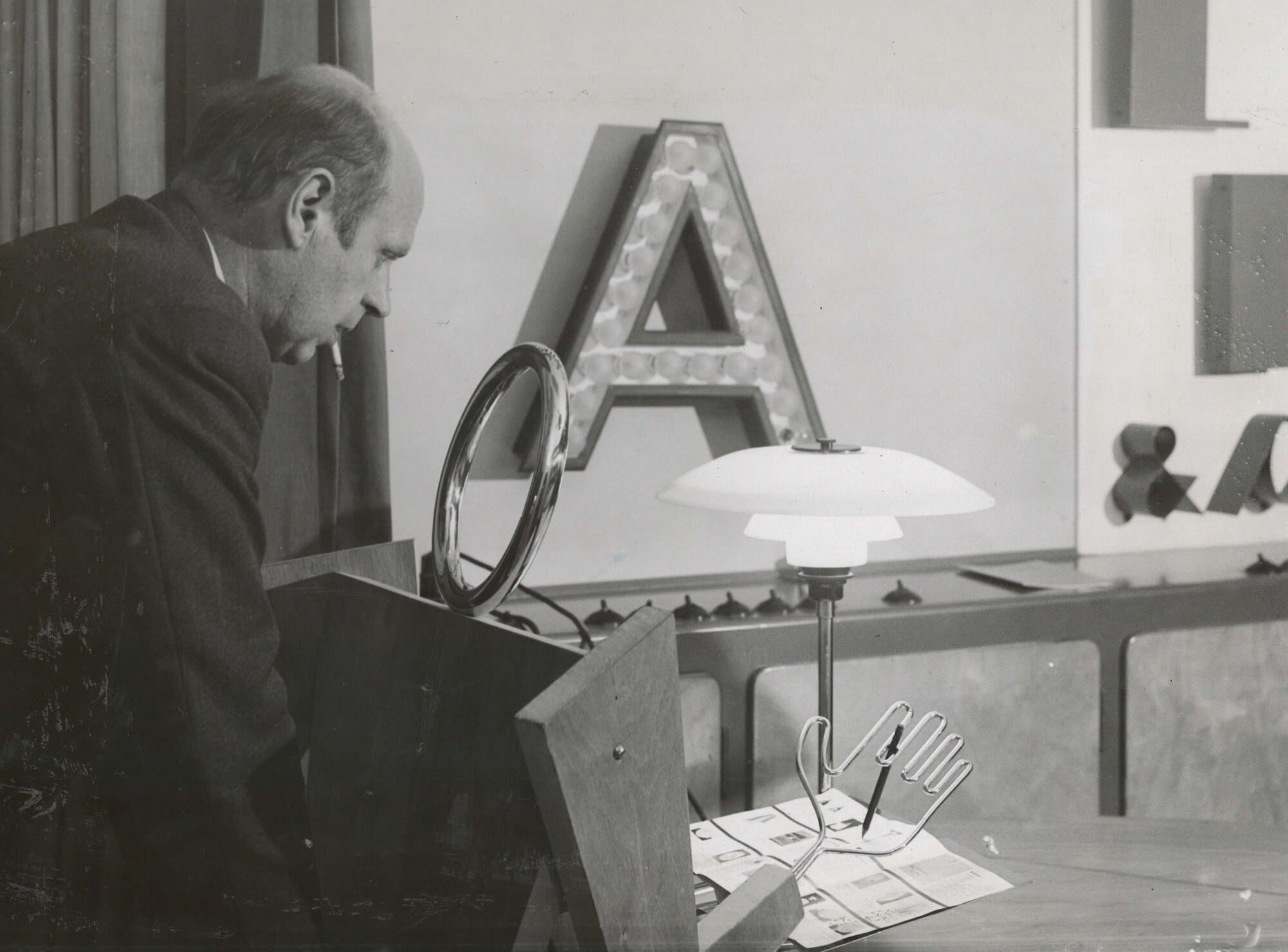
The man who hated glare
Henningsen was born in Copenhagen in 1894, the son of the well-known Danish actress Agnes Henningsen, and, as Louis Poulsen likes to point out, he never actually graduated as an architect. He studied at technical schools in Frederiksberg and Copenhagen, then built a career as a writer and designer with a near-scientific obsession with light.
In 1925 he created his three-shade system. Each shade is shaped using a logarithmic spiral so that light from the bulb bounces from one shade to the next, spreading evenly and never shining straight into your eyes. The first lamp to use it was made with Louis Poulsen for the Paris exhibition that same year, and the Paris Lamp won a gold medal. Nearly every PH lamp since is a variation on that system.
Here is the detail almost nobody knows: the numbers in the names are a size code. Louis Poulsen explains that each PH number refers to the size of its shades. In the PH 3/2, the 3 is a top shade of about 30 centimeters and the 2 means the lower shades come from the smaller 2/2 lamp. So the PH 5 is, roughly, a lamp with a 50 centimeter top shade, which matches its 19.5 inch width.
Louis Poulsen PH5 vs PH Artichoke vs PH 3/2, side by side
| PH 5 | PH Artichoke | PH 3/2 Table Lamp | |
|---|---|---|---|
| Type | Pendant | Pendant | Table lamp |
| Designed | 1958 | 1958 | Three-shade system from 1925 |
| Size | 19.5 in wide, 10.5 in tall (PH 5 Mini 11.8 in) | From 18.9 in wide in four sizes, Small to Extra Large | 11.4 in wide, 17.9 in tall (smaller PH 2/1 also made) |
| Materials | Spun or painted metal shades, frosted glass diffuser | 72 laser-cut leaves in copper, brass, steel or painted finishes | Mouth-blown three-layer opal glass, metal body |
| Best place | Over a dining table or island | High ceilings, halls, big dining rooms | Desk, sideboard, bedside |
| Louis Poulsen US price | $990 to $1,715 by size and finish ($1,365 in most colors) | $17,490 to $26,995 | $1,110 to $1,860 |
Sizes, materials and price ranges are from Louis Poulsen's official US product pages in November 2026. Louis Poulsen also sells many other PH sizes, including the PH 3½-3 pendant, so treat these three as the headline models in each category.
PH 5: the one that earns its place
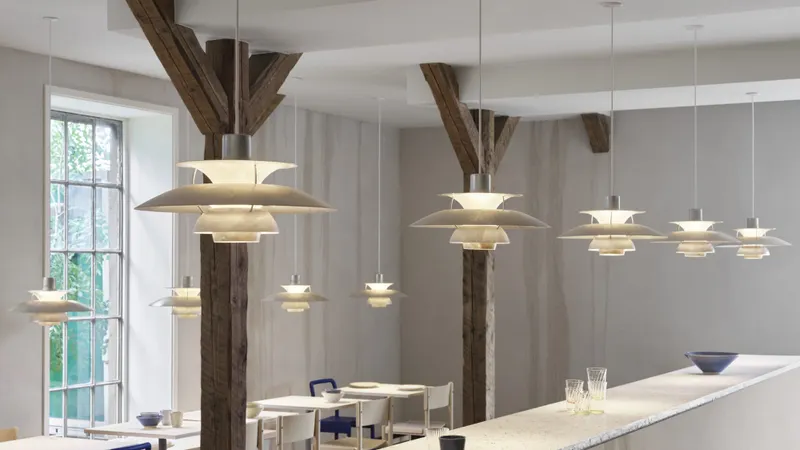
Henningsen designed the PH 5 in 1958 for a very practical reason. Light bulbs kept changing shape and size, and every new bulb risked glare in his older lamps. The PH 5 was built to work with any bulb of its time. Its stacked shades send light both down onto the table and out sideways, and they light up the lamp itself, so it glows instead of glaring. A small frosted-glass diffuser in the lower shade makes the downward light, in Louis Poulsen's words, 100 percent glare-free.
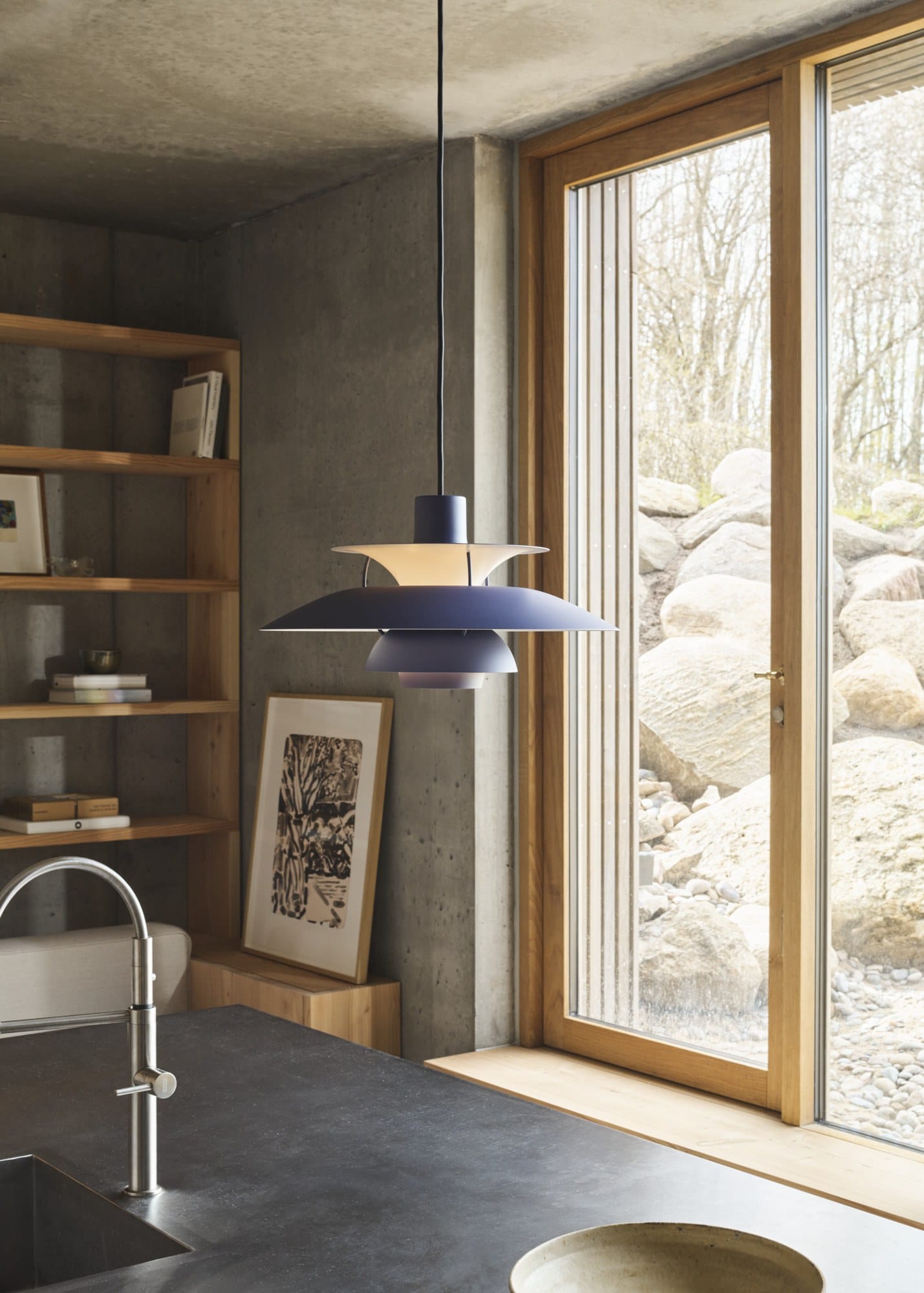
A surprise for anyone who thinks of the PH 5 as a white lamp: Henningsen's original included red and blue shades to improve the color of the light. Today it comes in Monochromes, Pastels and blended Hues Of finishes, plus the PH 5 Retake, an online-only reimagining of the vintage PH 5 with the paint stripped away to bare metal. In the US it takes a standard E26 bulb, including smart bulbs. Louis Poulsen suggests hanging it 24 to 28 inches above the table, and spacing two of them about 30 inches apart over a long one.
PH Artichoke: a sculpture that happens to light a room
The PH Artichoke was designed the same year for a single building, the Langelinie Pavillonen restaurant in Copenhagen, and the original lamps still hang there today. It has 72 leaves arranged in 12 rows of six, and every leaf is positioned so you cannot see the bulb from any angle. The light comes out diffused, with a pattern thrown across the ceiling and walls. Louis Poulsen says much of the production is still carried out by hand, which goes a long way to explaining the price.
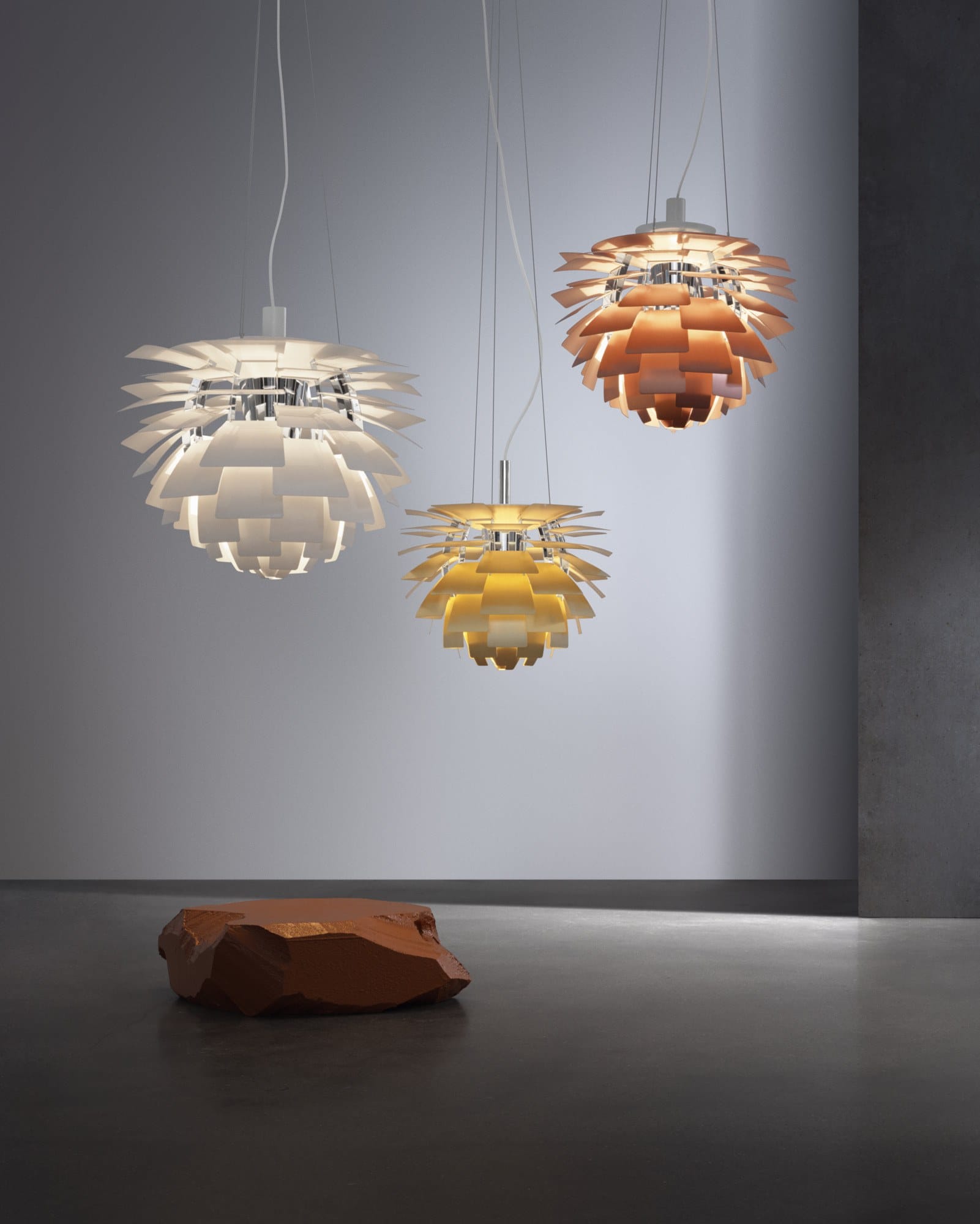
It comes in four sizes, with laser-cut leaves in brass, copper or brushed stainless steel, or powder-coated in white, black and soft colors. The bigger sizes are meant for lofty ceilings and entry halls, while the smallest can hang over a dining table. Be honest about scale before you buy: even the smallest is almost as wide as a PH 5 and much taller, and in a low room it can dominate everything.
PH 3/2: the 1925 idea on your desk
The PH 3/2 Table Lamp is the closest you can get to the original Paris Lamp in a modern home. Its three shades are mouth-blown, three-layer opal glass, glossy on top and sandblasted matte underneath, so the light is soft and pushed mostly downward. Louis Poulsen says it is built partly by hand in Denmark, and each glass shade varies slightly because it is blown individually.
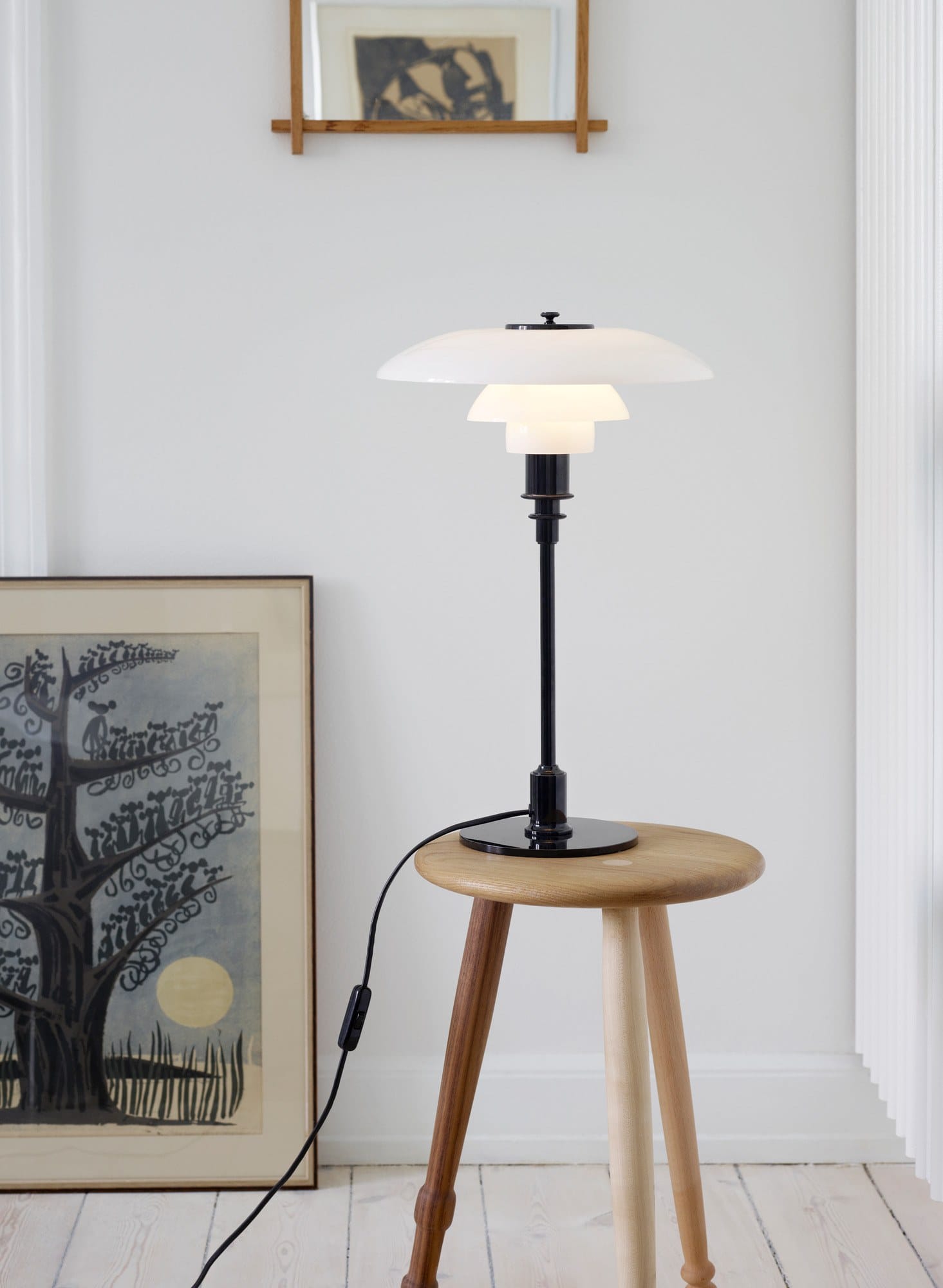
It is offered in metallized brass and black, high-luster chrome and glossy colors including beige, burgundy, deep blue and deep green. At 17.9 inches tall it is a real lamp, not a mini, so it suits a sideboard or a desk better than a crowded nightstand. If space is tight, the smaller PH 2/1 uses the same idea.
Which PH lamp to buy, by room
- Dining table or kitchen island: the PH 5, or two of them over a long table.
- Small apartment or low ceiling: the PH 5 Mini over a small table, or the PH 3/2 Table Lamp on a sideboard.
- Home office or reading corner: the PH 3/2 Table Lamp.
- Grand entry, double-height living room or once-in-a-lifetime purchase: the PH Artichoke.
- You want the story more than the color: a PH 5 Retake, the vintage look in bare metal.
Our call
Our call: buy the PH 5. It is the lamp that best does what Henningsen set out to do, a soft, glare-free pool of light over the place people actually sit, and it looks just as good switched off. At $1,365 in most colors it is a serious purchase, but it is one you keep for decades. Choose the PH 3/2 Table Lamp if you want the same idea on a desk, and save the PH Artichoke for a room big enough, and a budget generous enough, to let it be the star.
Louis Poulsen PH 5 pendant ($1,365 in most colors): our pick, the dining-table classic from 1958. Shop it at Louis Poulsen
Louis Poulsen PH 3/2 Table Lamp (from $1,110): the 1925 three-shade system in mouth-blown opal glass. Shop it at Louis Poulsen
Louis Poulsen PH Artichoke (from $17,490): 72 leaves, four sizes, the ultimate statement light. Shop it at Louis Poulsen
Louis Poulsen PH 5 Retake: the PH 5 reimagined in bare metal, sold only online by Louis Poulsen. Shop it at Louis Poulsen
More lighting icons: see how Henningsen lit a pianist's sheet music in our PH 1/1 Piano story, learn to tell a real Flos Arco from a copy in our Arco lamp guide, compare desk lamps in Anglepoise vs Tolomeo vs Tizio, and browse the rest in our Design Icons Hub.
Prices are from Louis Poulsen's US online store in November 2026 and change often. Design history, dimensions and materials are from Louis Poulsen's official product and designer pages.
Unknowndivide may earn a commission from purchases made through links in this post.