
Here is the thing most Fujifilm comparisons bury: the X-T5, the X-T50 and the X-E5 take exactly the same pictures. All three use Fujifilm's 40.2 megapixel X-Trans CMOS 5 HR sensor (CMOS stands for complementary metal-oxide semiconductor) and the same X-Processor 5. All three have five-axis in-body stabilization rated up to 7 stops, the same subject-detection autofocus and the Film Simulations that make Fujifilm files look like film. So the question is not which camera is better. It is which body you will actually carry, and which controls you want under your fingers. Here is how they compare, and which one to buy.
The quick answer
- Buy the X-T5 if you want the classic Fujifilm experience: ISO, shutter speed and exposure dials on top, a big viewfinder, weather sealing, two card slots and nearly double the battery life. It is the one to buy if you shoot outdoors, travel hard or do paid work.
- Buy the X-T50 if you want the same images in a smaller, lighter SLR-style body with a dedicated Film Simulation dial. It is the best value of the three.
- Buy the X-E5 if you want a flat, rangefinder-style street camera that slips into a jacket pocket with a pancake lens, and you love beautiful machined metal.
The camera that made dials cool again
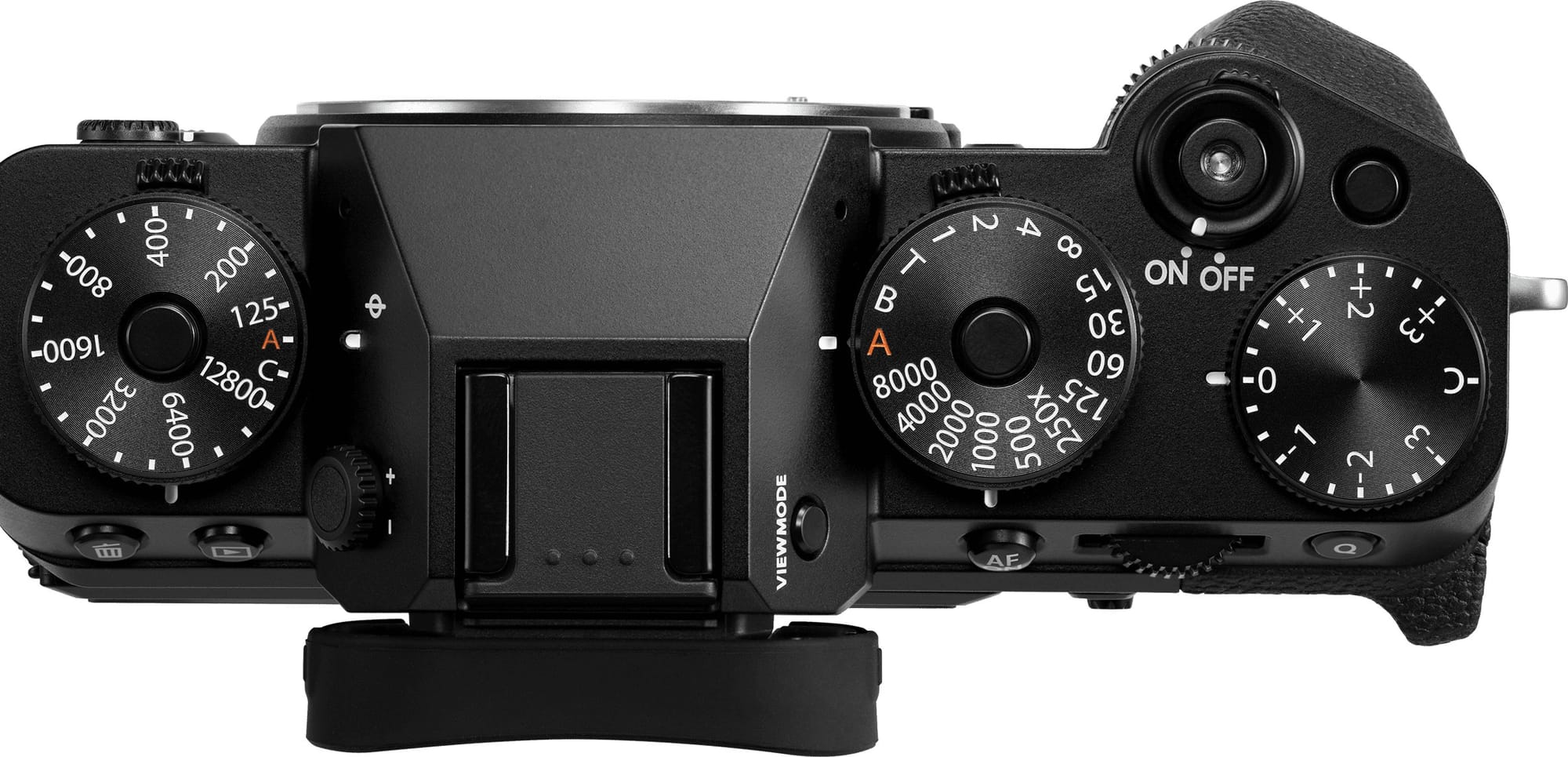
Fujifilm released the first X-T, the X-T1, in 2014 to mark the company's 80th anniversary, and in its own words that camera went on to lead a mirrorless revolution. The pitch was simple and very un-modern: put the exposure settings back on physical dials, like a film camera, so you can read and change everything without a menu. The X-T5 arrived in November 2022 as the fifth generation, carrying Fujifilm's newest sensor in what the company calls a timeless, classic body.
The color science is the other half of the story. Fujifilm made photographic film for decades, and its Film Simulations are digital recreations of its own stocks: Provia, Velvia, Astia, Classic Chrome, Acros for black and white and, newest, Reala Ace. The X-E5 page talks about 90 years of Fujifilm color science behind them. If you have ever shot Fujifilm film, these are the looks you remember. Our Fujifilm Film Simulations guide explains each one.
Fujifilm X-T5 vs X-T50 vs X-E5, side by side
| X-T5 | X-T50 | X-E5 | |
|---|---|---|---|
| Sensor and processor | 40.2MP X-Trans CMOS 5 HR, X-Processor 5 | Same | Same |
| In-body stabilization | 5-axis, up to 7.0 stops | 5-axis, up to 7.0 stops | 5-axis, up to 7.0 stops center, 6.0 at the edges |
| Body style | SLR style, center viewfinder | Small SLR style, center viewfinder | Flat rangefinder style, corner viewfinder |
| Top dials | ISO, shutter speed, exposure compensation | Shutter speed, exposure compensation, Film Simulation | Machined aluminum top plate with a Film Simulation dial |
| Viewfinder | 3.69 million dots, 0.8x | 2.36 million dots, 0.62x | 2.36 million dots, 0.62x |
| Rear screen | 3 inch, tilts three ways | 3 inch, tilts | 3 inch, tilts |
| Fastest mechanical shutter | 1/8000 sec | 1/4000 sec | 1/4000 sec |
| Weather sealing | Yes, 56 sealed points, works to 14F | Not advertised | Not advertised |
| Card slots | Two SD, both UHS-II | One SD | One SD |
| Battery, normal mode | About 580 shots | About 305 shots | About 310 shots |
| Weight with battery and card | 557 g (1.23 lb) | 438 g (0.96 lb) | 445 g |
| Size (W x H x D) | 129.5 x 91 x 63.8 mm | 123.8 x 84 x 48.8 mm | 124.9 x 72.9 x 39.1 mm |
| Typical US body price, Nov 2026 | About $2,000 | About $1,500 | About $1,600 |
Specifications are from Fujifilm's official US product and specification pages in November 2026. UHS-II means Ultra High Speed II, the faster SD card standard. Prices are typical US retail prices for the body only and change often, so check the links below.
X-T5: the one built to last
The X-T5 costs the most, and the extra money buys things you notice every day. The viewfinder is bigger and sharper, at 3.69 million dots and 0.8x magnification against 2.36 million dots and 0.62x on the other two, which makes manual focus and composing much easier. The three-way tilting screen flips up for waist-level shots in both horizontal and vertical orientation. The mechanical shutter reaches 1/8000 of a second, handy for shooting wide open in bright sun.
Then there is the toughness. Fujifilm lists 56 weather-sealed points and operation down to 14 degrees Fahrenheit, plus two UHS-II card slots, so one can back up the other. And battery life is close to double: about 580 shots in normal mode against roughly 305 to 310 for the smaller cameras. For a wedding, a hike or a week of travel, that alone can decide it.
X-T50: the smart buy
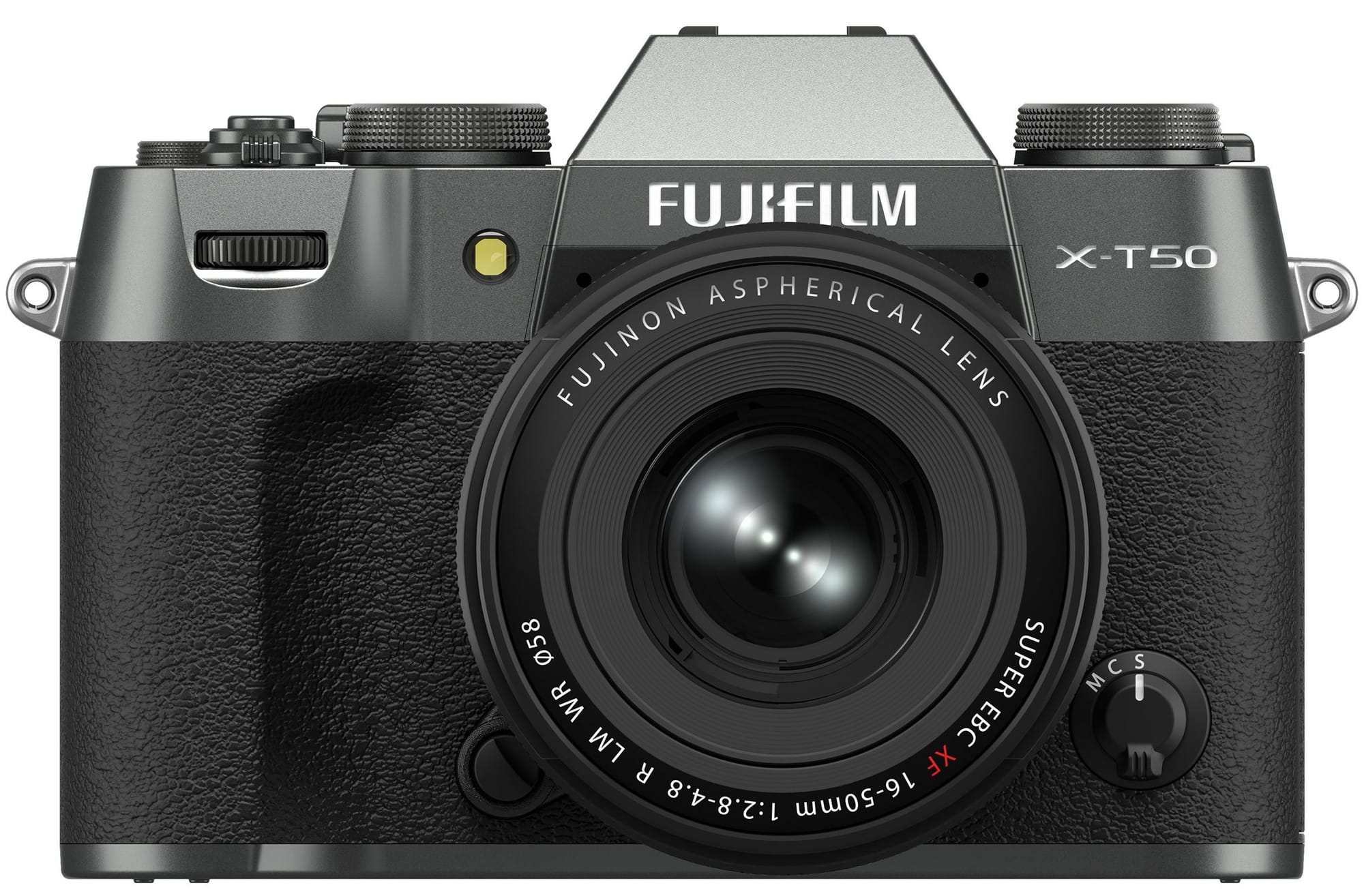
The X-T50 is the X-T5's image quality in a body that is noticeably smaller and about 120 grams lighter. The big design change is on top: where the X-T5 has an ISO dial, the X-T50 has a Film Simulation dial, so switching from Classic Chrome to Acros is a single turn. It is a small thing that changes how you shoot, because it makes the look of the picture part of the decision rather than something you fix later. It also adds Reala Ace, for 20 simulations against the X-T5's 19.
What you give up is the bigger viewfinder, the weather sealing, the second card slot, the 1/8000 shutter and a lot of battery life. For everyday, travel and family photography, none of that is a deal breaker, and the money saved buys a very good lens.
X-E5: the beautiful one
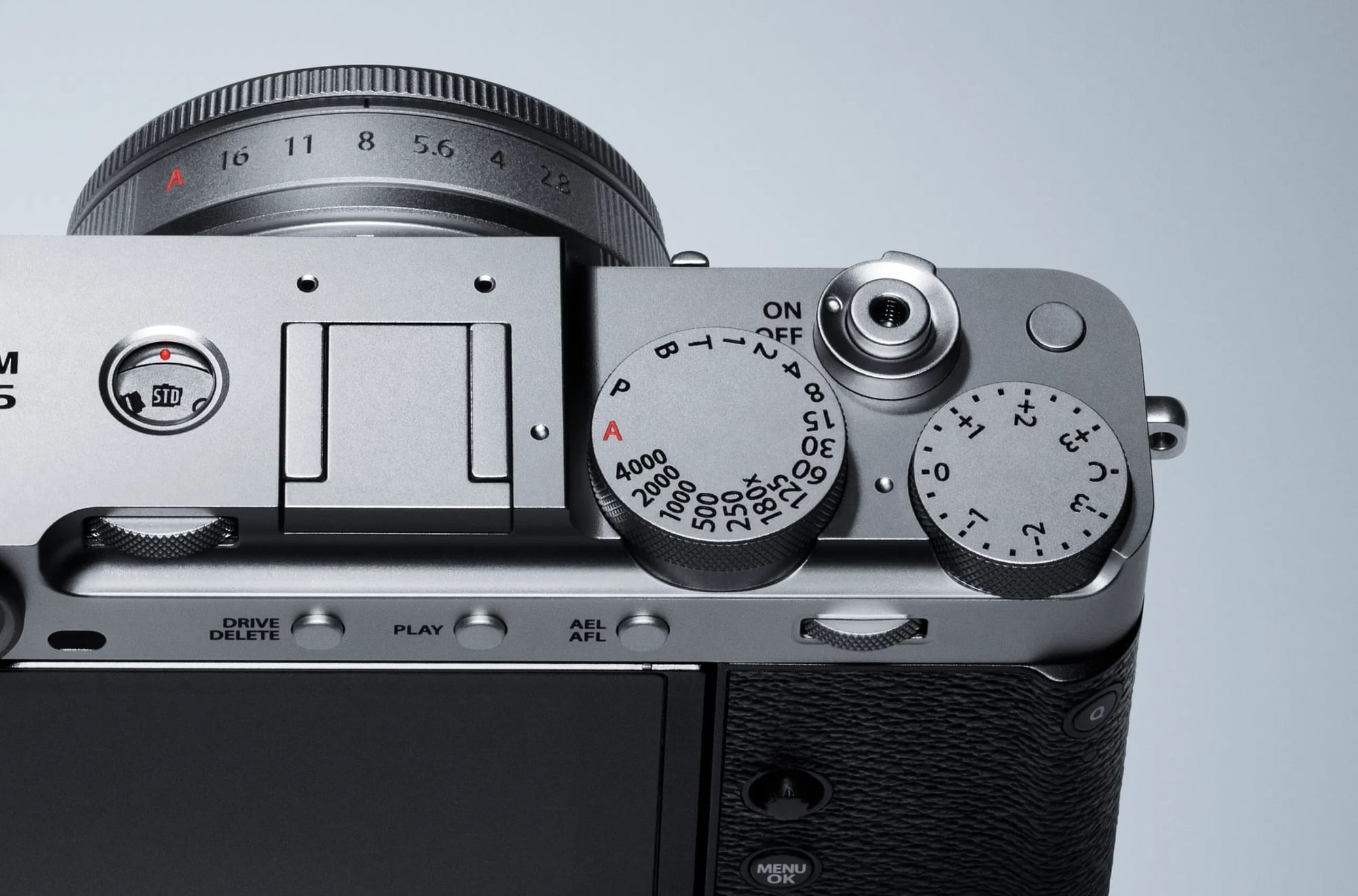
The X-E5, released in June 2025, is the camera people buy with their heart. It is the flattest of the three at 39.1 mm deep, with the viewfinder in the top corner like a rangefinder, so your face is not pressed against the back of the camera. Fujifilm carves the top plate from a single piece of machined, anodized aluminum, and even the Bluetooth button on the base plate is designed to look like the rewind button on a film camera.
It is also the first camera in the X-E line with in-body stabilization, and Fujifilm pairs it with a new XF23mmF2.8 R WR pancake lens that weighs just 90 grams and gives a classic 35mm-equivalent view. Together they make a genuine pocketable 40MP camera. A Classic Display mode keeps the viewfinder clean, and a Surround View mode shows what is about to enter the frame, much like a rangefinder. The trade-offs match the X-T50: the smaller viewfinder, one card slot, shorter battery life and no advertised weather sealing.
Which Fujifilm to buy, by photographer
- Travel, landscape and anyone who shoots in bad weather: the X-T5.
- Paid work, weddings and events: the X-T5, for the two card slots and the battery.
- First serious camera or best value: the X-T50.
- Street photography and everyday carry: the X-E5 with the 23mm pancake.
- You mostly want the Fujifilm look straight out of camera: the X-T50 or X-E5, for the Film Simulation dial.
- You want a fixed-lens camera instead: read our Ricoh GR IV vs Fujifilm X100VI guide.

Our call
Our call: buy the X-T50. It gives you the exact same 40.2MP files, stabilization and autofocus as the X-T5 in a smaller, lighter body, and the Film Simulation dial makes it the most fun of the three to shoot day to day. Spend up to the X-T5 if you need weather sealing, two card slots, the bigger viewfinder or all-day battery life, and choose the X-E5 if pocketability and that machined rangefinder body matter more to you than a grip.
Fujifilm X-T50, body only, silver: our pick, the same sensor in the smallest SLR-style body. Check price
Fujifilm X-T5, body only, black: weather sealing, two card slots and the best viewfinder. Check price
Fujifilm X-E5, body only, black: the rangefinder-style street camera. Check price
Fujifilm X-E5 with XF23mmF2.8 pancake, black: the pocketable kit. Check price
Full specifications at Fujifilm: compare every X Series camera on the maker's site. See it at Fujifilm
Thinking retro? Our Nikon Zf vs Z fc guide covers Nikon's dial cameras, and you can browse more in our Leica and Film Photography Hub.
Specifications and design details are from Fujifilm's official US product and specification pages in November 2026. Prices are typical US retail prices for the body only and change often.
Unknowndivide may earn a commission from purchases made through links in this post. As an Amazon Associate we earn from qualifying purchases.