
Instax vs Polaroid is really a question about two very different pieces of film. Fujifilm's instax prints are small, sharp, quick and cheap enough to hand out at a party. Polaroid prints are bigger, softer, slower and roughly three times the price per shot, and the people who love them would not have it any other way. The cameras matter less than you think. Pick the film first, and the camera choice almost makes itself. Here is how the two compare on size, cost, image quality and feel, which camera to buy on each side, and the strange history that explains why they are so different.
The quick answer
- Buy instax if you want sharp, reliable prints that develop in about 90 seconds and cost well under a dollar each. The instax mini 13 is the easy pick for most people.
- Buy Polaroid if you want the big square frame, the dreamy color and the slow reveal, and you are happy paying a bit over $2 a print. The Polaroid Now Generation 3 is the place to start.
- Buy instax WIDE if you shoot groups, travel or landscapes. Its wide frame has about the same image area as a classic Polaroid and costs noticeably less per shot.
- Skip the Polaroid Go unless tiny size matters most. Its prints are the smallest here, and its film still costs nearly twice as much per shot as instax mini.
Two companies, one idea, very different histories
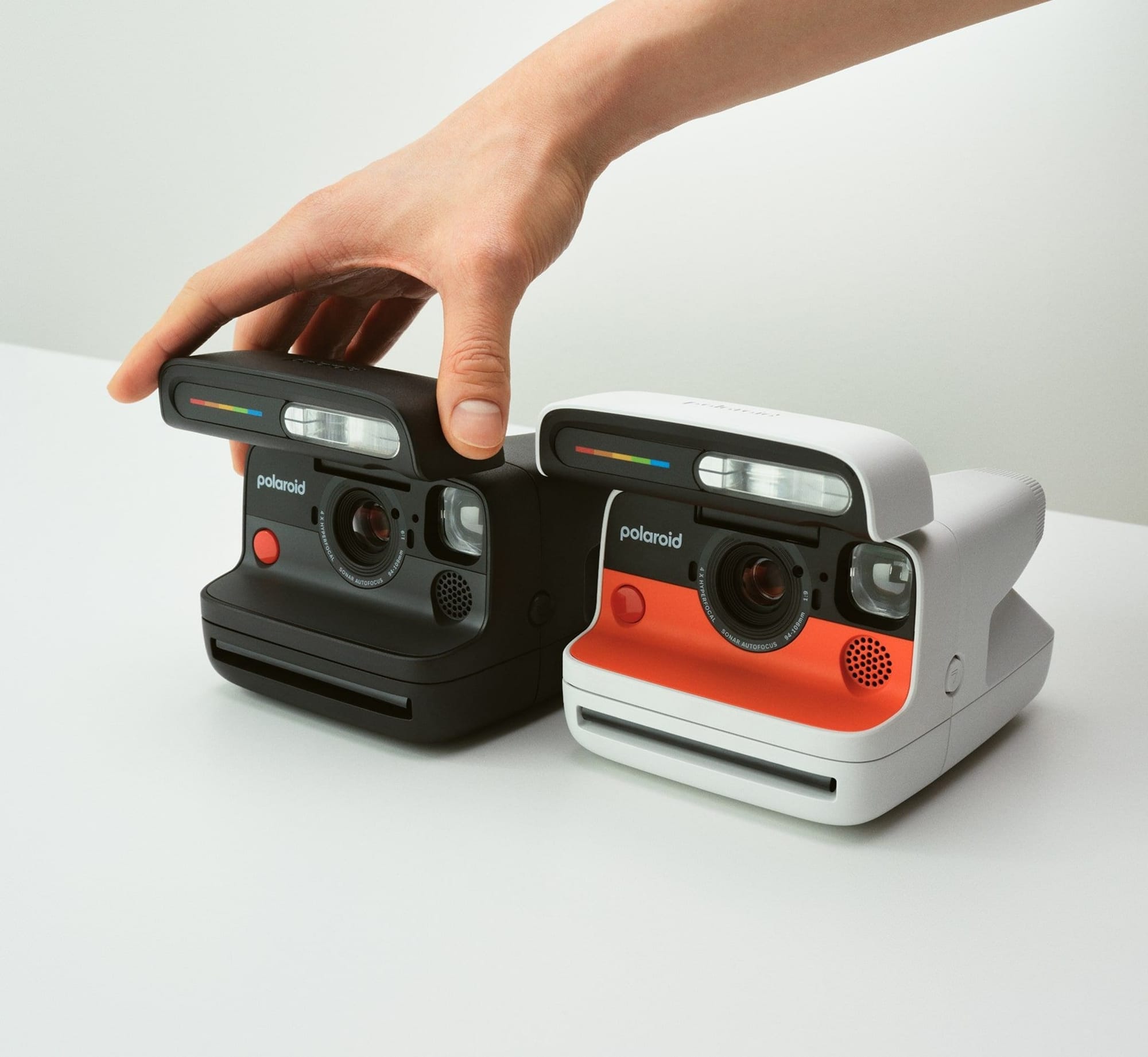
Polaroid's story starts with a question from a three-year-old. In 1943 Edwin Land's daughter asked why she could not see a photo he had just taken. Land, already a successful inventor of polarizing filters, spent the next few years working out how to put a darkroom inside the film itself. The first Polaroid camera went on sale in 1948, and in 1972 the SX-70 introduced the integral film most people picture today: a single sheet with the chemistry sealed inside a white frame, ejected from the front of the camera.
Then the business collapsed. Digital cameras gutted demand, and in 2008 Polaroid stopped making instant film. A small group of enthusiasts, working as the Impossible Project, took over the last Polaroid film factory in Enschede in the Netherlands and discovered that many of the original chemicals and suppliers no longer existed. They had to rebuild the film from scratch. The early results were famously temperamental, but the chemistry improved year after year, the project took back the Polaroid name, and today's film still comes from that same Dutch factory. That history is a big part of why Polaroid film looks the way it does: it is a reinvented formula with its own personality, not a copy of the old one.
Fujifilm took a calmer path. It launched instax in 1998 and kept refining one consistent product while Polaroid was falling apart. Fujifilm says each instax photo has 18 layers inside a film just tens of micrometers thick, with its own pod of developer fluid that a roller spreads across the image as it ejects. The fluid is black on purpose: it works as a tiny darkroom inside the film, which is why an instax print can come out into daylight and develop safely in about 90 seconds. And no, you should not shake it. Fujifilm says to hold the print steady and let it develop.
Instax vs Polaroid size: how big are the prints?
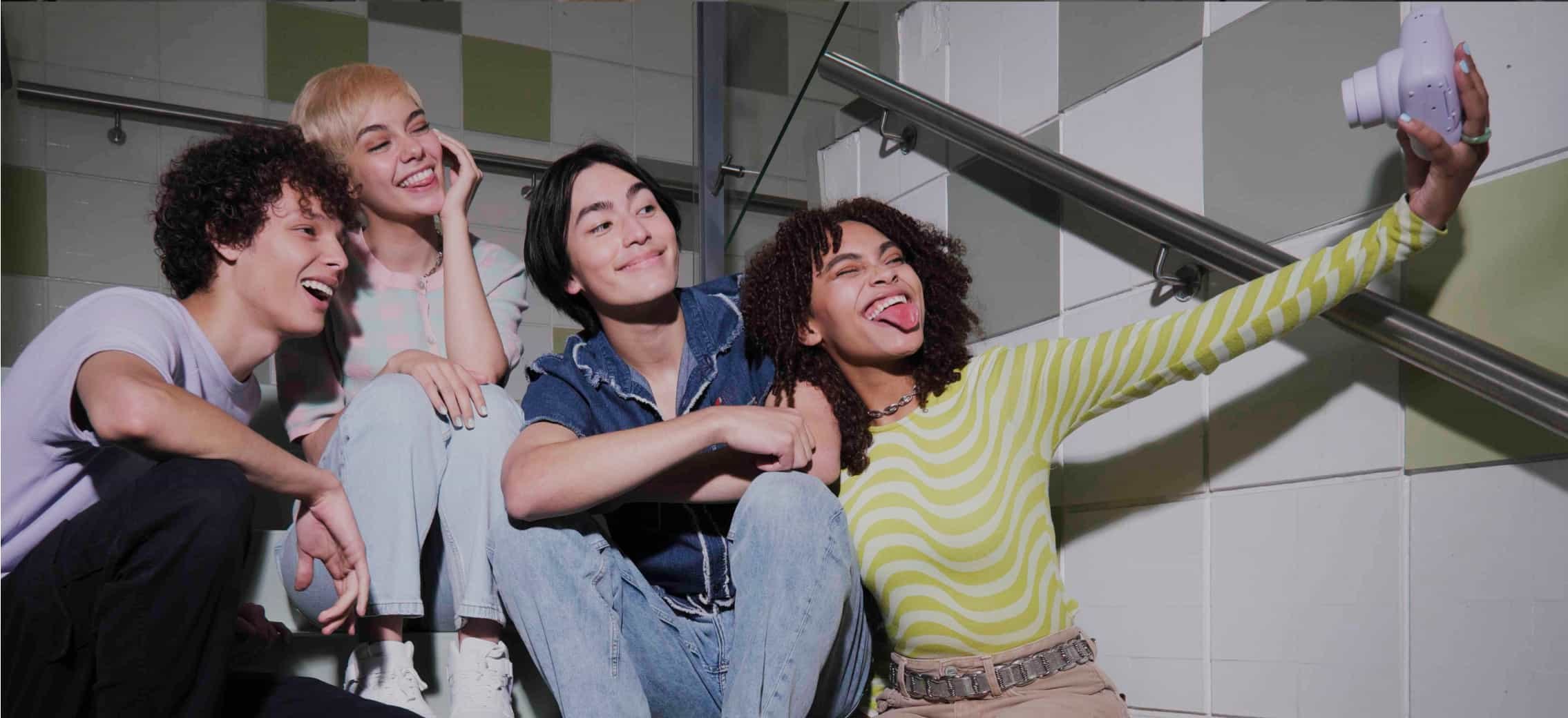
This is the difference you notice first. A classic Polaroid image is almost square and about twice the area of an instax mini. instax mini is the credit card-sized format, instax SQUARE sits in the middle, and instax WIDE matches the classic Polaroid's image area in a wide rectangle. Polaroid Go film is a shrunken Polaroid, with a full print roughly a third the area of the classic one.
| Film | Image area | Full print | Develops in | Cost per photo |
|---|---|---|---|---|
| instax mini | 62 x 46 mm | 86 x 54 mm | About 90 seconds | About $0.75 (20-photo twin pack, $14.99) |
| instax SQUARE | 62 x 62 mm | 86 x 72 mm | About 90 seconds | About $1.50 |
| instax WIDE | 99 x 62 mm | 86 x 108 mm | About 90 seconds | About $1.60 to $1.75 |
| Polaroid i-Type and 600 | 79 x 77 mm | 107 x 88 mm | 10 to 15 minutes | About $2.37 (8-photo pack, $18.99) |
| Polaroid Go | 47 x 46 mm | 66.6 x 53.9 mm | 10 to 15 minutes | About $1.37 (16-photo double pack, $21.99) |
Polaroid sells bigger bundles that bring the price down: a twelve-pack of i-Type film (96 photos) is $199.99 on Polaroid's store, or about $2.08 a shot. Even then, a Polaroid print costs nearly three times as much as an instax mini and still more than an instax WIDE.
Instax vs Polaroid image quality
instax is the sharper, more predictable film. Colors are clean and a little cool, skin tones are reliable, and exposure is consistent shot to shot. Rated at a film speed of 800, it handles indoor light and flash well, which is why instax prints from a party almost always come out usable.
Polaroid film is softer and less predictable, with warmer, dreamier color that shifts with temperature and light. i-Type film is rated at 640, a touch slower than instax. Cold film can come out blue, hot film can turn warm, and Polaroid tells you to keep the print away from light as it develops. That unpredictability is the charm for many people and a frustration for others. The payoff is the size: the big square image has a presence on a table or a wall that an instax mini cannot match.

Instax vs Polaroid film: what works with what
The two systems do not mix. instax mini cameras take only instax mini film, SQUARE cameras take SQUARE film and WIDE cameras take WIDE film. On the Polaroid side, i-Type film has no battery in the pack and works in the modern cameras: the Now, Now+, Flip, Mod and I-2. Polaroid 600 film carries its own battery, so it also runs in vintage 600 cameras from the 1980s and 1990s, at a slightly higher price. Go film only fits the Go.
That vintage compatibility is a real Polaroid advantage. Thrift-store 600 cameras still work with fresh film from Enschede, and Polaroid still makes film for the SX-70 and for 8x10 large format cameras. Nothing in the instax world reaches back that far.
Which instax camera to buy
- instax mini 13 ($89.95 list): the default. Automatic exposure and flash, a selfie mirror, a close-up mode that corrects the viewfinder so close shots stay centered, and a self-timer with 2 and 10 second options. It takes the cheapest film here.
- instax mini 41 ($116.95 list): the same mini film in a more grown-up, retro body.
- instax mini 99 ($234.95 list): the enthusiast mini, with more manual creative control.
- instax SQUARE 2 ($119.95 list): the square format with a Mood Filter switch for warm or cool tones. We covered it in our instax SQUARE 2 guide.
- instax WIDE 400 ($175.95 list): the big print. It comes with a clip-on close-up lens and an old-school self-timer lever that counts up to 10 seconds in 2-second steps.
If you want to choose your shots before printing, the hybrid instax cameras like the instax mini Evo 2 shoot digitally and print only the frames you pick. That saves film but loses some of the one-shot magic.
Which Polaroid camera to buy
- Polaroid Now Generation 3 ($129.99 list): the classic boxy Polaroid, with a two-lens autofocus system, a better-placed light meter, a tripod mount and double exposure. Start here.
- Polaroid Now+ Generation 3 ($149.99 list): the same camera with app control for aperture priority, manual mode, remote shutter and more. Worth the extra $20 if you like to tinker.
- Polaroid Flip ($219.99 list): the easiest Polaroid to get good results from, with sonar autofocus, a four-lens system and Polaroid's most powerful flash. It warns you when a shot will be under or overexposed, which saves expensive film.
- Polaroid Mod ($169.99 list): a creative-mode dial for double exposure, split shots, motion freeze and light painting.
- Polaroid I-2 ($599.99 list): the serious one. Polaroid calls it the first analog instant camera with built-in manual controls, and pairs it with its sharpest lens yet. For photographers who want to control every frame.
- Polaroid Go Generation 3 ($89.99 list): Polaroid calls it the world's smallest instant analog camera. Fun and pocketable, but the small prints lose the big-frame appeal.
Polaroid Now vs instax mini: the head-to-head most people mean
| instax mini 13 | Polaroid Now Generation 3 | |
|---|---|---|
| List price | $89.95 | $129.99 |
| Print image | 62 x 46 mm | 79 x 77 mm |
| Photos per pack | 10 (twin packs of 20) | 8 |
| Cost per photo | About $0.75 | About $2.37 |
| Develop time | About 90 seconds | 10 to 15 minutes |
| Look | Sharp, clean, consistent | Soft, warm, unpredictable |
| Best for | Parties, kids, travel, gifts | Portraits, walls, keepsakes |
Over a year of shooting two packs a month, the instax mini costs about $180 in film, the Polaroid Now about $455. That gap matters more than the $40 difference between the cameras.
The pick for each kind of buyer
- First instant camera, or a gift for a teenager: instax mini 13. Cheap film, few bad shots.
- You want the classic Polaroid look on your wall: Polaroid Now Generation 3, or the Flip if you want fewer wasted shots.
- Weddings, trips and group photos: instax WIDE 400.
- You already shoot film and want control: Polaroid I-2, or the Now+ for a fraction of the price.
- You found a vintage Polaroid at a thrift store: buy fresh 600 film and try it before buying anything new.
Shooting more film than instant? See our guide to film cameras you can still buy new, and our gift guide for photographers for more ideas.
Our call
Our call: buy instax for everyday fun, and buy Polaroid for pictures you plan to keep on the wall. For most people the instax mini 13 is the smarter buy: the film is a third of the price, the prints are sharp and you get a usable picture almost every time. But if the reason you want an instant camera is the look of a real Polaroid, nothing else gets there. Buy the Polaroid Now Generation 3, shoot fewer frames, and make each one count.
FUJIFILM instax mini 13 ($89.95 list): our pick for most people, with the cheapest film and the fewest bad shots. Check price
FUJIFILM instax mini film twin pack (20 photos): stock up, you will burn through it. Check price
FUJIFILM instax WIDE 400 ($175.95 list): the biggest print for groups and travel. Check price
Polaroid Now Generation 3 with 16 photos: our Polaroid pick, bundled with two packs of color film. Check price
Polaroid Now+ Generation 3 with 16 photos: for app control and manual modes. Check price
Polaroid Color i-Type film, double pack (16 photos): the film for every modern Polaroid except the Go. Check price
Polaroid Flip ($219.99): the easiest Polaroid to get right. Shop it at Polaroid
Polaroid I-2 ($599.99): full manual control and Polaroid's sharpest lens. Shop it at Polaroid
More cameras, film and darkroom guides: browse our Leica and Film Photography hub.
List prices are from the Polaroid US store and Fujifilm's US instax site in November 2026 and can change. instax SQUARE and WIDE per-photo costs are approximate, based on typical twin-pack prices.
Unknowndivide may earn a commission from purchases made through links in this post. As an Amazon Associate we earn from qualifying purchases.