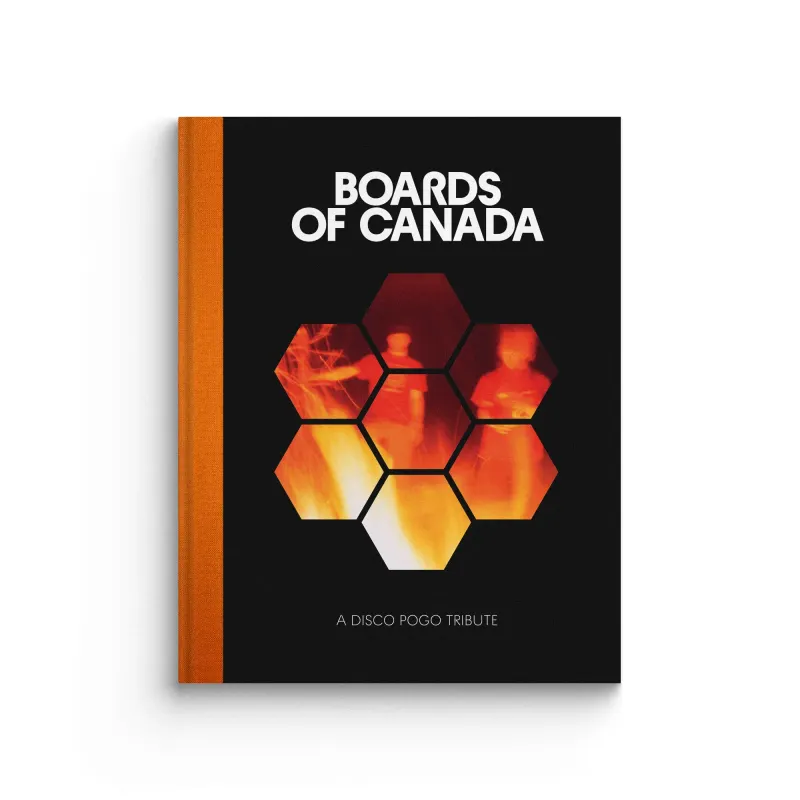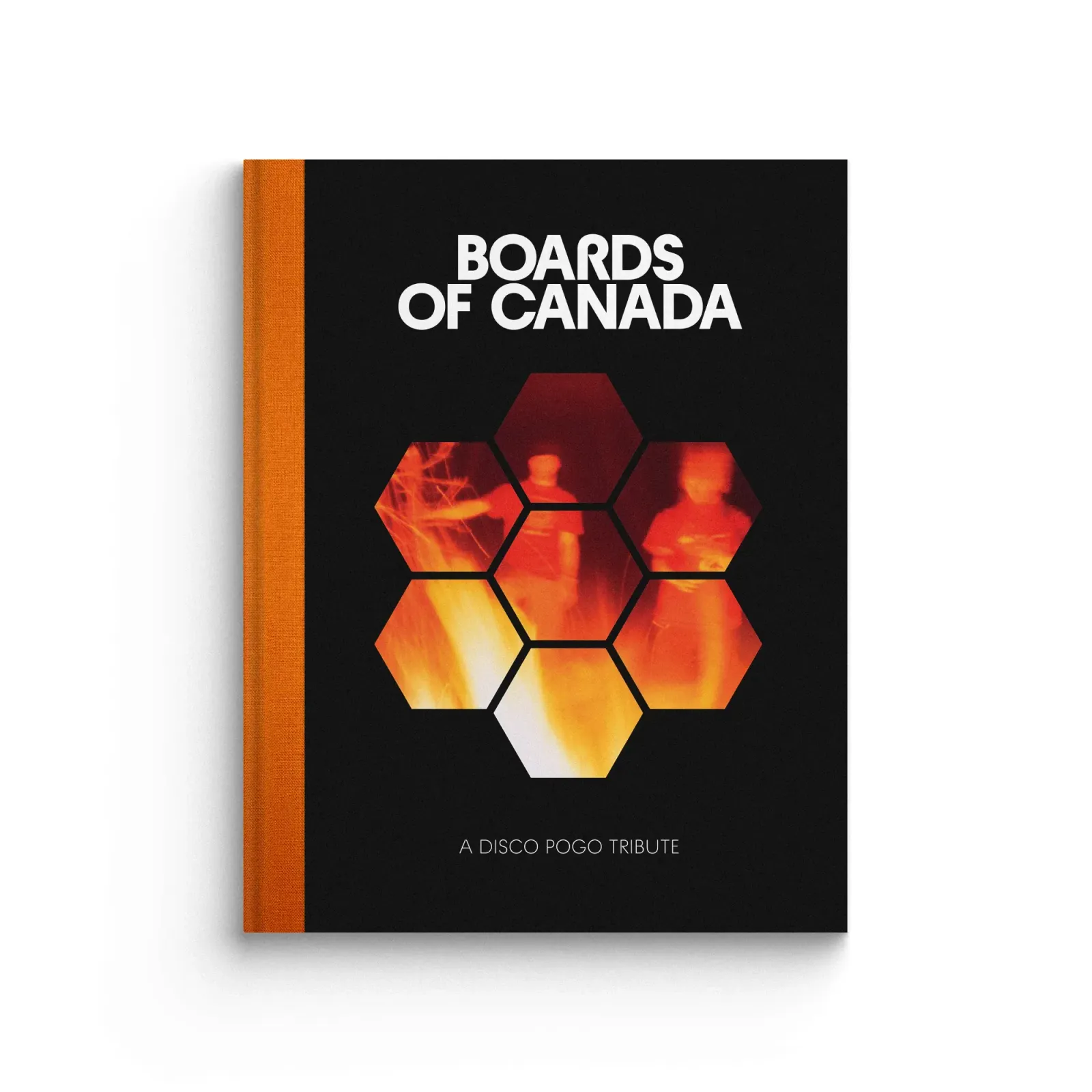
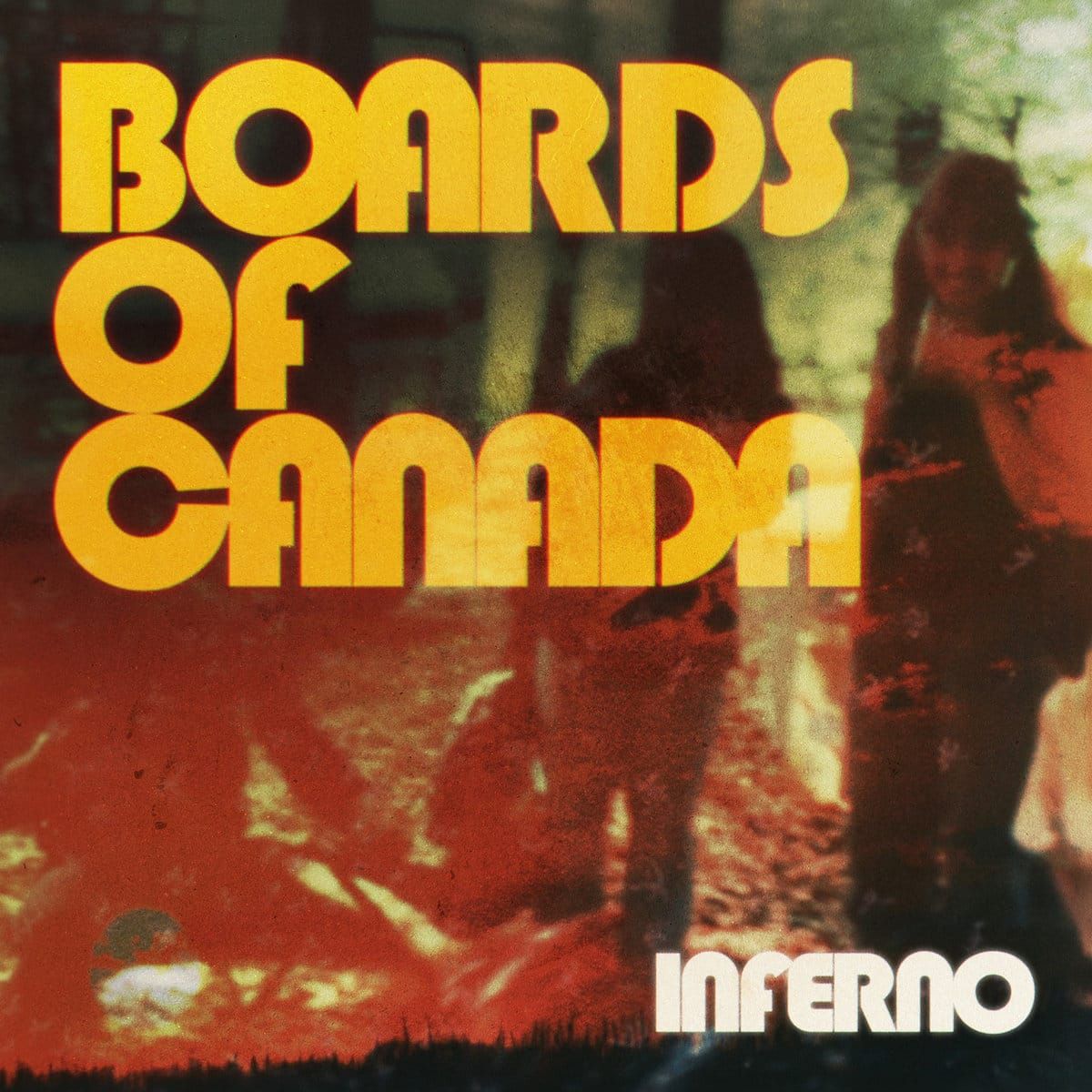
The first sign of life was not a press release. It was a stack of unmarked VHS tapes arriving in mailboxes around the world in early April, brown paper, no explanation, return addresses that traced quietly back to Warp. That is how Boards of Canada chose to end thirteen years of silence. Not with an announcement but with an artifact, something you had to hold in your hands and feed into a dying format to understand. By the time the album had a name and a date, the tapes had already done their work. The room was ready.
I remember exactly where I was when Tomorrow's Harvest came out in 2013, and I remember assuming, somewhere around year eight of the silence, that it was the last one. Mike Sandison and Marcus Eoin have never operated on anyone's clock, but their own, and there was a certain peace in accepting that the catalog was complete, a sealed transmission from a duo who understood that mystery is a renewable resource only if you stop spending it. Then Inferno arrived on May 29th, eighteen tracks, seventy minutes, recorded at Hexagon Sun in the Pentland Hills, and the sealed transmission turned out to be a pause between broadcasts.
The lead single told you everything about the ambition here. Introit is thirty-six seconds of invocation, a liturgical opening, and then Prophecy At 1420 MHz takes over. That number is not decoration. 1420 megahertz is the hydrogen line, the frequency of the most abundant element in the universe, the channel scientists have pointed radio telescopes at for decades because if anyone out there is trying to reach us, that is where they would call. Boards of Canada have always hidden their signal in the noise, numbers stations and half-heard voices and math folded into song lengths, but this time the reference points outward, past nostalgia, past childhood film reels, into deep space and deep time. There is literally a track called Deep Time. There is another called I Saw Through Platonia, a nod to the physics of a universe where time itself might be an illusion. This is a band that spent twenty years excavating memory now asking what happens when memory runs out.
And that is the turn that makes Inferno feel like a genuinely new phase rather than a reunion lap. The warmth is still here, the detuned synths that wobble like sun-damaged film, the analog hiss that feels like weather. But the album title is not a bluff. Track names like Memory Death, Blood In The Labyrinth, and All Reason Departs map a descent, and the music follows it, moving from the hymnal calm of the opening into passages that feel scorched and processional. Naraka borrows its name from the Buddhist realm of purgation. The Word Becomes Flesh runs over five minutes of slow transfiguration. Where Tomorrow's Harvest surveyed a wasteland from a distance, Inferno walks into it, and somewhere in the middle of the record you realize the duo has stopped scoring the apocalypse and started scoring what comes after.
The credits tell their own quiet story. Sandison is listed as the sole producer, with writing on the majority of the album credited to him alone, while Eoin appears across the record on electronics, synths, tapes, and sound design. For a band that has always presented as a single sealed unit, that shift in weight is notable, and you can hear a singular editorial hand in how the album moves. Eighteen tracks in seventy minutes means nothing overstays. Acts Of Magic burns for seventy-eight seconds and vanishes. Somewhere Right Now In The Future drifts past in under three minutes like a station you almost tuned. Then All Reason Departs stretches past six minutes and earns every second of it. The sequencing feels less like a playlist and more like a film that was edited by someone who knows exactly when to cut away.
I have played this album a dozen times now, in the car at night, through studio monitors, once outside on a humid Carolina evening with the crickets acting as an uncredited nineteenth track, and it keeps reorganizing itself. Some nights it is background radiation, gorgeous and ignorable. Other nights it grabs the wheel. Arena Americanada in particular keeps growing, five minutes of something that sounds like a national anthem decaying in real time, and You Retreat In Time And Space closes the loop on the album's obsession with escape, whether that means escaping history, escaping the present, or escaping the version of yourself that spent thirteen years waiting.
Thirteen years is long enough for a listener to become a different person. I am a different person than the one who bought Tomorrow's Harvest. What startles me about Inferno is that Boards of Canada seem to know that, and they made a record for who we are now, anxious about the future in ways that no longer feel abstract, hungry for something that sounds like it was made by human hands in a real room in the Scottish hills. The fire in the title is not just destruction. It is also the thing you gather around.
Inferno is out now via Warp Records. Buy it on Bandcamp, watch the video for Introit / Prophecy At 1420 MHz, and follow the band at boardsofcanada.com and on Facebook.