
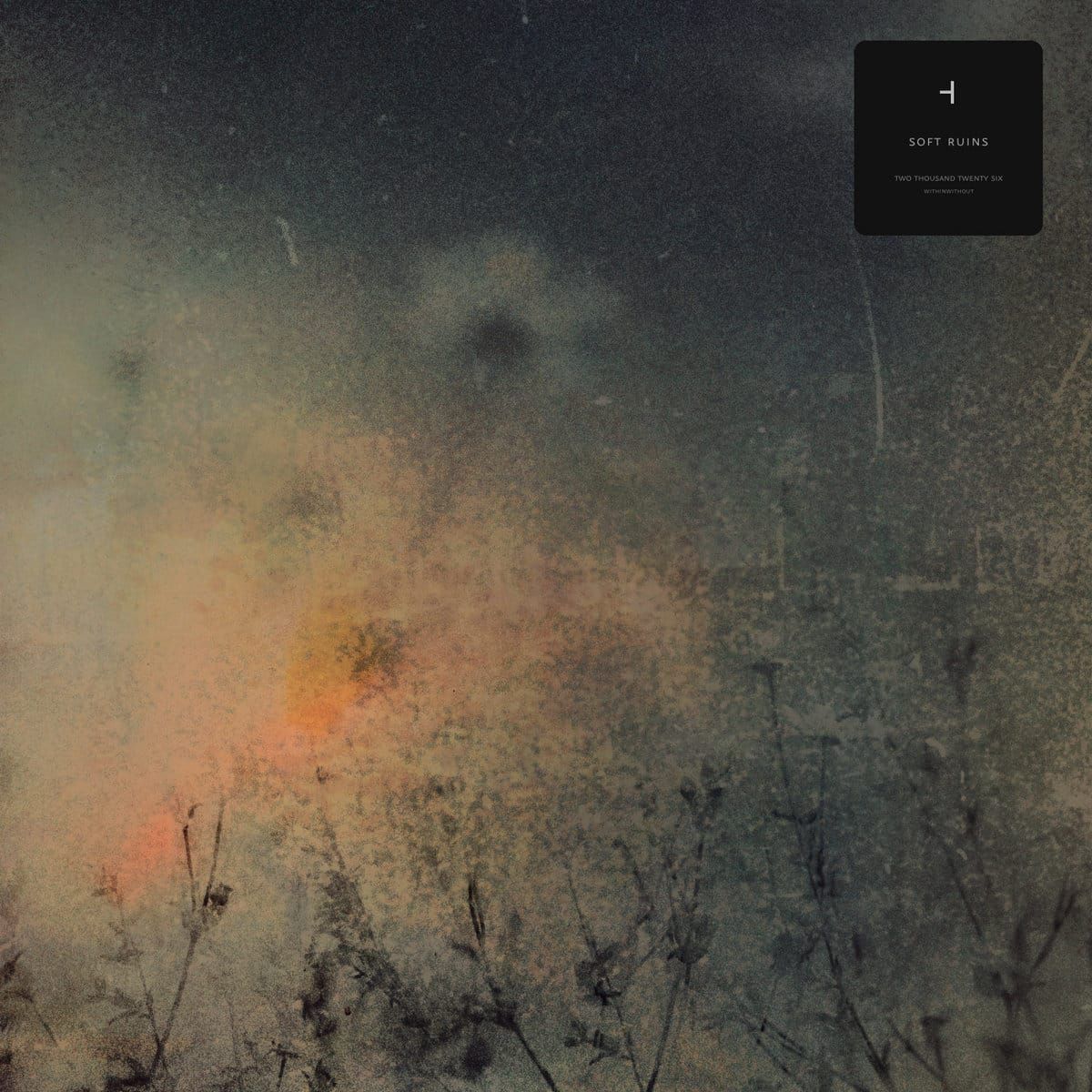
There's a version of this release that's now practically a genre unto itself. Ambient artist goes somewhere remote. Records at night. Uses old tape. Leaves the flaws in. Writes liner notes about memory and disappearance. You have heard this pitch a hundred times, and if you're being honest, maybe eight of those hundred records were worth the ceremony.
Soft Ruins, out August 6, is that pitch almost to the letter. Eight tracks, three nights, a cabin near the beach, a very old reel-to-reel, minimal intervention afterward. On paper it is indistinguishable from a dozen releases that came out the same week.
So the only useful thing I can tell you is whether the frame is doing real work or just decorating, and with this one I think it's real, for a reason that has nothing to do with the cabin.
Three nights is a constraint, not a vibe
Most tape-and-solitude records are made over months and then described as though they happened in a weekend. The romance of the isolated session gets applied retroactively to something that was actually assembled in a DAW with a saturation plugin doing the aging.
Three nights is different. Three nights means you cannot fix things. You get what the room and the machine gave you, and then you have to decide whether you can live with it. Every take that stays is a take somebody chose not to run again, which is a much harder decision than it sounds, because the temptation to redo a passage you almost got is close to physical.
That decision is audible on a record like this. Tape wear, hiss, the specific way an old reel-to-reel smears transients, the low hum of a building at three in the morning. When those artifacts are real they sit differently in the mix than when they're applied. They don't behave consistently, because rooms and machines don't behave consistently.
The problem with the aesthetic
Here's my complaint, and it's a genre complaint more than an album complaint.
Imperfection has become a texture you can buy. There are tape emulation plugins that model specific machines down to the wow and flutter, and they sound convincing enough that the average listener cannot tell. Which means the ethical claim embedded in "we left the flaws in" has quietly lost most of its value. Nobody can verify it, and plenty of artists have figured out that the story sells the record whether or not the story is true.
What that does to a genuine article like Soft Ruins is unfair. The work of actually hauling gear to a cabin and accepting whatever three nights produced now reads identically to the work of not doing that. The listener has no way to tell, so the listener stops caring, so the constraint stops paying.
I think it still pays, but not in the way artists hope. It pays in what gets left out. Records made under real time pressure tend to be shorter, sparser, and less inclined to fill every register, because there was no opportunity to add. Eight tracks with nothing stacked on top of them is the tell, more than any amount of hiss.
The name is a burden
How To Disappear Completely is a Radiohead song title, and taking it as a project name means every piece written about you opens with someone pointing that out, which I have now done, which proves the point.
It's a good name and a slightly costly one. It sets an expectation of a certain kind of dread, and this is not a dread record. The material here is closer to fondness than to fear. Things fading, light going, the sea at night. The idea that some things disappear well before they're actually gone is the closest it comes to a thesis, and that's an observation about grief most people arrive at years after the fact, not a statement of horror.
The tracklist tells you where it actually lives: "Pale Fires," "Nightbloom," "Penumbra," "Memory Landscapes." Two tracks paired as "Even As A Shadow" and "Even As A Dream," which is the sequencing decision I'd most want to ask about, because pairing them announces that they're arguing with each other.
The instruction
The artist ends the release note by telling you to find somewhere quiet, put on headphones, close your eyes, and press play.
I want to defend that, because I know how it reads. Being told how to listen is irritating, and there's a whole tradition of ambient artists issuing gentle commands that amount to asking you to take them seriously.
But the request is correct here, for a boring technical reason. Music recorded this quietly, with this much of its content living in noise floor and tape artifact, genuinely does not survive a car stereo or a kitchen speaker. The parts that make it worth hearing are the parts that get lost first. If you listen to this on laptop speakers while doing email, you will hear eight pieces of nothing much and conclude the record is thin, and you will be wrong, and the fault will be yours.
What it's for
This is not a record that will change your week. Almost nothing in this genre is, and the ones that promise to are usually lying.
It's a record for a specific and fairly narrow use: late, alone, in headphones, when you want company that isn't asking anything. That's a real need and there is less good work serving it than the volume of releases would suggest, because most artists working this territory mistake quiet for empty.
Eight tracks, no filler room to hide in, and a set of choices somebody had to live with. That's enough.
Soft Ruins is out now.
Tracklist
- Pale Fires
- Leaving Hearts
- Even As A Shadow
- Even As A Dream
- Penumbra
- Nightbloom
- Into The Blue
- Memory Landscapes