
Unknowndivide may earn a commission from purchases made through links in this post.
Few garments carry as much story as the aloha shirt. Also called the Hawaiian shirt, it started as a bright, short sleeved shirt tied to island life and grew into something much bigger: an emblem of Hawaii, a workplace staple there, the seed of casual Fridays around the world and a serious collector category. This guide covers where the shirt came from, how fabrics and printing methods change the look and feel, and what to look for when you buy one.
The golden age
Collectors talk about a golden age of aloha shirts, and the Japanese company Toyo Enterprise, whose Sun Surf label recreates vintage shirts, places it from the 1930s through the 1950s. Toyo's own history explains how that era worked. As Hawaii developed in the 1950s, aloha shirts reached their peak in popularity, and the printed fabric was ordered from the mainland United States and from Japan.
That international supply chain is part of what makes vintage shirts so interesting. Toyo Enterprise says its predecessor, Kosho and Co., was heavily involved in import and export and was one of the original makers of rayon Hawaiian shirts, now considered vintage collectables. It even ran its own label, Fashion Mart, producing shirts that were exported to Hawaii. After the company became Toyo Enterprise in 1965, it launched Sun Surf in the 1970s as a label dedicated to aloha shirts.
From souvenir to office wear
The other major thread in the story runs through Honolulu. Reyn McCullough, a retailer from Catalina Island, first visited Hawaii in 1957 and moved his family to Honolulu a year later. His shop opened at the new Ala Moana Center in 1959. He partnered with Ruth Spooner, a seamstress whose one sewing machine operation on Waikiki beach was known for its custom surf trunks, and the Reyn Spooner name dates to 1961.
According to Reyn Spooner's history, the Hawaiian Fashion Guild, with Reyn as a leading member, began promoting aloha shirts as acceptable workplace attire in 1962. During what the Guild called Operation Liberation, it gave two aloha shirts to every member of the Hawaii House and Senate. The Guild then lobbied for Aloha Friday, and that custom began officially in Hawaii in 1966. It spread to California and beyond, and by the 1990s the idea had become known as Casual Fridays around the world. In Hawaii today, aloha shirts are worn as business attire on any day of the week.
Fabrics: rayon, cotton and blends
The fabric decides almost everything about how an aloha shirt hangs and how its print looks.
- Rayon: the fiber of the classic vintage era, as Toyo's history of rayon Hawaiian shirts shows
- Cotton: a common alternative for a more casual shirt
- Cotton and polyester blends: Reyn Spooner's Spooner Kloth is a blend of cotton and spun poly that the brand calls durable, breathable and wrinkle free; on the Lahaina Sailor it is listed as 55% cotton and 45% polyester
Neither approach is better in every way. Rayon connects you to the shirts of the golden age. A blend like Spooner Kloth gives you a shirt that packs well and behaves like a dress shirt.
Bold prints and reverse prints
Most aloha shirts show the printed face of the fabric, which gives the brightest possible color. The alternative is the reverse print, where the fabric is used inside out so the pattern looks softer and slightly faded. Reyn Spooner credits Reyn McCullough with pioneering the reverse print in 1963. He felt traditional aloha shirts were too bold, and after seeing an inside out shirt sewn by a local bartender and surfer, he combined that method with more refined prints and the tailoring of an oxford cloth shirt. That is how a beach shirt picked up a button down collar.
The photo at the top of this page shows a vintage 1968 Lahaina Sailor that Reyn Spooner lists as a rare, made in Hawaii example with a 1970s style collar. The same print is still made today, which tells you how well the reverse print idea has lasted.
What to look for when you buy
- Pocket matching: on a well made shirt, the print on the chest pocket lines up with the pattern behind it
- Collar: a camp or open collar is the classic beach look; a button down collar reads more like office wear
- Placket: full button front or a pullover with a short placket, which Reyn Spooner offers in four button form
- Fabric: rayon for a vintage feel, a blend like Spooner Kloth for travel and low care
- Print scale: small, repeating patterns are easier to wear; large scenes are louder statements
- Origin of the print: brands that recreate or reissue archive designs often tell you the year the print first appeared
How to wear it
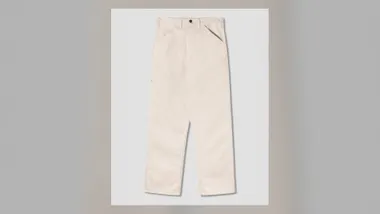
A reverse print button down works with chinos, denim and even under a jacket. A bold rayon shirt is best kept simple, with plain trousers or shorts and minimal layers. Aloha shirts also pair well with workwear basics, such as Dickies 874 work pants or a sturdy pair of Stan Ray fatigue pants, because the clean bottoms let the print do the talking. If you want a lighter outer layer, a chore coat fits the same relaxed spirit.
Where to buy
For more shirts and style guides, browse our sneakers and style hub.