Unknowndivide may earn a commission from purchases made through links in this post.
Shop for a backpack and you will see numbers everywhere: 10L, 19L, 25L, 45L. That number is the bag's volume in liters, and it is the single most useful spec for figuring out whether a pack fits your life. The trouble is that a liter of bag space is hard to picture. This guide breaks down what different sizes mean, using real bags and the volumes their makers publish.
What liters actually measure
A liter is a unit of volume, roughly the size of a large water bottle. When a bag maker says a pack holds 25 liters, it means the space inside, when filled, adds up to about 25 of those units. Some makers also list cubic inches. Tom Bihn, for example, lists its Synapse 25 at 25 liters or 1,526 cubic inches and notes that its figures follow a standard measuring method.
That last point matters. Not every brand measures the same way. Some count only the main compartment, while others include every pocket. When you compare two bags, treat the numbers as a helpful guide rather than an exact match, and look at the listed dimensions too.
Under 10 liters: slings and side packs
Bags in this range are about carrying daily essentials: a phone, wallet, keys, a small charger, sunglasses and maybe a compact water bottle. They are worn across the body or on one shoulder and stay out of the way.
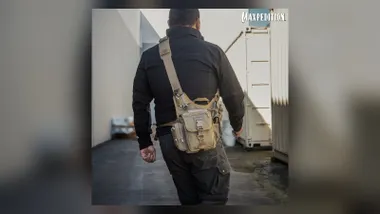
The Maxpedition Fatboy Versipack is a good example. Maxpedition lists its total volume at 7.4 liters, in a bag that measures 14 x 6 x 14 inches including the strap base. That is enough for a flashlight, a multi tool, a notebook and a phone in its own strap pouch, but not for a laptop or a change of clothes.
At the top end of this range, the KAVU Rope Bag is listed by KAVU at 10 liters. It is a casual sling with two zip compartments, ideal for festivals, travel days and city walks.
10 to 20 liters: small daypacks
This is the classic school and city pack size. A 15 or 16 liter bag carries a tablet or small laptop, a light jacket, lunch and a bottle. It is compact enough for errands and museum days without feeling bulky.
The Kanken from Fjallraven is a 16 liter daypack, and its boxy shape makes good use of that space. A bit larger, the Tom Bihn Synapse 19 holds 19 liters. Tom Bihn describes it as a pack for everyday carry, ultralight travel or a day hike, and says it meets the personal item size requirement on most airlines.
20 to 30 liters: everyday and commuter packs
For many people, this is the sweet spot. A 20 to 30 liter pack fits a full size laptop, a lunch, a water bottle, a sweater and a few extras. It can serve as a commuter bag during the week and a light travel bag for a quick overnight trip.
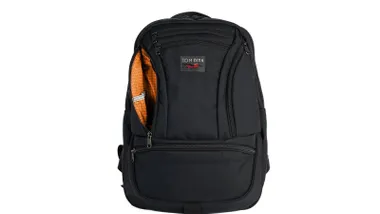
The Tom Bihn Synapse 25 is a clear example at 25 liters. It measures 13.4 x 20 x 9.1 inches, has five exterior pockets and a center pocket for a 32 ounce bottle, and can hold a laptop up to 16 inches. Tom Bihn says it fits under an airplane seat, which makes it a strong personal item for travel.
The Aeronaut 30 sits at the top of this range. Tom Bihn lists it at 30 liters and 19.7 x 12.6 x 7.9 inches, and describes it as a smaller travel bag built for shorter trips while still meeting most airline carry on requirements.
30 to 45 liters: travel bags
Once you pass 30 liters, you are in travel territory. Bags in this range can carry several days of clothes, toiletries and shoes, and many are designed around carry on limits.
The Tom Bihn Aeronaut 45 is listed at 45 liters, at 21.9 x 14 x 9.1 inches. Tom Bihn says it is made for travelers who pack a little extra but still want to meet most airline carry on requirements. It can be carried as a duffel, a backpack or a shoulder bag. Always check your airline's current size rules before you fly, since they vary.
Over 45 liters: big trips and the outdoors
Above 45 liters you are usually looking at checked luggage, large duffels or multi day hiking packs. These carry tents, sleeping bags and food, or a week or more of clothing. They are rarely the right everyday bag, but they are essential for long trips where you need to carry everything with you.
How to choose your size
Start with what you carry most days rather than what you might carry once a year. Lay it all out on a table, including your laptop, bottle and jacket, and picture how much space it takes up. Then use these rough guidelines:
- Phone, wallet, keys and a few small tools: under 10 liters
- Daily essentials plus a tablet, snack and light layer: 10 to 20 liters
- Laptop, lunch, bottle and a sweater for work or school: 20 to 30 liters
- A few days of travel clothing in one bag: 30 to 45 liters
- Camping gear or a long trip: over 45 liters
Your body size matters too. Tom Bihn notes that the Synapse 19 generally fits people between 5 feet and 5 feet 10 inches comfortably and points taller people to the Synapse 25. A bag that is too big for your frame is uncomfortable, even if you need the space.
Finally, think about organization. Two bags of the same volume can feel very different. A pack with many small pockets keeps things findable, while one big compartment is better for bulky items like clothing.
The final word
Liters are the best shorthand for how much a bag can hold, but the right size depends on your daily routine. Small slings keep your hands free, daypacks cover errands and school, 25 liter packs handle the work week and 45 liter bags make one bag travel possible. If you want to try the Tom Bihn approach, the Synapse 19 and Synapse 25 are good examples of how a few liters change what a bag can do.
Keep reading with our looks at the Maxpedition Fatboy Versipack, the KAVU Rope Bag, the Fjallraven Kanken, the Tom Bihn Synapse 25 and our guide to the best carry on travel backpacks. For more, browse our buying guides.