

Arne Jacobsen is the Danish architect behind the Egg and Swan chairs, a national bank, an Oxford college and, quite literally, a teaspoon. But the two chairs that made him famous as a furniture designer are much humbler: the Ant, from 1952, and the Series 7, from 1955. Both are made by Fritz Hansen in Denmark to this day, both are stackable dining chairs with a molded plywood shell on thin steel legs, and from across a room plenty of people cannot tell them apart. They are not the same chair, and the differences matter more than you would think. Here is how the Series 7 vs Ant chair really compare, and which one to buy.
The quick answer
- Buy the Series 7 if you want the more comfortable, more versatile chair. It is taller, with a broader back that supports your shoulders, and it comes in far more versions, from armchairs to office chairs and bar stools.
- Buy the Ant if you want the purer, more sculptural design and the chair that came first. It is lighter, smaller, often a little cheaper, and the original three-legged version is still made.
- Both share the same core build: nine layers of pressure-molded veneer shaped into a single seat and back, on a tubular steel frame.
A chair for a factory canteen
The Ant was not designed for a living room. Jacobsen drew it in 1952 for the canteen at the Novo factory in Denmark, where it needed to be light, stackable and cheap to make in numbers. According to Fritz Hansen, it was the first chair with a seat and back formed from one single sheet of pressure-molded veneer. That was a real technical leap: the narrow waist that gives the chair its insect-like outline is also what lets the plywood bend into a seat and a backrest at the same time without cracking.
The three legs have their own story. Fritz Hansen says the base was inspired by simple agricultural stools made to stand firmly on the uneven floors of Danish farmhouses, since a three-legged stool can never wobble. The original Ant is built from just two parts, the molded shell and the steel frame, and nothing else. Four-legged versions were occasionally made during his lifetime, but the four-legged Ant 3101 only entered official production in 1971, the year he died.
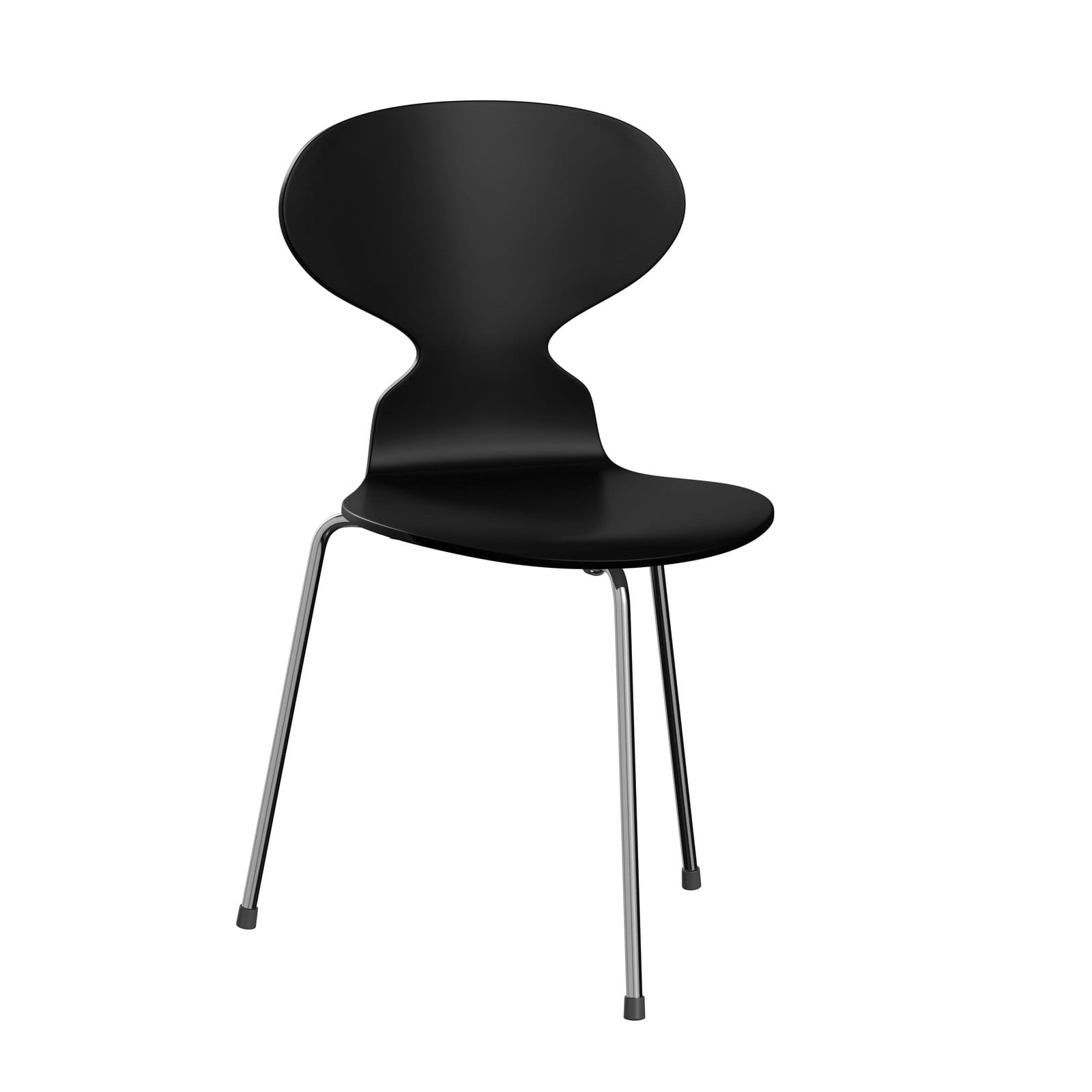
Series 7 vs Ant chair, side by side
| Ant (3100 and 3101) | Series 7 (3107) | |
|---|---|---|
| Designed | 1952 | 1955 |
| Legs | Three (3100) or four (3101) | Four |
| Height | 77 cm (3100), 81 cm (3101) | 82 cm |
| Width | 52 cm | 50 cm |
| Depth | 51 cm (3100), 48 cm (3101) | 52 cm |
| Weight | 3.1 kg (3100), 3.6 kg (3101) | 4 kg |
| Shell | Nine layers of pressure-molded veneer, narrow waist | Nine layers of pressure-molded veneer, broad back |
| Stackable | Yes | Yes |
| Versions | Side chair, front or fully upholstered | Side chair, armchair, upholstered, office chair, bar and counter stools |
| Starting price at Fritz Hansen (Denmark, coloured ash) | DKK 2,499 | DKK 3,499 |
Dimensions are from Fritz Hansen's product pages for the standard seat height versions. Prices are from Fritz Hansen's own online store in Danish kroner and change with finish, upholstery and market, but the gap between the two chairs holds across most finishes.
Series 7: the bestseller
Three years after the Ant, Jacobsen reworked the idea into something broader and more comfortable. The Series 7 keeps the one-piece molded shell but drops the deep waist, so the back flares out into wide shoulders that hold your upper back. It stands on four legs from the start, and it sits a little taller. Fritz Hansen calls it the most popular chair in its collection, and it is easy to see why: it works at a dining table, in a cafe, in a meeting room or at a desk.
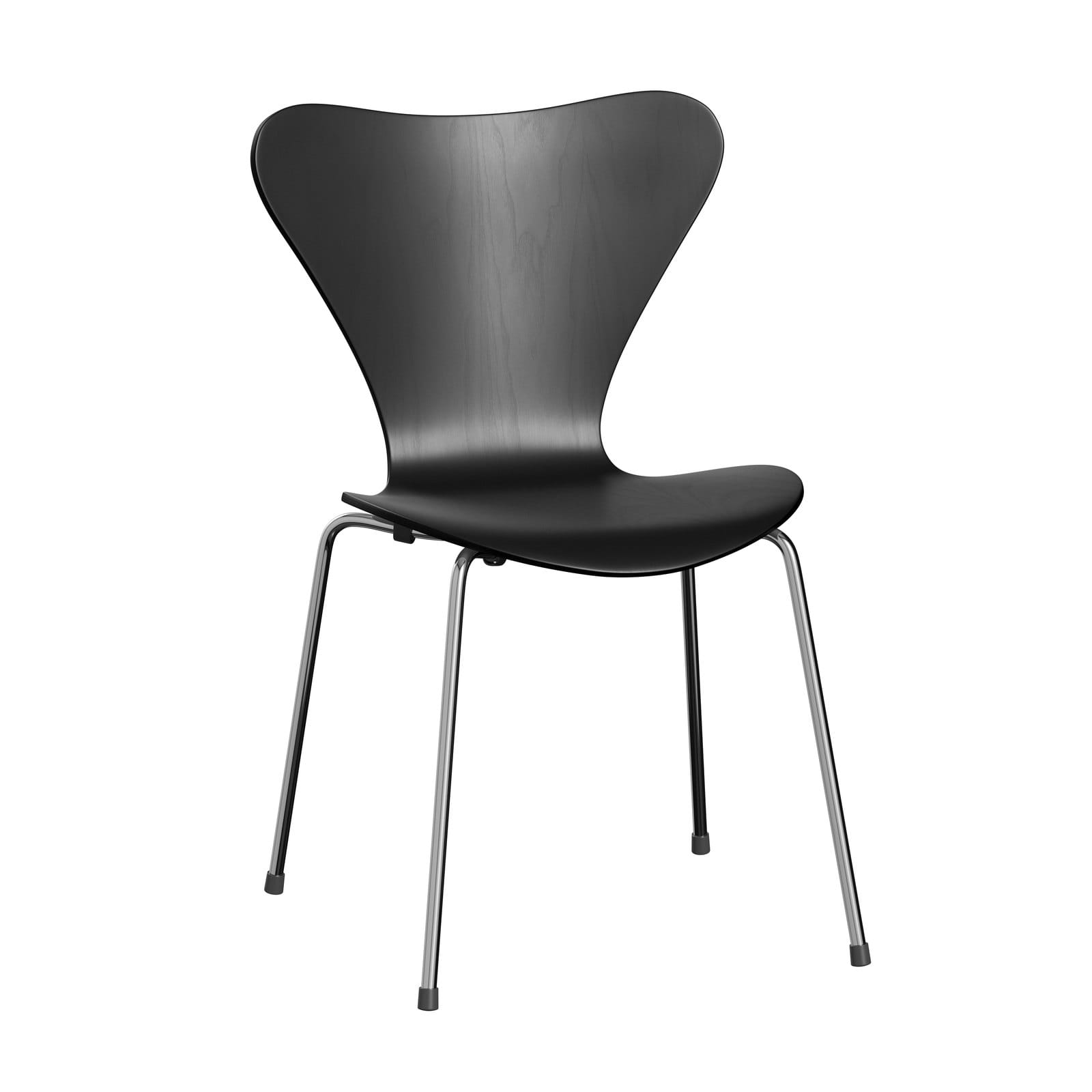
The Series 7 also became a pop culture object. The chair in the famous 1963 portrait of Christine Keeler, the model at the center of a British political scandal, is often called a Series 7, but it was actually a copy. That photo did more for the shape than any advertisement, and it is one reason the Series 7 remains one of the most imitated chairs in the world. Today it comes as a side chair, an armchair, an upholstered chair, a swivel office chair and in bar and counter heights, in dozens of colors and wood finishes.
The Ant: lighter and more sculptural
Side by side, the Ant looks more delicate. Its tight waist and rounded head give it a figure that Fritz Hansen compares to the curves of a musical instrument, and the three-legged 3100 weighs just 3.1 kg. It takes up less visual space around a table, which makes a set of Ants look lighter than the same number of Series 7s. The trade-off is comfort over a long dinner: the narrower back supports less of you, and some people simply find three legs less reassuring than four, which is why many families and offices pick the four-legged 3101.
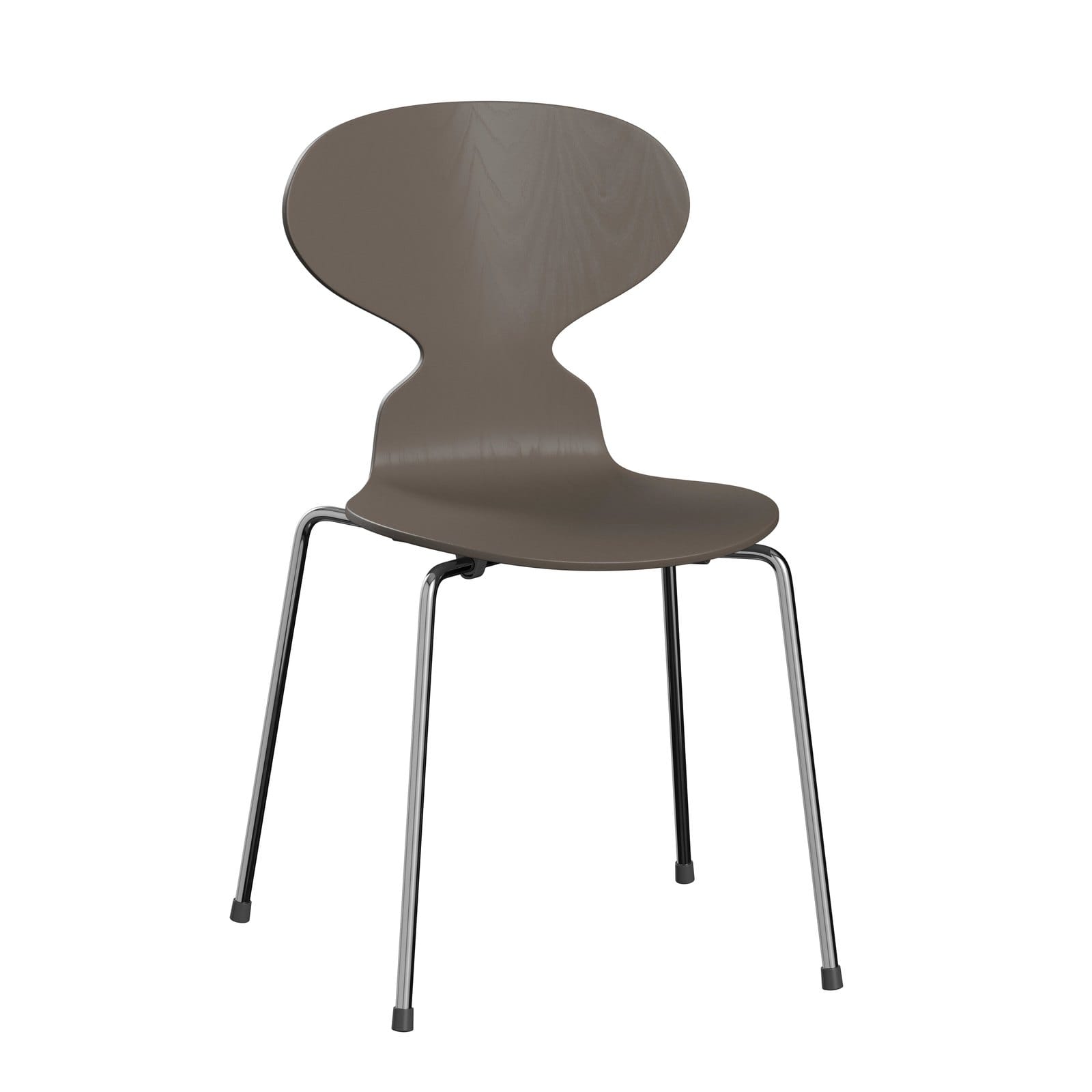
Which to buy, by buyer
- Everyday dining chairs for a family: the Series 7. More back support and four legs as standard.
- A home office or desk: the Series 7, which comes as a proper swivel office chair as well as a side chair.
- Small kitchens and tight dining nooks: the Ant. It is lighter, slimmer at the back and visually quieter.
- Design purists: the three-legged Ant 3100, the chair exactly as Jacobsen intended.
- Mixing chairs around one table: both work together, since they share the same shell technology and steel legs. Pair them with the Wishbone chair for a full Danish modern set.
- Comparing with American shell chairs: read our Eames DSW vs DSR vs DAW guide.
Our call
Our call: buy the Series 7 for most homes. It is more comfortable, more practical and available in versions for every room, and there is a reason it is Fritz Hansen's most popular chair. Buy the Ant instead if you love its sculptural outline, have a smaller space, or want the original three-legged design, and you will often pay a little less for it. Whichever you choose, buy from Fritz Hansen or an authorized dealer, since both chairs are among the most copied designs in furniture.
Fritz Hansen Series 7 3107 chair: our pick, the classic four-legged side chair. See it at Fritz Hansen
Fritz Hansen Series 7 3207 armchair: the same shell with arms, for the head of the table or a desk. See it at Fritz Hansen
Fritz Hansen Ant 3100 chair: the original three-legged Ant. See it at Fritz Hansen
Fritz Hansen Ant 3101 chair: the four-legged Ant, steadier for everyday use. See it at Fritz Hansen
For Jacobsen's most famous lounge chair, read our Egg chair explainer, learn the bigger story in Scandinavian design explained, and browse more classic furniture in our Design Icons hub.
History, dimensions and prices are from Fritz Hansen's official designer and product pages.


