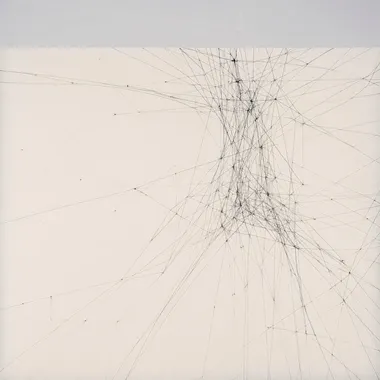

Electronic music has always claimed to be about the future. The Black Dog has spent over three decades proving it's just as good as the past. Formed in 1989, the group was there at the founding of British electronic listening music, part of the early-nineties moment that taught techno to be introspective, before Ed Handley and Andy Turner departed to form Plaid and Ken Downie carried the name forward from Sheffield, where the band still works today. Their Bandcamp catalog runs to over 120 releases, they self-release through their own Dust Science label, and their bio is three words long: we make techno. Feral Grace, the new seven-track album, is the deepest they've ever let their city and their childhoods into the machines.
The album was written around old childhood places that have since been reclaimed by nature or buried under new housing estates: the woods where they gathered leaf moss for tomato plants, the shallow streams dammed with small hands, the fishing banks where hours passed without talking, just shared food and cheap cans. The water has been drained, and the people are gone, but the faint outline of where it all was is still there if you look hard enough. The record positions itself as a bridge between then and now, a last spell cast before the memories fade with the people carrying them. The question the band leaves hanging over the whole album is the one that gives it its weight: "Who will know we were here at all?"
This isn't nostalgia as comfort. Woven through the remembered childhood is the remembered violence done to it: the paths still cut into the land where people once walked to work, leading to trades and industries smashed during the Thatcher years, communities ripped apart in ways that are still legible in a Sheffield pub today. The Black Dog has always been a political band in the quietest possible way, and here the politics are geological, pressed into the landscape itself. The land remembers who walked it and what was taken from them. The album is an attempt to read that record back before it erodes.
The tracklist reads like a psychological weather report: "Bleak Comfort," "Soft Collapse," "The Slow Decline," "Cold Patterns," "Broken Signal," "Dead Language," "Every Empty Room." Seven titles, one temperature. This is The Black Dog in their contemplative register, the mode that made their reputation for turning machine music melancholic, and the titles map the album's real subject: not the places themselves but the slow, undramatic process by which they and their meanings disappear. A signal breaking up. A language dying. A room emptying. The feral grace of the title is what's left when human purpose withdraws, and the undergrowth moves back in, and the music sits exactly there, in the overlap between decay and reclamation, where something ending and something growing are the same event.
The record gives its ideas room: forty-eight minutes across seven tracks, opening with the ten-and-a-half-minute "Bleak Comfort," which sets the album's pace the way a long walk sets a conversation's. Everything here is written, mixed, produced, and mastered by the band themselves, the way it has been for years, and it extends a run of remarkable late-career productivity that has recently included the Loud Ambient series and an expanded box set of their landmark Music For Real Airports project, the band's earlier masterwork of reading emotional truth out of anonymous modern spaces. Feral Grace is the same skill pointed in a more personal direction: not the airport everyone passes through, but the fishing bank only a few people remember.
Few acts have earned this subject the way this one has. A band that helped invent the idea of electronic music, you sit with, still working from the same city thirty-five years on, is itself one of those paths cut into the land, still walked. Feral Grace is them mapping the territory while the outline is still visible.
Listen and buy: streaming on Spotify and every major service, in 24-bit lossless on Bandcamp, and direct from the band at DustStore, where a very limited digipak CD is available while it lasts; their site links out to everywhere else the album lives, from Bleep to Boomkat to Tidal. Buying direct puts the most in the band's hands.
Related: rheom - _ 729.root: Reductionist IDM from Bilbao's Polygon Network · The Orb Auntie Aubrey's Excursions Beyond The Call Of Duty pt.3
More in our Electronic Music Labels hub.