Everyday carry has a reputation problem. Search the term and you get flat lays of tactical flashlights, titanium pry bars and knives that look ready for a war, all arranged on a slab of wood. It is a hobby that tends to reward having more, and more expensive, things in your pockets.
The better version is the opposite. The things you carry every day should be small, quiet and useful enough that you notice when they are missing. They should last years, ideally decades, and most of the best ones have already proved that they can. The seven picks below are ordinary objects done well: a small knife, a pen that writes upside down, a watch that costs less than lunch for two, and a few things that keep the rest in order.
Unknowndivide may earn a commission from purchases made through links in this guide. As an Amazon Associate we earn from qualifying purchases.
Victorinox Cadet Alox: the small knife
The Swiss Army knife is the original everyday carry object, and the Cadet is the version that has quietly become a favorite among people who carry one daily. At 84mm long and 46 grams, it is thin enough to forget in a pocket. The ribbed aluminum Alox scales replace the familiar red plastic and wear well over time. You get nine functions, including a blade, a nail file, a bottle opener and screwdrivers, and none of the bulk of the bigger models. The blade does not lock, which keeps it legal to carry in more places. Around $45 on Amazon.
See the Victorinox Cadet Alox on Amazon
The James Brand Carter: the upgrade
The James Brand has spent its life making knives that look like design objects rather than weapons, and the Carter is a good example. It has a 2.8 inch VG-10 steel blade, holds an edge well, weighs 3.0 ounces, and locks with a slide lock that is easy to release with one hand. The shape is calm and rounded, and it looks as at home on a desk as in a pocket. It is the knife to buy when you want something that will last a lifetime and still be the kind of thing you are happy to pull out in public. Check your local knife laws first. It lists at $149 and sells for around that on Amazon.
See The James Brand Carter on Amazon
Fisher Space Pen Bullet: the pen
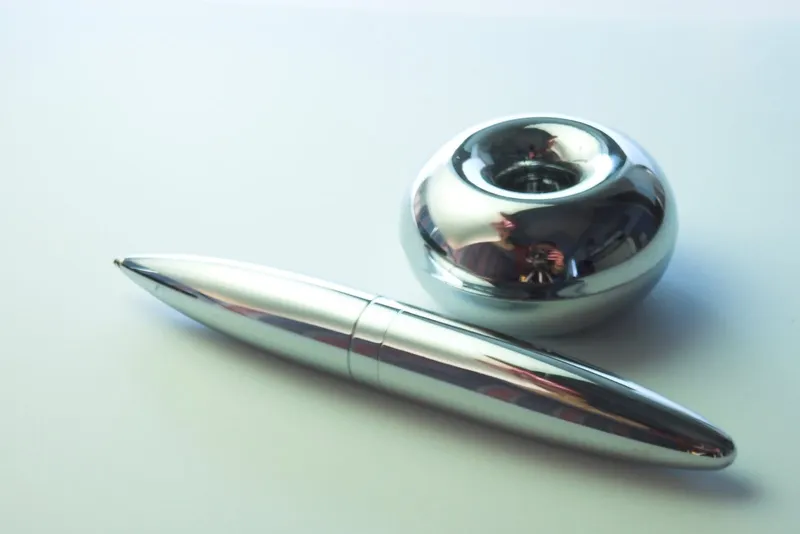
Paul Fisher founded his pen company in 1948, and he spent years developing a pressurized ink cartridge that would write upside down, underwater and in extreme cold. NASA took notice, and Fisher's AG-7 pen flew on Apollo 7 in October 1968. The Bullet uses the same cartridge in a much smaller body. Capped, it is about the size of a lipstick and disappears in a coin pocket. Posted, it becomes a full length pen. The chrome version costs around $35 on Amazon, and the matte black version is a few dollars less.
See the Fisher Space Pen Bullet on Amazon or the matte black version
Field Notes: the notebook
A pen needs paper. Field Notes was started in 2007 by Aaron Draplin's Draplin Design Co. and Coudal Partners, inspired by the promotional memo books that seed and farm supply companies used to give away. The format has not changed. Each book measures 3½ by 5½ inches, has 48 pages, and comes in packs of three. It fits a back pocket and is cheap enough to fill without guilt. A three pack of the Original Kraft costs around $13. If you want something more permanent for the desk, the Hobonichi Techo is a good companion.
See Field Notes Original Kraft on Amazon
Casio F-91W: the watch
Casio released the F-91W in June 1989, and it has been in production ever since, which makes it one of the best known watches ever made. It does the basics: time, date, an alarm, a stopwatch and a small backlight. The CR2016 battery lasts around seven years. It is only splash resistant, so take it off before swimming. It weighs almost nothing and looks deliberate on almost anyone. If you want something with more character, our guide to microbrand watches under $500 picks up where the Casio leaves off. Around $22.
Orbitkey Leather Key Organizer: for keys
Orbitkey began in Melbourne in 2013, when Charles Ng and Rex Kuo took a simple idea to Kickstarter: stack your keys inside a leather strap so they stop jangling, scratching your phone and poking through your pockets. The organizer holds keys in a neat bundle that fans out when you need one, and the stack stays tight and quiet. It is one of those objects that seems unnecessary until you use it, and then a loose key ring feels like a mess. Around $44 on Amazon.
See the Orbitkey Leather Key Organizer on Amazon
Bellroy Card Sleeve: for cards
Bellroy was founded in Australia in 2010 on the idea that most wallets were too thick. The Card Sleeve is the purest version of that thinking. It holds between two and eight cards, with a pull tab that lifts the ones you use less often out of a hidden slot, and a center pocket for a folded note. It is made of leather that wears in nicely and slips into a front pocket without a bulge. If you prefer something even more minimal, The James Brand Lowe wallet is a good alternative. Around $59.
See the Bellroy Card Sleeve on Amazon
Carry less, carry better
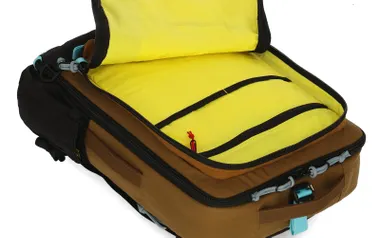
None of these picks are exciting on their own, and that is the point. They are objects that have been refined for decades, and they work well enough to disappear. Start with whatever you reach for most, replace one thing at a time, and resist the urge to fill every pocket. If it all needs to go somewhere, our guide to the best carry-on travel backpacks covers the bag.
The makers tell their own stories at Fisher Space Pen, Field Notes, Orbitkey and Bellroy, and the Carter's full specifications are on The James Brand's site. Everything here is available on Amazon at the links above.
More in our Desk & Everyday Carry hub.