Unknowndivide may earn a commission from purchases made through links in this post.
Fast film gets the attention, but slow film is where the detail lives. CineStill 50Daylight is a slow, daylight balanced color negative film made from a motion picture emulsion, and CineStill calls it the sharpest and finest grain color negative film in the world. If you shoot in bright light and want clean, high resolution images, here is why it deserves a spot in your camera bag.
What it is
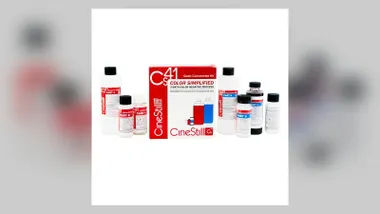
CineStill 50Daylight, usually shortened to 50D, is a color negative film from CineStill. The company describes it as an EI 50 speed, daylight balanced (5500K) motion picture film stock prepared for still photography. It is based on the original motion picture emulsion, and CineStill preps and rolls it for clean and safe processing at a standard photo lab, or at home with its Cs41 Color Simplified kit.
The key details, according to CineStill:
- Speed: EI 50
- Color balance: daylight, 5500K
- Processing: standard C-41
- Exposure range: can be rated anywhere from EI 12 to 100 without push processing
- Grain: almost none, no matter how you meter
- Workflow: optimized for scanning, and prints well on RA-4 paper when processed in C-41
Why slow film
CineStill says 50D is ideal for shooting in bright light at wide apertures and for producing high resolution, low grain images. In other words, it is made for sunny days, when there is plenty of light and you want as much detail as the frame can hold.
The trade off is speed. A slow film needs plenty of light, so 50D is a poor fit for dim interiors or night scenes. For those, its sibling CineStill 800T is designed for low light and artificial light.
Exposure latitude
The standout feature is latitude. CineStill says the exposure latitude of 50D is beyond anything digital and most other films can hope to achieve, and that you can rate it anywhere between EI 12 and 100 without push processing. You will see almost no grain at any of those settings.
What does change is the look. CineStill says color, contrast, shadow detail and highlight rendering are affected by the EI you choose. If you expose at a lower EI, you get warmer images with greater halation in the highlights. That gives you a creative dial: rate it lower for a warmer, glowing look, or closer to box speed for a cleaner result.
50D vs 800T
CineStill makes 50D and 800T from motion picture emulsions, and the two are opposites in many ways. 50D is a slow, daylight balanced film rated at EI 50, built for bright light and the finest possible grain. 800T is a fast, tungsten balanced film rated at 800, which CineStill says can be pushed up to 3200 for low light. Both are prepped for standard C-41 processing, and both are optimized for scanning. A simple approach is to carry one roll of each: 50D for the day and 800T for the night.
About halation
Like other CineStill films, 50D goes through what the company calls its proprietary Premoval process, so halation is possible. CineStill explains that halation occurs most strongly around in focus, overexposed point light sources, and is most visible when those sources are surrounded by a darker background.
Push and pull
CineStill says 50D can be push or pull processed, either at your lab or using its Cs41 kit. It notes that push processing will generally increase contrast and grain, and colors may shift slightly. Full instructions are in the push and pull chart in the Cs41 kit's manual. Our guide to push processing explains how it works.
Developing at home
CineStill says that processing 50D in C-41 chemistry gives standard color negatives that scan well using a variety of workflows and have the color contrast curves intended for RA-4 color darkroom printing. Its recommendation is to start with C-41, which leaves more options open should you want to print your pictures in a darkroom someday.
That makes 50D a great roll for home development with the CineStill Cs41 kit. Our guide to developing color film at home walks through the process.
Storage
CineStill recommends storing unexposed film in a refrigerator at 13°C (55°F) or lower in the original sealed package, then letting it warm to room temperature before opening to avoid condensation. Load and unload in subdued light, and process the film as soon as possible after exposure.
Where to buy
CineStill sells 50D directly, and camera shops carry it in 35mm, with medium format versions also available.
For more gear we love, browse our buying guides.