Unknowndivide may earn a commission from purchases made through links in this post.
Earplugs used to be a bag of orange foam you found at a hardware store. Now there are reusable earplugs designed for gigs, for open offices, for flights and for sleep, and the box usually shows one number in decibels. That number is the SNR, and once you understand it, choosing the right pair gets much easier. This guide explains what SNR means, how to match a rating to what you are doing, and which reusable earplugs make sense for concerts, everyday noise and sleep.
What SNR means
SNR stands for Single Number Rating. It is not signal to noise ratio, which is a term you may know from audio gear. According to Loop, SNR is the hearing protection rating most commonly used in Europe, and it represents the estimated amount of noise reduction a hearing protector can provide when tested to European standards. The higher the SNR, the greater the potential reduction in surrounding noise under laboratory conditions.
Some products also list HML ratings next to the SNR. H describes performance against higher frequency sounds, M against mid frequencies and L against low frequencies. The SNR rolls that information into one easy number, which is why it is the figure you see on the front of the packaging.
SNR vs NRR
In the United States and Canada you will often see NRR, or Noise Reduction Rating, instead. Loop explains that both ratings measure the same thing, how much noise hearing protection can reduce, but they come from different testing standards and calculation methods. SNR values are often around 2 to 3 dB higher than NRR values for comparable products, and there is no official formula to convert one to the other. The practical takeaway is simple: compare SNR with SNR and NRR with NRR, and do not assume a product with a bigger number on a different scale is automatically stronger.
Loop also makes a point worth repeating. The best hearing protection depends on your environment, on proper fit and on how you plan to use it, not just on the highest number on the box. An earplug that is too strong for a concert can make the music sound muffled, and an earplug that does not seal well will never reach its rated reduction.
Matching the number to the moment
Think of SNR as a dial. Lower numbers take the edge off while keeping sound clear. Higher numbers aim to block as much as possible. Here is how that plays out across a typical lineup.
- Around 16 to 17 dB: conversation and live music. This range is designed to lower volume while keeping speech and music intelligible. It suits bars, gigs, festivals and busy restaurants.
- Around 24 dB and up: focus, travel and sleep. This range is meant to muffle unwanted noise rather than simply turn it down. It suits open offices, planes, trains and noisy neighbors.
The right pick depends on whether you want to hear what is happening around you, just more quietly, or whether you want to shut it out.
For concerts and festivals
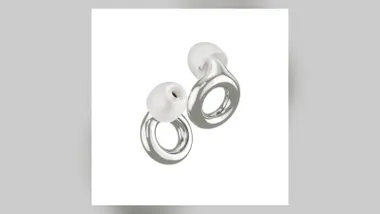
The Loop Experience 2 is built for live music and events. Loop rates it at 17 dB (SNR), lists certified hearing protection, and includes four ear tip sizes so you can get a seal in different ear shapes. The earplugs are reusable and come with a carry case, which matters when you are juggling a phone, a drink and a jacket at a show. We cover it in more depth in our Loop Experience 2 review.
If you go to a lot of shows, a reusable pair also pays off in comfort. Soft silicone tips are easier to wear for a full set than foam you have to roll and reinsert. Pair them with the music you are going to see: our Merge Records starter guide and Sub Pop starter guide are a good place to find bands that are worth seeing loud.
For everyday noise and conversation
The Loop Engage 2 sits just below the Experience 2 at 16 dB (SNR). Loop designed it for clearer, more focused conversations, says it keeps speech clear, and notes that it minimizes the blocked ear feeling that many people get when they talk while wearing earplugs. It also has four ear tip sizes, a carry case and certified hearing protection. It is a good fit for dinners in loud restaurants, family gatherings and anyone who finds crowded rooms draining.
For focus, travel and sleep
For deeper quiet, the Loop Quiet 2 is rated at 24 dB (SNR). Loop says it is made for deeper focus, calmer travel and sleep, and builds it from flexible soft touch silicone with a wide range of ear tip sizes. Like the others, it is reusable, comes with a carry case and is certified as hearing protection. See our full Loop Quiet 2 review for who it suits.
If you are using earplugs on a plane, they work well alongside a good pair of headphones for the parts of the trip when you want to listen rather than block. Our roundup of the best studio headphones covers closed back options that also travel well.
Why fit matters more than the number
Every rating assumes the earplug is worn correctly. In practice that means trying more than one tip size, choosing the one that feels snug without pressure, and inserting it so it sits securely. If you can hear a big change when you press gently on the earplug, the seal was not complete. A good fit is the difference between an earplug that performs and one that only looks like it does.
Clean reusable earplugs regularly, keep them in their case and replace tips when they lose their shape. These are small habits, and they keep the earplugs comfortable and effective for longer.
How to choose
- You go to gigs and festivals: start with a lower SNR designed for music, like the Experience 2.
- You want relief in loud social settings: look at a conversation focused design like the Engage 2.
- You want to block noise for work, travel or sleep: go higher, like the Quiet 2.
- You do all three: it is common to own two pairs, one for music and one for quiet.
For more gear we use every day, browse our buying guides.