Few garments carry as much history as a thick wool sweater. Long before it became a fashion staple, the fisherman sweater was work clothing for people who spent their lives on cold, wet water, and its patterns carried meaning for the families who knitted them. This guide covers why wool became the material of choice, how fisherman sweaters were made, what their stitches meant and how to choose a good wool sweater today. Much of the history draws on Filson's journal history of wool sweaters at sea.
Why wool
People have been harvesting fleece for a very long time. Filson's history notes that humans are thought to have first domesticated sheep around 11,000 years ago for their milk, meat and fleece, and that the first wool clothing appeared around 4000 BC (before Christ). The history calls sheep an incredibly hardy animal that can survive and thrive in a wide range of climates, describes wool as one of the most versatile materials on Earth and points out that it is a renewable resource.
What drew people to wool then still applies now. The history describes wool as one of the few natural fabrics resistant to fire and temperature extremes, as well as moisture wicking, water resistant and durable. Even without the natural oils and lanolin that were present in the unscoured wool of the past, modern wool fibers can absorb up to 30 percent of their weight in water before feeling wet. For a garment worn at sea, where spray and rain are constant, that matters a great deal.
If you want to compare wool types, our merino wool explainer covers fine wool for base layers, and our Mackinaw wool guide covers the dense woven wool used in heavy outerwear.
Sweaters of the British Isles
The windswept, rain soaked British Isles were where wool's practical strengths met daily life most clearly. Surrounded by a turbulent sea, the people of these islands, and especially their fishermen, learned to deal with rough weather early in life. It was here that the iconic fisherman's sweater took shape, a garment now prized by outdoor enthusiasts, loved by families and seen on runways around the world.
For generations of men who went to sea in small fishing boats, the ocean could both reward and punish. One thing that helped them was the thick sweater hand knitted by their wives and the other women of their fishing villages. Filson's history notes that these sweaters took sixty to eighty hours to knit by hand. That is a remarkable investment of time for a single garment, and it helps explain why these sweaters were treasured and kept in use.
Patterns with meaning
From a distance, the flowing patterns on a traditional fisherman's sweater look decorative. Up close, many of them carried deeper meaning. Hundreds of designs exist, and many are still popular today. A few of the best known:
- Tree of Life. A branching pattern that, according to Filson's history, symbolizes different families in Ireland and how interconnected some of them may be.
- Cable stitch. A twisted, rope like pattern said to depict fishermen's ropes and a wish for a fruitful day at sea.
- Scottish patterns. The many intricate patterns found in Scottish sweaters are linked to different clans.
It has been said that if you know the patterns, you can tell where the wearer is from and where they call home. Whether or not every sweater could be read that precisely, the idea captures how closely these garments were tied to family and place.
More than a garment
The history Filson tells is not really about fashion. It is about resilience and resourcefulness. Fishermen were not the only ones who relied on heavy wool sweaters. People facing blizzards on lonely hillsides, soldiers on patrol and farmers working frosty land all wore them too. In a world now dominated by synthetic fabrics and mass production, a well made wool sweater is a reminder of craftsmanship and slower ways of making things.
Shetland wool
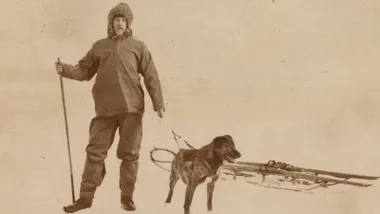
Not every heritage sweater is a cabled fisherman's knit. Shetland wool sweaters are another classic. Filson's Shetland 5-gauge Wool Sweater is made with pure Shetland wool, which the company says is widely regarded as the best available. Filson notes that Sir Edmund Hillary wore Shetland wool layers on his historic 1953 Mount Everest expedition. The company describes the wool as light and warm, with a natural ability to insulate whether dry or wet. The sweater has 2x2 rib knit cuffs, hem and collar.
A plain Shetland knit like this is a good everyday alternative if you want a heritage wool sweater without the intricate patterning of a fisherman's knit. It is simple enough to wear with work pants, denim or chinos, and it layers easily under heavier outerwear.
How to choose a wool sweater
Start with how you will wear it. A heavy, patterned fisherman's sweater can work as an outer layer on cool, dry days. A lighter, plainer knit layers more easily under a jacket. Then consider:
- Fiber. Check the label for the type of wool, and whether it is pure wool or a blend.
- Pattern. Decide whether you want the texture and story of cables and traditional stitches or a plainer knit that works with more outfits.
- Fit. Look for enough room to move, with cuffs and a hem that sit where you want them.
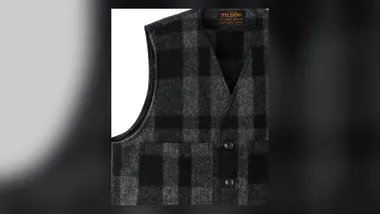
- Layering. A wool sweater works well under a peacoat, a waxed jacket or a Mackinaw Wool Vest.
Care
A hand knitted fisherman's sweater once represented dozens of hours of work, and a good wool sweater today still deserves careful handling. Always follow the care label that comes with the garment, since the right method depends on the wool and the knit.
Where to buy
Shetland 5-gauge Wool Sweater at Filson
Read Filson's history of wool sweaters at sea
For more heritage clothing, browse our denim and workwear hub.