A good leather jacket can last for decades, so it pays to know what you are buying. The term covers several very different designs, each with its own history, fit and attitude. This guide walks through the main styles, the hides they are made from and how to choose the one that suits you, using jackets from one of the oldest names in the business as examples.
Where the modern leather jacket started
Schott NYC traces its story to 1913, when brothers Irving and Jack Schott opened a small factory in the basement of a tenement building on the Lower East Side of Manhattan. They began by cutting and sewing raincoats, then Irving started experimenting with leather and sheepskin. In 1915 he named his top of the line leather jackets Perfecto, after his favorite Cuban cigar.
In 1928, Irving Schott introduced what the company calls the first modern leather motorcycle jacket. It was sold through a Long Island motorcycle dealer and built from heavy leather with an asymmetrical front designed to block the wind and protect the rider. By 1930 Schott had opened a shop and factory in South Amboy, New Jersey, producing riding jackets in horsehide, goatskin and steerhide.
The motorcycle rider
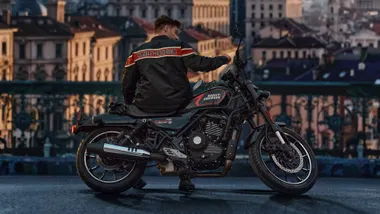
This is the jacket most people picture when they hear the words leather jacket. The defining feature is the asymmetrical front zipper, which closes off to one side so that the wide lapels overlap across the chest. That shape keeps wind out when you lean forward on a motorcycle.
Schott's Perfecto 618 is a textbook example. It is 25 inches long and made from heavyweight steerhide. Schott lists snap down lapels, collar and shoulder epaulettes, an attached belt with a square buckle, zippered sleeve cuffs, three outside zippered pockets plus a small coin pocket, a bi-swing back for movement and a quilted, insulated lining.
Its close cousin is the 613, known as the One Star. Schott says the differences are subtle, with the 618 using logo snaps and no stars on its epaulettes. Both are built to be tough, and both look the part with jeans, boots and a plain tee.
Wear a rider if you want maximum attitude. It is the boldest leather jacket style and the most closely tied to music and motorcycle culture.
The cafe racer
The cafe racer strips the rider down to its essentials. It has a straight center zipper, a short band collar instead of lapels and a clean front with no belt. That sleek profile was designed for riders who wanted less flapping fabric at speed, and it reads as more refined off the bike.
Schott's Model 141 is a classic version. The company says customer demand has kept it in production for over forty years and calls it its most versatile leather jacket. It has a Mandarin style collar with a snap closure, an inside wind flap behind the zipper, nickel plated side buckles, three zippered outside pockets with chain pulls and a zip out pile lining for colder weather. It is offered in 26 and 28 inch body lengths.
The 141 is cut from naked cowhide, which Schott describes as having a softer feel than its steerhide. That means it feels comfortable right away instead of needing a long break in period.
Wear a cafe racer if you want something that works with a sweater and chinos as easily as with jeans. It is the most adaptable of the classic styles.
The trucker and mechanic jacket
The trucker takes its shape from the classic denim work jacket, which Schott notes has been an American wardrobe staple since the early 1900s. It hits at the waist, closes with buttons and often has chest pockets and pleating down the front.
Schott's P620H is a horsehide mechanic's jacket built on that template. It has a 25 inch back length, front vertical pleats, metal shank buttons, lower flap pockets with button closures and a vintage horse blanket cotton lining. Schott describes it as lightweight enough to wear all year and easy to layer.
Wear a trucker style jacket if you like workwear and want leather that feels casual rather than tough.
Other styles to know
Flight jackets and field jackets are classics too, but their best known versions, such as the MA-1 bomber and the M-65 field coat, are usually made from nylon or cotton blends rather than leather. When it comes to leather, the rider, cafe racer and trucker remain the three core styles.
Understanding the hides
- Steerhide: heavy and firm, with a stiff feel at first that softens and shapes to you with wear. Schott uses it for the 618 and 613.
- Naked cowhide: softer from day one, with a natural matte look. Schott uses it for the 141.
- Horsehide: a traditional workwear and riding leather with plenty of character, used in the P620H.
Fit and breaking it in
A leather jacket should fit closely through the shoulders, since that is the hardest area to alter. Your arms should move freely, and you should be able to layer a light sweater underneath. Heavier hides start stiff. Schott says its steerhide jackets need a real commitment from the owner, and recommends wearing them often so they conform to your body over time.
Schott also notes that its chrome tanned leathers are processed to last for years without treatments or conditioners. Keep your jacket on a broad hanger, away from heat and direct sunlight, and let it dry naturally if it gets wet.
The final word
Pick the rider for attitude, the cafe racer for versatility and the trucker for laid back workwear style. Whichever you choose, a well made leather jacket rewards patience, and it only gets better the longer you wear it.
Keep exploring with our look at the Schott Perfecto 618, our guide to the MA-1 bomber jacket, the Alpha Industries M-65, the Barbour Bedale and the peacoat. For more, visit our sneakers and style hub.