
Six years ago, Ring showed off a security camera that flies around your house. On November 10 the idea came back with a new name, a new brain and a date you can put in a calendar: the Ring Drone Cam ships in the US on January 27, 2027.
It leads a two-device launch Ring calls Ring Robotics, with a rolling security robot for businesses alongside it. The drone is the one people will talk about, because it is a home camera that does not need a wall, a shelf or an outlet in the room it is watching.
What the Ring Drone Cam actually does
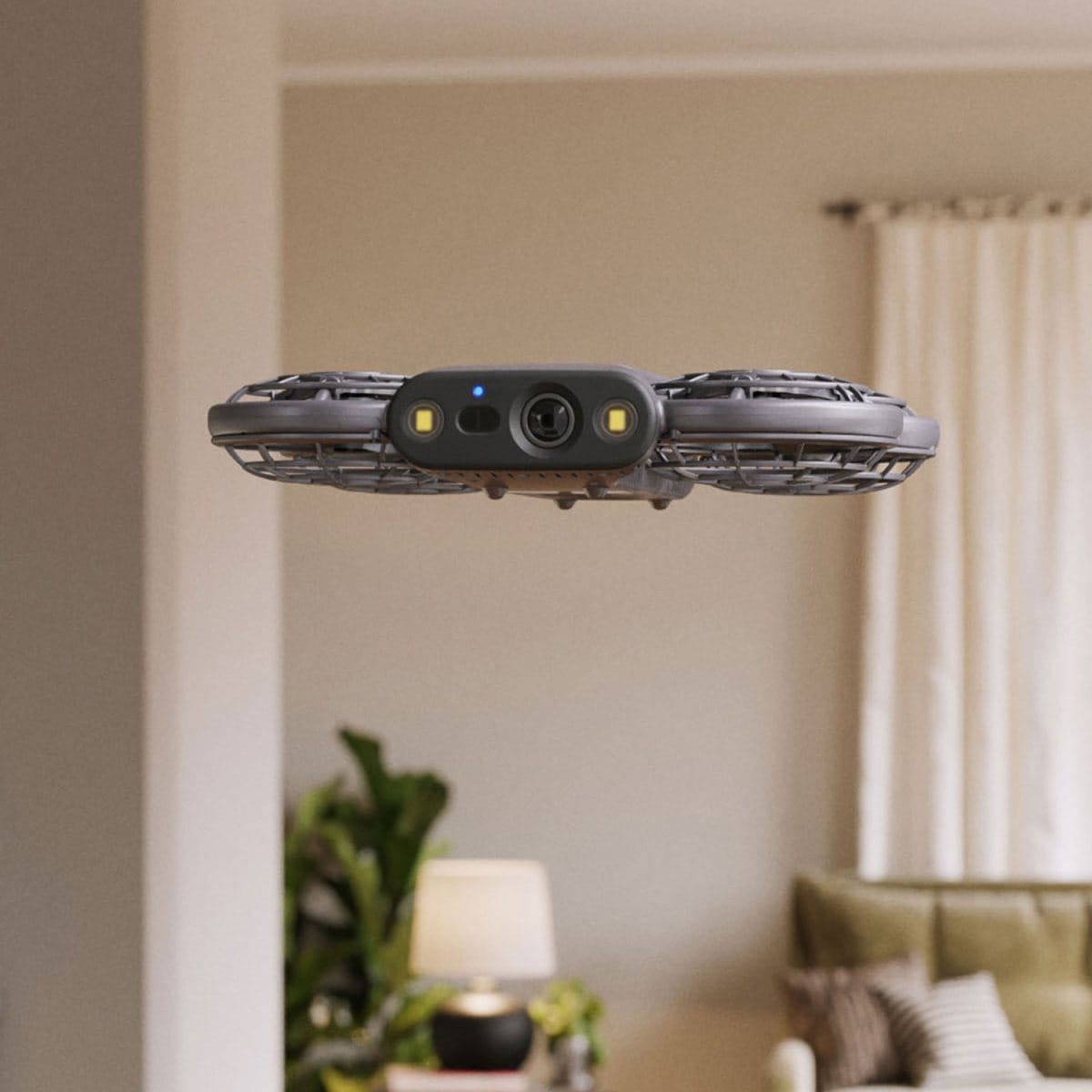
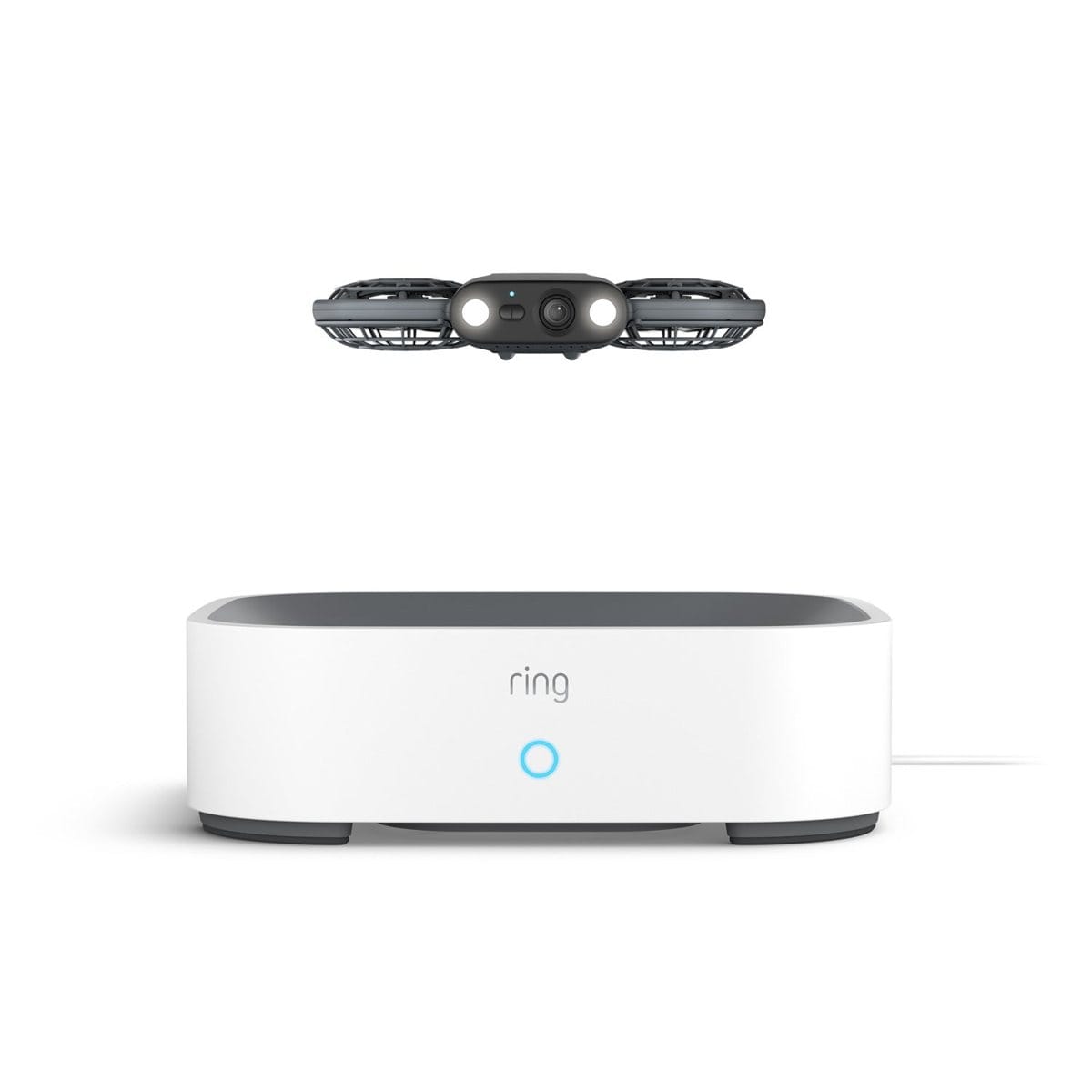
The drone lives in a dock on a flat surface. When a linked Ring doorbell, sensor or alarm is triggered, it lifts off and flies to points you marked in advance, like a back door, a window or the hallway to the garage, and streams what it sees to the Ring app. You can also launch it yourself, or set a schedule if you pay for a Ring Protect plan.
Ring's software, AI Pilot, builds the map for you. During setup you carry the drone through your home, it turns what it sees into a floor plan, names the rooms and suggests patrol points. In flight it plans its own route and steers around furniture and anything else in the way.
Ring Drone Cam specs, in plain numbers
- Video: 2K in a square 1920 x 1920 frame, with a 148 degree field of view both ways, and the drone can turn a full 360 degrees.
- Light: two LED spotlights switch on by themselves in dark rooms.
- Flight time: up to 8 minutes per flight, measured on a new battery. Think short patrols, not tours.
- Size: 17.2 x 13.7 x 3.3 cm and 165 grams.
- Audio: none. There is no microphone and no speaker.
- Coverage: indoors and one floor for now. Ring lists multi-floor support as planned.
The 2020 flying camera most people forgot
On September 24, 2020, Ring founder Jamie Siminoff introduced the Always Home Cam, an autonomous indoor camera that flew preset paths and checked the house when the alarm went off. Its privacy pitch carries over almost intact: the camera was physically blocked in its base, it could not be steered by hand, and it was tuned to hum so you could hear it recording. That post ended with a sign-up list, not a ship date.
The new drone keeps the same thinking. It records nothing while docked, an LED shows when it is recording, and Ring says plainly that the propellers are not quiet, which, with a stranger in the house, is the point. Clips are covered by Ring's strongest default encryption, which it calls Throw Away the Key.
The catches before you sign up
The fine print is on Ring's own support page and product page. The drone works best in rooms with varied visual detail and can be thrown by polished marble, wet tile, plain matte walls, frameless glass and mirrors, which describes plenty of modern apartments. The dock cannot hang on a wall. Scheduled patrols need a subscription, and video search is not offered to customers in Illinois. At launch it is also still waiting on authorization from the Federal Communications Commission, so for now you can only join the notify list.
Rover Cam, the one built for shops
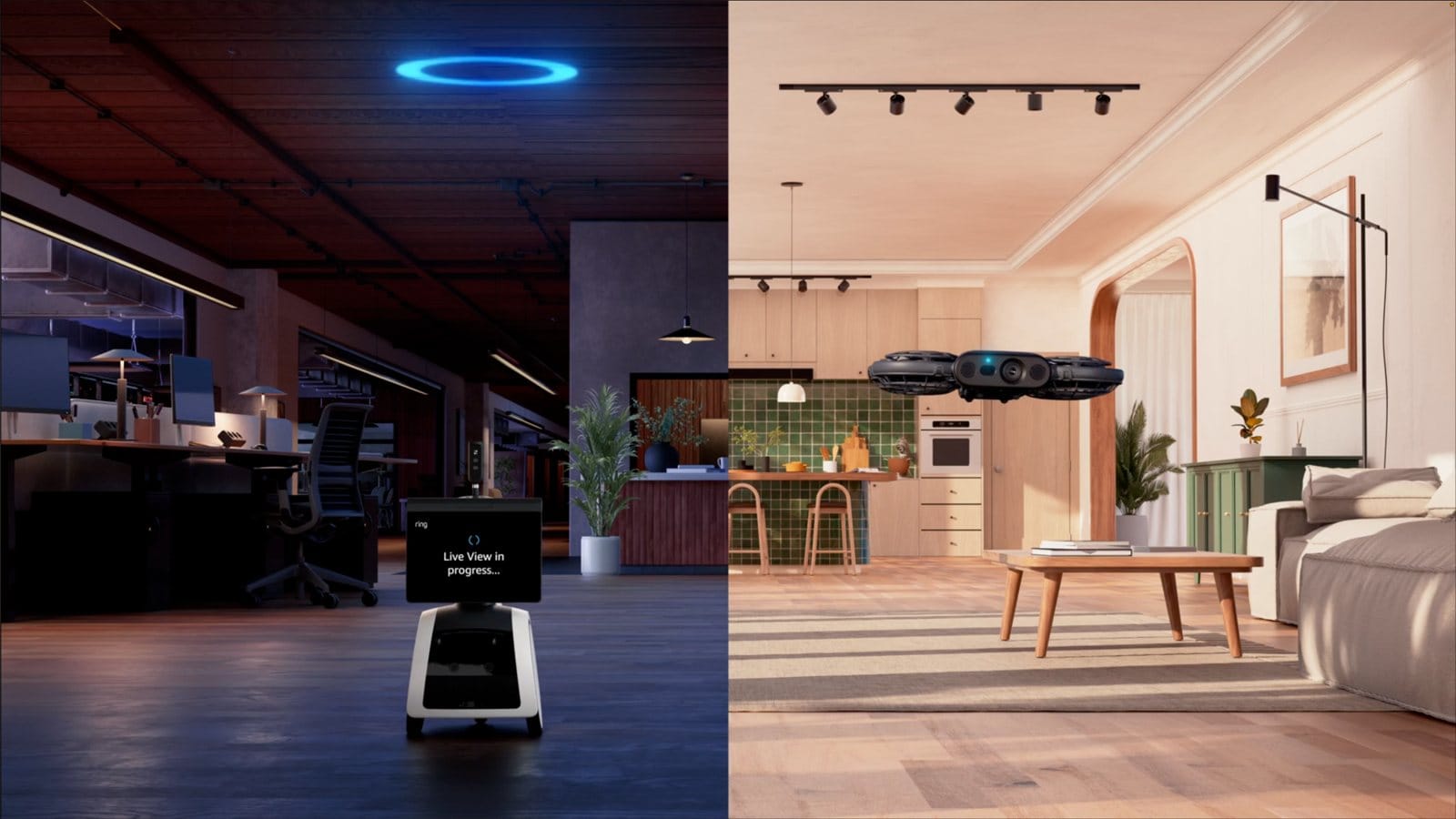
The Ring Rover Cam ships sooner, on December 16. It is a wheeled robot for businesses with a periscope camera mast that rises over counters and shelving, a siren, a light tower, two-way audio and up to 4K video the whole time it patrols. Ring says it covers up to 5,000 square feet, and that it grew out of owners of Astro, the home robot from Ring's parent company, saying roving security was the feature they loved most.
Shop picks while you wait
- Ring Drone Cam. Orders are not open yet, so the notify list is how you hear first. Sign up at Ring.
- Ring Pan-Tilt Indoor Cam 2K. The fixed alternative that ships today: one camera that turns to cover a whole room, with no battery clock running. Shop it at Ring.
For the other big home device of the season, see our look at Apple HomeView. For another product that turned a sci-fi idea into real hardware, there is the PP-2 turntable that reads vinyl with light.
Our call: wait. The Drone Cam is the most interesting home security camera in years, and the details show Ring has thought hard about privacy this time. But it is a first-generation flying device with an 8 minute battery, a one-floor limit, trouble with glass and mirrors, and no FCC sign-off yet. Join the list, then let the first owners show how it copes with a real living room. If you need eyes on a room this winter, the Pan-Tilt Indoor Cam does the job today.