
Gift guides for musicians usually go one of two ways. Either they recommend a pile of novelty accessories nobody asked for, or they assume the recipient wants the most expensive interface on the market. People who make music at home are harder to shop for than that, and also easier. Most of them already own the boring essentials. What they want is an instrument that gets them out of a rut, a tool that removes a small daily annoyance, or a book that changes how they finish tracks.
That is the angle here. Nothing below is a starter kit, and none of it duplicates the interface, microphone and monitors covered in our guide to home studio starter gear. These are the gifts that tend to get used the same night they are unwrapped, from a pocket sampler to a set of speaker isolators that make an ordinary desk sound better.
Unknowndivide may earn a commission from purchases made through links in this guide. As an Amazon Associate we earn from qualifying purchases.
Teenage Engineering EP-133 K.O. II: the sampler
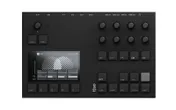
Teenage Engineering made its name with the OP-1, but the EP-133 is the product that put its ideas within reach. It is a sampler, drum machine and sequencer with twelve pressure-sensitive pads, a built-in microphone and speaker, and a body that looks like a calculator designed by someone who loves old Casio gear. The current edition has 128MB of memory and 999 sample slots, runs on four AAA batteries or USB-C, and syncs with almost anything. It is the rare piece of hardware that makes finishing a beat faster than doing it in a laptop.For a smaller budget, the original PO-33 K.O. pocket operator is the budget alternative, and our guide to every Teenage Engineering product covers the rest of the family.
See the Teenage Engineering EP-133 K.O. II
Arturia MicroFreak: the weird synth
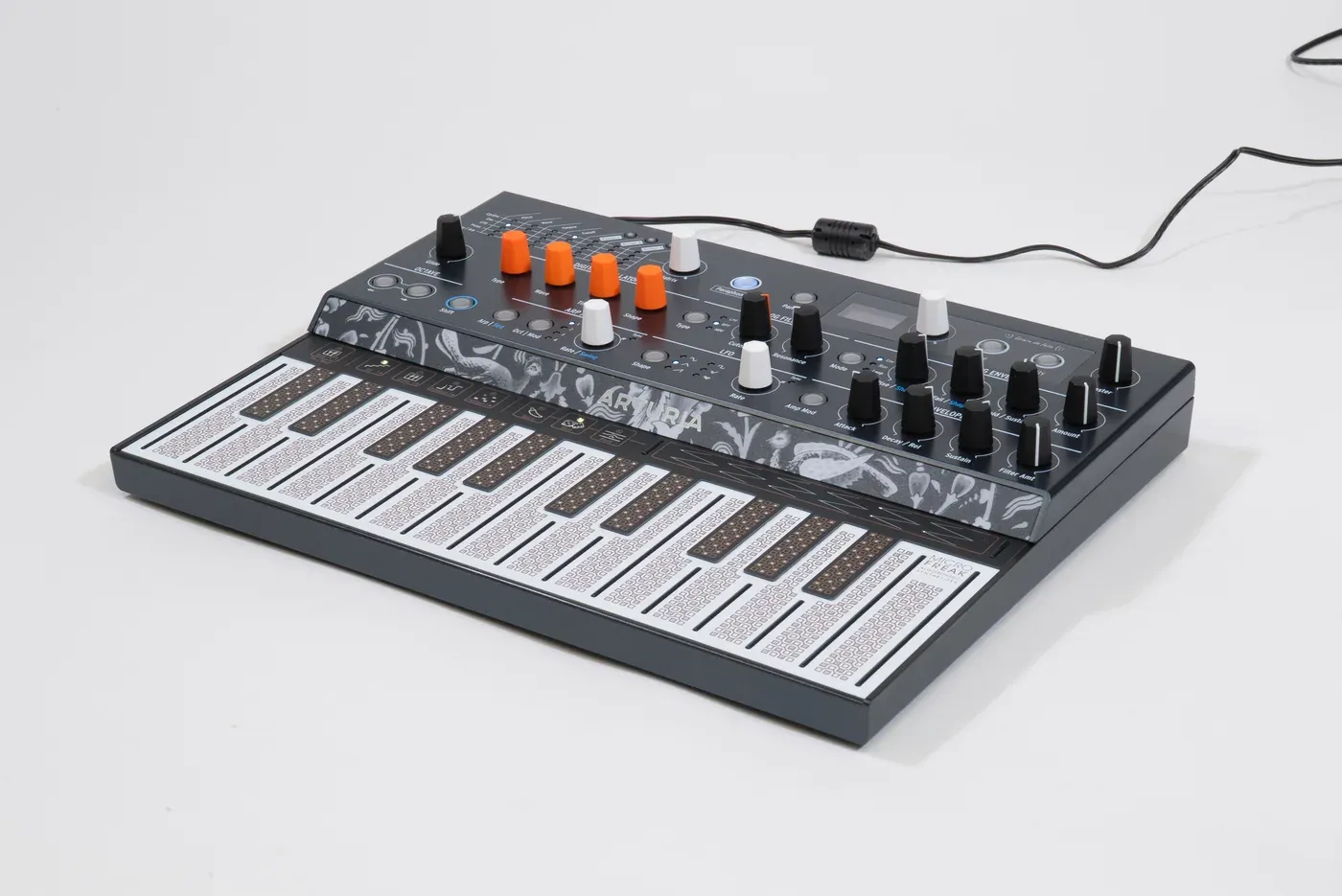
Arturia introduced the MicroFreak at NAMM, the big annual music gear trade show, in 2019, and it still has no real competitor at its price. The sound starts in a digital oscillator with a dozen engines, seven of them adapted from the open-source code of Mutable Instruments' Plaits module, and runs through an analog filter modeled on the Oberheim SEM. The keyboard is the controversial part: 25 flat, capacitive keys with polyphonic aftertouch instead of mechanical ones. Traditional players grumble. Producers who want strange textures, generative sequences and sounds nobody else has preset tend to fall for it.
Roland S-1: the pocket SH-101
The SH-101 is one of the most loved bass and lead synths ever made, and original units now sell for collector money. Roland's answer is the S-1, a palm-sized AIRA Compact unit that uses the company's Analog Circuit Behavior modeling to recreate the 101's sound, then adds four-voice polyphony, a chord mode, a 64-step sequencer and delay, reverb and chorus. It charges over USB-C and runs for about four and a half hours on its internal battery. There is no speaker, so headphones are part of the deal. It is the best argument that a modern reissue can be more useful than the original.
Korg volca sample 2: the sketchpad
The volca line has spent more than a decade proving that cheap hardware can be serious. The volca sample 2 is the most practical of the bunch: ten parts of samples, eight-voice polyphony, a 16-step sequencer with motion sequencing, a built-in speaker and six AA batteries for playing on the couch. Korg doubled the original's sample memory to 200 slots and added a USB port, so loading your own sounds no longer involves piping audio through a sync cable. The 31.25kHz sample rate adds a slight grit that most people end up liking.
Moog Mavis: the one they build themselves
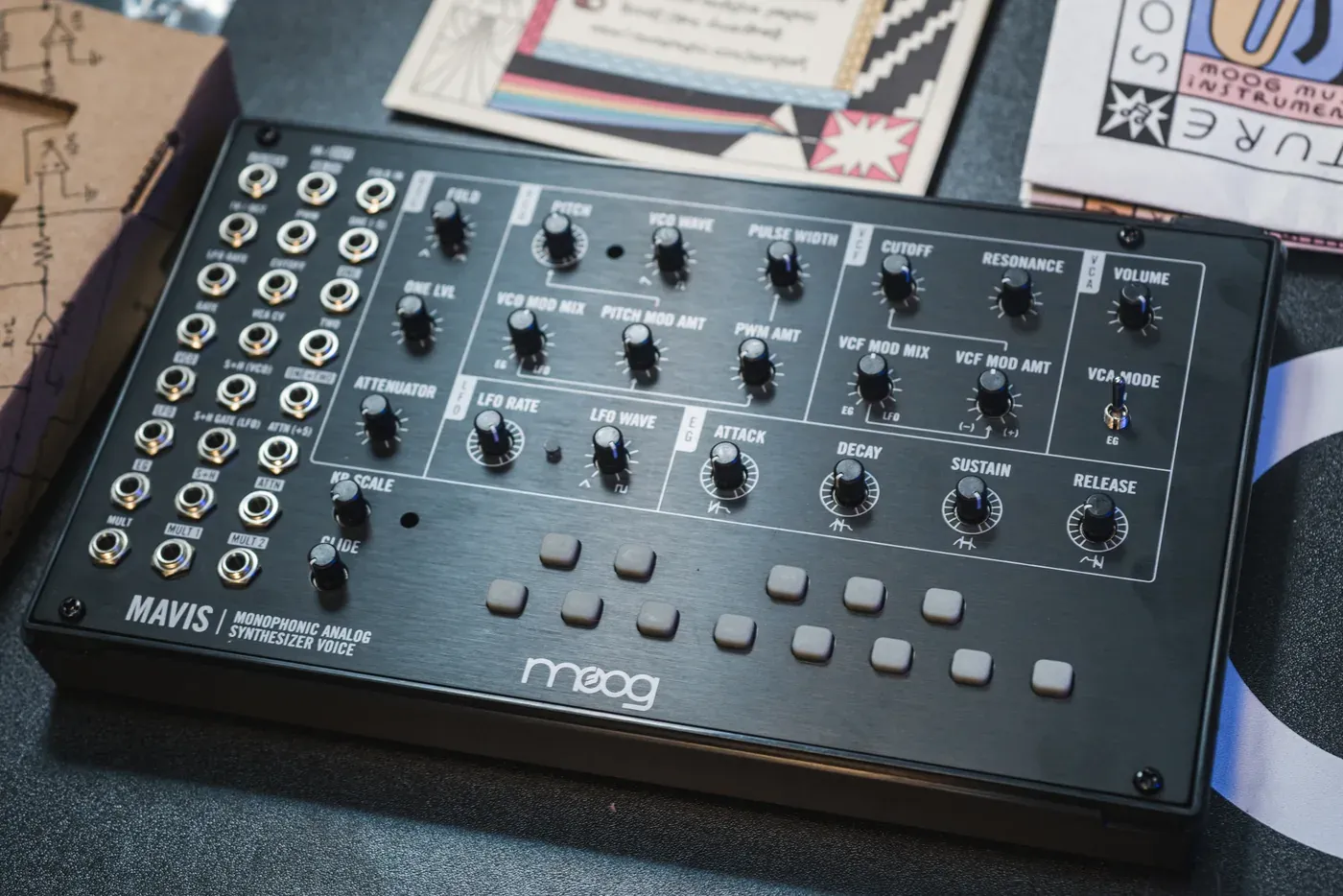
Moog sells the Mavis as a kit, and that is the best part. Assembly takes a screwdriver and an evening, with no soldering, and by the end the recipient understands their synth better than most people understand anything they own. What they have built is a genuine Moog analog monosynth with a 13-note keypad, a 24-point patch bay for rerouting the signal with cables, and a case it can leave later to become a 44HP Eurorack module. It is a lesson in synthesis disguised as a toy, and it sounds unmistakably like Moog.
Novation Launchpad Mini MK3: for Ableton users
If the recipient uses Ableton Live, a grid controller changes how they work more than any plug-in. The Launchpad Mini MK3 puts 64 RGB pads in a box small enough to sit in front of a laptop, mirrors Live's Session View clip by clip, and draws power over a single USB-C cable. It turns arranging into something closer to playing, which is the point. It also works as a drum pad and note controller in other software. For an Ableton user, it is the gift on this list most likely to be used every single day.
See the Novation Launchpad Mini MK3
Zoom H1essential: the sample collector
Most producers say they want to record more of their own sounds, and most never do, because carrying a recorder and setting levels is a hassle. Zoom's H1essential, released in 2024, removes the second problem. It records 32-bit float WAV through its built-in X/Y microphones, which means a slammed door or a quiet room tone can be fixed afterward rather than clipped or buried. It doubles as a USB microphone. Pocket it, record everything, and sort it out later. Our guide to the best field recorders for musicians covers the bigger options.
Audio-Technica ATH-M40x: the second pair
Everyone knows the M50x. Its quieter sibling is the better gift for someone who already owns headphones. The M40x is tuned flatter, with less of the M50x's low-end lift, which makes it a more honest reference when checking a mix. It is closed back, folds flat, and has a detachable cable, so a snag does not end its life. As a second pair for the laptop bag or a collaborator's chair, it is hard to beat. If they are still on their first pair, our guide to the best studio headphones goes deeper.
See the Audio-Technica ATH-M40x
IsoAcoustics Iso-Puck Mini: for the desk
Small studio monitors sitting directly on a desk send vibration into the surface, which muddies the low end and blurs the stereo image. Foam pads are the usual fix, and they are not very good at it. IsoAcoustics' Iso-Puck Mini isolators decouple the speaker from the desk with a much smaller footprint, and each one handles up to six pounds, which suits most compact monitors. It is the kind of gift nobody buys for themselves, and the difference is audible the first time they press play. The eight-pack covers a pair of speakers.
See the IsoAcoustics Iso-Puck Mini 8-pack
Making Music by Dennis DeSantis: the book
Ableton published Making Music in 2015, and it remains the most useful book a producer can own, partly because it has almost nothing to do with software. Dennis DeSantis organizes 74 strategies into three problems: beginning, progressing and finishing. Each one is a short, practical way past a creative block, from writing a bassline first to deliberately limiting your sound palette. It works whether the recipient uses Live, Logic or a stack of hardware. If they keep a folder of eight-bar loops that never became songs, this is the gift.
Elektron Model:Cycles: the frequency modulation groovebox
Model:Cycles is a six-track groovebox built on frequency modulation (FM) synthesis. It turns a notoriously fiddly kind of synth into a hands-on drum and melody machine with Elektron's famous step sequencer and per-step parameter locks. It is a gift that sounds unlike anything else on their desk.
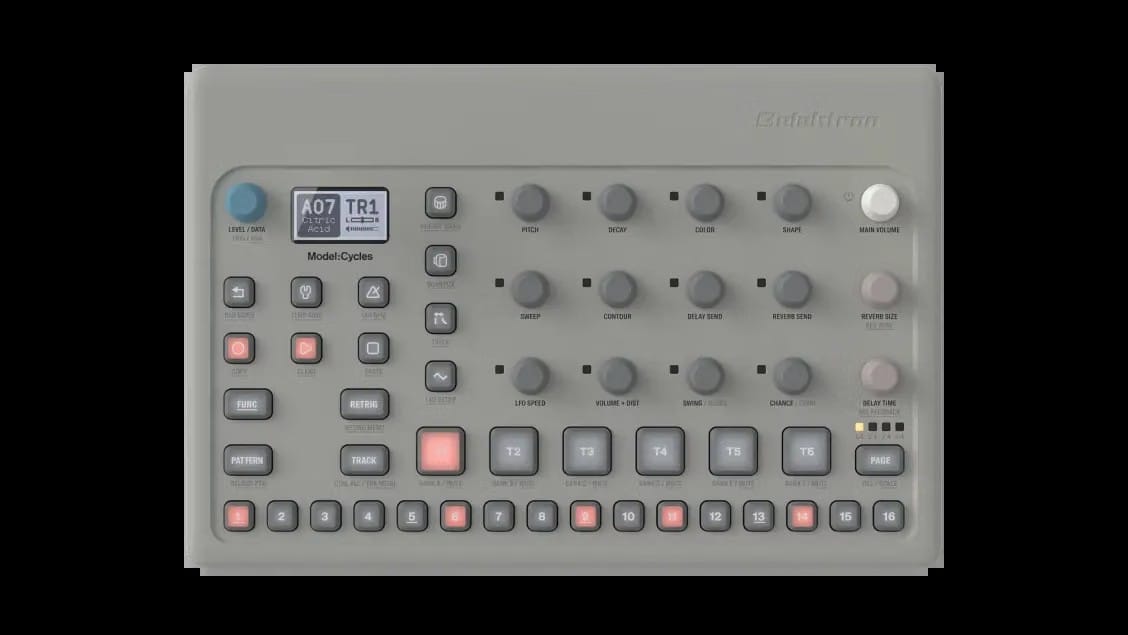
Elektron Model:Samples: the sample-based sibling
Same form factor and sequencer, but built around samples instead of FM. Model:Samples is the pick for producers who think in chopped breaks and one-shots.
See the Elektron Model:Samples
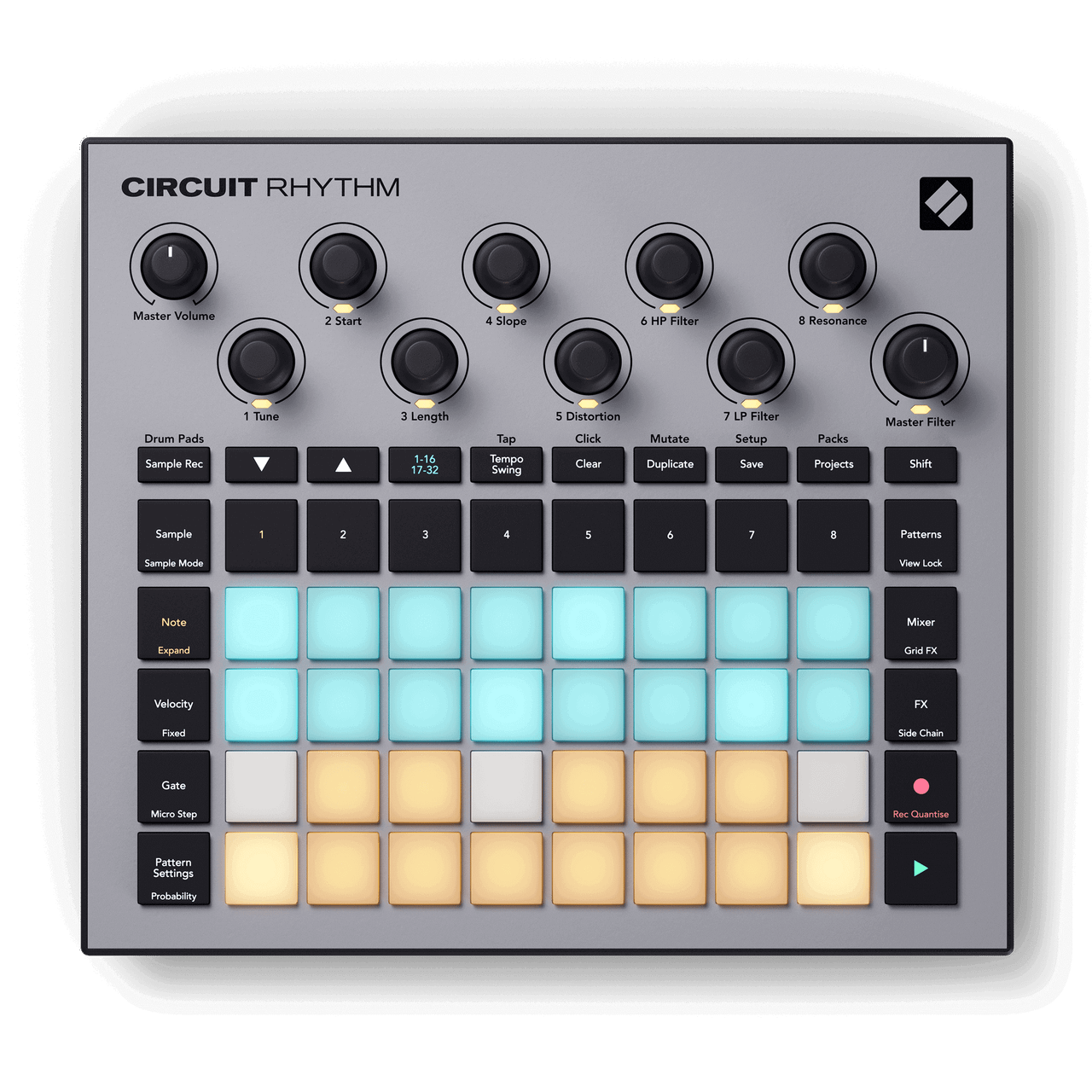
Novation Circuit Rhythm: the sampler and groovebox
Circuit Rhythm is a standalone sampler with eight tracks, a grid of velocity-sensitive pads, a built-in battery and an onboard effects section. It records straight in, so someone can sample a record and build a beat on the couch without a computer.
See the Novation Circuit Rhythm
Roland AIRA Compact T-8: the pocket drum machine
The T-8 packs Roland's TR-808 and TR-909 drum sounds plus a bass line voice into a battery-powered pocket box. It is a cheap way to get the sounds behind half of electronic music history into a gift.
Novation Bass Station II: the analog synth
Bass Station II is a true analog monosynth with a multimode filter that includes an acid-style mode, a built-in arpeggiator and sequencer, and full-size keys. It is huge for bass and leads, and it has stayed in production for years because it simply works.
Arturia KeyStep 37: the controller and sequencer
KeyStep 37 is a 37-key controller with a step sequencer and arpeggiator that can drive software, Musical Instrument Digital Interface (MIDI) gear and modular synths over control voltage (CV). It is the glue that connects everything else on this list.
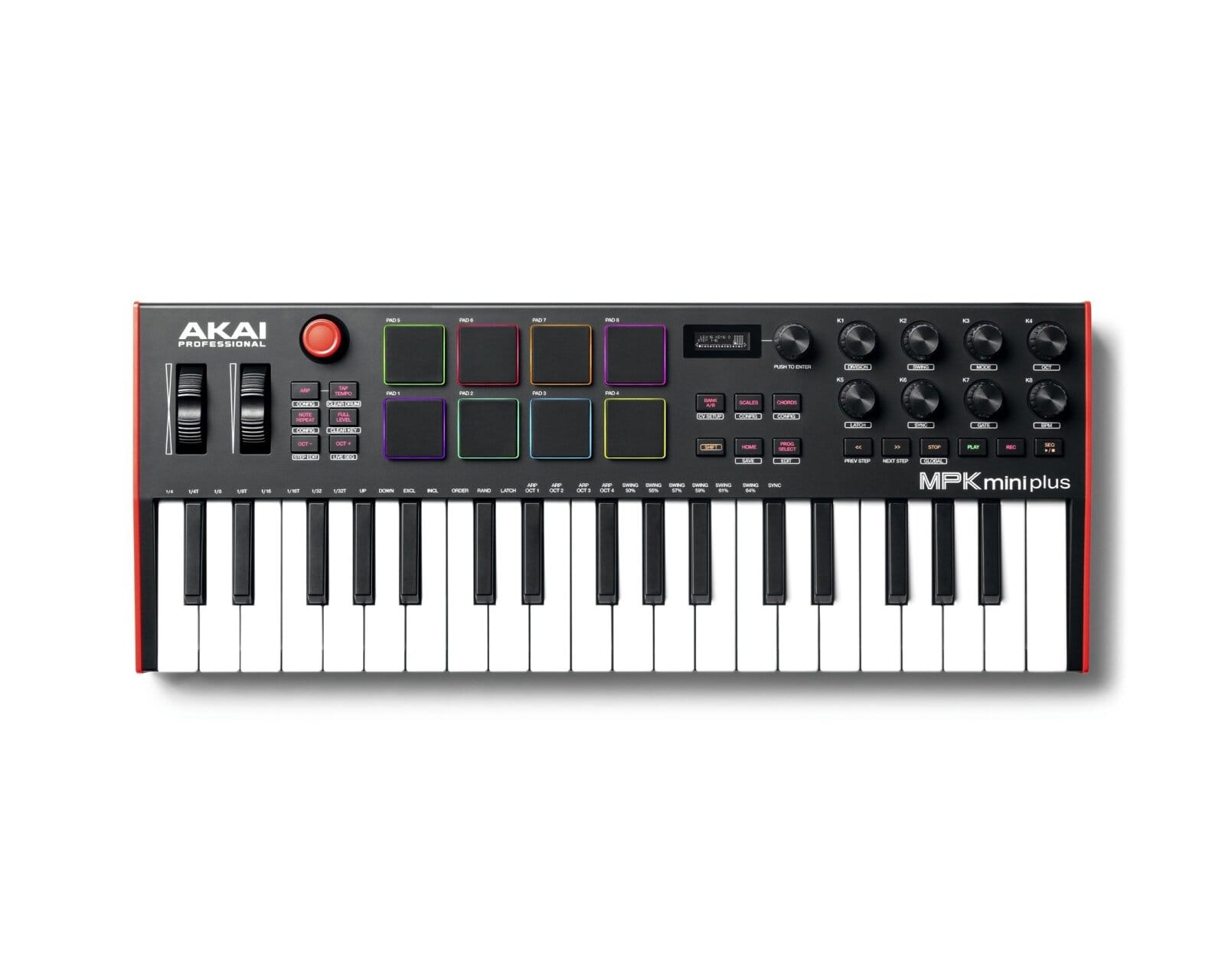
Akai Professional MPK Mini Plus: the desk controller
For producers who mostly work in software, the MPK Mini Plus gives 37 small keys, drum pads, knobs and a built-in sequencer in a body that fits beside a laptop.
Vintage Synthesizers by Mark Vail: the book
Mark Vail's Vintage Synthesizers covers the instruments and designers behind early electronic music. It is the right read for anyone who wants to know where the sounds in their groovebox came from.
Buy the thing that gets used tonight
The best gift for a producer is not the most expensive one. It is the one that removes friction between an idea and a finished track, whether that is a box that makes beats on the couch, a recorder that lives in a pocket or a book that gets someone past the eight-bar loop. If you are not sure which way they lean, the EP-133 and Making Music are the safest bets on this list. If they make electronic music on hardware, our pieces on the Torso S4 and the Roland RE-201 Space Echo show where the obsession goes next.
Our stocking-stuffers guide covers small gifts such as the Victorinox Classic SD, Zebra F-701 and Gerber Dime.
Our call: buy the Elektron Model:Cycles for anyone who already makes music on a laptop. FM synthesis is famously hard to program, and Cycles hides it behind six tracks and a few knobs, so it gets them making sounds their plugins never would. For someone just starting out, the EP-133 K.O. II is the safer bet.
Frequently asked questions
What is a good gift for a music producer who already has the basics?
An instrument or tool that gets them out of a rut rather than more studio essentials. Our picks include the Teenage Engineering EP-133 K.O. II sampler, the Arturia MicroFreak, the Roland S-1 and the Korg volca sample 2, all of which tend to get used the night they are unwrapped.
Is the Moog Mavis hard to build?
No. Moog sells the Mavis as a kit that takes a screwdriver and an evening, with no soldering. The finished synth is a genuine Moog analog monosynth with a 13-note keypad and a 24-point patch bay, and it can later move into a Eurorack case as a 44HP module.
What is the best gift for an Ableton Live user?
A grid controller such as the Novation Launchpad Mini MK3. It has 64 RGB pads, mirrors Live's Session View clip by clip and runs on a single USB-C cable, and it also works as a drum pad and note controller in other software.
Does the Roland S-1 have a built-in speaker?
No. The S-1 recreates the SH-101 sound with Roland's Analog Circuit Behavior modeling and runs for about four and a half hours on its internal battery, but there is no speaker, so the recipient will need headphones or a mixer.
The makers have full specifications on their own sites: Teenage Engineering, Roland, Korg and Moog, and Ableton hosts sample chapters of Making Music. Everything here is available at the links above.
More in our Home Studio hub.