
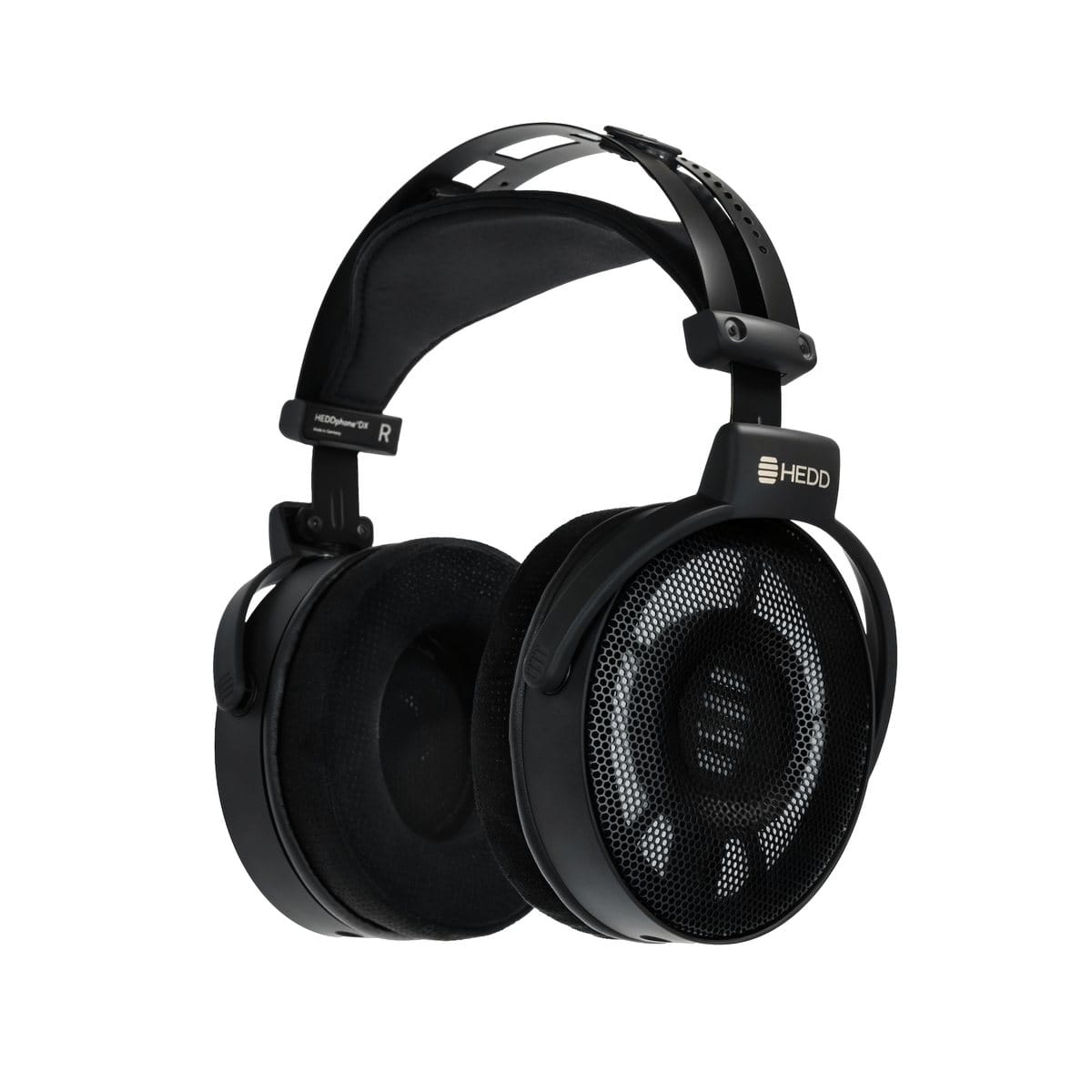
The HEDDphone DX is the new flagship headphone from HEDD Audio, the Berlin company better known for its studio monitors. It is an open-back, over-ear design built around a 50 millimeter dynamic driver with a Thin-Ply Carbon Diaphragm, and HEDD's headline claim is simple: full bass output all the way down to 20 Hz, the bottom edge of human hearing. HEDD put it on its own store this morning.
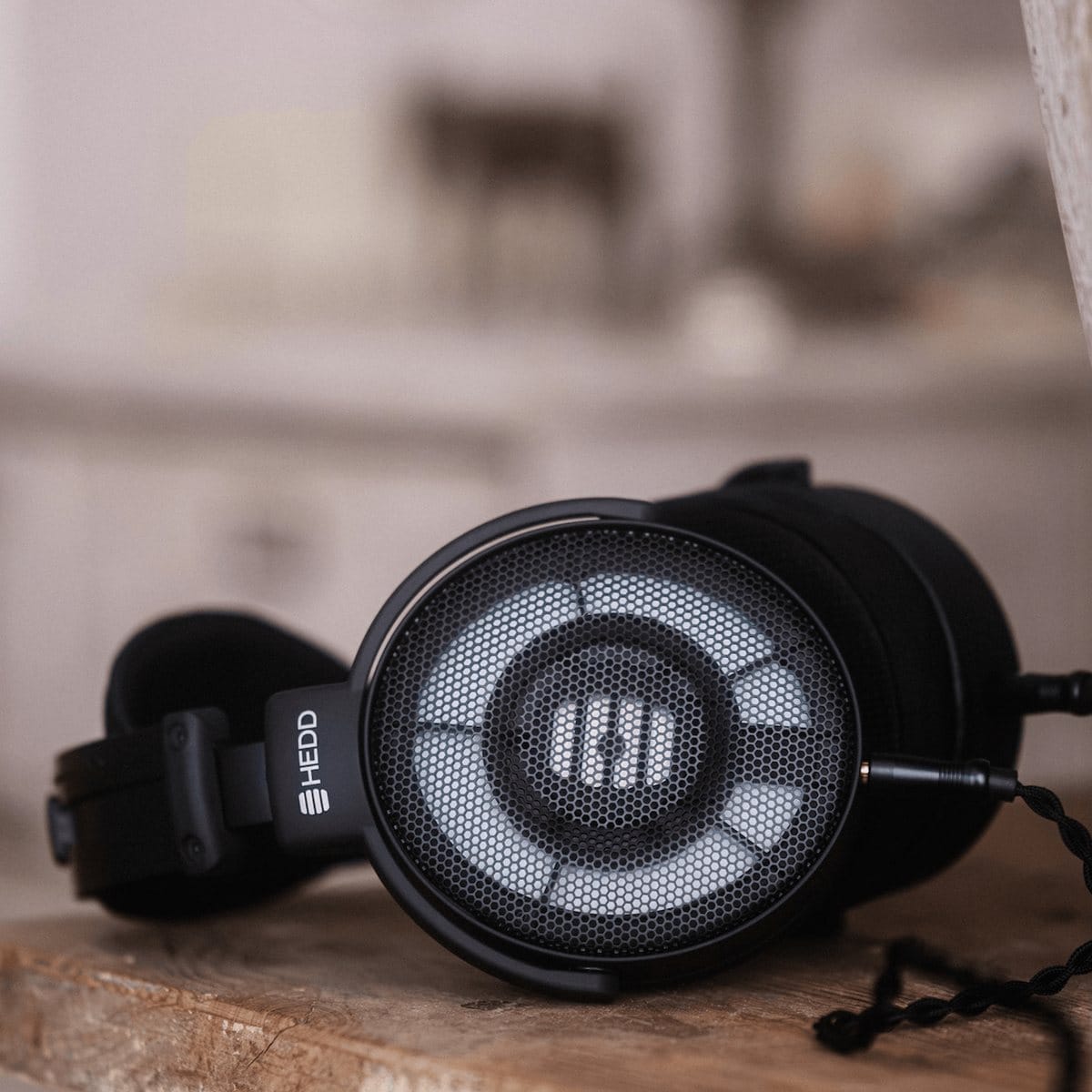
A carbon driver from a company known for folded film
This is a bigger shift than it looks. HEDD made its name with the Air Motion Transformer, or AMT, a pleated film driver that squeezes air out like an accordion instead of pushing it like a cone. The original HEDDphone and the HEDDphone TWO GT use a full range AMT, which HEDD pitches for speed and detail, but those models are heavy and want a serious amplifier. HEDD lists the TWO GT at 550 grams and recommends at least a watt of power.
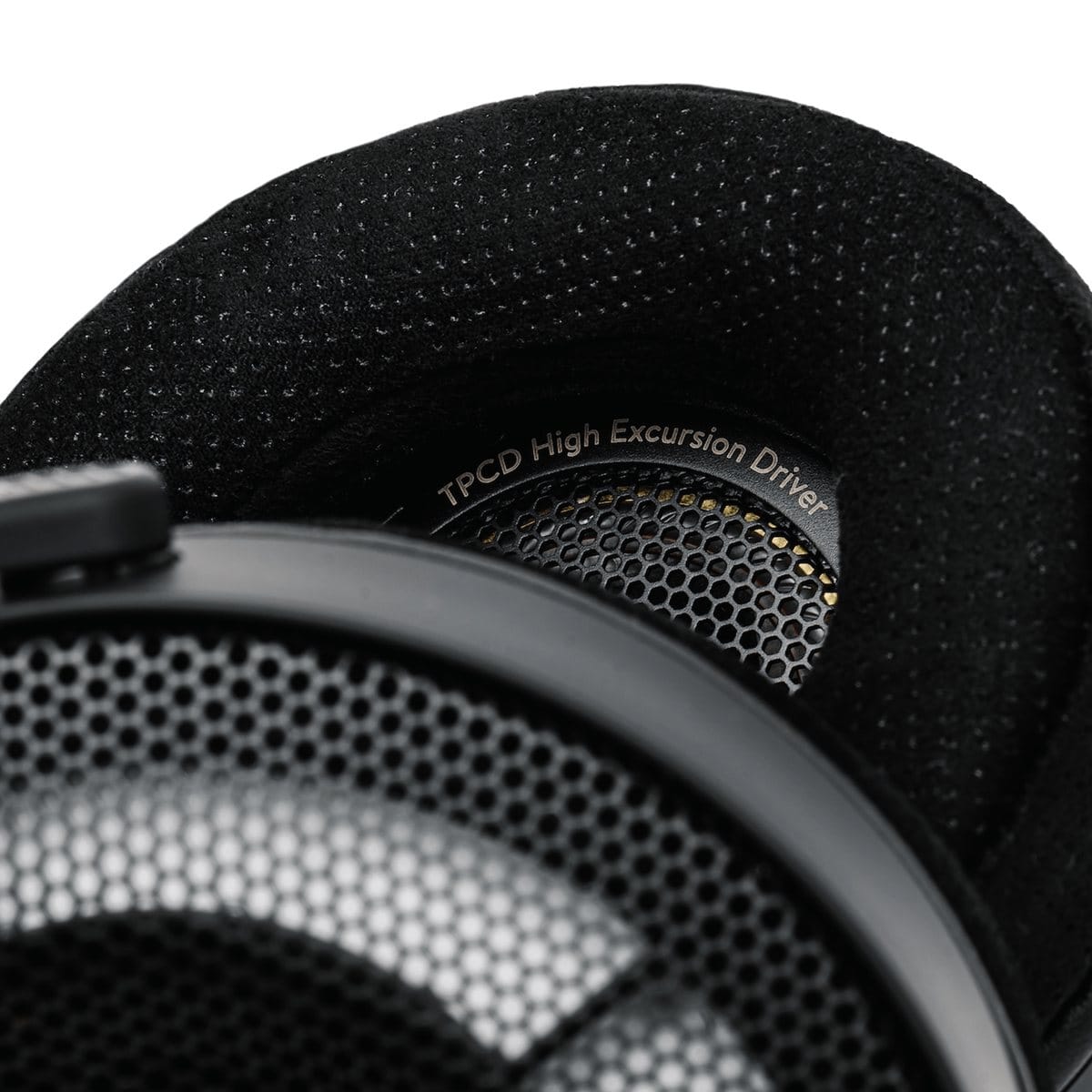
The DX goes the other way. Its new high excursion driver, meaning the diaphragm is built to travel farther for deep notes, uses the same thin-ply carbon approach HEDD introduced on the HEDDphone D1 last year. HEDD developed that diaphragm with the Swedish specialist Composite Sound, and says thin-ply carbon has been used everywhere from Formula 1 cars to NASA's Ingenuity Mars helicopter. HEDD says the material is so stiff that the diaphragm needs no traditional damping, which is where much of the smearing in a dynamic driver comes from.
HEDDphone DX specs
- Design: open back, over ear, dynamic
- Driver: 50 millimeter high excursion, Thin-Ply Carbon Diaphragm
- Frequency range: 5 Hz to 40 kHz, with full level bass to 20 Hz
- Impedance and sensitivity: 32 ohms, 100 dB per milliwatt
- Weight: 310 grams
- Pads: perforated velour over memory foam
- Headband: elastic neoprene suspension band, developed with Capra Audio
- Cable: 2.2 meter eight strand braided OCC (Ohno Continuous Cast) copper, balanced 4.4 millimeter plug, 6.3 millimeter adapter, dual 3.5 millimeter jacks on the cups
- In the box: travel case with double layer protection
- Built: designed and assembled in Berlin, five year warranty after registration
Two numbers stand out. At 310 grams the DX is the lightest HEDDphone yet, lighter than the 350 gram D1 and far lighter than the AMT models. And 32 ohms with 100 dB sensitivity means it should run from a good portable amp, not only a desktop stack. If those specs read like a foreign language, our guide to headphone impedance breaks them down, and our portable DAC and amp picks cover what to plug it into.
The family behind HEDD
HEDD stands for Heinz Electrodynamic Design. Co-founder Klaus Heinz, born in 1946, ran a hi-fi shop in Berlin in the 1970s and was mentored by Oskar Heil, the physicist who invented the AMT. Heinz went on to found ADAM Audio in 1999, left in 2014, and started HEDD the next year with his son Frederik Knop, a mastering engineer with a doctorate in musicology. The detail most people miss sits on HEDD's own about page: Heinz is the son of Ernst Ruska, the physicist who won the Nobel Prize for the electron microscope. The full story is in the company's ten year history.
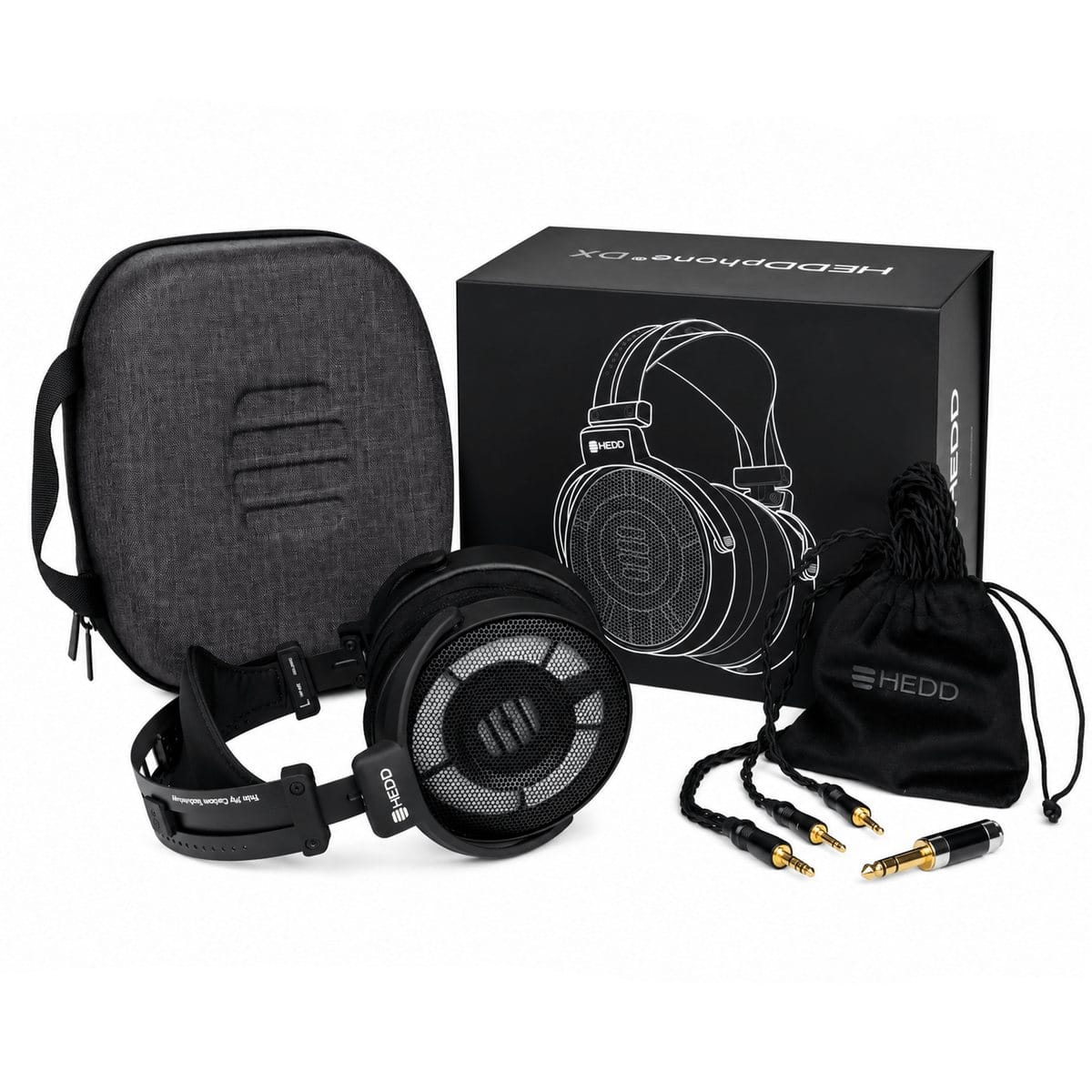
HEDDphone DX: the new flagship, for deep bass without closing the cups. See it at HEDD
HEDDphone D1: the first carbon diaphragm model and the proven pick right now. See it at HEDD
HEDDphone TWO GT: the AMT original with a warmer tuning, if you have the amp for it. See it at HEDD
Our call: wait, for now. HEDD has listed the DX on its own store, but the order button was not live when we checked, and nobody here has heard it yet. If you mix synth bass or kick drums on headphones and you have been stuck choosing between an open back's space and a closed back's low end, this is the one to watch. Need a pair this week? The D1 already carries the same carbon driver idea, and our list of the best studio headphones covers the proven classics.