
Teenage Engineering, the Stockholm company behind the pocket operators and a long line of objects people buy partly to look at, makes two flagship portable instruments, and they are exactly the same size. The OP-1 field is the descendant of the 2011 OP-1, the synthesizer, sampler and drum machine that made the company famous. The OP-XY is the newer one, a black, sequencer-first machine built on the workflow of the OP-Z. Both run on battery, both have a built-in speaker and microphone, and both cost about as much as a good laptop. They are not two versions of the same idea. One is a tape recorder you write songs into. The other is a pattern machine you perform with.
The quick answer
- Buy the OP-XY ($2,299) if you think in loops and patterns, make beat-driven electronic music, or want one box that can also run your other synths, drum machines and modular gear.
- Buy the OP-1 field ($1,999) if you write by playing, sampling and recording ideas as you go, and want a portable sketchbook with a tape recorder at its center.
- Skip both if you mostly want to finish tracks in a computer program. Neither is a cheap way into production, and both reward people who want to work away from a screen.
OP-1 field: a four-track tape machine that fits in a bag
The original OP-1 came out in 2011 and became a cult object for one simple reason: it records like a tape machine. You build a sound with one of its synth engines or the sampler, play it on the two-octave keyboard, and record it to virtual tape, one of four tracks, then bounce the tracks down and keep going. There is no grid of patterns to manage. It pushes you to commit, which is why so many songwriters and producers fill notebooks of ideas with it.
The field version, released in 2022, keeps that idea and rebuilds everything around it. Teenage Engineering lists more than 100 changes. The ones that matter: stereo throughout the whole signal chain with 32-bit audio, eight swappable tapes instead of one, and four tape styles (studio 4-track, vintage 4-track, porta and disc mini), each with its own character. Sampling time goes up to 20 seconds with a dual-layer mode, and there is space for more than 160 minutes of samples. Battery life is rated at 24 hours. It adds Bluetooth Low Energy wireless MIDI (Musical Instrument Digital Interface), USB-C (Universal Serial Bus Type-C) audio and MIDI, a new reverb, a new synth engine called Dimension, and a built-in frequency modulation (FM) radio that can both receive and transmit.
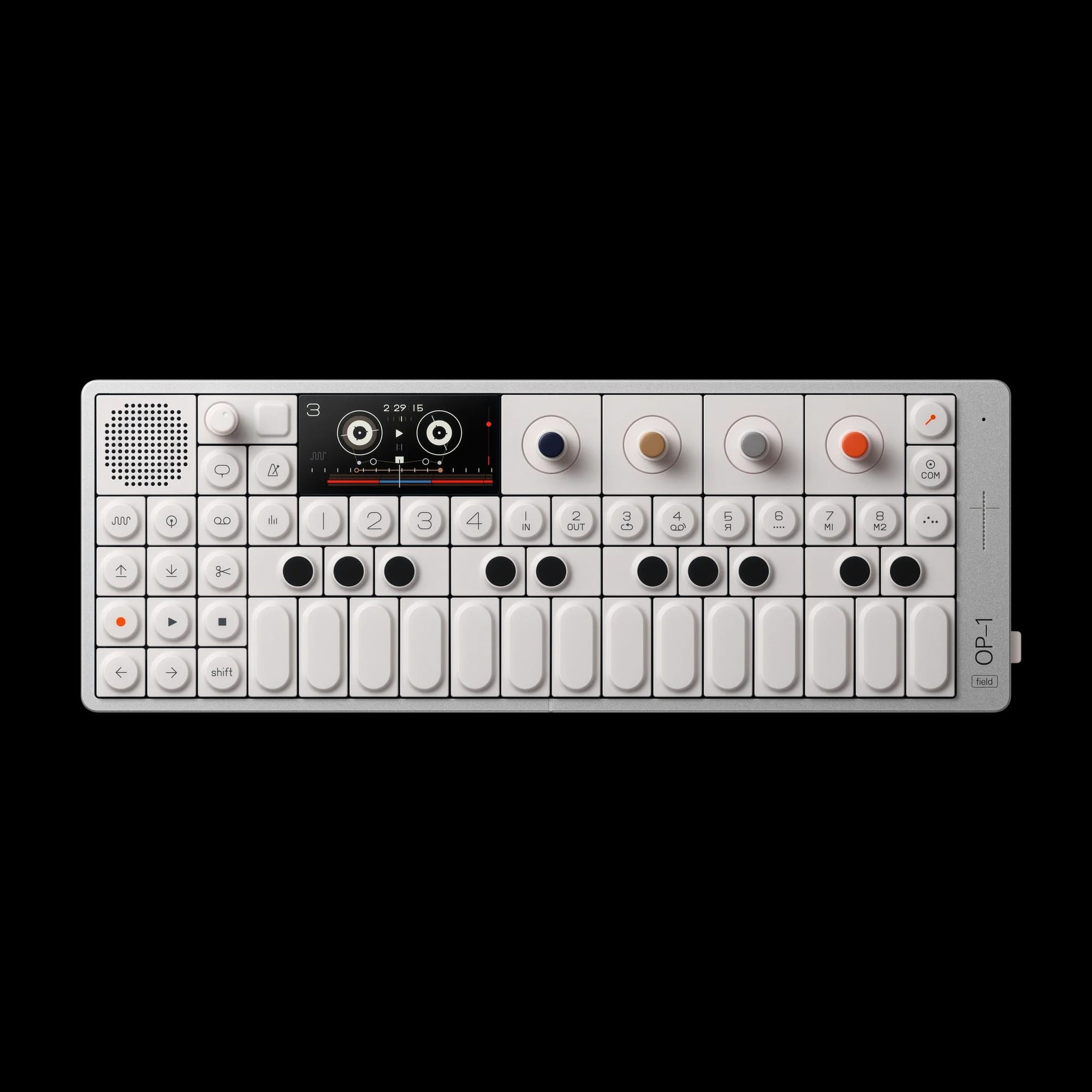
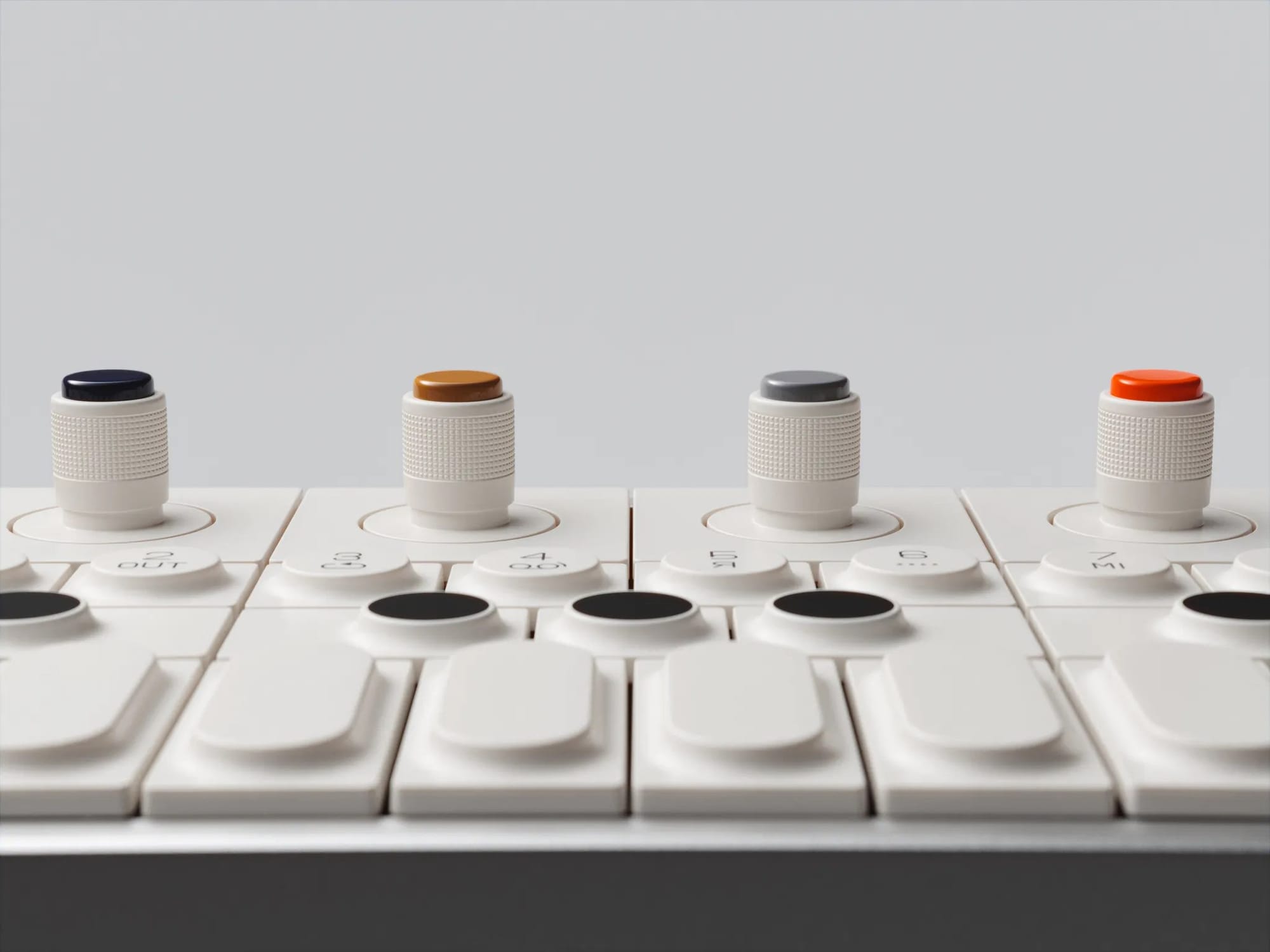
Physically it is a slab of aluminum 300 by 120 by 20 millimeters (about 11.8 by 4.7 by 0.8 inches) weighing 590 grams (about 1.3 pounds). The four colored knobs map to the four parameters on screen, which changes with every engine, so you learn it by playing rather than reading. Software updates have kept arriving: an operating system (OS) update earlier this year added seven stages of tape undo, something Teenage Engineering says it had left out on purpose for 15 years. The OP-1 field was out of stock at the maker for part of the fall; it is listed and shipping from the US again now.
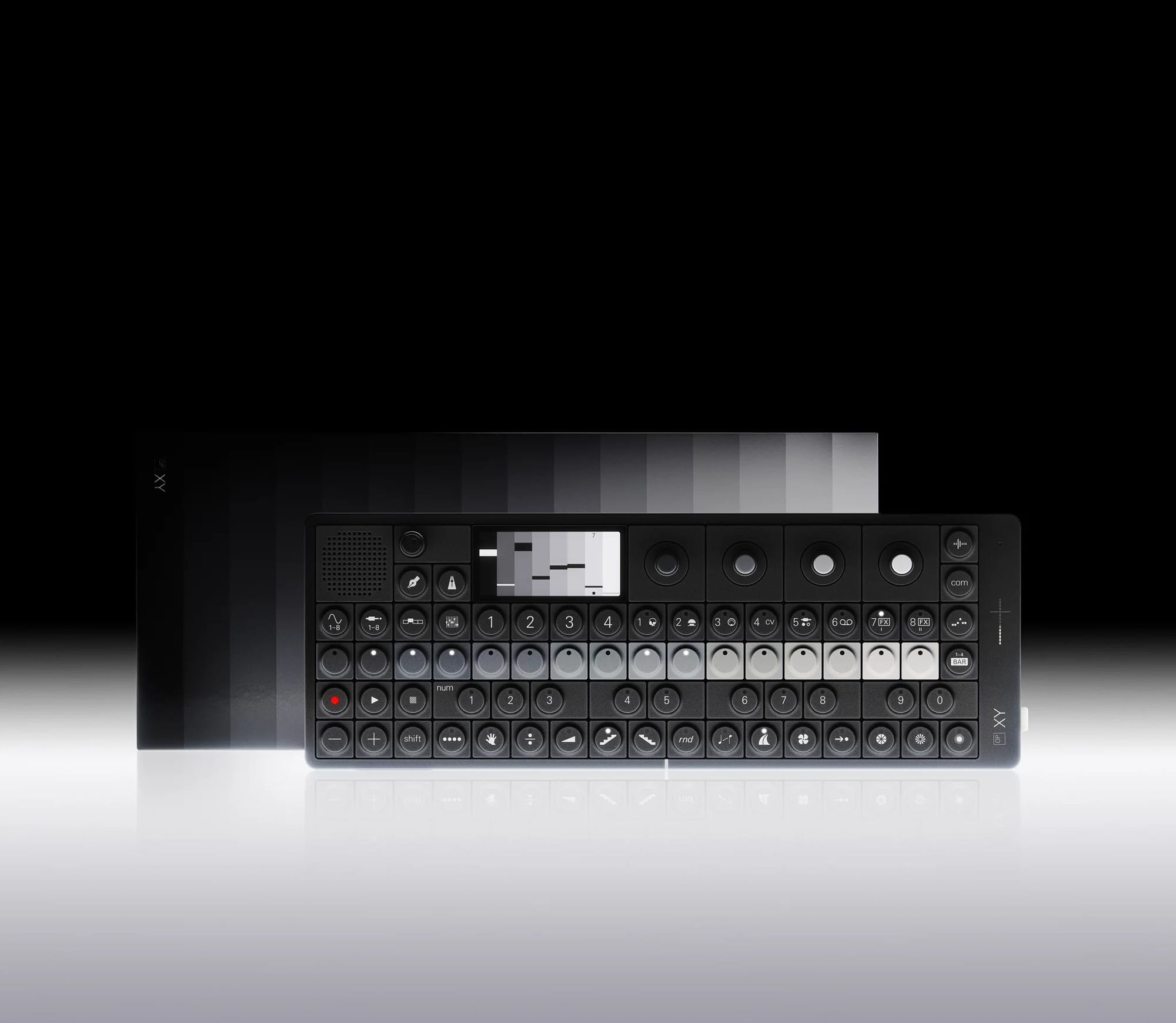
OP-XY: a 16-track sequencer that also makes sounds
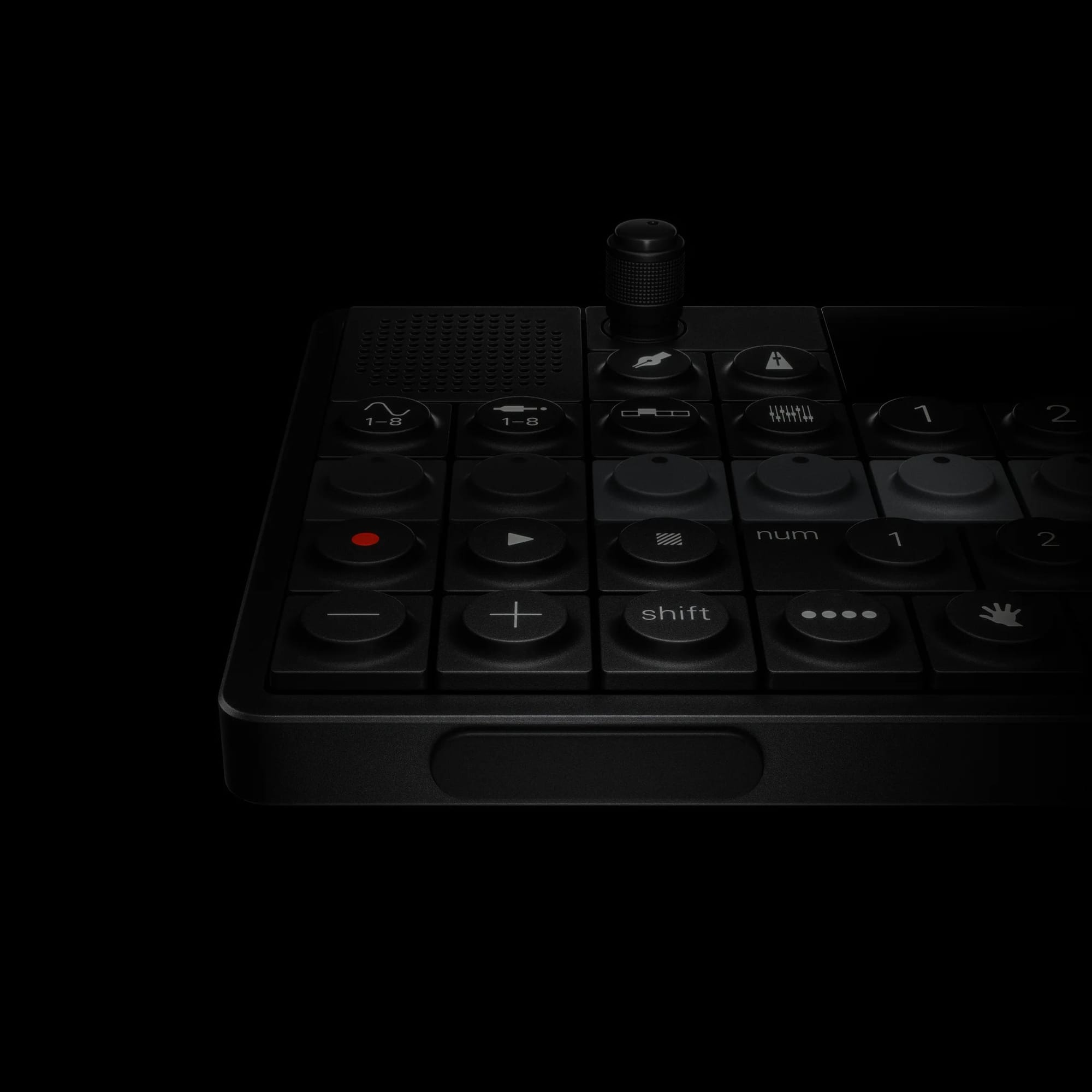
The OP-XY takes the workflow of the OP-Z, the company's small pattern-based sequencer, and rebuilds it with two processors, a far better screen and the same footprint as the OP-1 field. Teenage Engineering calls it probably the most complete portable sequencer ever built, and the specification backs that up: 8 instrument tracks plus 8 auxiliary tracks for controlling external gear and effects, a 64-step sequencer across four pages, 9 patterns per track, 99 scenes and a song mode with 9 songs per project.
The sound side is no afterthought. It has 8 synth engines, a drum sampler, a multisampler, 4 filter types and 24 voices across its tracks, plus a creative tape looper, master equalization, saturation, compression and limiting. The performance tools are where it pulls away from the OP-1 field. Step components let you add variations to any single step, such as ratchets, ramps, random notes or skipped repeats, so a short loop keeps changing. Punch-in effects add stutters and repeats live, 24 of them. Brain is a transposer that generates chord progressions across tracks. Tracks can run at different speeds and lengths for polyrhythms.
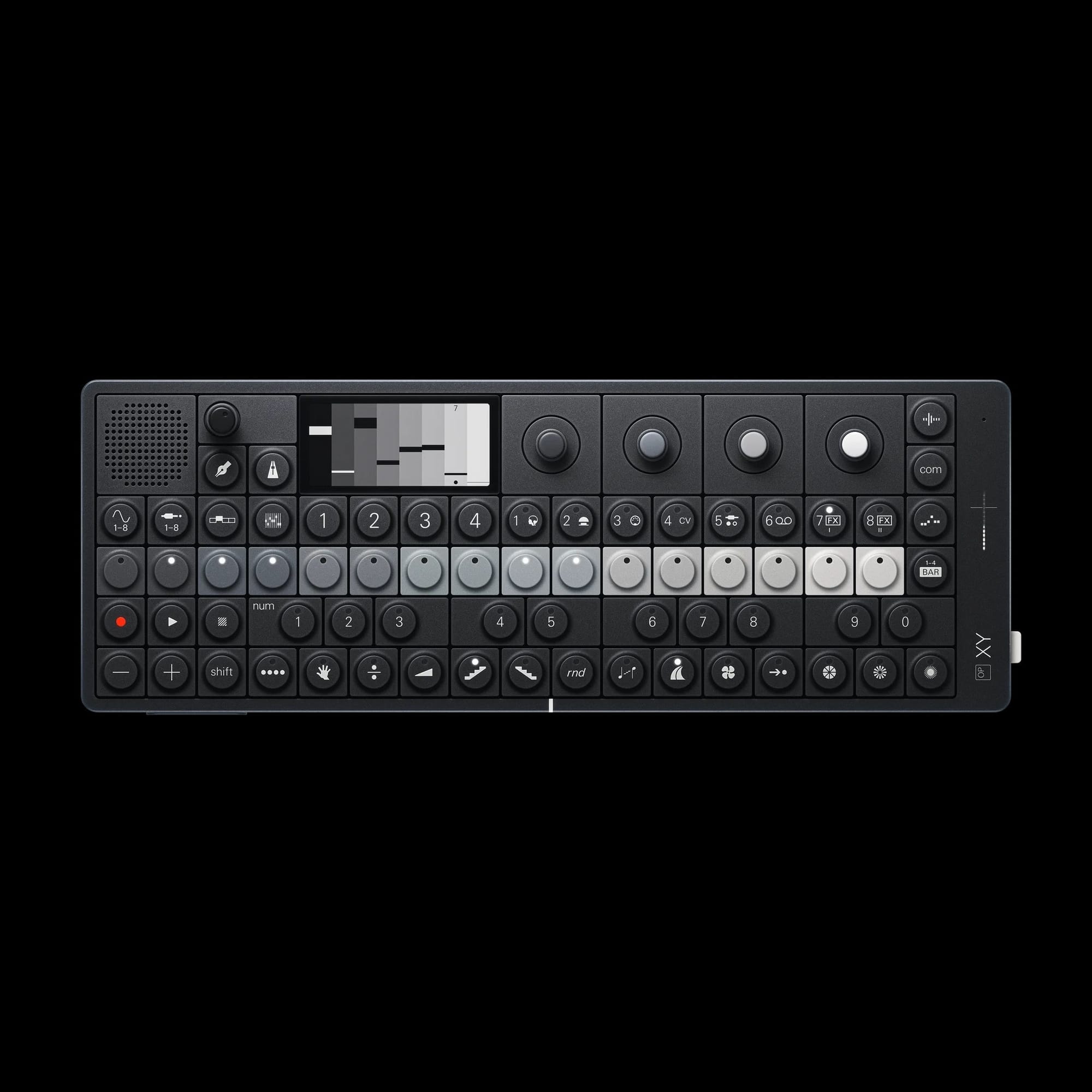
The real difference for anyone with other gear is the connections. A single multi-out jack can send control voltage (CV) and gate, MIDI, sync or a second audio output, so the OP-XY can play a Eurorack modular system or an old drum machine directly. There is also MIDI in, audio in, USB-C that works as a host or a device, and Bluetooth Low Energy MIDI. Battery life is rated at 16 hours, eight fewer than the OP-1 field.
OP-XY vs OP-1 field compared
| OP-XY | OP-1 field | |
|---|---|---|
| Price at the maker (US) | $2,299 | $1,999 |
| Core idea | Pattern sequencer, synth and sampler for performance | Synth, sampler and drum machine built around tape recording |
| Tracks | 16 (8 instrument, 8 auxiliary) | 4 tape tracks, 8 swappable tapes |
| Sequencing | 64 steps, step components, 9 patterns per track, 99 scenes | Several playful sequencers, recorded to tape |
| Sounds | 8 synth engines, drum sampler, multisampler, 24 voices | Multiple synth engines including Dimension, stereo drum and synth samplers |
| Sampling | Instant sampling from audio in or the built-in mic | Up to 20 seconds per sample, over 160 minutes of storage |
| Control voltage | Yes, CV and gate from the multi-out jack | No |
| MIDI | MIDI in, MIDI out through the multi-out jack, USB, Bluetooth | USB and Bluetooth |
| Extras | Punch-in effects, Brain chord transposer, tape looper | FM radio receive and transmit, four tape styles |
| Battery | 16 hours | 24 hours |
| Size | Same footprint as OP-1 field | 300 x 120 x 20 mm, 590 g |
| Best for | Beatmakers, live sets, controlling other gear | Songwriters, sound collectors, ambient and sketching |
How to choose
Ask yourself how your music usually starts. If it starts with a beat or a loop that you build up, tweak and let run, the OP-XY fits the way you already think, and its step components keep a short loop changing on its own, so it stays interesting through a whole set. If it starts with a sound, a recording of a room, a melody you hum into the mic or a chord you stumble into on a keyboard, the OP-1 field is the better partner, because its tape lets you capture that moment and build on it immediately.
The second question is what else is on your desk. The OP-XY was designed to sit in the middle of a setup and run it. With its CV output and full MIDI, it can sequence a modular rack, a bass synth and a drum machine while playing its own tracks. The OP-1 field is happiest alone, on a train or a couch, and its 24-hour battery and FM radio sampling lean into that.
If you are weighing the OP-XY against other grooveboxes, our Elektron Digitakt II vs Syntakt vs Digitone II comparison covers the deepest alternatives, and Novation Circuit Tracks vs Circuit Rhythm covers the affordable ones. For the rest of the catalog, from pocket operators to the EP-133 K.O. II, see Teenage Engineering: every product explained.
Our call
Our call: buy the OP-XY if you make loop-based electronic music or own other gear, and buy the OP-1 field if you want a portable songwriting and sampling sketchbook. For most producers in 2026 the OP-XY is the more capable instrument for $300 more: 16 tracks, a deeper sequencer, CV and MIDI out, and performance tools that make it a real live machine. The OP-1 field is the more personal one. It is slower to master and limited to four tracks on purpose, and that limit is the point; nothing else makes you commit to an idea and move on quite like it. If you already own a groovebox, the OP-1 field adds more to your setup than a second sequencer would.
Teenage Engineering OP-XY ($2,299): our pick for beatmakers and anyone running other synths, with 16 tracks and CV out. Shop it at Teenage Engineering
Teenage Engineering OP-1 field ($1,999): the pick for songwriters and samplers who want a tape-based sketchbook with a 24-hour battery. Shop it at Teenage Engineering
Setting up a space to use it in? Start with our home studio starter gear guide. More like this: browse every related post in our Home Studio hub.
Prices are from Teenage Engineering's own US online store in mid-November 2026 and can change.