Shooting film is slower than taking a phone picture, and that slowness is the point. You load a roll, set a film speed, focus, press the shutter, and wind on. You will not see the result until the roll is developed. That delay is why a first roll can feel either magical or wasted. This is a practical look at how to shoot film: how a roll works, how a modern beginner camera such as the PENTAX 17 is meant to be used, and how to give that first roll a decent chance.
How to shoot film: the short version
- Load carefully. Open the camera back only in subdued light, seat the cartridge, attach the film leader to the take-up spool, and advance until the film lies flat with the sprockets engaged.
- Set the film speed. Turn the film-speed (ISO) dial to the number printed on the carton, then leave it for the whole roll.
- Focus, then expose. On a zone-focus camera, pick the distance zone that matches your subject. On a camera with automatic exposure, trust the standard mode until you have a reason to override it.
- Wind after every frame, and rewind fully before you open the back at the end of the roll.
- Shoot a whole roll of ordinary light before you experiment with night, indoor flash or unusual film. The goal of the first roll is to finish it, not to master every trick.
What a roll of film actually is
Photographic film is a strip of plastic coated with a light-sensitive emulsion. When you press the shutter, a measured amount of light reaches that coating and forms a latent image, which a lab (or a home darkroom) later makes visible. Unlike a digital sensor, a roll has one speed, printed as an ISO number on the carton. You set the camera to that number so its meter, or its automatic modes, will expose the emulsion as the maker intended.
A standard 35mm cartridge is the format most beginners will meet first. You can also shoot medium-format film in larger cameras, but that is a later step. Color negative film is the most forgiving first choice in ordinary daylight. Black-and-white film is just as valid, and often cheaper to process, if you like that look. The important part is to pick one roll and finish it, so you can learn from a complete set of frames rather than from three cautious pictures and a half-used cartridge sitting in a drawer.
A first camera that is meant for film
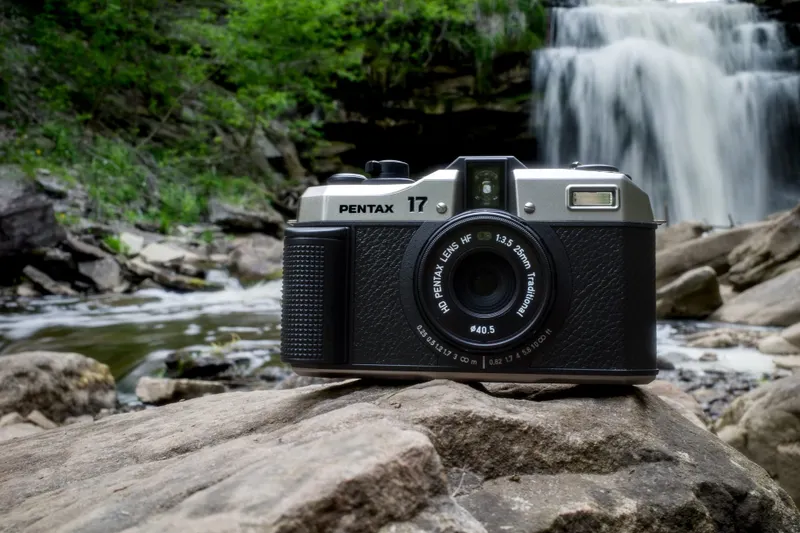
You can learn on a used 35mm single-lens reflex camera, but a current compact made for film removes a lot of mystery. Ricoh Imaging's PENTAX 17 is a half-frame compact: it captures two 17 by 24 millimetre pictures inside a single 35mm frame (36 by 24 millimetres). Held in the usual landscape grip, it produces vertical pictures, with proportions close to a phone image, and it gets more photographs from each roll than a full-frame 35mm camera would.
Ricoh designed the camera around manual film habits: a selectable zone-focus system, a manual film-advance lever, and separate dials for exposure compensation and ISO sensitivity. The lens is a fixed 25mm F3.5, equivalent to about 37mm on a full-frame 35mm camera, with HD (High Definition) coating. The optical viewfinder is an Albada-type bright-frame finder, with a close-up compensation frame and zone marks you can see while you look through it. In other words, you still have to choose a distance and wind the film, but you are not also learning a used light meter and a bag of old lenses on day one.
The zone-focus system is divided into six marked distances, from far scenery (5.1 metres to infinity) through medium and close groups, down to a tabletop zone (0.47 to 0.54 metres) and a macro zone (0.24 to 0.26 metres). For tabletop and macro, Ricoh warns that the compact body introduces parallax, and you should compose with the close-up frame in the viewfinder. For everything else, pick the zone that matches how far away the subject is, then stop thinking about autofocus.
Exposure modes include a fully casual automatic, a standard mode that lets you choose the focus zone while the camera sets exposure, a slow-speed mode without flash for twilight, and a maximum-aperture-priority mode, also without flash, when you want the lens wide open. Start in standard mode. Change modes later, once you can predict what the camera did on a sunny street.
Loading, shooting and finishing the roll
Load film out of hard sunlight. Open the back, drop in the cartridge, pull the leader across, and make sure the sprocket teeth sit in the holes before you close the camera. Advance and fire a couple of frames if the manual tells you to, until the counter is at the first exposure. Set the ISO dial to the box speed immediately, so you do not shoot half the roll on the wrong setting.
Then go outside or stand near a window and shoot ordinary things: a person at conversation distance, a building, a table in the cafe zone if you are on the PENTAX 17. Wind after every frame. Do not open the back to "check the film." When the lever will not advance, you have reached the end. Use the rewind crank or rewind button as the camera requires, and only open the back once the film is back in the cartridge.
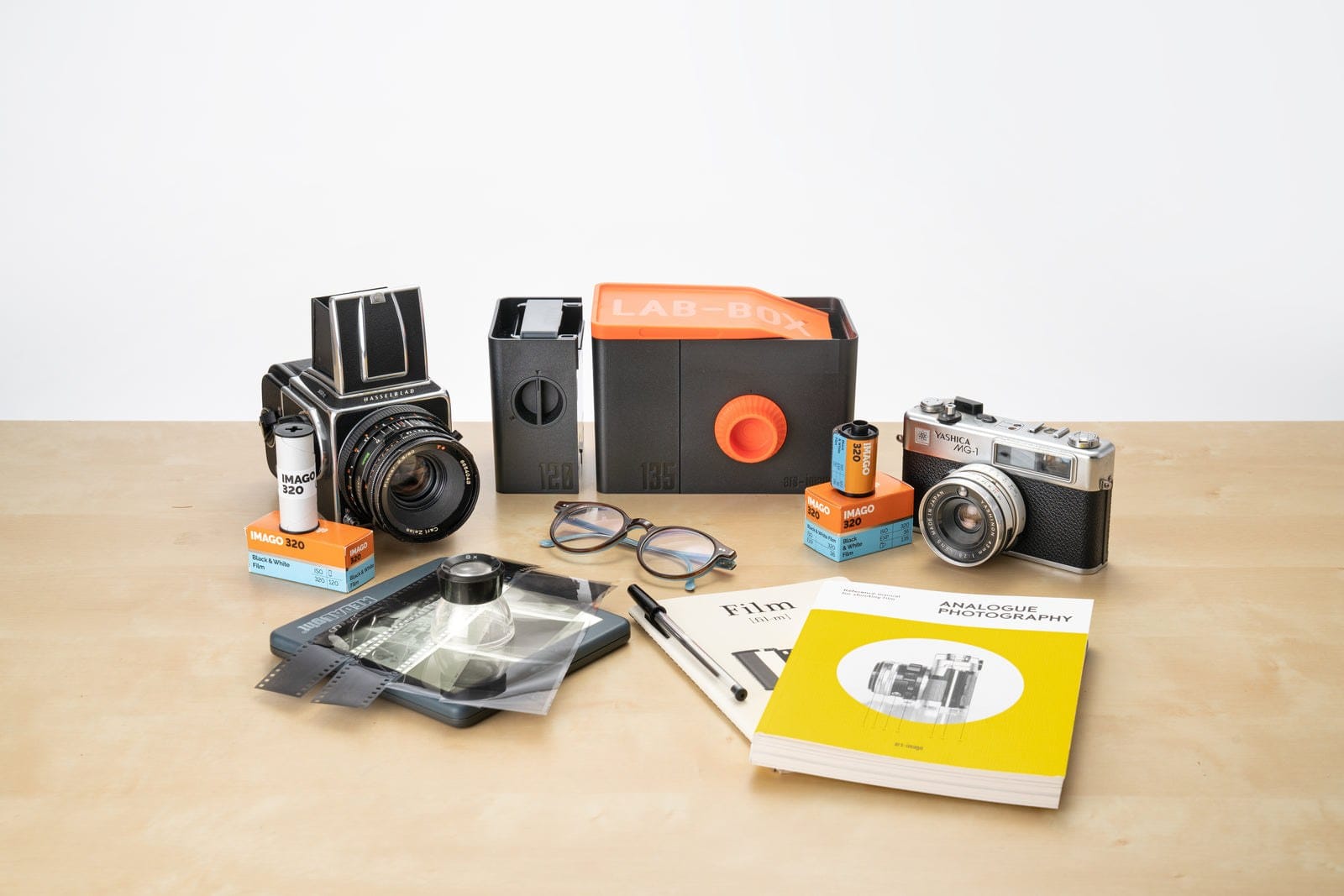
After that, the roll goes to a lab, or into a developing kit if you already have the space and the patience. Either path is valid. What matters is that you get the pictures back and look at them in order. The frames that failed will teach you more than the ones that happened to work. For a deeper camera choice later, our Leica M-A vs MP vs M6 guide is a different conversation, about rangefinders at the other end of the film world. Start here, with a camera you will actually finish rolls in.
Our call
Our call: buy a simple film camera and finish several ordinary rolls before you worry about rare stock or a more complicated body. The PENTAX 17 is a strong modern starting point, because it is a half-frame compact with zone focus, a clear viewfinder and the manual winding that makes film feel like film, without asking you to learn a used SLR at the same time. Load one daylight roll, set the ISO dial, use standard mode, and bring the whole cartridge back. The skill is finishing the roll.
PENTAX 17: our pick for a current beginner film camera, a half-frame compact with zone focus and a 25mm F3.5 lens. Buy from Ricoh Imaging
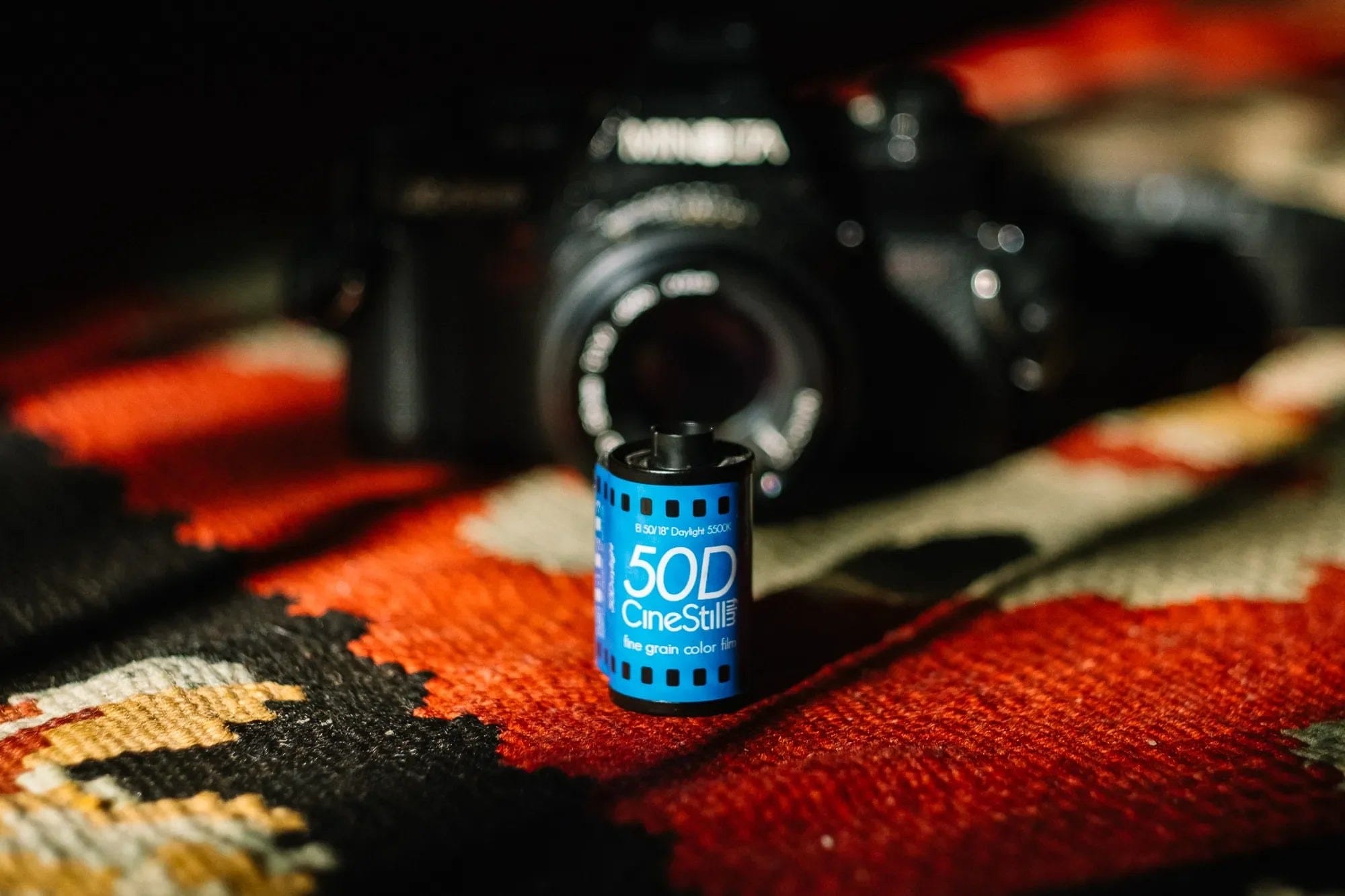
35mm color film: start with a daylight roll from a maker such as CineStill, and match the camera's ISO dial to the carton. See current films at CineStill
For more cameras, film and technique, continue in our Leica and Film Photography hub.
Specifications and operating details are from Ricoh Imaging's official PENTAX 17 product page. Additional photographs are from CineStill's official site.
Frequently asked questions
How do I shoot film for the first time?
Load a 35mm cartridge in subdued light, set the camera's film-speed (ISO) dial to the number printed on the roll, advance the film to the first frame, and shoot in the exposure mode you understand. On a camera such as the PENTAX 17, you can use the standard mode, which lets you choose a focus zone while the camera sets exposure.
What camera should a beginner use to shoot film?
A simple current camera is easier than a complicated used SLR for a first roll. The PENTAX 17 is a half-frame compact with zone focus, an optical viewfinder and manual winding, designed both for people who already shoot film and for people who are starting. A basic used 35mm SLR is also fine if someone can show you how to load it.
What is a half-frame film camera?
A half-frame camera, such as the PENTAX 17, records two 17 by 24 millimetre pictures in a single 35mm frame (36 by 24 millimetres). Held in the usual way, it makes vertical pictures, and you get more photographs from each roll than a full-frame 35mm camera would.
How do I choose ISO or film speed?
Match the camera's ISO dial to the speed printed on the film carton. A slower film needs more light and usually looks finer. A faster film is more forgiving in shade or at dusk. Set the dial when you load the roll, and leave it until you finish that roll.
What should I do after I finish a roll of film?
Rewind the film into its cartridge, following the camera's instructions, then take it to a lab or develop it yourself. Do not open the camera back until the film is fully rewound, or you will fog the roll.