
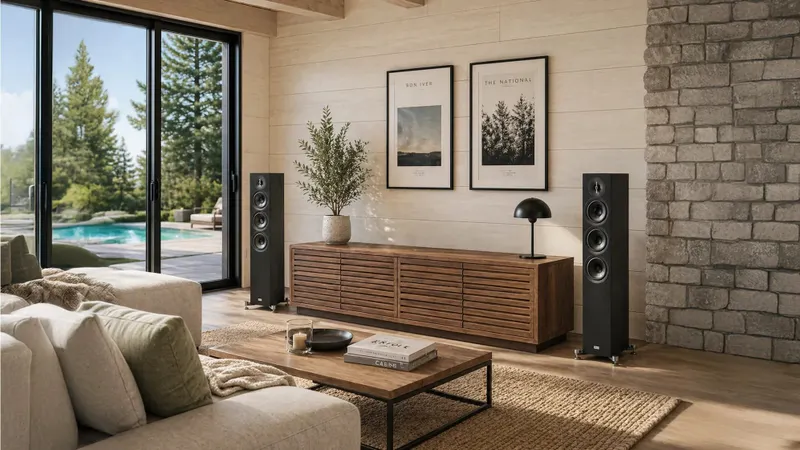
The confusion is reasonable. Both are boxes that make sound. Both can be connected to a turntable, a computer or a television. Stand in a shop and the differences look mostly cosmetic: a studio monitor often has a visible woofer and a horn or waveguide, while a home speaker may wear a grille and stand on the floor. The real split in studio monitors vs speakers is the job they were voiced to do. One is a tool for hearing a mix as plainly as possible. The other is a piece of furniture that should make records feel generous in a room.
Studio monitors vs speakers: the short answer
- Buy studio monitors if you mix, produce or edit audio, and you want to hear problems rather than hide them. Place them on stands or isolation pads, at ear height, forming an equilateral triangle with your head.
- Buy home speakers if the main job is listening to records, films and playlists in a living room. Floorstanders or bookshelf speakers in a proper stereo triangle will fill the space more naturally than a pair of nearfield monitors on a sideboard.
- Do not treat them as interchangeable. You can relax with monitors, and you can mix cautiously on a familiar pair of home speakers, but each will push you toward a different idea of how music should sound.
Accuracy versus pleasure
Studio monitor designers try to keep the frequency response honest. Kali Audio, writing about its Lone Pine series, puts the goal plainly: whatever is present on your mix is what you should hear, with nothing boosted or suppressed to cover flaws or to sound more pleasing. That is a reference mindset. It can make a harsh vocal or a muddy bass obvious, which is exactly the point when you still have time to fix the session.
Home speakers start from the opposite brief. They are meant to be lived with: to make a record feel full from the sofa, to disappear into a room, and to flatter a wide range of recordings rather than interrogate them. The living-room photograph ELAC publishes for its Debut 3.0 range is the right picture of that job. The speakers stand on the floor, well away from a desk, in a space that is furnished for people, not for a mixing chair.
Studio monitors vs speakers, side by side
| Studio monitors | Home speakers | |
|---|---|---|
| Purpose | Reveal what is in the recording so you can mix and edit with confidence | Make music and films enjoyable in a living space |
| Voicing | As flat and even as the designer can manage | Often a little warmer, with bass that feels generous at a listening distance |
| Amplification | Usually powered, with the amplifiers built into each cabinet | Often passive, needing a separate amplifier or receiver, though powered home speakers exist |
| Placement | Nearfield: close to you, aimed at your ears, on stands or a desk | Farther into the room, often on the floor or on stands beside a cabinet |
| Inputs | Balanced XLR (three-pin) or quarter-inch connections from an audio interface or monitor controller | Speaker wire from an amplifier, or line inputs on a powered pair |
| Typical first buy | A pair of 5-inch or 6-inch powered monitors, such as the JBL 305P MkII or Kali Audio LP-6 | A stereo pair of bookshelf or floorstanding speakers from a home-audio line such as ELAC's Debut 3.0 |
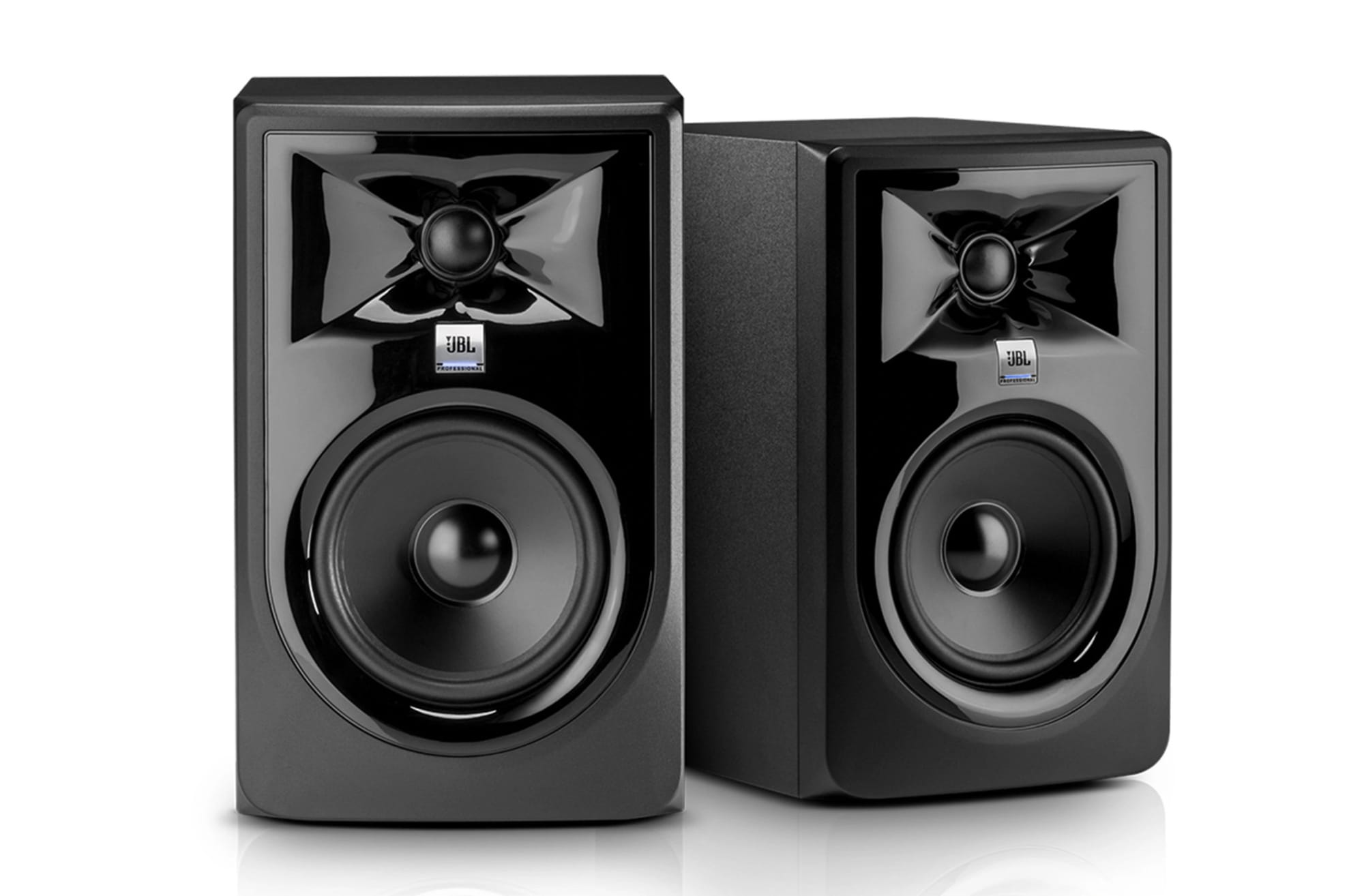
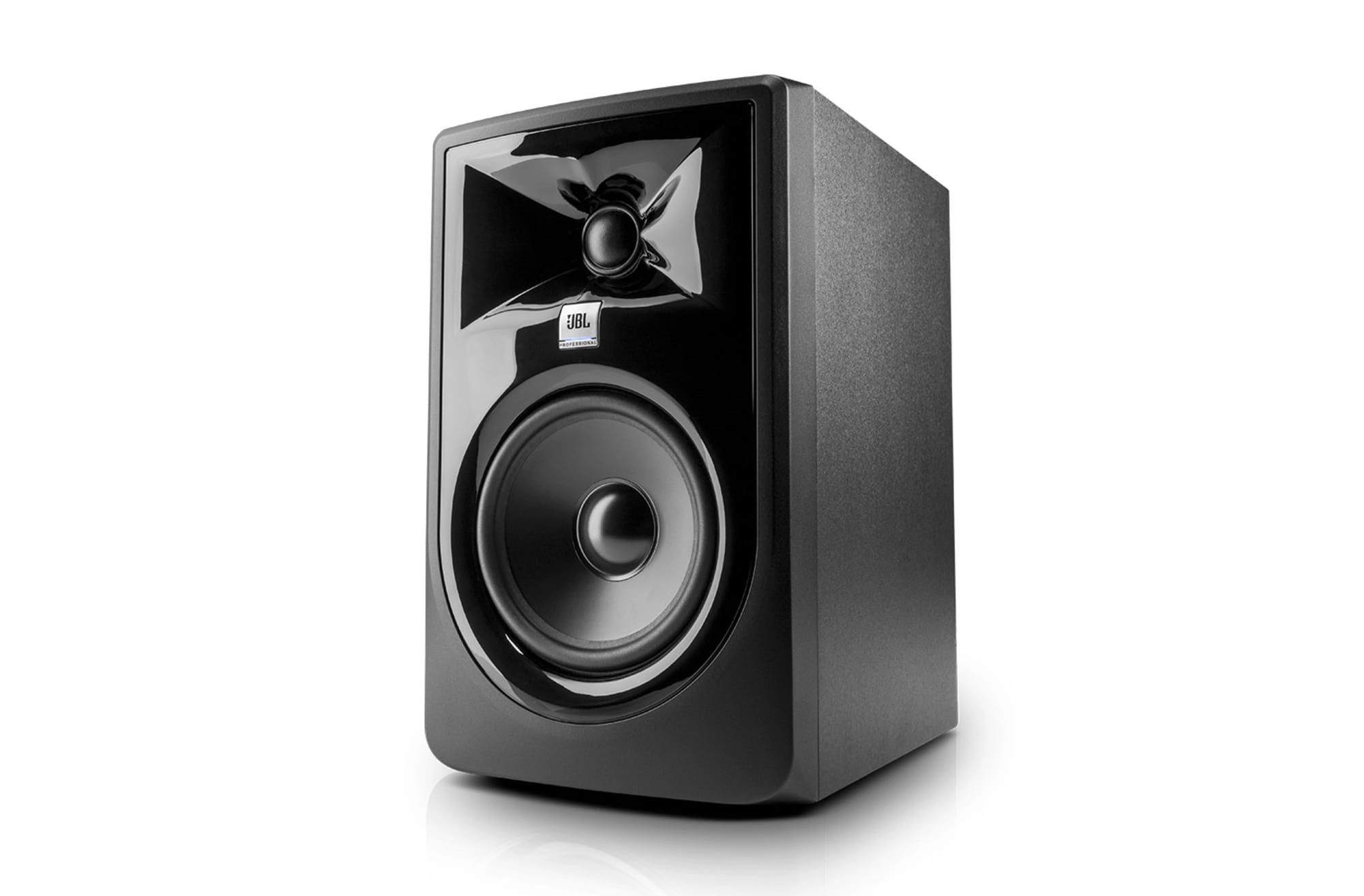
JBL's 305P MkII is a clear example of the monitor side. It is a powered 5-inch two-way speaker that uses the company's Image Control Waveguide, originally developed for JBL's M2 Master Reference Monitor, to keep the handoff between woofer and tweeter smooth and to present a precise stereo image. A long-throw 5-inch woofer and a Slip Stream port handle the low end. Dual Class D amplifiers power the two drivers, and you get balanced XLR and quarter-inch inputs with a +4 dBu or -10 dBV sensitivity switch, which is how a monitor talks to an interface.
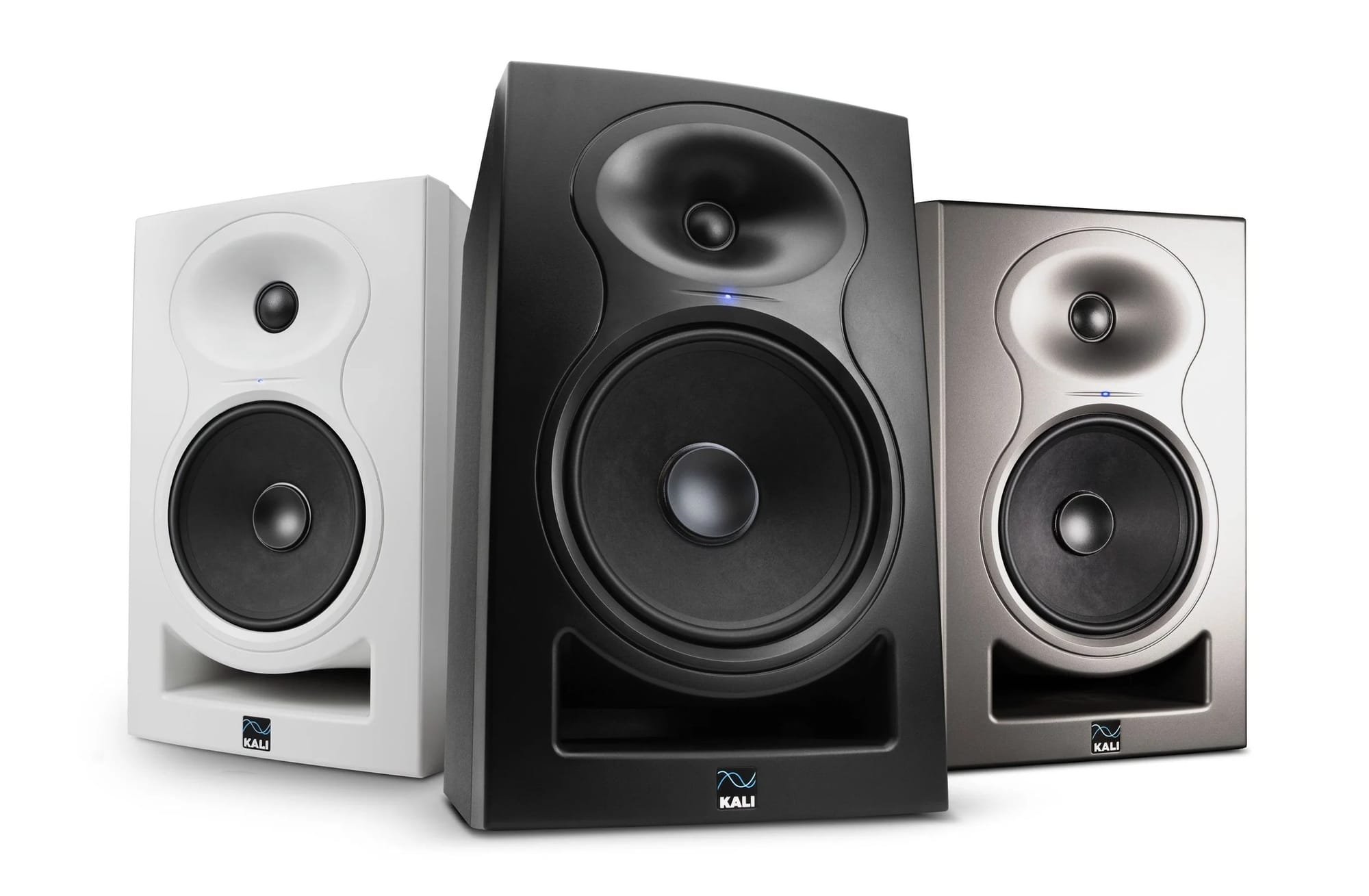
Kali's LP-6 and LP-8, in their 2nd Wave Lone Pine form, follow the same idea with different hardware: a 3-D Imaging Waveguide, a dual-layer voice coil, a port tube shaped to reduce noise, and Class D power (80 watts on the LP-6, 100 watts on the LP-8). Kali quotes a lower frequency response of 39 hertz for the LP-6 and 37 hertz for the LP-8. Those numbers matter at a desk. They matter less if the speakers will sit twenty feet away from a sofa.
Which to buy, by room
A desk where you make music. Buy studio monitors. Start with a compact powered pair, put them on pads or stands, and keep the room's bass in check before you add a subwoofer. The 305P MkII is a proven small monitor with professional inputs. The Kali LP-6 is the one to consider if you want a slightly larger cabinet and that very literal, unflattered midrange Kali aims for. For more first-monitor options, including Yamaha's HS series, see The Best Studio Monitors for Beginners and our Yamaha HS5 vs HS7 vs HS8 comparison.
A living room where you listen. Buy home speakers. A pair of floorstanders, placed with some air around them, will move the room in a way nearfield monitors will not. Use a proper amplifier or a pair of powered home speakers, and if a turntable is part of the system, put a phono preamp in the path, as we describe in our powered speakers for turntables guide.
A single room that has to do both. This is the awkward case. If mixing is the work you care about most, let monitors live on the desk and add a modest pair of home speakers later, or walk into another room with headphones when you want to stop analysing. If listening is the main pleasure and you only mix occasionally, buy good home speakers and learn their character, then check important mixes on headphones and a small reference pair when you can.
Our call
Our call: buy studio monitors for a desk where you make decisions, and buy home speakers for a room where you sit back and listen. The JBL 305P MkII is the compact monitor we would start with on a first desk, because the waveguide, the inputs and the size all match that job. The Kali LP-6 is the better fit if you want a more literal midrange and a little more low-end reach. For a living room, look at a home-audio line such as ELAC's Debut 3.0 rather than perching a pair of nearfield monitors on a sideboard and hoping they behave like furniture. The format follows the room, not the other way around.
JBL Professional 305P MkII: our pick for a first compact studio monitor, with the Image Control Waveguide and balanced inputs. Shop the 305P MkII or see it at JBL Professional
Kali Audio LP-6 V2: our pick if you want Lone Pine accuracy and a 3-D Imaging Waveguide in a 6-inch cabinet. Shop the LP-6 V2 or buy from Kali Audio
ELAC Debut 3.0: a home-speaker range for living-room listening rather than a mixing desk. See the line at ELAC
For interfaces, headphones and the rest of a small studio, continue in our Home Studio hub.
Unknowndivide may earn a commission from purchases made through links in this guide. As an Amazon Associate we earn from qualifying purchases.
Specifications are from JBL Professional's official 305P MkII page, Kali Audio's official Lone Pine pages, and ELAC's official Debut 3.0 page.
Frequently asked questions
What is the difference between studio monitors and speakers?
Studio monitors are designed to sound accurate, so you can hear what is actually in a recording. Home speakers are designed to sound pleasing in a living room, often with a warmer bass and a wider, more flattering presentation. That difference in voicing, plus how and where you place them, is the core of studio monitors vs speakers.
Can I use studio monitors for casual listening?
Yes. Many people enjoy them for records and films because they are clear and revealing. They can also sound dry or fatiguing in a living room, and they usually need a dedicated stand or desk placement, closer than a pair of floorstanding home speakers.
Can I mix music on regular home speakers?
You can, but you will be fighting the speaker's own voicing. A pleasing bass lift or a soft treble can hide problems that appear later on headphones, cars and phones. If mixing is the job, a pair of nearfield studio monitors is the more honest tool.
Do studio monitors need an amplifier or a subwoofer?
Most modern nearfield monitors, including the JBL 305P MkII and Kali Audio LP-6, are powered, so they have amplifiers built in and connect from an audio interface or a monitor controller. A subwoofer is optional. It helps if you work on music with deep bass in a room that can support it, and it is unnecessary for a first small-desk setup.
Which should I buy for a turntable in a living room?
Buy home speakers, or powered speakers made for listening, and put a phono preamp in front of them. Studio monitors can play records, but they are built for a short, accurate listening distance, not for filling a room from the corners.