Ambient music is less about collecting rare instruments than about making time feel longer. A single held tone, a slow change in tone color, and a room that seems bigger than the one you are sitting in will do more than a crowded arrangement. If you want to know how to make ambient music, start there: one sound, a lot of air, and the patience to let it evolve. The rest of this guide is about how to build that feeling with tools you can actually buy and techniques you can hear working.
How to make ambient music: the short version
- Begin with a drone or a slow chord, not a beat. Hold fewer notes for longer, and give each one room to decay.
- Put space around the sound with a dedicated reverb or a multi-effects pedal. Long decay, soft attacks, and a mix that still leaves the original tone visible are the usual starting points.
- Move one thing slowly. A filter, a delay time, or a wavetable position, changing over a minute rather than a bar, is often enough motion.
- Leave silence in the arrangement. Ambient listening depends on what you do not add. If a second layer does not change the atmosphere, mute it.
Start with space
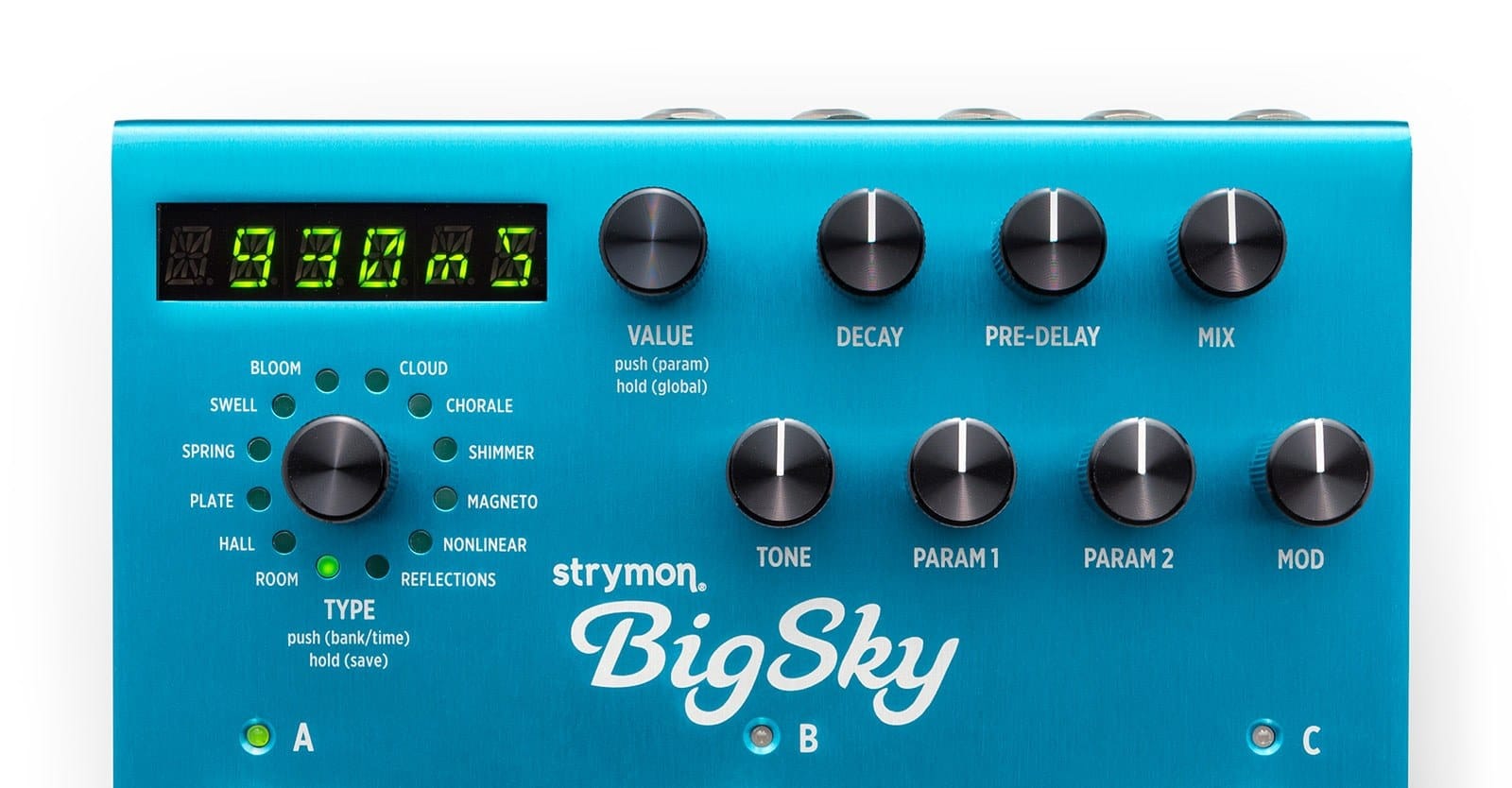
Reverb is the obvious ambient tool because it turns a short sound into a place. You do not need every algorithm at once. You need one program you understand. Strymon's BigSky is built around twelve reverb machines, including Hall, Plate, Spring, Cloud, Bloom, Shimmer, Nonlinear and Magneto. The Cloud machine is the one many people reach for first when they want a tone to hang in the air as a wash of particles rather than a bounce off a wall. Hall is the more literal large room. Shimmer adds the high, slowly rising halo that has become a shorthand for modern ambient guitar.
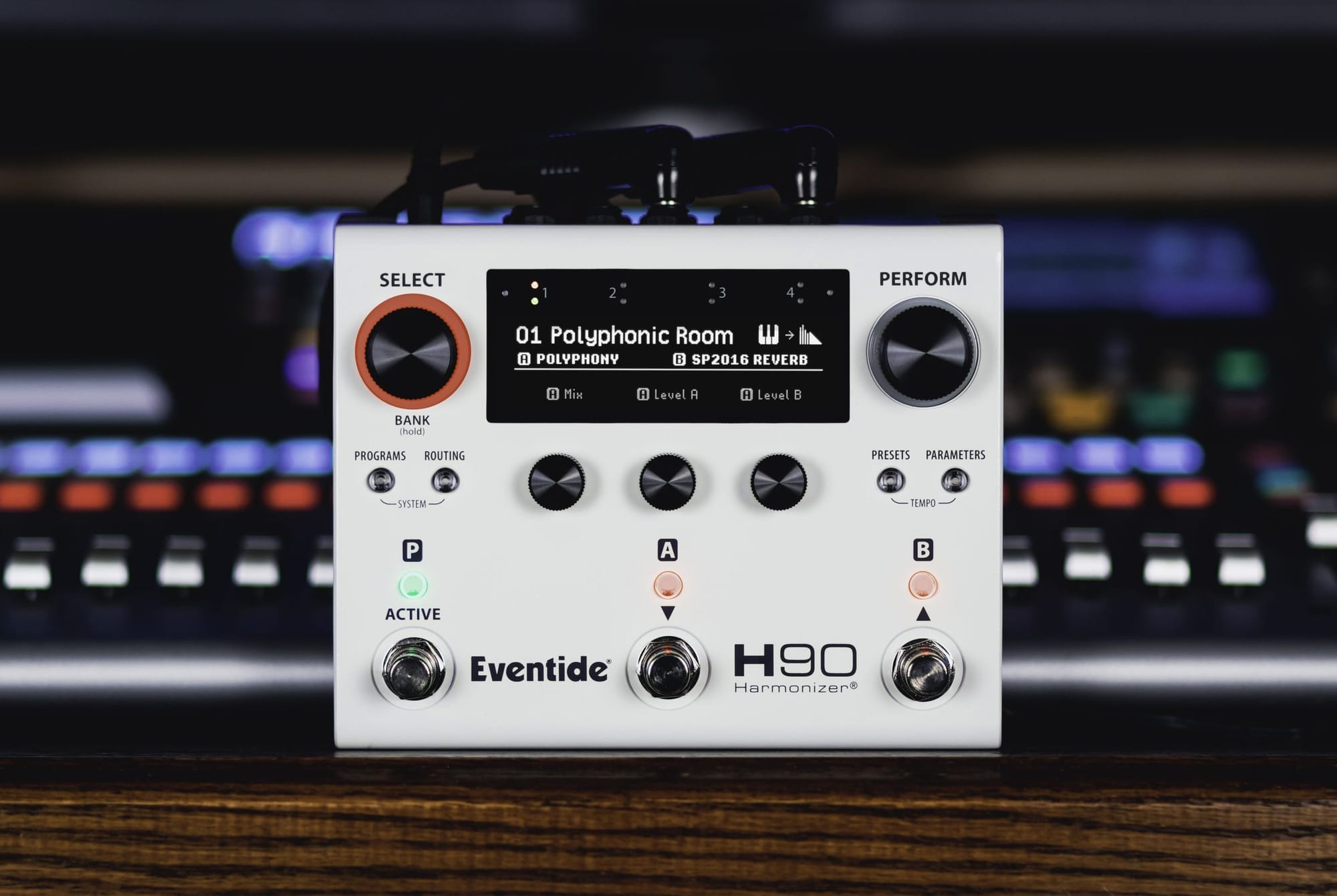
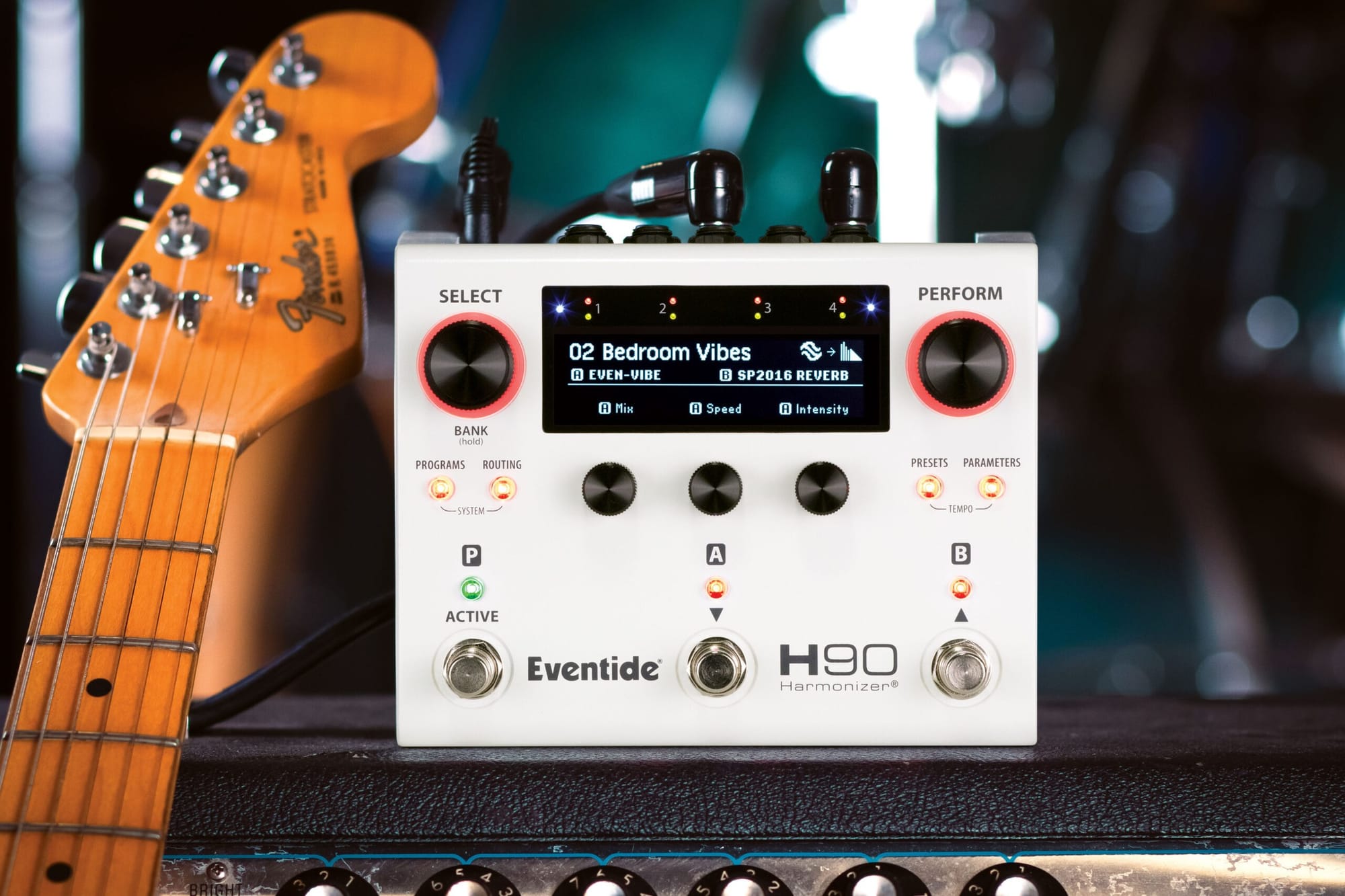
Eventide's H90 Harmonizer takes a wider brief. Eventide bases its architecture on the company's H9000 processor, and the pedal can run the reverb, delay, modulation and pitch algorithms familiar from the H9 Max, plus newer granular and polyphonic pitch programs. For ambient work, that means you can keep a long reverb on one side of the pedal and a slow, warble-free pitch shift or a granular texture on the other, without jumping to a computer. It is more than a reverb, which is useful once a single wash starts to feel static.
If you want a dedicated pedal shortlist, we have already ranked options in Best Reverb Pedal for Ambient Music. The technique stays the same whichever box you use: set a long decay, keep the mix below the point where the dry sound vanishes, and resist adding a second reverb until the first one has a job you can describe.
Hold a tone, and move it slowly
The second skill is not filling the box with notes. Play a small chord, a fifth, or a single pitch, and stay there. Let the reverb finish its thought before you change anything. When you do change something, make it slow: a low-frequency oscillator on filter cutoff, a delay that gradually feeds back, or a wavetable that inches forward over a minute. Fast motion turns ambient music into a sequence. Slow motion turns a sequence into weather.
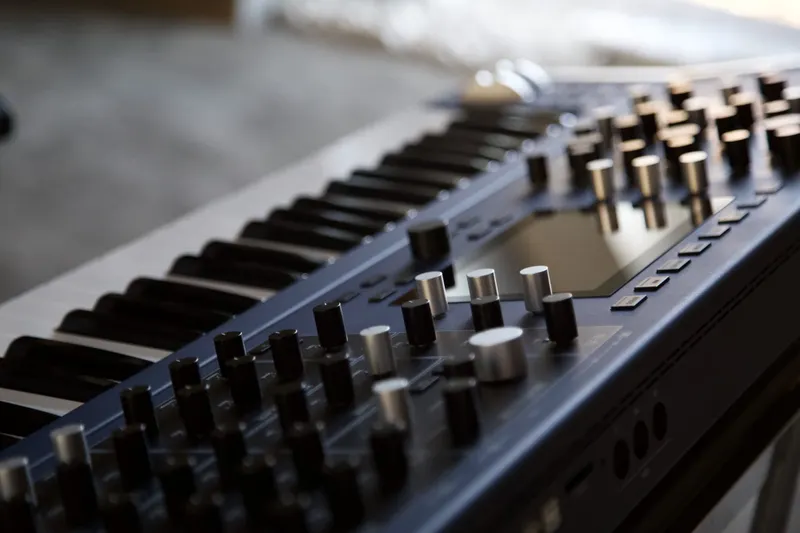
Any stable sound source will do. A small desktop synthesizer, a guitar into a volume pedal, or a simple sample can carry a piece. A larger instrument helps when you want more than one kind of tone in the same session. Waldorf's Quantum MK2 is a full-size example: a 61-key Fatar TP8/SK keyboard with polyphonic aftertouch, hybrid polyphony that can combine eight analog filter voices with digital voices for up to sixteen voices in total, and a large internal library for samples, presets and wavetables. You do not need that much instrument to start. You need something that will hold a pitch without fidgeting, then give you one or two controls worth riding slowly. For a focused shopping list, use our best synths for ambient music guide rather than treating the Quantum as a first purchase.
Record the room, and leave air in the arrangement
Found sound is the other classic door into ambient music: an open window, a radiator, a walk with a small recorder, then those textures stretched or buried under a drone. You do not need a field-recording career to use the idea. A phone memo, slowed down and sent through the same reverb as your synth, will often sit more naturally than a third keyboard line. Keep the recording quiet and unprocessed at first, so you can decide how much of the real room you want to keep.
Arrangement is mostly subtraction. Start a piece with one layer, add a second only when it changes the atmosphere, and end by taking things away rather than piling on a finale. A useful test is to mute each track in turn. If the piece does not get worse when a layer disappears, that layer was decoration. Ambient music can be long, but it should not be crowded. For listening context while you work, our ambient music starter guide to essential albums is a better teacher than another plugin.
Our call
Our call: start making ambient music with one sound source and one excellent reverb, and wait on a larger synth or a more complicated pedalboard until those two things already feel musical. A BigSky, or a similar dedicated reverb, plus a simple drone will teach you more than a packed modular case. Move to an H90 or a deep instrument such as the Quantum MK2 when you can already describe the space you want, and you need more ways to shape it. The skill is patience, not inventory.
Strymon BigSky: our pick for a dedicated ambient reverb, with twelve machines including Cloud, Hall, Plate and Shimmer. Shop the BigSky or buy from Strymon
Eventide H90 Harmonizer: our pick when you want reverb, delay, granular textures and pitch in one pedal. See it at Eventide
Waldorf Quantum MK2: a deep hybrid keyboard for later, once a simpler source already has a voice. See it at Waldorf
For more listening, instruments and pedals, continue in our Ambient Music hub.
Unknowndivide may earn a commission from purchases made through links in this guide. As an Amazon Associate we earn from qualifying purchases.
Specifications are from Strymon's official BigSky page, Eventide's official H90 page, and Waldorf's official Quantum MK2 page.
Frequently asked questions
How do I make ambient music as a beginner?
Start with one long sound, not a full drum arrangement. Hold a simple chord or drone, send it through a spacious reverb such as a Cloud or Hall program, add very slow movement with a filter or delay, and leave more silence than you think you need. A complete studio is optional. A patient signal chain is not.
What gear do I need to make ambient music?
You need a sound source and a way to put space around it. That can be a synthesizer, a guitar, or a simple sample, plus a reverb such as Strymon's BigSky or a multi-effects unit such as Eventide's H90. A digital audio workstation (DAW) is enough software. Fancy modular systems can wait.
How do I make ambient music in Ableton or another DAW?
Record or program a slow harmonic bed, lengthen it with reverb and delay, and automate one or two parameters slowly over several minutes. Avoid busy drum patterns at first. The same techniques apply in any digital audio workstation. The software brand matters less than how slowly you let the sound change.
What is the best synth for ambient music?
There is no single best instrument. Look for something that can hold a tone steadily and be modulated slowly, from a small desktop synth to a deep keyboard such as Waldorf's Quantum MK2. We keep a dedicated shortlist in our guide to the best synths for ambient music.
Do I need a lot of reverb to make ambient music?
You need a sense of space, which often means reverb, but more is not automatically better. A single, well-chosen program, such as a Cloud or Plate on a BigSky, with a long decay and a careful mix, usually beats stacking five washes until the notes disappear.