The short answer: a groovebox is a self-contained music machine that holds sound sources, a sequencer and effects in one box, so you can build a whole track, drums, bass, chords and all, without a computer. Think of it as a small studio you can carry, built for making loops, arranging them into songs and playing them live.
What is a groovebox, and where did the name come from
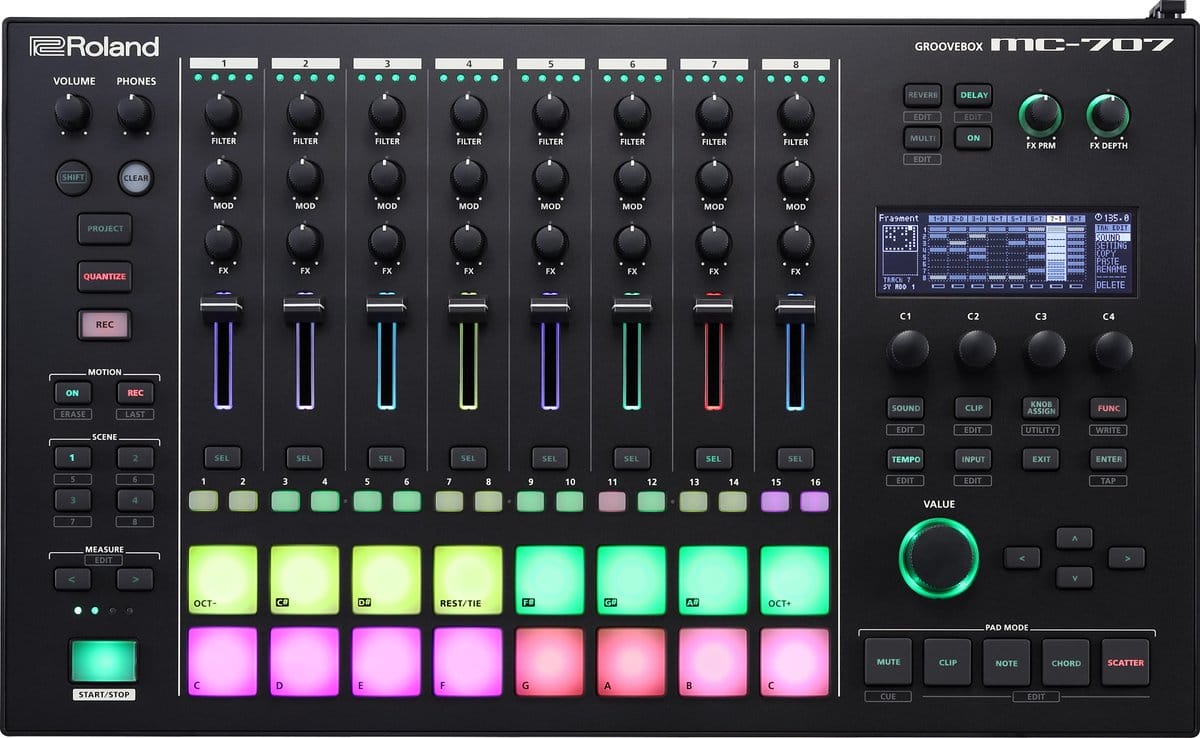
The word started as a Roland product name before it became a category. In 1996 Roland released the MC-303 and printed "Groovebox" on it: a box of dance music sounds tied to a step sequencer, aimed at people who wanted to make whole tracks rather than just program drums. The name stuck, and today it covers everything from palm-sized samplers to flagship workstations. Roland still uses it on the MC-707, which it simply calls a GROOVEBOX.
What a groovebox does that other gear does not
Every groovebox combines three jobs. It makes sound, through synth engines, samples or both. It sequences that sound, usually on a 16 step grid inherited from classic drum machines, with patterns you can chain into a song. And it processes it, with per track effects and a master bus. The point is speed: everything you need to finish an idea is under your hands, with no menus on a laptop.
- Groovebox vs drum machine: a drum machine is built around drums. A groovebox handles melodic parts too, so bass lines, chords and leads live in the same pattern. Our drum machines for beginners guide covers the drums first route.
- Groovebox vs sampler: a sampler records and plays back audio. Many grooveboxes sample, but they add synths, sequencing and mixing around it.
- Groovebox vs DAW: a DAW (digital audio workstation, the recording software on your computer) is unlimited but slow to perform with. A groovebox is limited on purpose and fast to play live, and most will send their parts into the DAW when you want to finish a mix.
The grooveboxes worth starting with
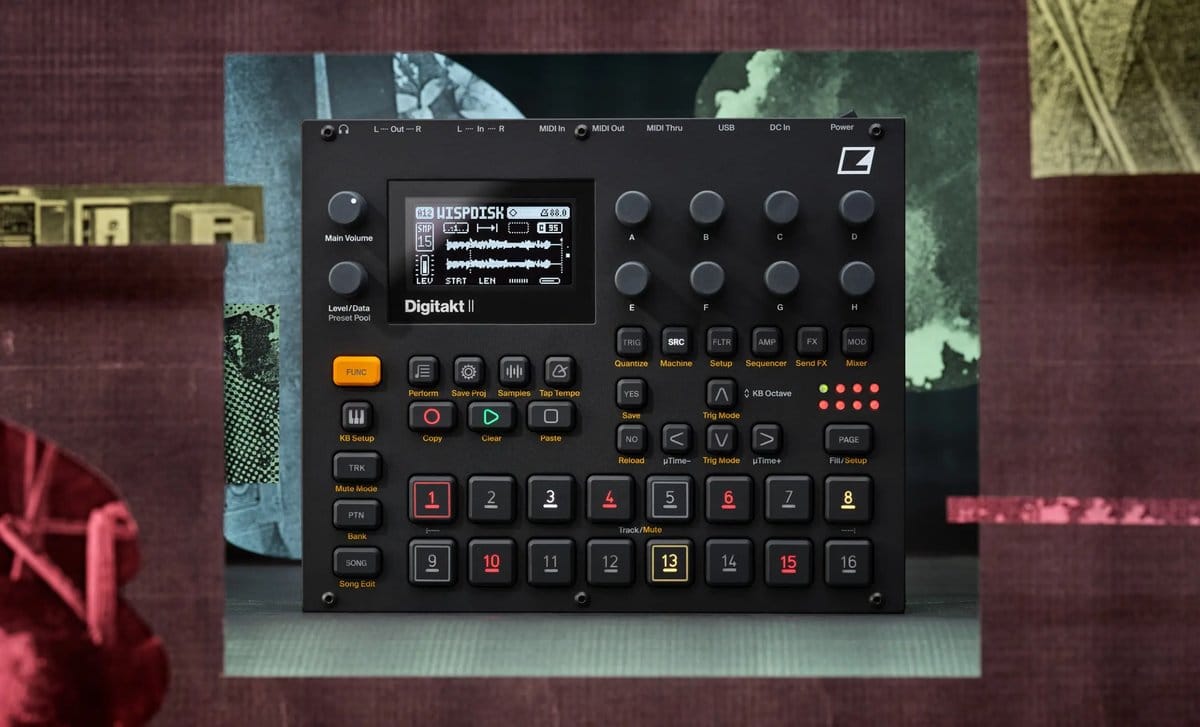
Elektron Digitakt II: the one most producers grow into
The Digitakt II is a 16 track drum computer and stereo sampler, and any track can also sequence external gear over MIDI. Patterns run to 128 steps, there is 400 MB of sample memory, and each track gets its own Euclidean sequence generator for instant polyrhythms. Elektron's signature is the parameter lock, which lets every single step carry its own sound settings. It takes a weekend to learn and years to exhaust. Shop it at Elektron or check price. We compare it with its siblings in Digitakt II vs Syntakt vs Digitone II.
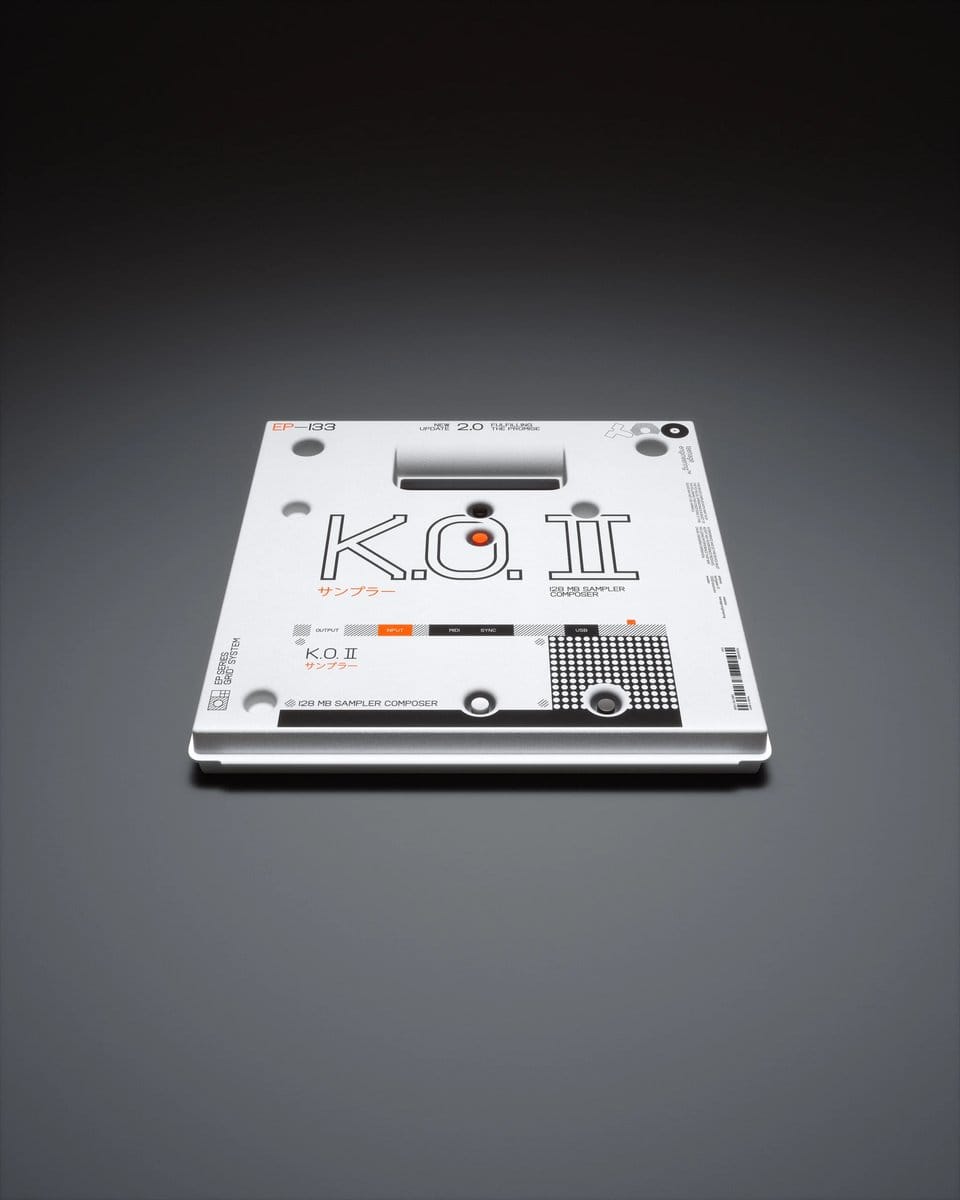
Teenage Engineering EP-133 K.O. II: the fun first sampler
The EP-133 K.O. II grew out of the Pocket Operator PO-33 K.O. and turned it into a proper sampler groovebox: 999 sample slots, 128 MB of memory, a built-in mic and speaker, and a sequencer of four groups with 12 patterns each. The punch-in effects are the hook, letting you stutter and filter a beat with one finger. It is the cheapest way on this list to find out whether you like making music this way. Shop it at Teenage Engineering or check price.
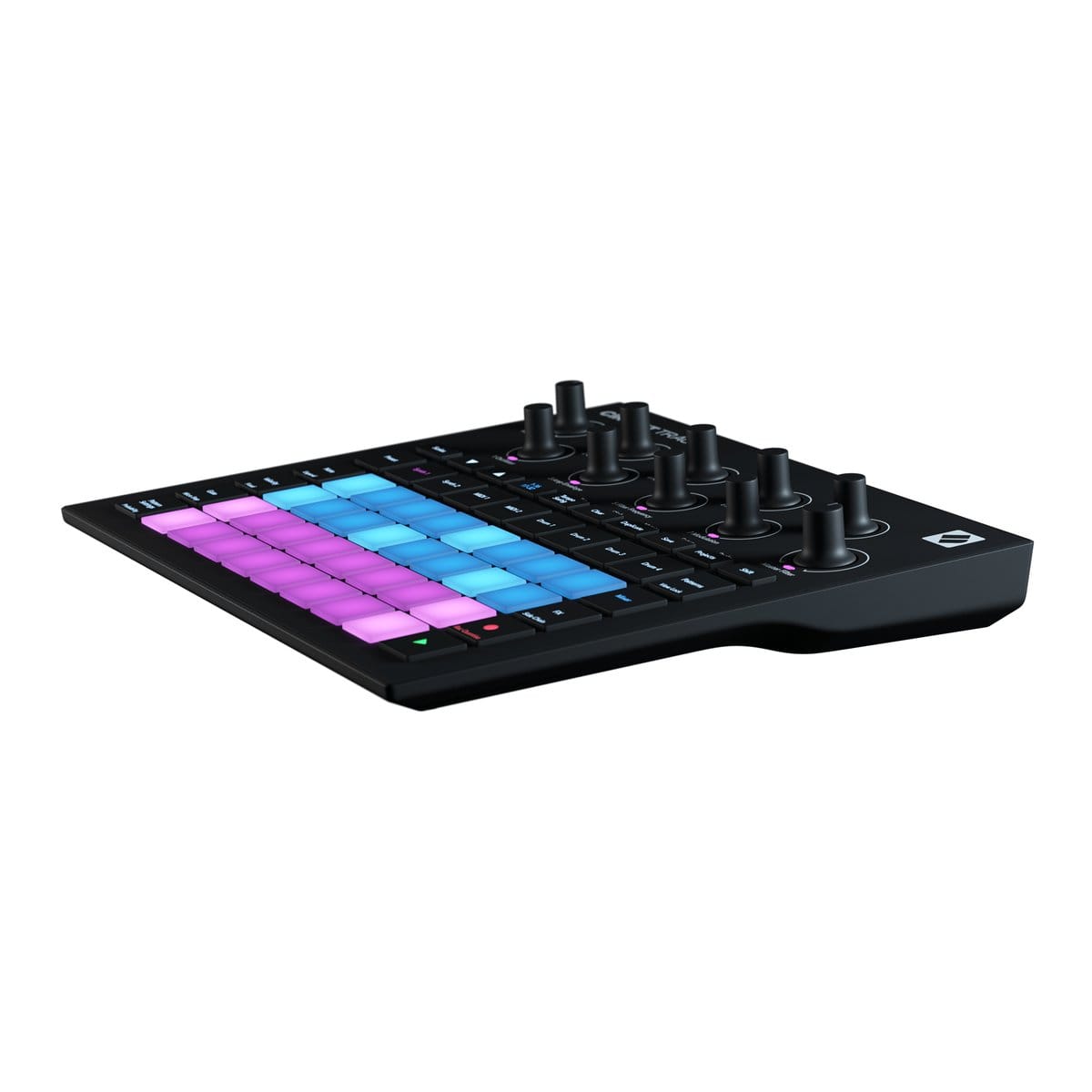
Novation Circuit Tracks: the best all rounder for beginners
Circuit Tracks is the most obvious groovebox here: two six voice synth tracks, four sample based drum tracks and two MIDI tracks to drive other gear, all played on 32 velocity sensitive pads with no screen to get lost in. It runs about four hours on its built-in battery and holds up to 32 extra sound packs on a microSD card. Shop it at Novation, which has a Black Friday sale running on its store.
Roland MC-707: the classic idea, done big
The MC-707 is the modern heir to the MC-303: eight tracks of clip based sequencing with faders for each, 16 pads, Roland's TR-REC step sequencer from its drum machines, and a library of sounds, loops and phrases. It is the most mixer-like groovebox here, which makes it a natural live performance machine. Find it through Roland's where to buy page.
Akai MPC One G2: the hip-hop standard
The MPC (originally MIDI Production Center) is the sampler that defined hip-hop production after Roger Linn helped design the first one in the late 1980s. The MPC One G2 is the most affordable way into the current standalone MPC system, with 16 pads and a touchscreen. Shop it at Akai Professional or check price, and see how it compares with the Live 3 and MPC Sample.
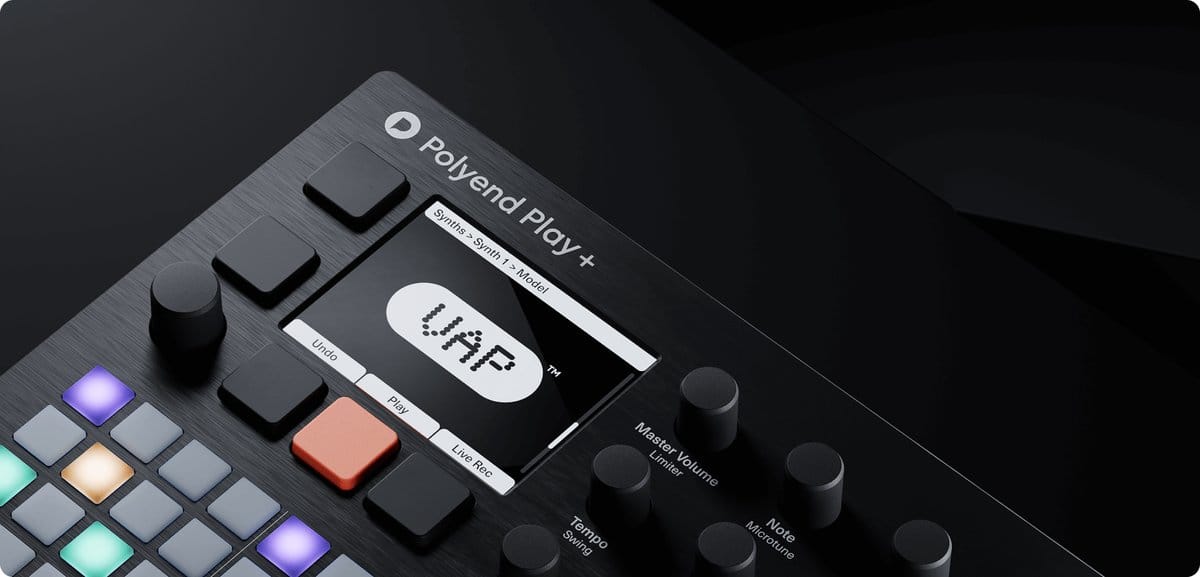
Polyend Play+ and Synthstrom Deluge: for when you want depth
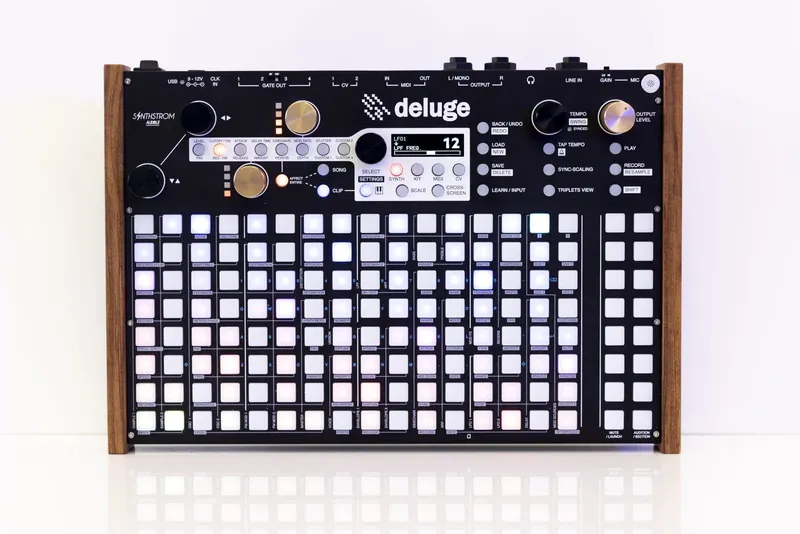
The Polyend Play+ is a 16 track sample and synth groovebox with multitimbral synth engines, and it can send 14 stereo tracks to your DAW separately over USB, which makes finishing a song much easier. Shop it at Polyend. The Synthstrom Deluge is the cult pick: subtractive, wavetable and FM synthesis, sampling and a piano roll sequencer across a 16 by 8 grid of 128 RGB pads, with up to 64 synth voices and a community that writes its open-source firmware. Shop it at Synthstrom, which ships every unit with a case.
Questions people ask about grooveboxes
What is a groovebox used for? Sketching ideas quickly, making full electronic tracks away from a computer, and performing live sets, since every part is playable and mutable in real time.
Is a groovebox a synth? Often it contains one or more, but it is more than a synth. A synth makes sounds; a groovebox also sequences, arranges and mixes them.
Do I need a computer with a groovebox? No. That is the point of one. A computer helps for backups, loading samples and final mixes.
More machines and comparisons live in our synths and grooveboxes hub.
Our call: start with the Novation Circuit Tracks if you have never used one, the EP-133 K.O. II if you mostly want to sample, and buy the Elektron Digitakt II if you know this is your instrument. Circuit Tracks teaches the groovebox idea in an afternoon, the K.O. II is the lowest risk, and the Digitakt II is the one people keep for a decade.
As an Amazon Associate we earn from qualifying purchases.