
The adidas Samba started life as a football boot for frozen pitches and ended up as one of the most worn sneakers on earth. It has been a terrace staple, a skate shoe, a 1990s fashion obsession and, in recent years, the default low-profile sneaker for anyone who wants something that is not a chunky runner. The shape barely changed along the way, which is a large part of the appeal.
This guide covers where the Samba came from, what each detail on the shoe does, how it fits into a wardrobe and which pair to buy. The history comes from adidas' own company timeline, and the product details are what you can see on the shoe itself.
Unknowndivide may earn a commission from purchases made through links in this guide.
The history
adidas launched the first Samba in 1950. The company's timeline describes it as a football boot made for icy and snowy pitches, and notes that at 357 grams it looks very different to the streetwear icon we know today. That is the key point: the Samba was built for a job, and the job was grip and stability in bad conditions.
The version people recognize arrived in 1972. adidas calls this the moment the Samba "as we know it today" was launched, with a low-profile indoor shape and a three-zone sole profile that gives multidirectional grip for fast changes of direction. It is still worn as an indoor football shoe, which is worth remembering when you see how many people wear it to the office.
The fashion crossover came in the 1990s, when, according to the same timeline, the fashion set embraced the Samba and it became a style icon. The shoe has had several waves since then, and the current one has been the biggest, with adidas reissuing the classic look under the name Samba OG, short for original.
Anatomy of a Samba
- Leather upper. The classic pair is smooth leather, usually white with black stripes, though suede and many colorways exist. Leather ages well and wipes clean.
- Suede T-toe overlay. The suede piece over the toe, shaped like a T where it meets the laces, protects the front of the shoe and gives the Samba its recognizable face.
- Serrated 3-Stripes. The adidas stripes on the side have a zigzag edge rather than a clean line, one of the quickest ways to spot a real Samba from across a room.
- Gum rubber outsole. The tan gum sole is flat and low, with a pattern cut into it for grip. It sits close to the ground, which is part of why the shoe looks so slim.
- Gold foil "Samba" script. The name is printed on the side, in gold on the white and black pair.
- Low profile. A thin sole and a slim silhouette make the Samba less bulky than most modern sneakers, and easier to dress up.
Why it works
The Samba succeeds because it is simple. There is no visible air unit, no stacked foam and no loud branding beyond the stripes. It looks right with jeans, work pants, shorts, a suit that has been loosened up or a pair of cuffed trousers, and it does not date a look to a particular year. That is the same quality that made the New Balance 990 and the Clarks Wallabee long-running favorites.
It is also a shoe that looks better when it is not perfect. Creases across the toe, a slightly dirty gum sole and scuffed suede all read as worn in, not worn out. If you like your shoes to look new, plan to clean them regularly. If you do not, you will be fine.
How it fits
The Samba is a slim shoe with a low toe box, so it fits snugly through the midfoot. Many wearers go up half a size from their usual sneaker size, especially if they have wide feet or wear thick socks. Before ordering, read the sizing notes and recent reviews on the product page, because fit can vary between versions and production runs. The leather upper will soften and give with wear, though it will not stretch dramatically.
The sole is thin and flat, so the Samba is comfortable for walking around town but is not a cushioned shoe for all-day standing or long distances. If your feet need arch support or cushioning, add a quality insole, and be honest about how much walking you will be doing in them.
Which to buy
For the classic look, the adidas Men's Samba OG is the version most people mean when they say Samba: the leather upper, suede T-toe, serrated stripes and gum sole. It is the right place to start if you only want one pair.
If you actually want to play, the adidas Samba Indoor Soccer shoe is the indoor football version that the line was built around. It is still a good everyday shoe, but check the product page for the exact materials and sole, since it may differ in small ways from the lifestyle pair.
If you like the Samba look but want a cousin with a slightly different personality, the adidas Gazelle is the other low-profile adidas shoe that shares a lot of the same wardrobe logic. Try both on, because they feel different on the foot. You can also browse the whole range on the adidas Samba page to see current colorways and women's sizing.
How to wear them
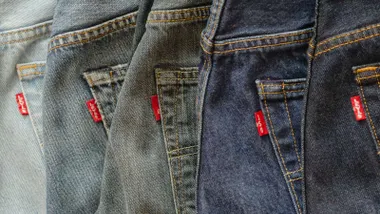
The easiest way is the classic one: straight-leg Levi's 501s, a plain tee and a pair of white Sambas. The slim profile balances a straight leg nicely, and the contrast of the dark stripes against light denim is a clean look. A heavy raw pair from our raw denim guide works just as well, and the Samba is a good way to break up a lot of denim.
For a dressier take, wear them with pleated trousers and a knit polo, or a lightweight overcoat. They are less formal than the Dr. Martens 1460 and quieter, so they work in situations where boots feel like too much. Dark socks keep the look tidy; short white socks give it a more casual, retro feel.
Care
Wipe the leather with a damp cloth after wearing, and use a soft brush on the suede toe. Do not machine wash them. A gum sole will get dirty and slightly yellow, and you can scrub it with a soft brush and mild soap if you want it fresher. A suede protector spray applied before the first wear makes a real difference to how long the toe stays presentable. Let them dry naturally, away from direct heat, and use shoe trees to help them keep their shape.
More in our sneakers and style hub.