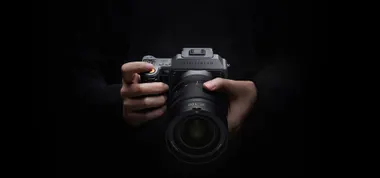

Leica now sells three versions of the same camera. The Q3, the Q3 43 and the Q3 Monochrom share a 60 megapixel full-frame body, an 8K video spec, a tilting screen and the same 5.76 megapixel OLED viewfinder. What separates them is the two things that matter most in a fixed-lens camera: the lens bolted to the front, and whether the sensor sees color.
That makes this an easier choice than it looks. You are really answering two questions: do you see the world at 28mm or 43mm, and do you shoot black and white only?
Leica Q3 vs Q3 43 vs Q3 Monochrom at a glance
| Q3 | Q3 43 | Q3 Monochrom | |
|---|---|---|---|
| Launched | 2023 | 2024 | 2025 |
| Lens | Summilux 28mm f/1.7 ASPH | APO-Summicron 43mm f/2 ASPH | Summilux 28mm f/1.7 ASPH |
| Stabilization | Optical, in the lens | Not listed by Leica | Optical, in the lens |
| Sensor | 60 MP color | 60 MP color | 60 MP monochrome, no color filters |
| Max ISO | 100,000 | 100,000 | 200,000 |
| Digital frame selection | Up to 90mm | 43mm to 150mm | 28mm to 90mm |
| Macro mode | Yes, from 17 cm | Yes | Yes, from 17 cm |
| Best for | Street, travel, everything | Portraits, details, a natural view | Black and white only |
All three let you shoot at 60, 36 or 18 megapixels while still using the whole sensor, which Leica calls Triple Resolution. Smaller files, same full-frame look.
Leica Q3: the 28mm that does everything
The Q3 is the default for a reason. A 28mm lens is wide enough for rooms, streets and landscapes, and with 60 megapixels behind it you can crop in hard. The camera has frame lines for tighter views built in, so you can compose as if you had a 35mm, 50mm, 75mm or 90mm lens and keep the full file. The Summilux 28 f/1.7 is fast and stabilized, and the macro mode, engaged with a ring on the lens barrel, focuses down to 17 cm, close enough for food, hands and objects.
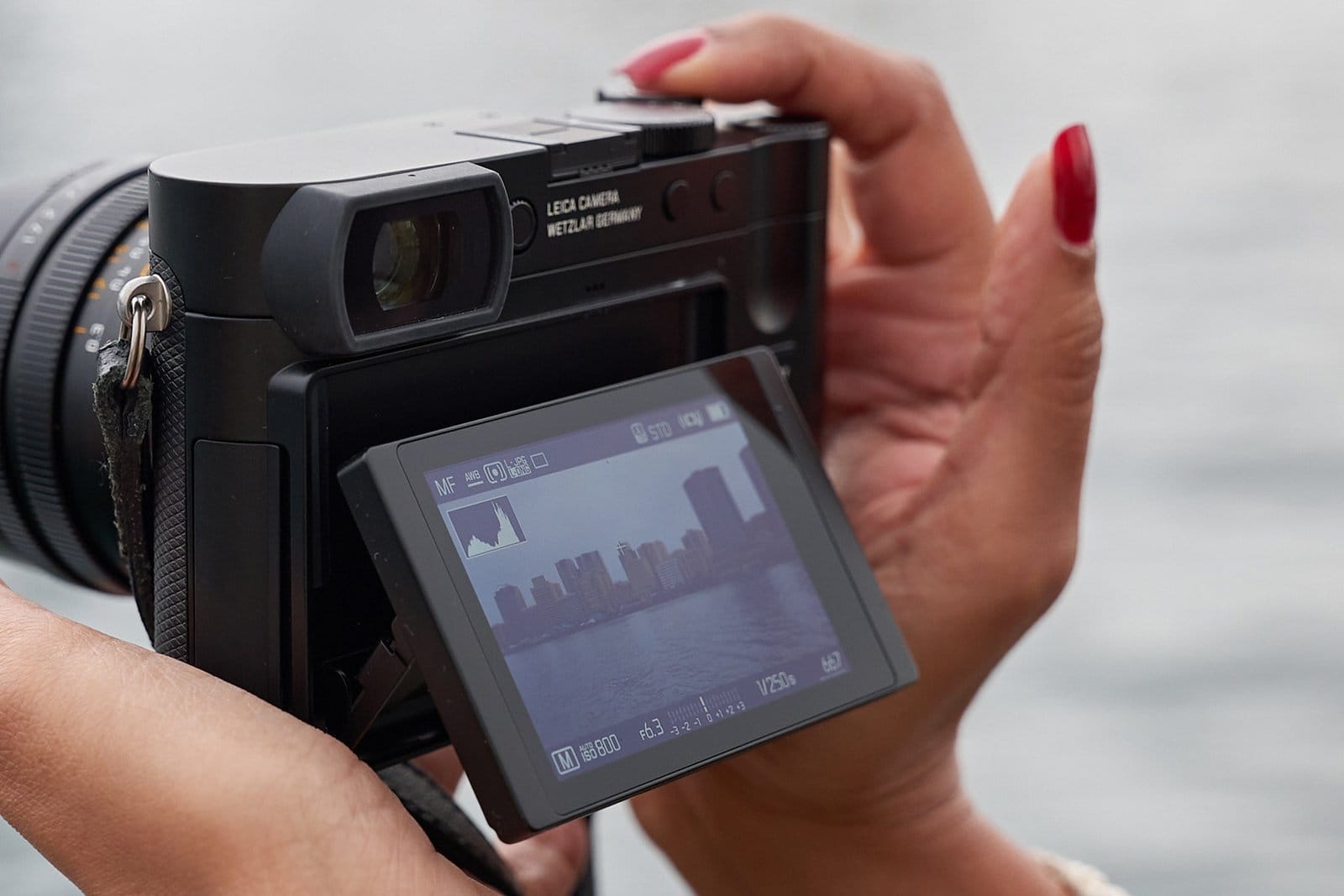
It also got the upgrades that made the Q line feel modern: a hybrid autofocus that adds phase detection to contrast and depth-from-defocus, a tilting screen, and wireless charging through Leica's optional handgrip and charging pad. Buy the Leica Q3 if you want one camera for everything and you like being close to your subject.
Leica Q3 43: the natural view and an APO lens
The Q3 43 is the same body with a completely different personality. Its 43mm lens sits right where the human eye's field of view feels natural, which is why Leica pitches it as distortion-free and true to life. Faces look like faces, not wide-angle caricatures, and tight frames stop looking cropped.
The bigger story is the glass. It is an APO-Summicron, Leica's apochromatic design meant to bring all colors of light into focus at the same point, which is why APO lenses render such clean edges with so little color fringing. It uses seven aspherical elements and still keeps the compact Q shape. Digital frame selection runs from 43mm all the way to 150mm, so it doubles as a short telephoto for portraits.
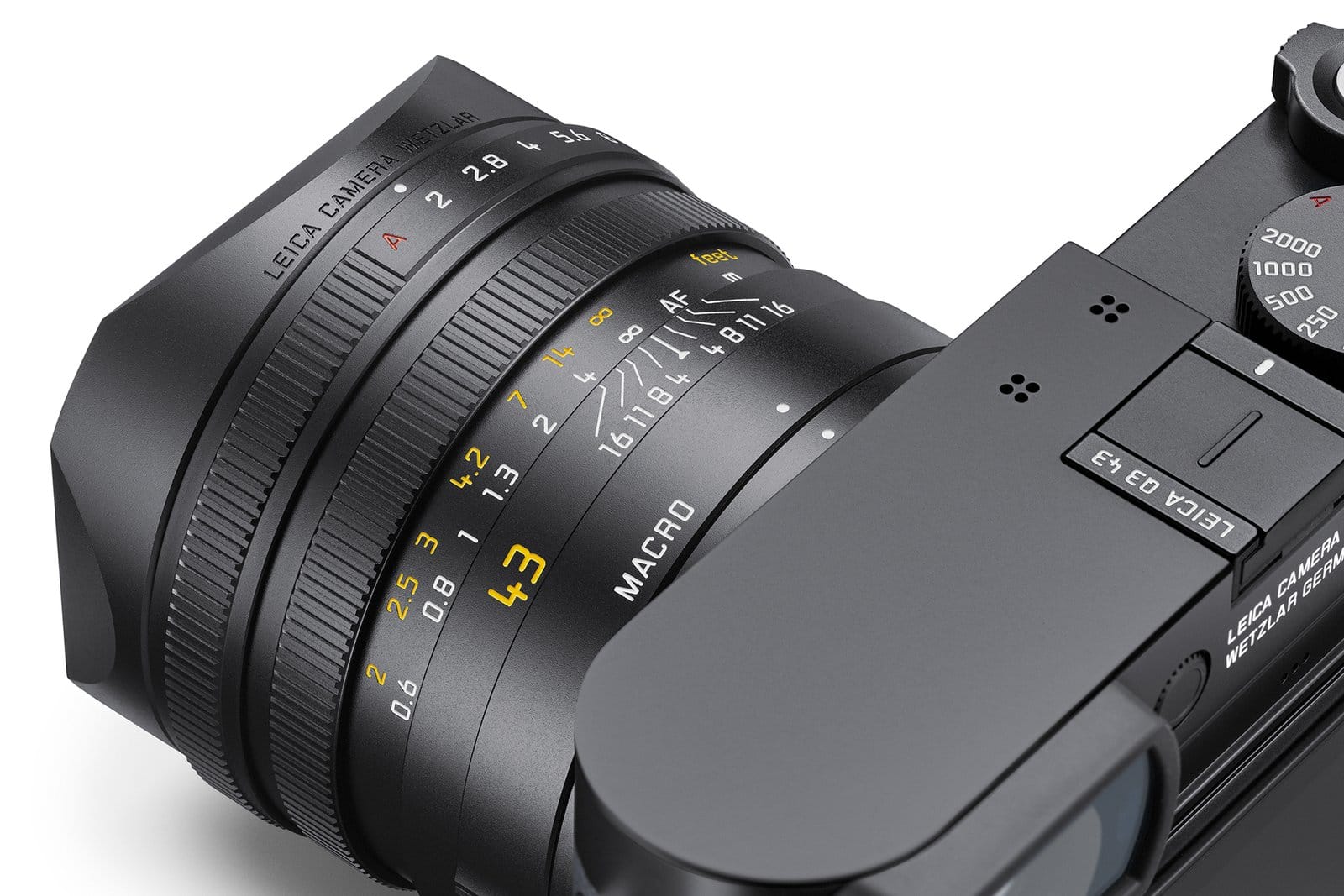
The trade-off: f/2 instead of f/1.7, and Leica's spec sheet does not list optical stabilization for this lens, so the Q3 asks less of you in dim light. Buy the Leica Q3 43 if you shoot people, details and everyday life and 28mm always felt too wide.
Leica Q3 Monochrom: built only for black and white
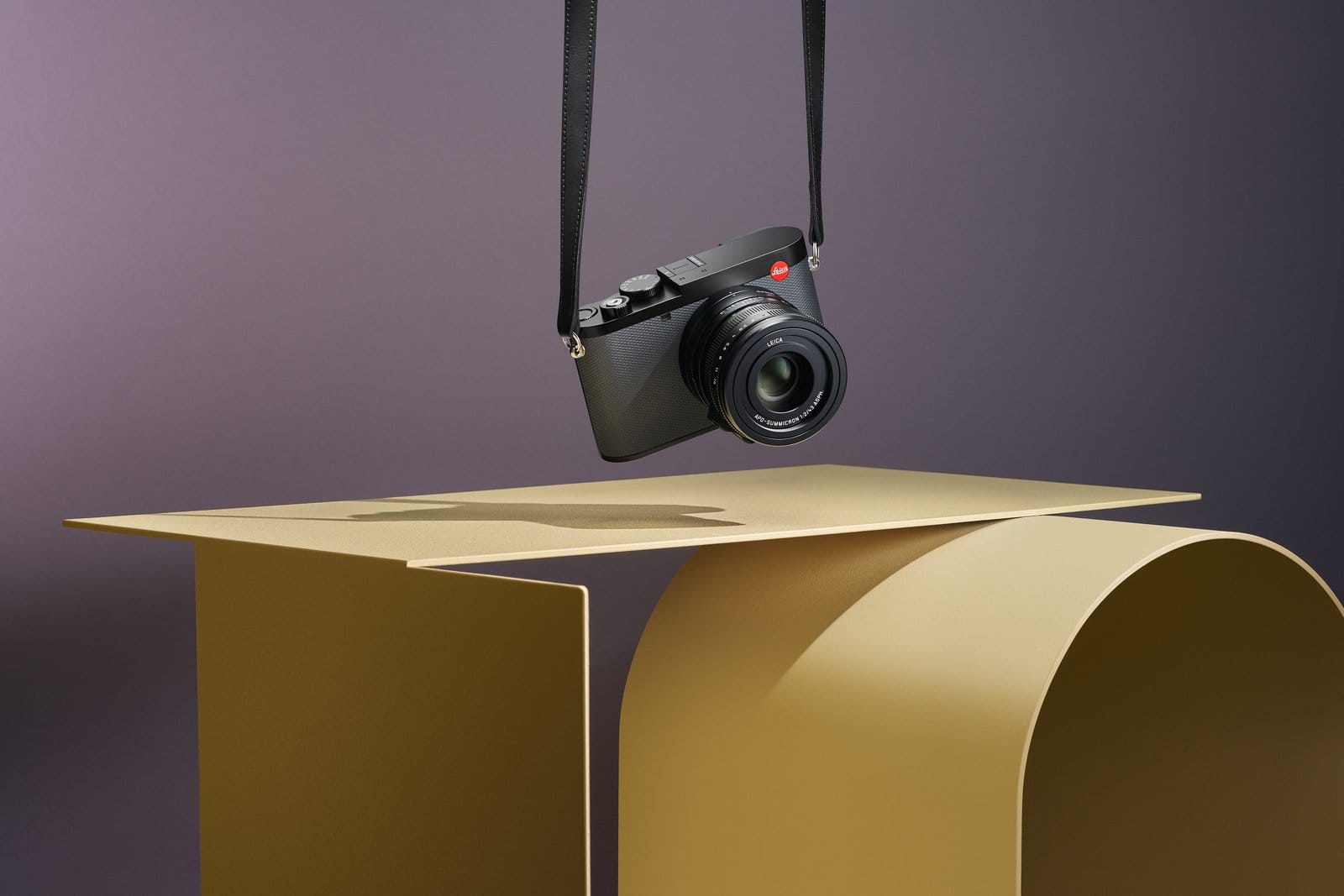
The Monochrom removes the color filter array from the 60 megapixel sensor. Every pixel records pure luminance instead of guessing color from its neighbors, which is where the finer detail and richer tonality come from. It also doubles the ceiling on ISO to 200,000. The lens is the same stabilized Summilux 28 f/1.7 as the Q3, which Leica calls the fastest lens ever put in a compact full-frame camera, with the same 17 cm macro and 28mm to 90mm frame selection.
It keeps the Q line's IP52 rating against dust and splashes, adds Content Credentials that sign your files for the first time in a Q, and takes optional red, green, yellow and orange filters, the same contrast tools black-and-white film shooters have used for a century. If that sounds like you, our black-and-white film guide is the analog side of the same obsession.
Buy the Leica Q3 Monochrom only if you are sure. There is no color mode to fall back on, which is exactly the point.
Which Leica Q fits you
- One camera for everything: the Q3. Widest view, fastest lens, stabilized, easy to crop.
- Portraits and a natural look: the Q3 43. Pair it with a phone for wide shots and you have most situations covered.
- Black and white, no compromises: the Q3 Monochrom, especially if you already own a color Q and want a second body.
If you are also weighing the interchangeable-lens route, our Leica Q3 vs M11 vs SL3 comparison covers that jump, and the Ricoh GR IV vs Fujifilm X100VI guide is the pocketable alternative.
Our call: buy the Q3 if you are choosing one. The 28mm lens, f/1.7 and stabilization make it the most forgiving and flexible of the three, and the crop modes cover a lot of what the 43 does. Pick the Q3 43 if you mostly photograph people and you find 28mm too wide. Buy the Monochrom as a committed black-and-white camera or as the second Q, not as your only camera unless color truly does not matter to you.